Yangmingshan cherry blossoms — when to go, where to stand, what to bring
The honest case for Yangmingshan in spring
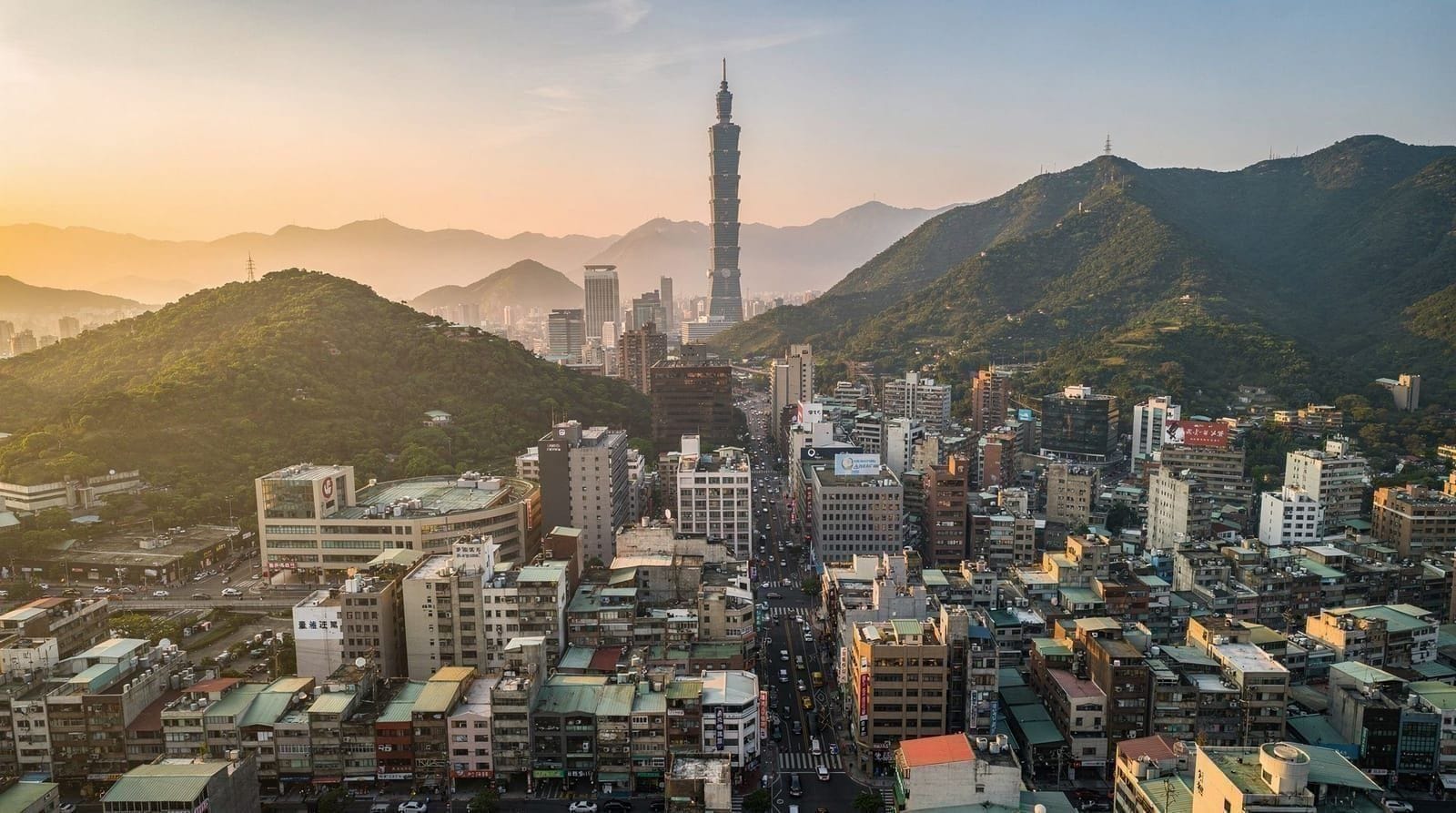
Yangmingshan National Park sits roughly 30 minutes north of central Taipei by bus — close enough for a half-day excursion, far enough that most visitors treat it as optional. That’s a mistake in late January through March, when the park layers cherry blossoms, white calla lilies, yellow forsythia and the occasional steam vent from the still-active volcanic terrain into a genuinely unusual landscape.
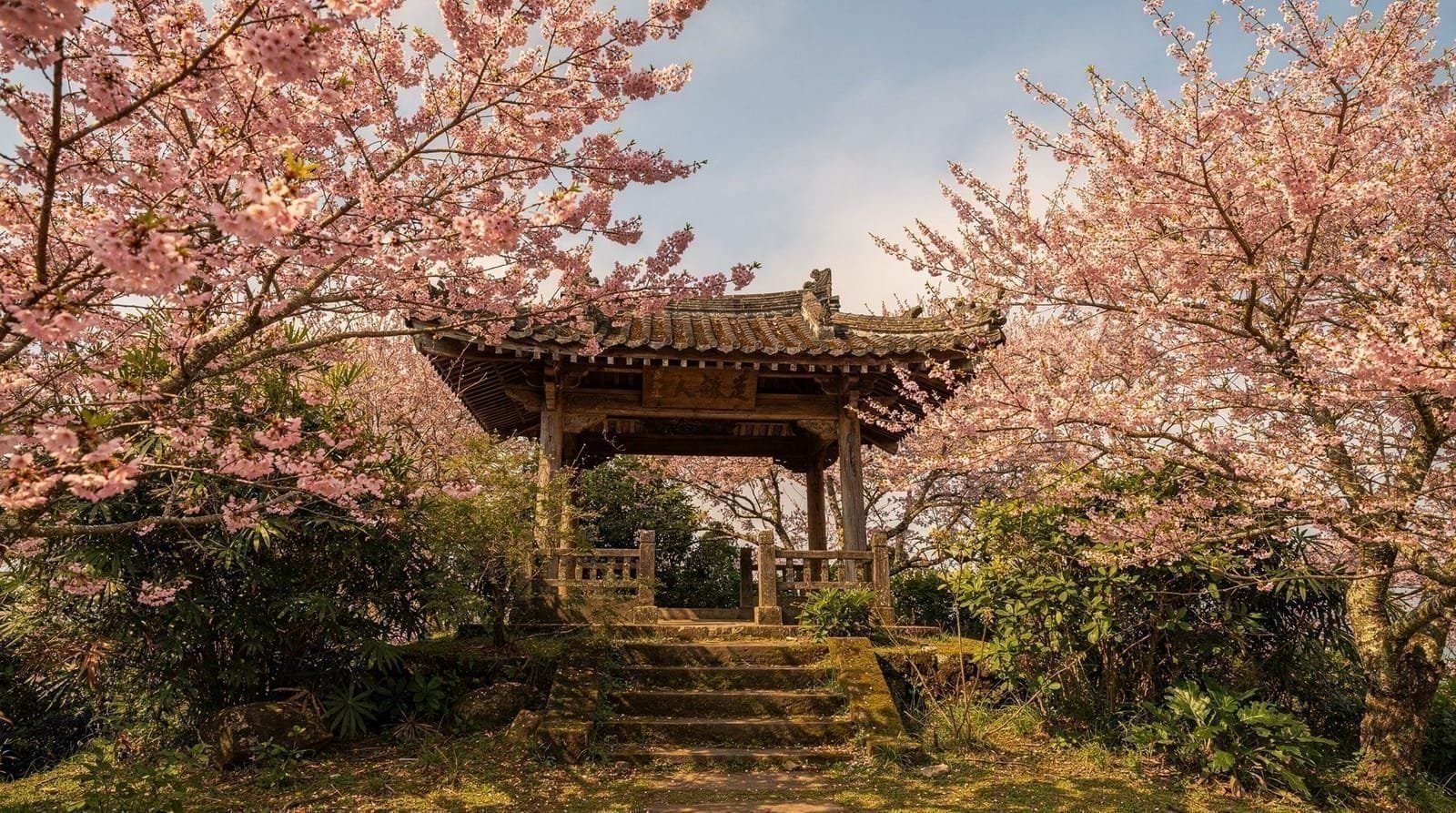
The cherry blossoms on Yangmingshan are not the delicate, pale-pink sakura that Japan does at scale. Taiwan’s dominant varieties on the mountain — primarily Prunus campanulata (Formosan cherry, 山桜花) and some weeping cherries — tend toward a deeper, more saturated pink-red. They’re striking in their own way, but different from expectations shaped by Japanese cherry blossom content.
| Where | Yangmingshan National Park, ~30 min north of Taipei |
| Cost | free entry; around NT$15–30 for buses |
| Time needed | half-day, 3–4 hours if adding Zhuzihu |
| Best time | late January to mid-February for peak cherry |
| Getting there | MRT to Jiantan, then Bus 260 |
When to go: timing the bloom
The Yangmingshan Flower Festival typically runs from late January to mid-March, with the park’s official programming (shuttle buses, guided walks, extended vendor hours) during this window. The actual peak of Formosan cherry blossoms tends to fall in late January to mid-February — earlier than most visitors expect, and certainly earlier than Japan’s sakura season.
By March, the cherries are giving way to calla lilies (Calla Plantation, 竹子湖 area) and cherry blossoms at higher elevations are fading. If your trip is in late February or early March, you’ll catch the transition — less cherry, more lily, which is actually a beautiful and less-photographed moment.
Elevation matters: the park rises from roughly 200m at the Beitou entry to 1,120m at Seven Star Mountain. Cherry trees at lower elevations bloom earliest; trees near Xiaoyoukeng (小油坑) and the upper trails bloom up to two weeks later. If you’ve missed the lower blooms, head up.
Temperature variability: Yangmingshan sits in its own microclimate. Even on clear-sky days in Taipei, the summit area (near Qingtiangang 擎天崗) can be cold, foggy and windy. In February, temperatures at altitude can drop to 8–12°C with wind chill making it feel colder. Layer properly — this catches many visitors off guard.
Where to go: the honest breakdown
Yangmingshan Main Trailhead area (陽明山管理站)
This is the park’s hub and the terminus for buses from Taipei. The cherry trees along the central road (陽明公園 section) are accessible within a 5-minute walk of where the bus drops you. Crowded on weekends, particularly during the flower festival. If this is your only target, come early (before 09:00) or go on a weekday.
The park’s main cherry grove is real and worth seeing — but at peak weekend, you’ll spend as much time navigating crowds as you will looking at trees.
Calla Lily Plantation at Zhuzihu (竹子湖)
This plateau-area field (~900m altitude) is the Yangmingshan experience that tends to be underwritten in travel content. Calla lily season runs late February through April, overlapping with late-cherry season. The fields are tended by local farmers who charge NT$30–50 for access (they use this for cultivation). You can cut one stem to take with you as part of the fee.
Bus route S20 from Yangmingshan Bus Terminal serves this area (around NT$15). The walk between the bus stop and the main field areas is 10–15 minutes.
Xiaoyoukeng (小油坑)
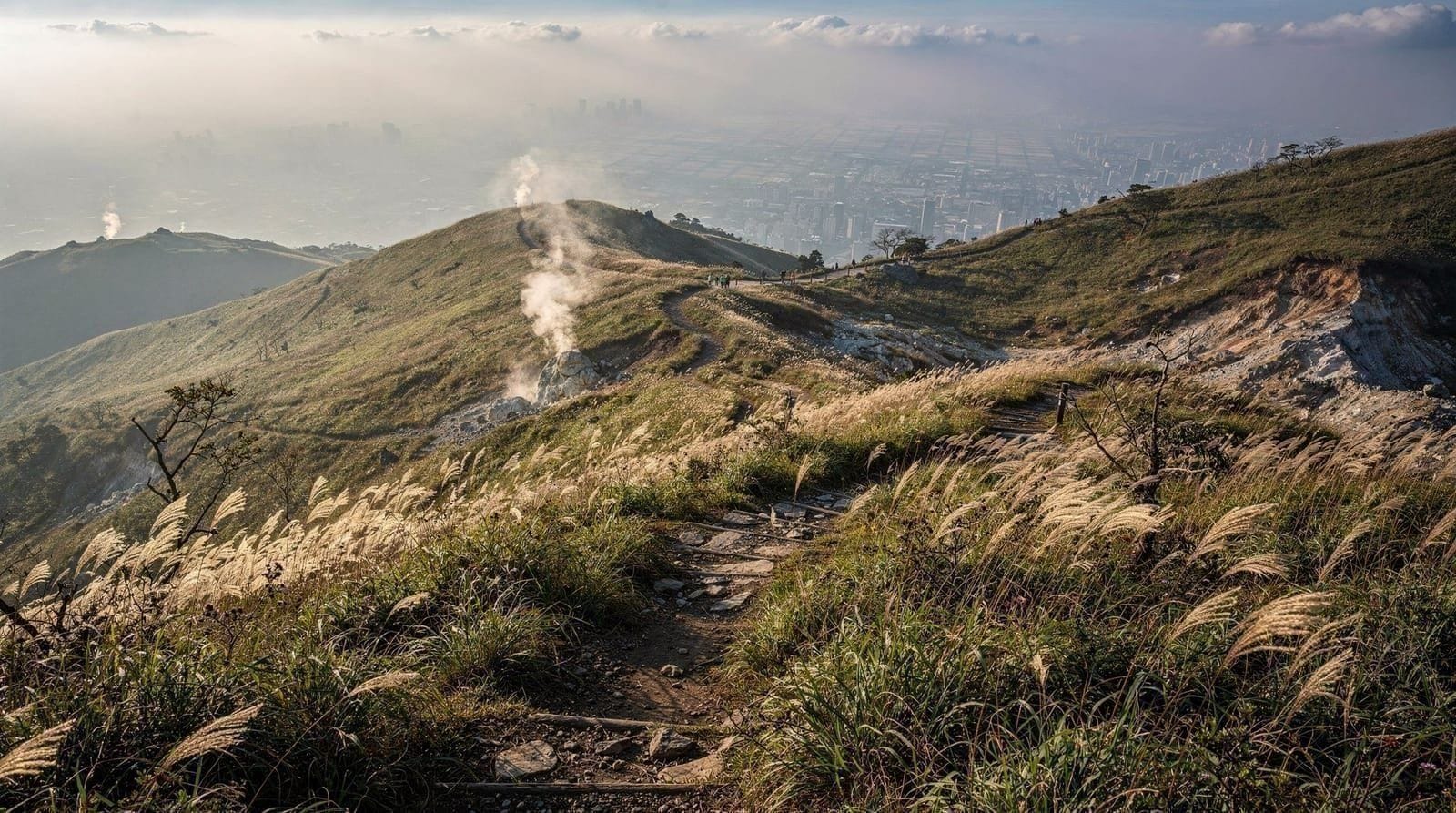
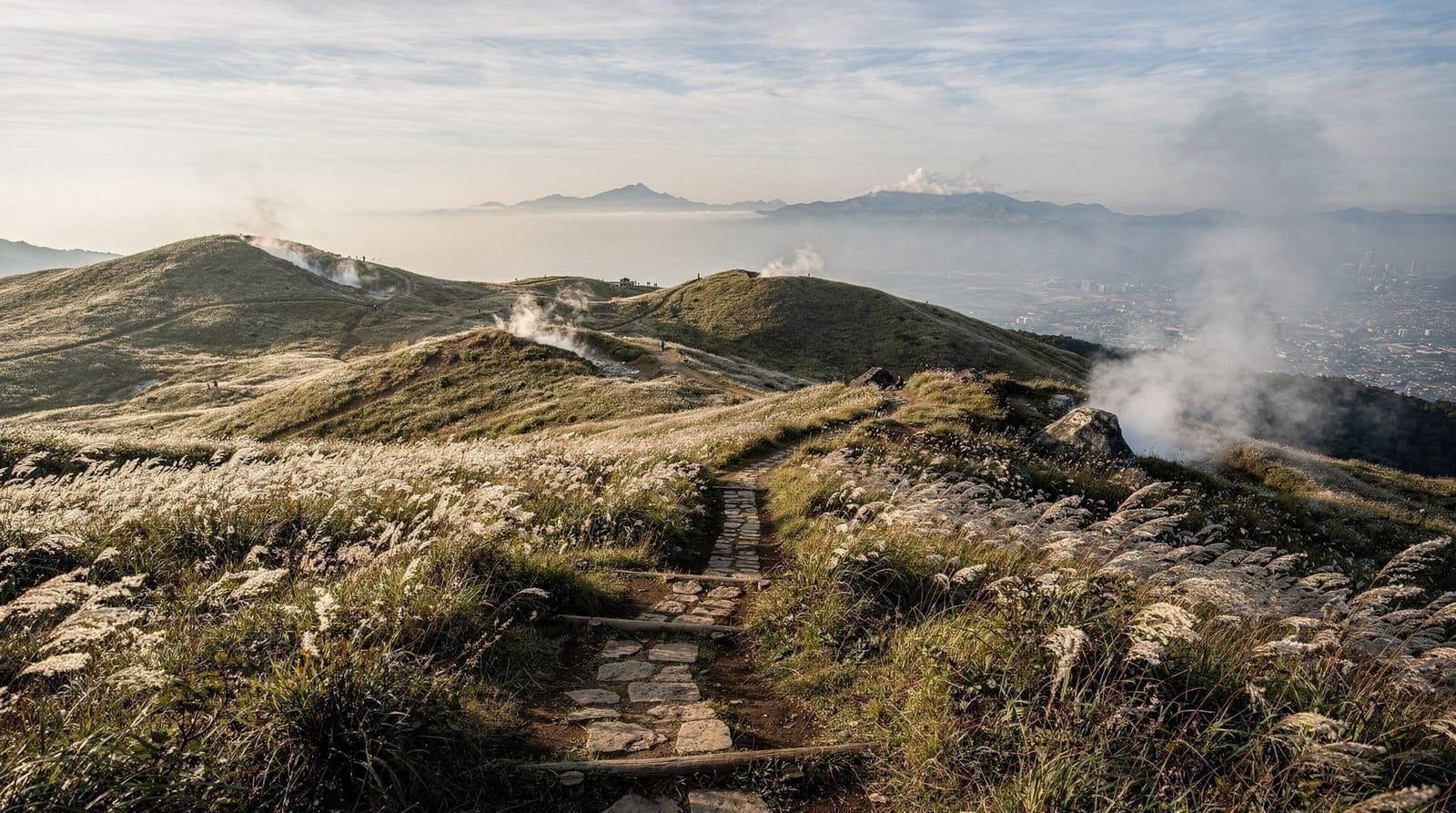
A fumarole and crater area at the park’s volcanic core. Less about blossoms, more about the weird experience of seeing yellow sulfurous steam vents surrounded by alpine vegetation. Cherry trees at this elevation bloom late (mid-February to early March). Good for hikers doing the Seven Star Mountain trail.
Qingtiangang (擎天崗)
The highland grassland at the top of the park — an unusual landscape where water buffalo still graze on open plateau. No cherry blossoms here, but in late February it’s an otherworldly landscape in mist: green grassland, cattle, low cloud. Worth the detour if you’re already up high.
Getting to Yangmingshan from Taipei
Red Line MRT to Jiantan, then Bus:
- MRT to Jiantan Station (Shilin direction from central Taipei)
- Bus 260 from Jiantan Station to Yangmingshan (NT$15, ~30–40 min)
- Alternatively, Bus S9 from Beitou MRT runs to Yangmingshan and connects Beitou to the park in 25–30 min
Bus 260 timing during flower season: weekend mornings see queues at Jiantan. The bus runs every 15–20 minutes but fills quickly. If you miss the first bus, the queue usually clears within 30–40 minutes.
No direct MRT to Yangmingshan: the park itself isn’t on any metro line. This is one of the places where a guided tour including transport genuinely saves time.
Taipei: Yangmingshan National Park half-day tourIf you’re combining with Beitou hot springs (a sensible pairing in late afternoon after a morning on the mountain), a combined day tour covers both efficiently:
Taipei: Beitou and Yangmingshan National Park day tourWhat to bring in February
- Layers: one warm fleece or light jacket minimum; summit areas can be genuinely cold
- Rain cover: February is wetter than most months; the park sits in clouds that don’t show on Taipei’s weather forecast
- Comfortable walking shoes: the central park area has paved paths; getting to outlying attractions means some uneven ground
- EasyCard: useful for buses and MRT connections
Combining Yangmingshan with the rest of your day
Morning: Yangmingshan + Beitou Take the early bus to Yangmingshan (arrive by 08:30), spend 3–4 hours walking the main area and possibly Zhuzihu, return by bus to Beitou for a late afternoon at a public hot spring bath (NT$40–200 for public pools, NT$400–1,000 for private ones). This is a well-paced day that combines two of the park’s best seasonal reasons to visit.
Yangmingshan + north Taipei neighbourhood After descending, Shilin is 20 minutes by bus — good for the night market in the evening if you’re visiting on a weekend.
For context on the rest of Taipei’s seasonal calendar — including when to avoid — the plum rain season in May–June and typhoon season (July–September) make spring the most reliably pleasant window for this kind of outdoor excursion.
Bloom timing by location, at a glance
| Location | Elevation | Typical peak | What’s there |
|---|---|---|---|
| Main Trailhead / 陽明公園 | ~200m | Late Jan–early Feb | Central cherry grove, most accessible |
| Xiaoyoukeng | ~800m | Mid-Feb–early Mar | Late blossoms + fumarole steam vents |
| Zhuzihu (Calla Lily Plantation) | ~900m | Late Feb–Apr (lilies) | Overlaps with late cherries |
| Qingtiangang | ~750m | No cherries | Highland grassland, water buffalo |
Comparing Yangmingshan to Wuling Farm and Alishan
Taiwan has other well-known cherry blossom sites — Wuling Farm in central Taiwan and Alishan further south — and it’s worth being clear about how Yangmingshan compares. Wuling and Alishan generally have denser, more classically “sakura-style” pale-pink blossom displays and are considered the country’s top cherry destinations, but both require a multi-hour drive or bus journey from Taipei and effectively a dedicated overnight trip.
Yangmingshan’s advantage is pure convenience: 30 minutes from central Taipei by bus, no overnight commitment, and a half-day slot that fits inside a Taipei-based itinerary. If cherry blossoms are your singular travel priority and you have the extra days, Wuling or Alishan deliver a more dramatic display. If you’re Taipei-based with limited time, Yangmingshan is the honest, practical choice.
What if you’re visiting outside cherry season entirely
Yangmingshan isn’t a one-season park. Summer brings cooler mountain air relative to the city, a welcome break from Taipei’s heat and humidity, plus hiking on the Seven Star Mountain trail. Autumn brings silvergrass (banner grass) across Qingtiangang’s slopes, another underrated seasonal display. Even winter, when little is blooming, the park’s hot spring areas near the main trailhead and the general cooler-air hiking make it worth a visit if you’re staying more than a few days in Taipei. The cherry and calla lily window is simply the park’s most photogenic period, not its only worthwhile one.
Frequently asked questions about Yangmingshan cherry blossoms
When do cherry blossoms peak on Yangmingshan?
Formosan cherries (the dominant variety) typically peak in late January to mid-February. Higher-elevation trees can bloom into early March. The Flower Festival runs late January to mid-March.
Is Yangmingshan worth visiting if I miss the cherry blossom peak?
Yes. Calla lily season (late February to April) is genuinely beautiful and less crowded. The hiking and volcanic landscape are year-round attractions — see the Yangmingshan hiking guide.
How long does a Yangmingshan visit take?
A morning at the main park area takes 2–3 hours. Adding Zhuzihu and hiking to Qingtiangang makes it a full day.
Can I drive to Yangmingshan?
Private vehicles are restricted on certain roads during the Flower Festival on weekends — shuttle buses are mandatory for some sections. Taxis are permitted. On weekdays, personal vehicles can access the park normally.
How cold does it get on Yangmingshan in February?
Summit temperatures in February average 8–15°C, often lower with wind chill. The park entrance areas are warmer. Pack layers regardless of what the Taipei city forecast shows.
Is Yangmingshan better than Wuling Farm or Alishan for cherry blossoms?
Wuling and Alishan have denser, more classic blossom displays but require a multi-hour trip and effectively an overnight stay. Yangmingshan is the practical choice for a Taipei-based half-day, even if the display is less dramatic.