Beitou hot spring experience — honest guide to public and private options
Taipei: Beitou hot springs and heritage walking tour
Beitou’s hot spring ecosystem — what you’re choosing between
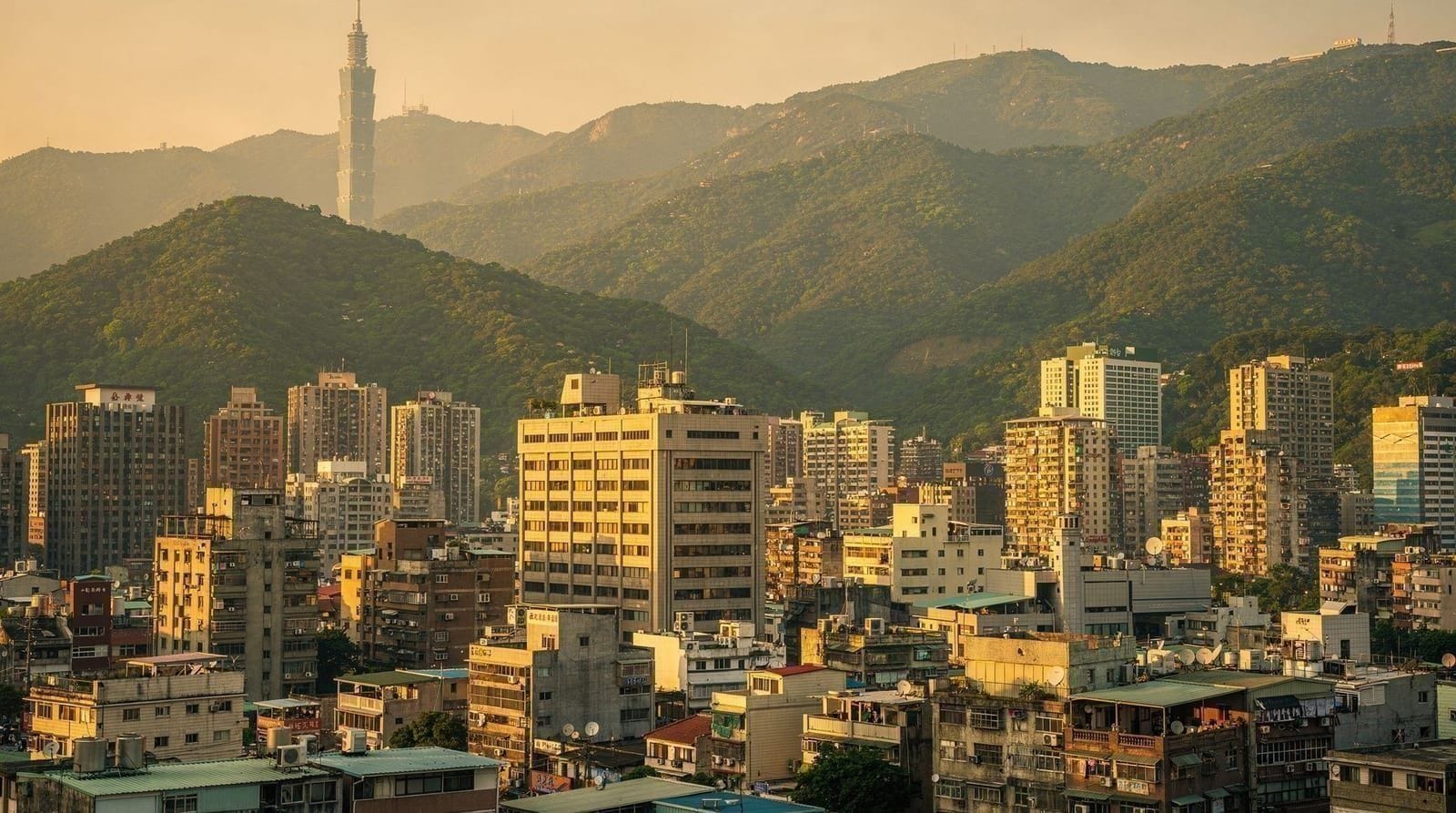
Beitou is Asia’s most accessible major hot spring district: 30 minutes from central Taipei by MRT, with hot spring options at every price point from free foot-soaking pools to luxury resort suites. Understanding the water types and the venue landscape before you arrive saves significant money and disappointment.
The district runs along a single main road (Zhongshan Road) from Xinbeitou MRT Station uphill toward Thermal Valley. Everything is walkable. The concentration of Japanese-colonial architecture, hot spring hotels, and public baths makes this as much a heritage district as a spa destination.
| Where | Beitou district, north Taipei — MRT Red Line + Xinbeitou branch |
| Cost | Around NT$0 (foot pools) to NT$2,500 (private suite, 2hrs) |
| Time needed | Half day (3–4 hours); full day combined with Yangmingshan |
| Getting there | MRT to Beitou, transfer Xinbeitou branch, around 35–45 min from downtown |
| Best time | Weekday mornings for quiet pools; evenings for a relaxed soak |
The water — what makes Beitou unusual
Two distinct spring types emerge from the volcanic geology beneath Yangmingshan:
White sulfur springs: Sodium bicarbonate water, colourless, mildly sulfurous smell, temperature 60–80°C at source (cooled to 38–44°C in facilities). This is the type used in virtually all commercial facilities. Safe for most skin types, well-documented therapeutic value for joint pain and skin conditions.
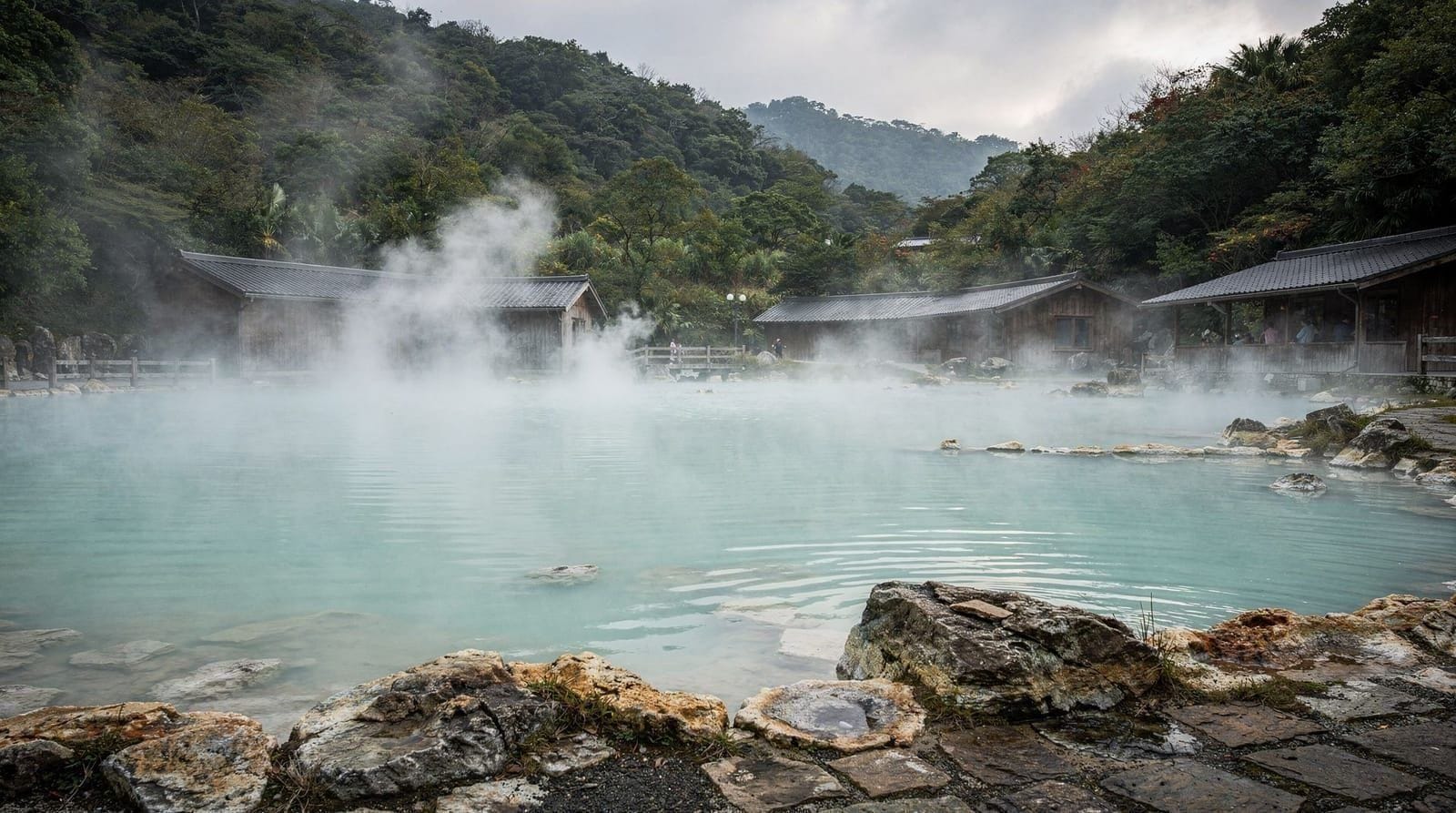
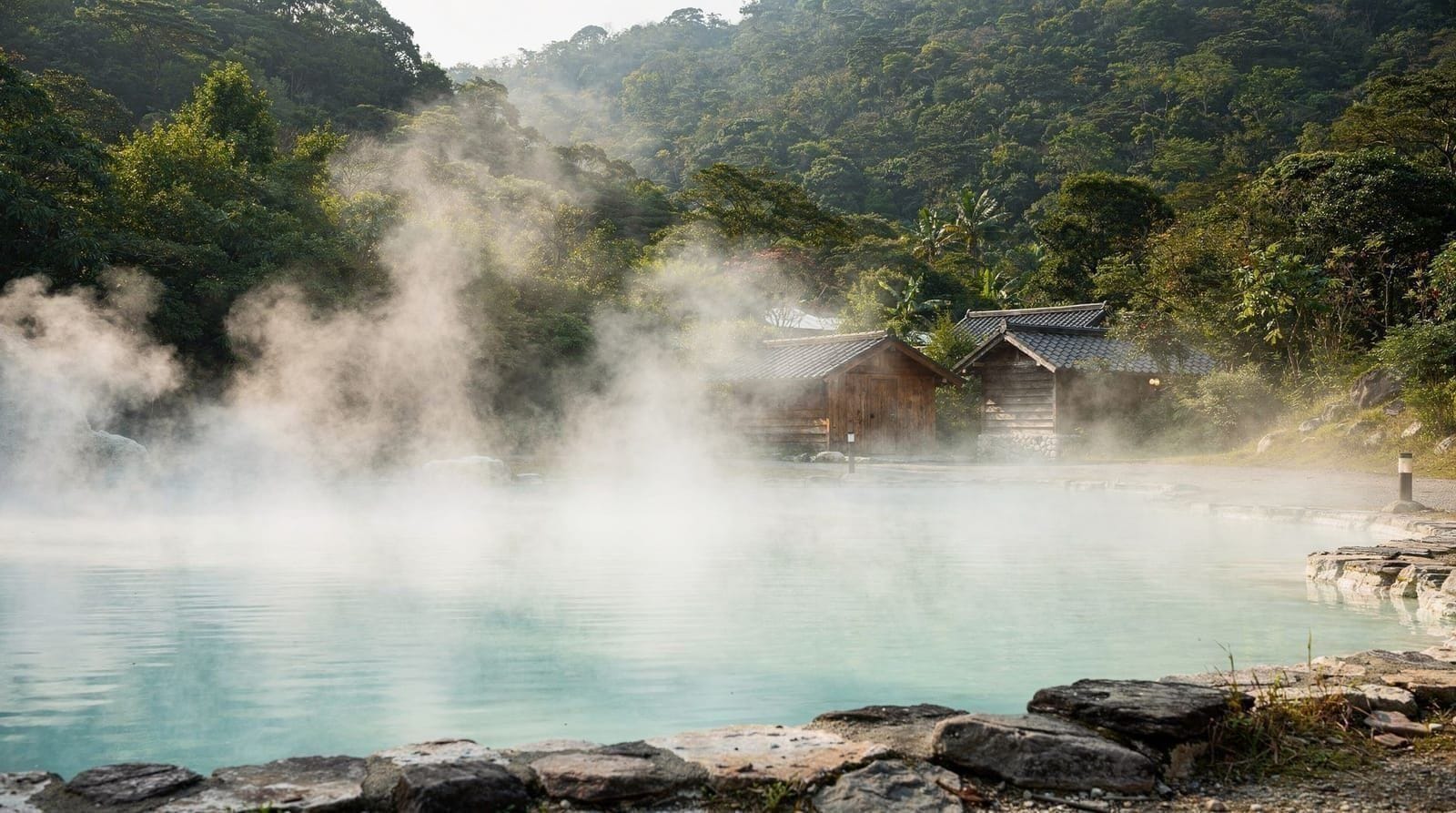
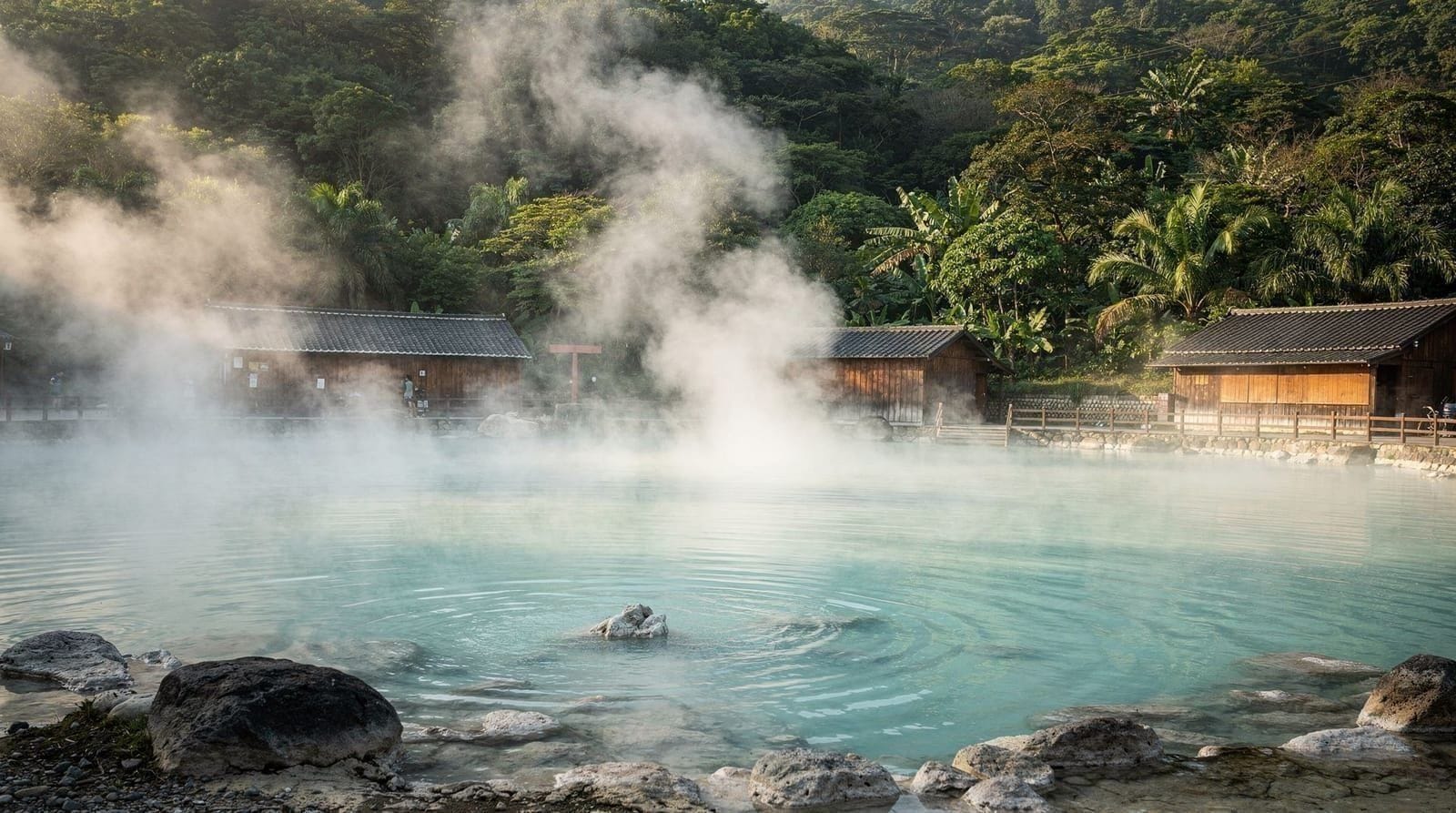
Green sulfur springs (Radium Hot Springs): Taiwan’s rarest water type, found only in Thermal Valley (地熱谷) and a handful of facilities in the immediate area. The pale jade-green colour comes from dissolved radium and is one of only three such springs in the world (the others are in Japan and Germany). The radioactivity is within safe tourism exposure limits, but pregnant women are advised to avoid prolonged immersion. Thermal Valley itself is free to enter (open Tuesday–Sunday, 09:00–17:00) and observation only — the 98°C pool cannot be bathed in.
Public options (NT$0–200)
Free foot-soaking pool (Zhongshan Road): Two outdoor public foot-soaking pools on Zhongshan Road, open to the public at no charge. Hot spring water flows directly from the source at 40–42°C. No time limit. Benches, running water for temperature adjustment. The experience is functional and genuinely pleasant for tired feet. This is a reasonable budget option if you can’t afford private facilities.
Millennium Hot Spring (千禧湯): Publicly operated, NT$40/person. Multiple outdoor pools divided by temperature (36–42°C). Swimwear required. No private rooms. Busiest on weekend afternoons; quietest weekday mornings. The facilities are clean but basic — concrete pools, no lounge areas. The water quality is excellent.
Beitou Hot Spring Public Bathhouse (北投溫泉浴場): A restored 1913 Japanese bathhouse on the spring creek, NT$100–200 for 80 minutes. This is the most beautiful public bathing facility — vaulted ceilings, mosaic tiles, steam rising from cedar-framed pools. Segregated by gender; swimwear required. Check operating hours before visiting (periodic renovations cause temporary closures). The building itself is the main historical draw even without bathing.
Private hotel room options (NT$600–2,500)
For a private experience without booking into a hotel, several Beitou properties sell hot spring room access to non-guests by the hour or two-hour block:
Spring City Resort (春天酒店): NT$600–1,200 for a private room (2 hours). Outdoor and indoor pools available depending on room type. Well-maintained, reliable water quality, English-speaking staff. Popular with couples and families.
Sweetme Hotspring Resort (時光行旅): NT$700–1,500 for a private room. More design-forward interiors, slightly younger clientele. Both outdoor and indoor room options.
Füma Thermal & Spa (風雅頌): NT$800–2,500 for private suites. The premium option in Beitou — genuine luxury finish, high water quality. Worth it for a special occasion; overkill for a casual soak.
The Beitou hot springs guide has a full comparison of private room options with current pricing and booking links.
Which option actually suits you
Budget solo travellers and anyone curious about the free version should start at the Zhongshan Road foot pools or Millennium Hot Spring — both give a genuine feel for the water without committing to a full session. Couples and families wanting privacy and no swimwear-etiquette anxiety should go straight to a hotel room (Spring City Resort is the reliable mid-range choice). Anyone who wants the heritage story alongside the soak should pair the heritage walking tour with a public bathhouse visit afterwards — the 1913 building itself is worth seeing even if you skip the water.
First-time visitors comparing Taiwan’s hot spring regions overall may also want Beitou against Wulai and Jiaoxi before committing a whole afternoon here — Beitou wins on accessibility, but the other two districts have their own character.
The heritage walking tour — what it adds
This 2-hour walking tour (NT$1,200/person) covers Beitou’s Japanese colonial architecture and hot spring history before leaving you near the bathhouses. The guide explains the district’s origins as a Japanese military R&R facility during the colonial period (1895–1945), the competing Taiwanese and Japanese architectural influences, and the political history of the famous “Plum Garden” villa. Context enriches the soak.Check availabilityWhat the tour doesn’t include: the hot spring bathing itself. You’re guided through the heritage district, then left to choose your own facility. This is honest — the tour operator doesn’t control the bathing experience, and separating them lets you pick a facility at your own budget.
The self-guided alternative: the Beitou Hot Spring Museum (free entry, Tuesday–Sunday in the restored 1913 bathhouse building at 2 Zhongshan Road) covers most of the same historical material with good English signage. The Plum Garden (梅庭, free, 6 Zhongshan Road) is the Japanese-era villa of nationalist general Chen Cheng — short visit but atmospheric. Both are walkable from Xinbeitou Station without a guide.
Combining Beitou with Yangmingshan
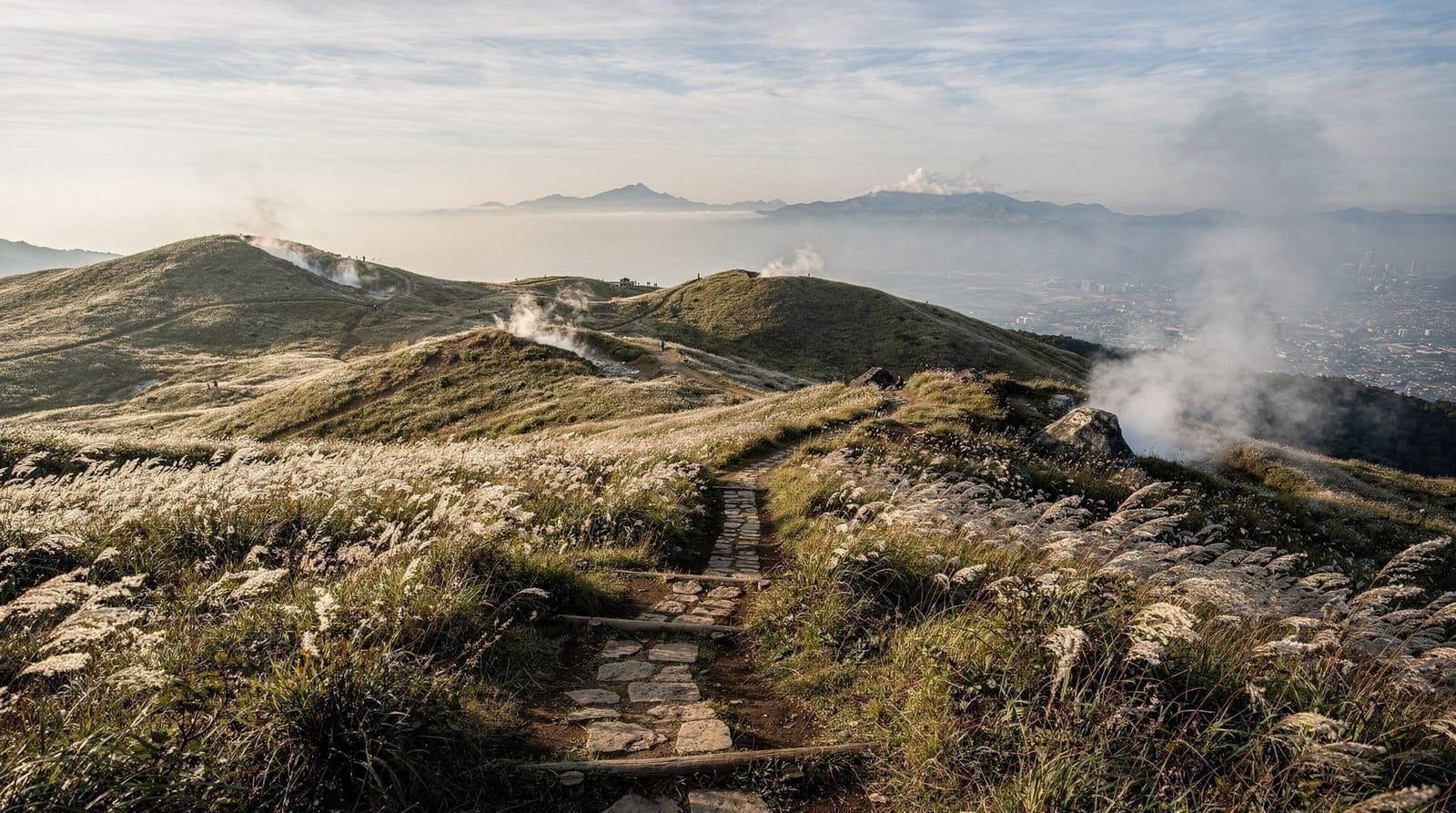
The most efficient use of a day is Yangmingshan volcano trails in the morning (Bus S9 from Jiantan MRT) and Beitou hot springs in the afternoon (return via Jiantan to Beitou, 20 minutes). The trail walking creates exactly the physical state that a hot spring soak addresses. The Yangmingshan destination guide and the Yangmingshan hiking guide cover the trail options if you’re building your own combined itinerary rather than booking the pairing below.
This 9-hour combined day tour handles transport between Yangmingshan and Beitou — particularly useful if you’re not comfortable navigating the mountain bus schedule on your own.Check availability For an 8-hour private tour combining Beitou’s hot springs with Tamsui’s waterfront, this option provides a driver-guide for both districts — the two connect naturally via a single road along the Tamsui River.Check availabilityPractical notes
What to bring: Swimwear, towel (or rent NT$50–100 at most facilities), non-slip sandals (pool areas are wet), change of clothes. Most facilities provide toiletries. Bring cash — many smaller facilities are cash-only.
Tattoo policy: Public facilities prohibit tattoos per Taipei City Government policy. Private hotel rooms generally permit tattoos. Confirm before visiting; policy is enforced.
After the soak: Hot spring water at therapeutic temperatures causes mild dehydration. Drink water before and after. Light-headedness on standing is normal after extended soaking — sit briefly before standing up quickly.
Etiquette: See the hot spring etiquette guide for full behavioural expectations at public facilities — showering before entering, no swimming or dunking, temperature acclimation. Japanese-style onsen etiquette is the standard.
Getting oriented first: If Beitou is your first stop in Taipei, the Beitou destination page has a wider overview of the neighbourhood beyond the hot springs — the shops, the park, and the general layout — useful context before you commit an afternoon to soaking.