Hot spring etiquette in Taiwan — what to do, what to avoid
Taipei: Hot spring tour Wulai Old Street cable car
Duration: 9 hours
What are the basic rules at Taiwan hot springs?
Shower before entering any pool. Swimwear is mandatory at public outdoor pools; communal single-sex baths are usually nude; private rooms allow either. No soap or shampoo in the pool water. Keep noise low. Most facilities prohibit tattoos in communal areas — private rooms are usually fine.
Why etiquette matters at Taiwan hot springs
Taiwan’s hot spring culture has deep roots in the Japanese colonial period (1895–1945), when public bathhouses followed strict cleanliness and behavioural codes. Many of those traditions remain alive in how facilities operate today — especially in Beitou and Wulai, which both developed their spring industries during the Japanese era.
Following the basic rules is both courteous and practical: it keeps the water clean, makes the experience better for everyone, and prevents the embarrassment of being asked to leave.
| Where | Mainly Beitou (in Taipei) and Wulai (edge of New Taipei) |
| Cost | Public pools around NT$40–60; private rooms roughly NT$500–1,500/hour |
| Dress code | Swimwear (public pools) or nude (single-sex communal baths) |
| Bring | Towel, swimsuit, flip-flops, water, no metal jewellery |
| Best time | Weekday daytime for shorter queues, evening for a quieter soak |
Before you enter: the mandatory shower
Every hot spring facility in Taiwan requires guests to shower thoroughly before entering any pool or tub. This is not advisory — it is enforced, and signs will say so clearly in Chinese, Japanese, and usually English. Soap and shampoo are available near the changing areas.
The shower removes sunscreen, sweat, perfume, and anything else that degrades water quality. This is especially important at public communal pools where the same water circulates among many users.
At private rooms: You still shower first, but it is less rigidly policed since the tub is your own for the session. Fill it after showering, not before.
Swimwear rules by facility type
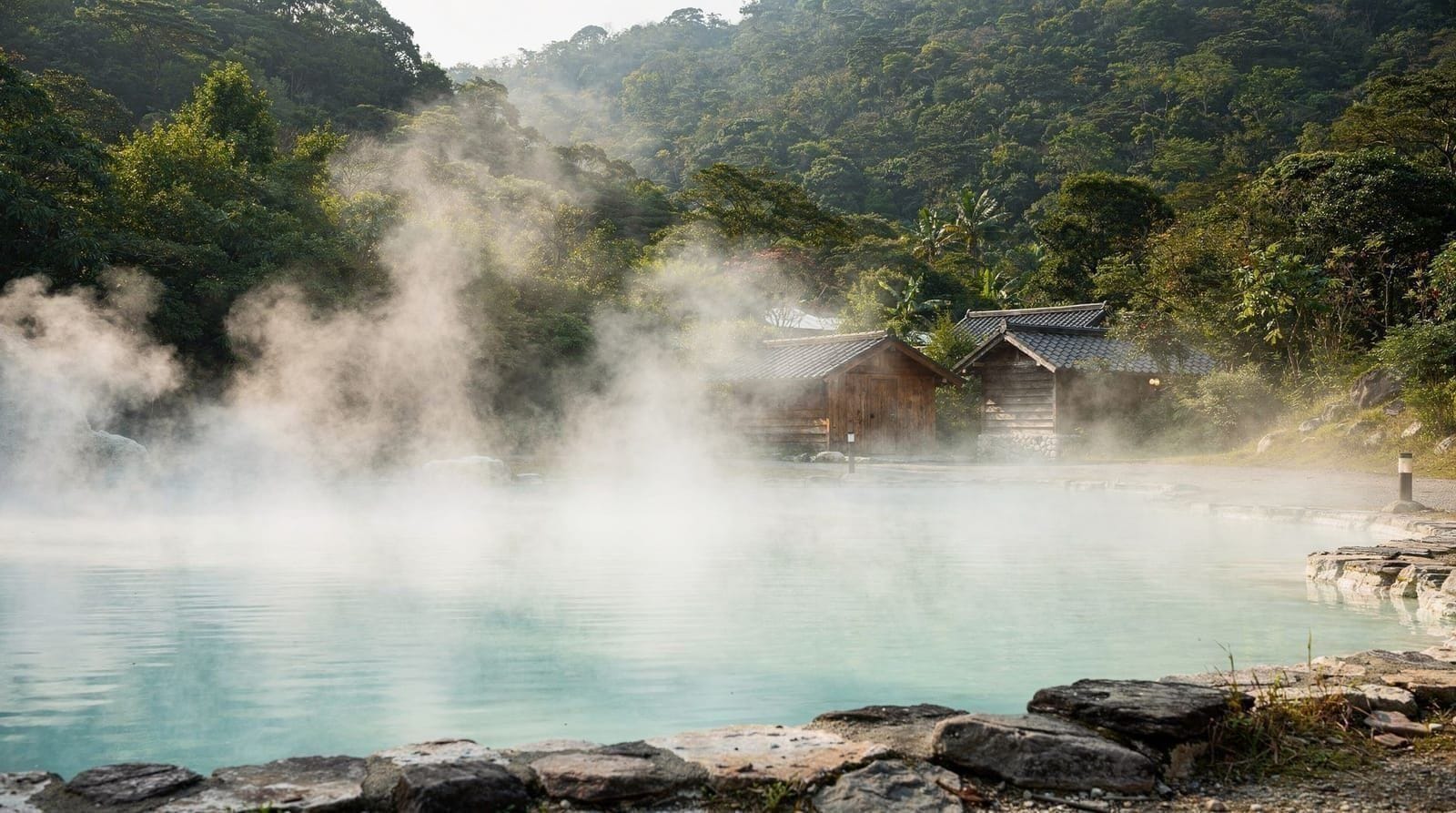
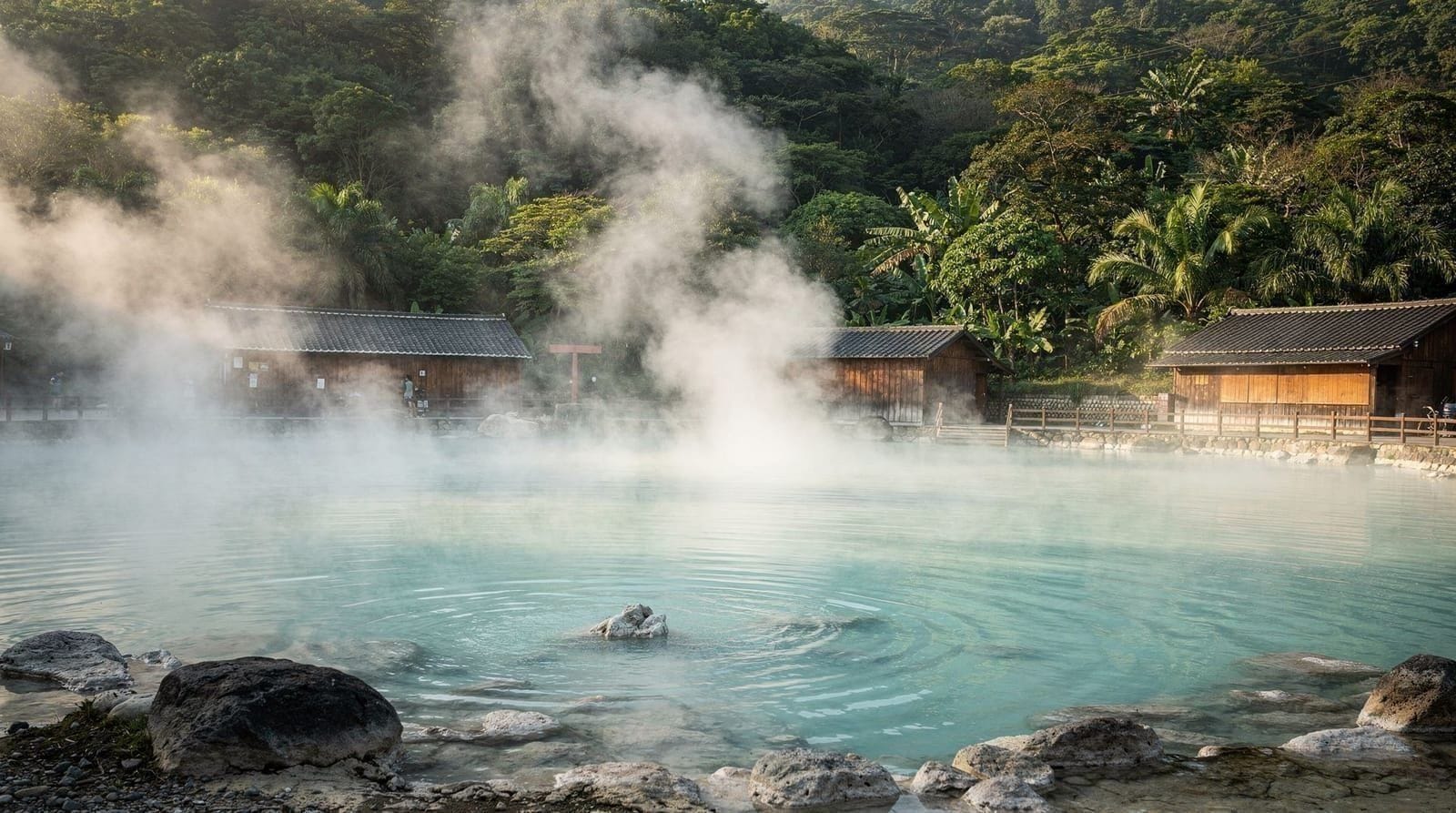
Public outdoor pools (Beitou Millennium Hot Spring): Swimwear mandatory, enforced at the entrance. No exceptions. Swim caps are sometimes required at specific pools — check the posted rules.
Communal single-sex indoor baths: These are nude-only. Swimwear is actually not permitted as it can be considered unhygienic (untreated fabric contaminates pool water). This format is less common at tourist-oriented facilities and more common at traditional bathhouses and some hotel facilities.
Private soaking rooms: No mandated swimwear requirement — you are alone or with your group and the room is yours for the session. Most people in private rooms go without or keep swimwear on for comfort — either is fine.
Mixed-gender pools: Swimwear required.
If you are uncertain, ask at reception before paying. Staff at tourist-facing facilities will usually speak enough English to explain the policy.
No soap, shampoo, or products in the pools
This is universal: no soap, shampoo, conditioner, or any personal care product goes into the pool water. Shower rooms adjacent to the pools are where you use those products. Using soap in a hot spring pool contaminates the water and is immediately visible to other bathers and staff.
Similarly, do not shave in the pools. Do not put your head underwater. Do not drink the spring water (even clean-looking sodium bicarbonate springs are not drinking water).
Hair and accessories
Tie up long hair before entering any communal pool — loose hair creates hygiene concerns and can block filters. Hair ties are usually available at reception if you have forgotten yours.
Remove metal jewellery. Sulfur springs — particularly those in Beitou — contain hydrogen sulfide which reacts with silver and gold, causing rapid discolouration and potential damage. This applies especially to rings and earrings. Platinum and titanium are unaffected.
Leave valuables secured. Lockers are standard at public facilities. At private rooms, most places have a small shelf or basket but no lock — leave expensive items at your hotel.
Noise and behaviour
Hot springs in Taiwan are generally quiet, even at public facilities. Loud music, shouting, or disruptive behaviour is frowned upon and will attract looks or staff intervention quickly. Children are welcome at most facilities but parents are expected to keep them reasonably calm.
Photography in changing areas or communal baths is absolutely prohibited and would be treated seriously. In private rooms with your own party, photography is generally fine.
Reading the room as a visitor
Etiquette in a hot spring is mostly observation. When you arrive, spend a minute watching what regulars do before you step into the water: where they leave their slippers, how they rinse, whether they sit or stand at the shower stalls, and how quietly they move around the pools. Copying that rhythm will carry you through almost any situation the signs do not cover.
Signs are usually the first thing to read. They are often written in Chinese and Japanese, with English underneath, and they tend to cover the same handful of points: shower first, no soap in the water, swim caps where required, no photography. If a sign is only in characters you cannot read, a translation app held up to the text works well, and staff are generally happy to point at the relevant rule.
Personal space matters too. Even in a busy public pool, bathers tend to leave a polite gap and avoid staring or striking up loud conversations with strangers. A quiet nod is plenty. If the pool is crowded, take a spot near the edge, soak for your turn, and move on rather than claiming the best corner for an hour.
Tattoo policies in practice
Officially, many public pool facilities post signs prohibiting visible tattoos in communal areas. In practice, enforcement varies — smaller independent bathhouses may not enforce it at all, while larger public pools sometimes do. The policy originates from Japanese cultural norms around tattoos (historically associated with organised crime) and has persisted in some facilities.
The practical solution: if you have significant tattoo coverage and want a guaranteed hassle-free experience, book a private soaking room. No facility in Taiwan restricts tattoos in private rooms.
Wulai’s bathhouses tend to be more relaxed about tattoos than Beitou’s public pools.
Beitou vs Wulai: what actually differs
Both are easy day trips from central Taipei, but the etiquette texture is not identical. If you are deciding between them, this is the practical difference:
| Beitou | Wulai | |
|---|---|---|
| Distance from Taipei | ~30 min by MRT | ~1hr by bus/car |
| Water type | Sulfur springs (white/green, strong smell) | Carbonate springs (odourless, clear) |
| Tattoo enforcement | Stricter at public pools | Generally more relaxed |
| Typical setting | Urban, historic bathhouse district | Riverside, mountain valley, waterfall nearby |
| Best for | A quick post-sightseeing soak | A slower half-day trip with scenery |
Neither is “more correct” etiquette-wise — the core rules (shower first, no soap in the pool, quiet behaviour) apply equally. See Beitou vs Wulai vs Jiaoxi for a fuller comparison including Jiaoxi.
Wulai hot spring, waterfall and old street tourHealth considerations
Alcohol and hot springs: Soaking in hot water while drunk is dangerous — blood pressure changes rapidly, and the heat is dehydrating. Many facilities will turn away visibly intoxicated guests. If you want to drink sake or beer after a soak (a popular tradition), do so after and in moderation.
Cardiovascular conditions: Hot spring temperatures above 40°C increase heart rate and affect blood pressure. Consult a doctor before visiting if you have heart disease, hypertension, or circulatory issues. Cooler pools around 36–38°C are safer for those with concerns.
Pregnancy: Most facilities advise against use during pregnancy, particularly high-temperature pools. The first trimester is the highest-risk period. Again, if in doubt, consult a doctor.
Duration: Soak for 15–20 minutes, exit and rest, drink water, then re-enter if you wish. Continuous soaking for 45–60 minutes without breaks is inadvisable regardless of health status.
What to bring
- Towel: For public pools, bring your own — loaner towels are not standard at budget facilities. At resort private rooms, towels are usually provided.
- Swimsuit: Required for public outdoor pools.
- Flip-flops: Mandatory in changing areas and practical around wet pool decks.
- Water bottle: Hydration before and after is important.
- Change of clothes: You will want to change out of a swimsuit before travelling home.
- No valuables: Leave expensive jewellery and electronics at your hotel.
Planning a soak into your Taipei days
A hot spring works best as a deliberate pause rather than something squeezed between sights. After a long walking day it is a very good way to reset tired legs, which is why it pairs naturally with a hilly outing such as Yangmingshan, the Yangmingshan hiking guide or any of the best hikes around Taipei. Finishing a trail and then heading to a pool is a classic local rhythm.
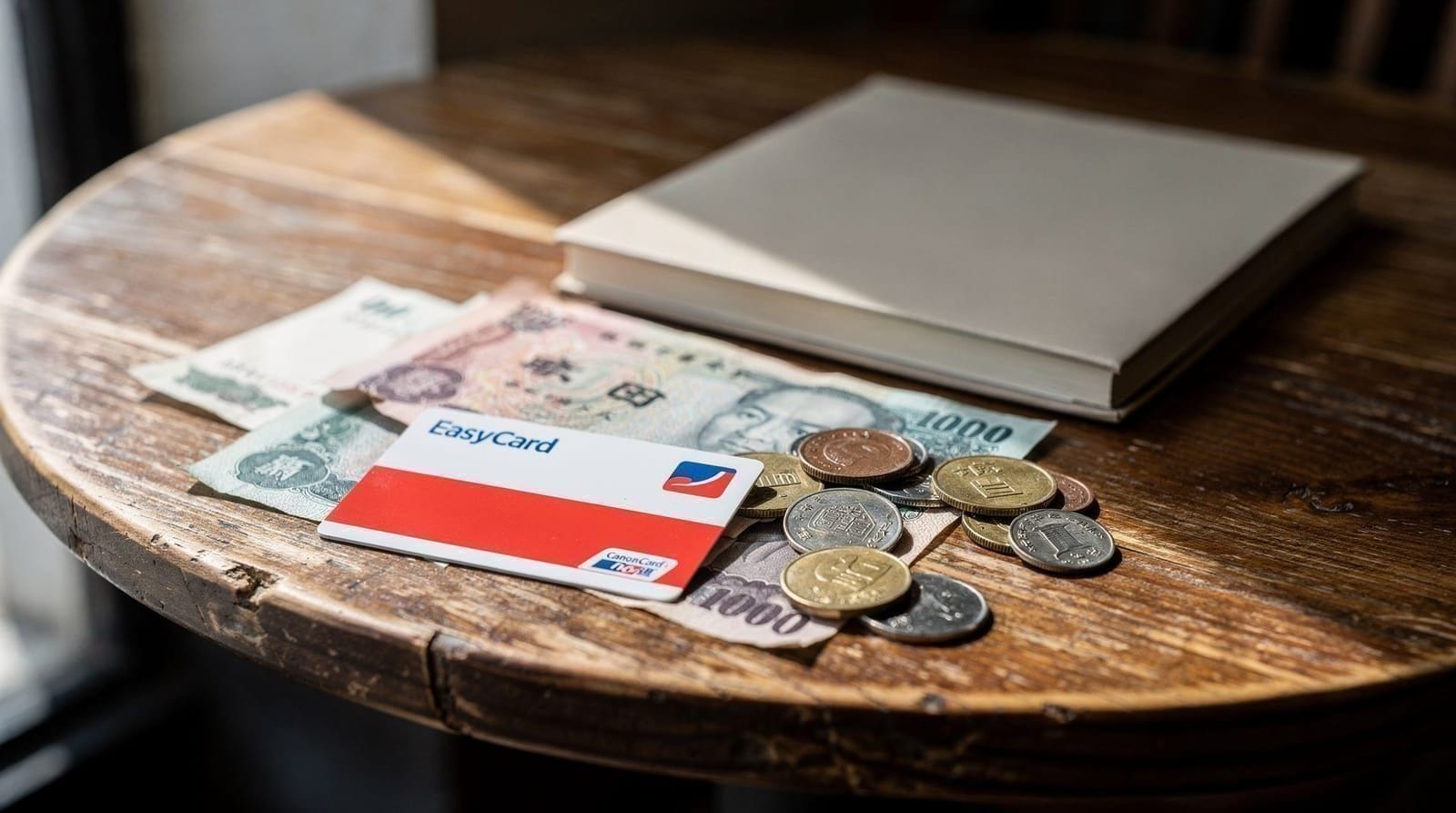
Getting there is simple. The Taipei MRT guide explains how to reach the Beitou area on the metro, and the EasyCard guide covers the card that makes every transfer painless. If you are still deciding where to base yourself, the Beitou destination page and where to stay in Taipei both help you weigh a hotel with its own spring against a central location.
Think about timing as well. A soak leaves you relaxed and a little sleepy, so it is rarely a good idea to schedule a demanding activity straight afterwards. Evenings suit many travellers, especially in cooler months; see Taipei in winter for why the season matters. In the heat of summer, a late-afternoon soak followed by a slow dinner can feel better than a midday one. Rain does not need to cancel the plan either, since an outdoor pool in light drizzle is part of the charm for many bathers.
Etiquette with groups, couples and children
If you are travelling with others, agree on the plan before you reach reception. Single-sex communal baths will separate your group, while private rooms keep everyone together, so choose the format that suits who you are with. Friends who are comfortable with communal nudity may prefer the traditional baths; families and couples often find a private room simpler.
With children, keep a close eye on how long they stay in the water and make sure they follow the same shower rule as adults. Small ones tire quickly in hot water, so encourage short soaks and plenty of rest on the deck. Parents looking for wider ideas for the family can browse Taipei with kids.
Teenagers and first-timers sometimes feel self-conscious. Reassure them that nobody is paying attention to anyone else, that towels are part of the routine, and that quietly following the steps is all that is expected of them.
After the soak
When you leave the water, rinse off if the facility provides showers, dry thoroughly and give yourself a few minutes to sit before standing quickly, since dizziness can hit just after a long soak. Drink water, and wait a while before eating a heavy meal. A light snack or a cup of tea is a pleasant way to wind down, and tea fits the setting well; the Taipei tea culture guide suggests ways to continue the unhurried mood.
Hang your wet towel and swimsuit to dry as soon as you can, and keep them in a separate bag until then. Metal jewellery that went into your bag rather than into the pool should still be checked, since the sulfur smell can cling to clothes and accessories.
First-time walkthrough, step by step
If this is your first Taiwan hot spring visit and you want the short version: pay at reception and get a locker key or wristband, change in the locker room, shower thoroughly with soap at the shower stalls (not near the pool edge), remove jewellery, tie up hair, then walk to the pool deck in your swimsuit (or without, if it’s a nude single-sex bath). Ease in slowly — the water is hotter than a typical bath. Soak 15–20 minutes, step out and rest on the deck or in the cooler pool if there is one, rehydrate, then re-enter if you like. Shower again before dressing. Most public sessions have no fixed time limit; private rooms are booked in fixed blocks, usually 60–90 minutes.
Paying and booking
Most facilities accept cash. Card acceptance is growing at larger resort hotels but is not guaranteed at independent bathhouses. Public pool fees are fixed and paid at the entrance. Private room fees are paid at reception before the session; confirm the duration when you pay to avoid surprises.
For Beitou, no advance booking is needed at the Millennium Hot Spring public pool (queues form, but they move). For private rooms at popular spots on weekends, calling ahead (or using LINE if the facility lists a number) is advisable.
For the full picture on Beitou’s facilities, see the Beitou hot springs guide. To compare all three main spring destinations near Taipei, see Beitou vs Wulai vs Jiaoxi.
Beitou hot springs and heritage walking tourOne cultural note
Hot springs in Taiwan carry a genuine wellness and restorative tradition, not just a tourist-attraction status. Many local families make weekend visits to Beitou or Wulai a regular practice, particularly in winter. Treating the facilities with the quiet respect you would give any communal wellness space in Japan or Korea is the right approach — and you will be welcomed accordingly.
For further reading: best day trips from Taipei, Wulai, Taipei travel budget.
Frequently asked questions about Hot spring etiquette in Taiwan — what to do, what to avoid
Are tattoos allowed at Taiwan hot springs?
Do you have to be nude in Taiwan hot springs?
Can children use hot springs in Taiwan?
What temperature are Taiwan hot springs?
How long should you stay in a hot spring?
Should I tip at Taiwan hot springs?
Top experiences
Bookable activities with verified prices and instant confirmation on GetYourGuide.