Jiufen at night — what the lanterns look like after dark and whether it's worth the effort
The gap between the photographs and the reality
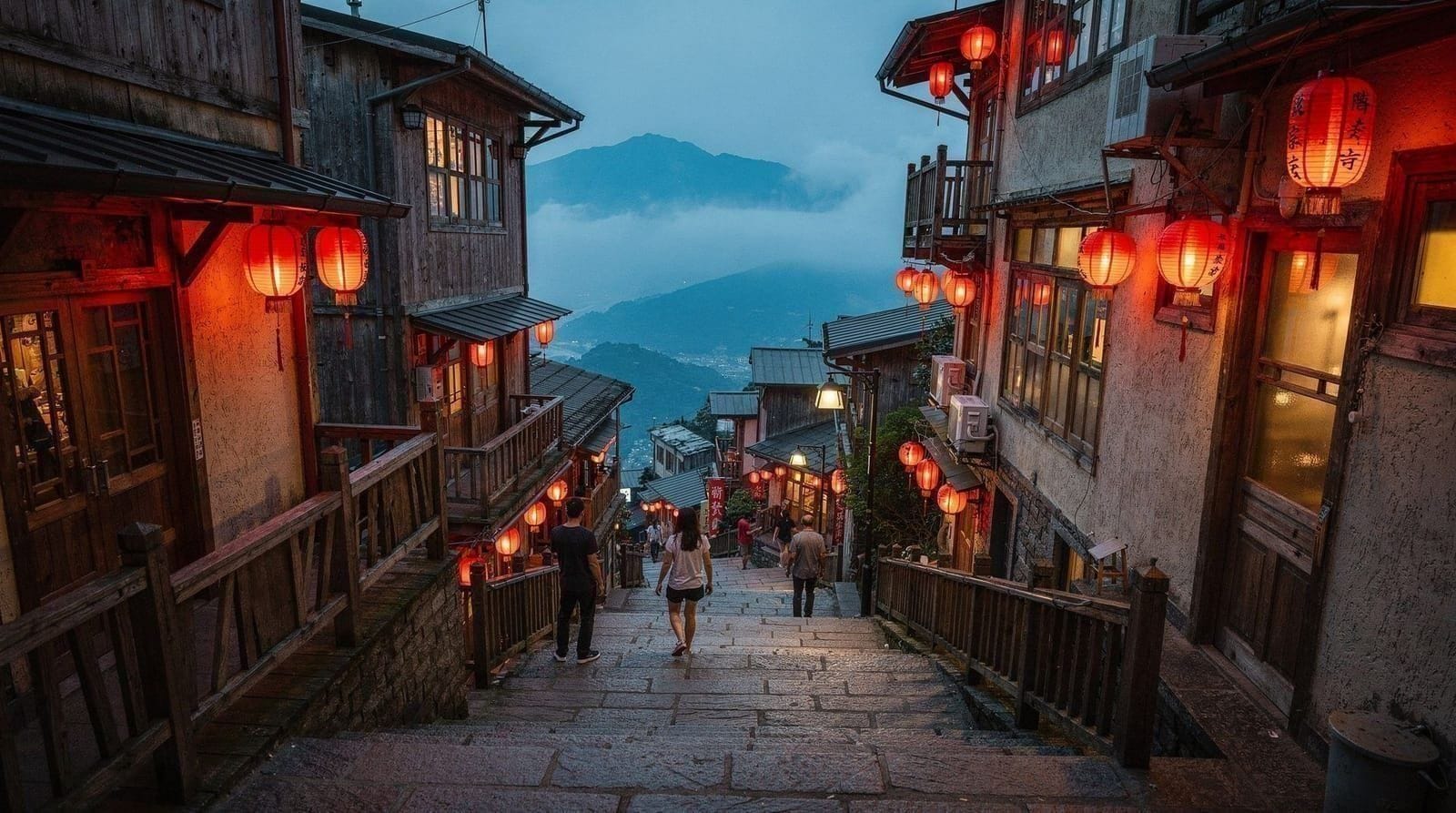
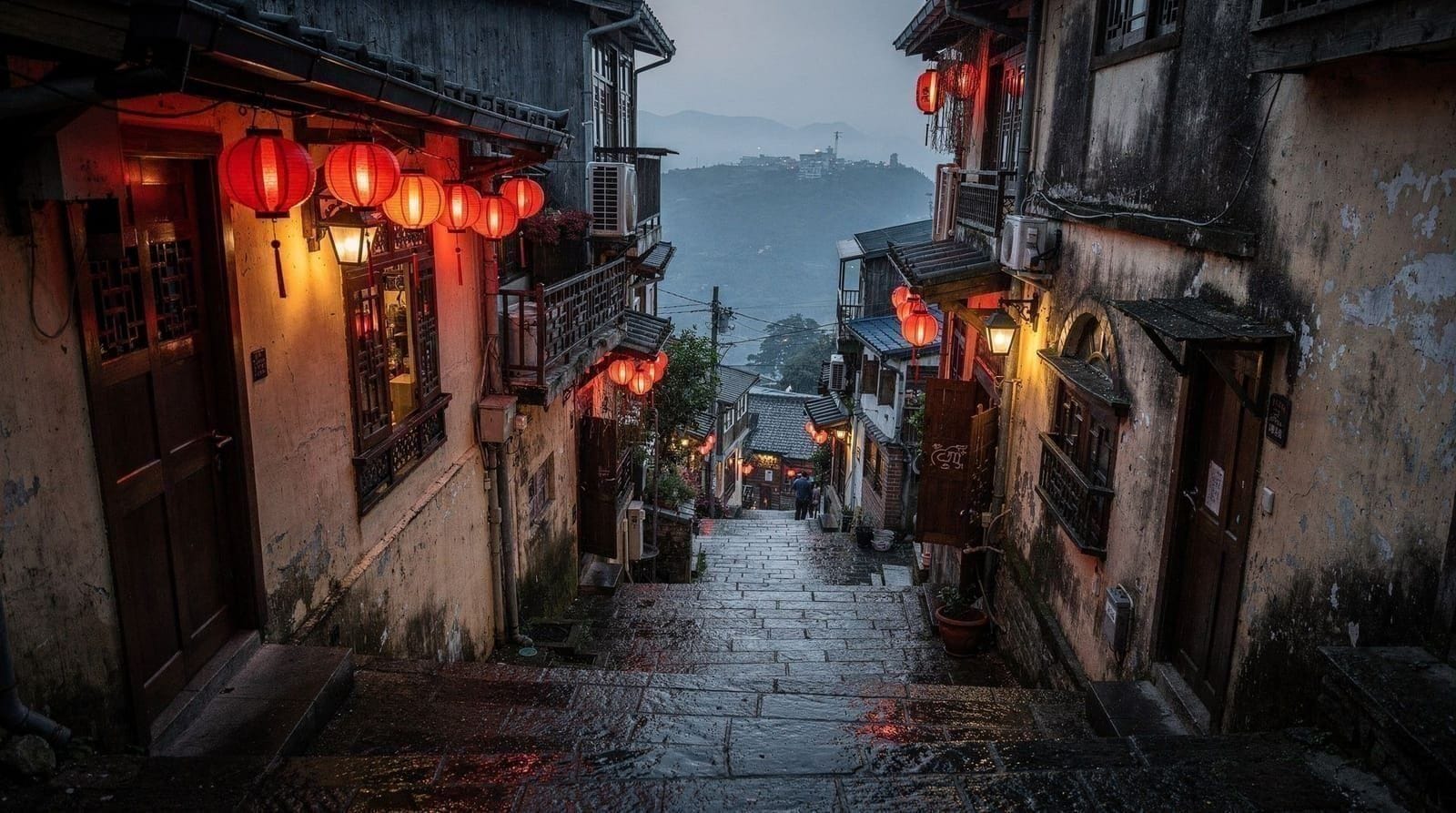
If you’ve seen photographs of Jiufen at dusk — the red lanterns glowing over the staircase steps, the tea houses clinging to the mountainside, mist rolling in from the Pacific — you probably already want to go. Those photographs are real; the actual scene does look like that, at specific moments, in specific weather.
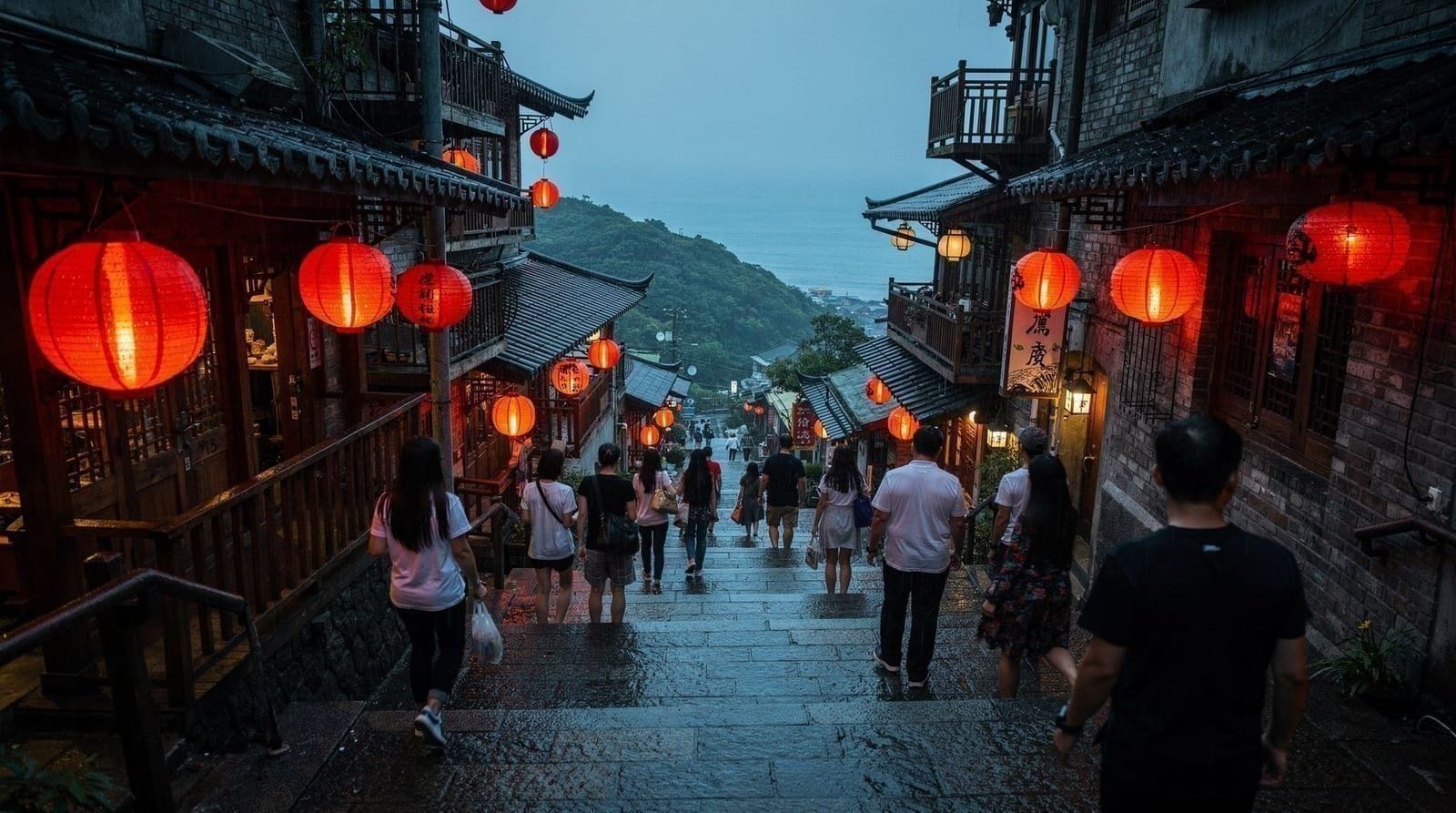
The honest complication is this: Jiufen after dark is one of the most visited sights in northern Taiwan, and on weekends, particularly in good weather, the famous A-Zhu Lantern Staircase (九份老街, Jiufen Old Street steps) sees crowds dense enough to make walking difficult. The lanterns are beautiful. The experience of photographing them while pressed against a hundred other people holding phones is something different.
This is not a reason to skip Jiufen at night. It’s a reason to understand what you’re optimising for — and to choose your visit day and timing carefully.
| Where | Jiufen Old Street, New Taipei, ~45–60 min from Taipei |
| Cost | around NT$74–89 round-trip train + bus |
| Time needed | 3–4 hours for a proper evening visit |
| Best time | weekday dusk, 17:30–19:30 depending on season |
| Getting there | TRA train to Ruifang, then Bus 825/826 |
What Jiufen actually is
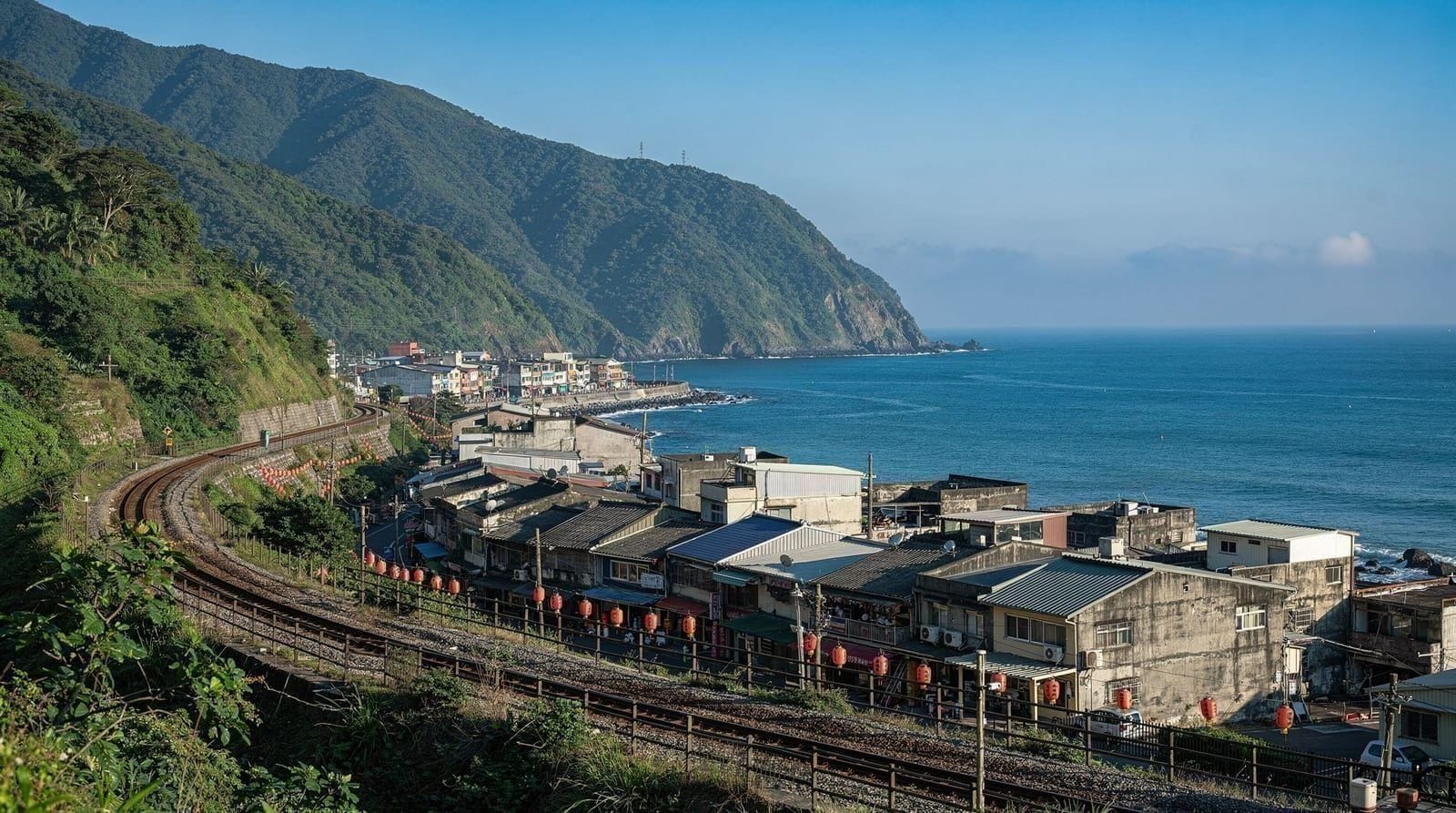
Jiufen was a gold-mining town from the late 19th century, booming during the Japanese colonial period (1895–1945) and declining as the mines exhausted. The town was left largely unchanged when the economy moved on — stone steps, old shophouses, sea views down steep lanes — and rediscovered by filmmakers and later by tourists.
The comparison to Spirited Away (千と千尋の神隠し) comes up constantly. Studio Ghibli has neither confirmed nor denied Jiufen as inspiration for the bathhouse scenes; director Hayao Miyazaki has said the inspiration was a specific building in the 江戸東京たてもの園 (Edo-Tokyo Open Air Architectural Museum). But the visual similarity is real enough that Jiufen has benefited enormously from the association.
The gold history is visible if you look for it: the Gold Ecological Park (黃金博物館) in nearby Jinguashi tells the mining story properly. Most day visitors don’t bother, which means it’s usually calm.
Why evening specifically
The answer is light. Jiufen in full afternoon sun is pleasant but relatively ordinary. As the light drops — around 16:30–18:00 depending on season — the red paper lanterns that hang over the main staircase and the teahouse windows switch on, and the combination of warm orange light, evening mist from the coast, and the black-and-red architecture of the old buildings creates the scene from the photographs.
The teahouses are also better in the evening. A-Mei Tea House (阿妹茶樓) — the one everyone photographs — is genuinely beautiful from outside and has adequate tea inside, but charges a NT$150 per-person minimum consumption on top of what you order. It’s worth having tea there for the setting and the view; the food is not the point.
For a better meal in a similar atmosphere, the teahouses and restaurants lower on the Jishan Street stairs tend to have more reasonable pricing and equivalent views once you find a window seat.
Timing your visit
Weekday evenings (Tuesday–Thursday): this is the right answer for most visitors. Arriving at Jiufen around 15:00–16:00 lets you walk the upper streets and the Gold Park area in daylight, eat an early dinner, and be on the main steps at dusk (around 17:30–18:30 in winter, 18:00–19:30 in summer) when the light is optimal and the crowds are thinner than on weekends.
Weekend evenings: the main Old Street becomes genuinely difficult to navigate after 17:00. If you must visit on a weekend, arrive by 14:00 to access the upper lanes before the afternoon bus surge from Taipei.
Rainy and misty evenings: paradoxically, bad weather often means better atmosphere in Jiufen. Mist rolls in from the Pacific and softens the light; fewer people make the trip; the lanterns reflect in wet stone. If you see a cool, overcast forecast, consider it an opportunity rather than a reason to postpone.
Getting to Jiufen in the evening
From Taipei Main Station, the TRA train to Ruifang takes 45–55 minutes (NT$49–69 depending on train type). From Ruifang Station, Bus 825 or 826 takes 15–20 minutes to Jiufen’s main bus stop (NT$25).
The last buses from Jiufen back to Ruifang run around 22:30–23:00, but schedules vary. Taxis from Jiufen to Ruifang cost NT$150–200.
From Taipei, the last train from Ruifang back to Taipei runs after midnight, so missing the last bus isn’t catastrophic — you just need to negotiate a taxi to Ruifang station.
Driving or private car: considerably easier for evening visits. The drive from Taipei is 45–60 minutes depending on traffic. Parking at Jiufen is limited and requires a 10–15 minute walk downhill to the old street area. Rideshare apps (Uber) work and are convenient for the return.
New Taipei: From Taipei, old gold rush town Jiufen guided night tourFor those combining Jiufen with Shifen and the Ruifang area in a full day:
Taipei: 7-hour Jiufen night view, Shifen, Raohe market tourThe main staircase (Jishan Street) in detail
The famous steps run from the bus stop area downward, lined with vendors selling taro balls (芋圓, yù yuán), traditional snacks, tea, lanterns and souvenirs. The staircase has three main levels — upper (broad, commercial), middle (lanterns, teahouses, photographers), lower (residential, quieter).
Taro balls are the signature snack: coloured, chewy balls of sweet potato or taro starch, served hot in a sweet broth or cold in shaved ice. NT$50–80 per portion. Several vendors on the upper steps do this; Ah-Gan Yi’s Taro Balls (阿柑姨芋圓) at the top has the best combination of quality and view terrace access.
Peanut ice cream rolls (花生捲冰淇淋): a wrapper of soft peanut brittle rolled with a scoop of vanilla ice cream and fresh coriander. NT$50–60. Sounds odd; actually quite good.
The street can be slippery in wet weather — the stone steps have been polished smooth by foot traffic. Wear rubber soles.
What’s around Jiufen: the less-visited parts
Gold Ecological Park (黃金博物館): 20-minute walk or 5-minute taxi from the main Jiufen bus stop, in the adjacent valley of Jinguashi. The park includes the original mine processing building, a gold bullion display (you can try to lift a 220kg gold bar through a small hole — almost nobody manages it), and the Prince Edward Building (a former miners’ dormitory). Entry NT$50–100 depending on exhibitions. Worth 1–2 hours.
Jiufen Old Street upper neighbourhood: the residential streets above the commercial lane have old stone walls, fruit sellers and residents who are clearly used to tourists wandering through. More atmosphere, less commercial density. Follow the lanes upward rather than staying on the main steps.
Practical notes
- Cash: almost all vendors are cash-only. There’s one ATM near the bus stop area but it doesn’t always accept foreign cards. Come with NT$500–1,000 for food, tea and minor purchases.
- Mobile signal: reasonably good on the main street, weaker in the lanes above. Download offline maps.
- Clothing: the mountain location means Jiufen is cooler than Taipei at any time of year. Add a layer, particularly for evening visits in autumn and winter.
- Photography: the staircase at dusk is genuinely photogenic, but a tripod in the narrow lanes during peak hours is a problem for everyone around you. Handheld with phone stabilisation works well enough.
For a broader day trip itinerary from Taipei that positions Jiufen within the Ruifang area loop alongside Houtong and Shifen, the day trips guide covers logistics in more detail.
Transport from Taipei to all northern destinations is covered in the Jiufen transport guide.
Weekday vs weekend at a glance
| Weekday evening | Weekend evening | |
|---|---|---|
| Crowd on main steps | Manageable, moving | Dense, occasionally static |
| Best arrival time | 15:00–16:00 | 14:00 or earlier |
| Teahouse seating | Available without much wait | Long waits at popular spots |
| Photography | Comfortable | Difficult on the main staircase |
| Last bus back | Same, ~22:30–23:00 | Same, but board earlier |
What to skip if you’re short on time
Not every part of Jiufen rewards a rushed visit equally. The Gold Ecological Park in Jinguashi is worthwhile but adds an hour round trip that a time-pressed weekday-evening visitor often can’t spare — if your window is narrow, prioritise the main staircase at dusk over the park. Similarly, the upper residential lanes are atmospheric but easy to miss without consequence if you’re focused on the classic lantern shot; they reward a second visit more than a rushed first one. What’s not worth skipping under any circumstances is the transition window itself — arriving after the lanterns are already lit misses the more interesting 15–20 minutes where daylight and lantern-light overlap.
Jiufen compared to a daytime visit
Daytime Jiufen is calmer, cheaper to photograph (better natural light for the surrounding hills and sea views), and easier to combine with the Gold Ecological Park. Evening Jiufen trades that ease for the specific lantern-lit atmosphere that made the town famous. If you’re only doing one visit and photography isn’t the priority, a midday-to-late-afternoon visit followed by an early dinner and departure before the evening crowd builds is a reasonable compromise — you still catch the early lantern light without committing to the full evening crush. For most first-time visitors, though, the evening version is the one worth prioritising; it’s simply a different, better-known experience.
Frequently asked questions about Jiufen at night
What time does Jiufen look its best in the evening?
The lanterns switch on around dusk — 17:30–18:30 in winter (November–March), 18:30–19:30 in summer (May–September). The first 30–45 minutes after the lanterns light up are the best for photography and atmosphere.
Is Jiufen safe to visit at night?
Yes — the main street is populated until 22:00–23:00 and the area is safe. Pickpocketing risk is low. The main risk is the crowds making navigation difficult on weekends.
How do I get back to Taipei from Jiufen late at night?
Bus 825/826 back to Ruifang runs until approximately 22:30–23:00 (check current schedules). Taxis from Jiufen to Ruifang are NT$150–200 and available informally from the bus stop area. Last TRA train from Ruifang to Taipei is after midnight.
Should I combine Jiufen with Shifen in one day?
Yes, if you go on a weekday. The standard route is Houtong (morning) → Shifen (midday) → Jiufen (afternoon into evening). See the Jiufen vs. Shifen comparison for help choosing if time is tight.
Is the Spirited Away comparison accurate?
Visually, yes — particularly the teahouse section of the main stairs under red lantern light. Officially, it’s unconfirmed. Either way, the atmosphere is distinctive and worth experiencing on its own terms.
Is a daytime visit to Jiufen worth it if I can’t go in the evening?
Yes. Daytime Jiufen is calmer and better for the Gold Ecological Park, though you’ll miss the specific lantern-lit atmosphere. An early-to-mid afternoon visit still catches the first stretch of evening light before departing.