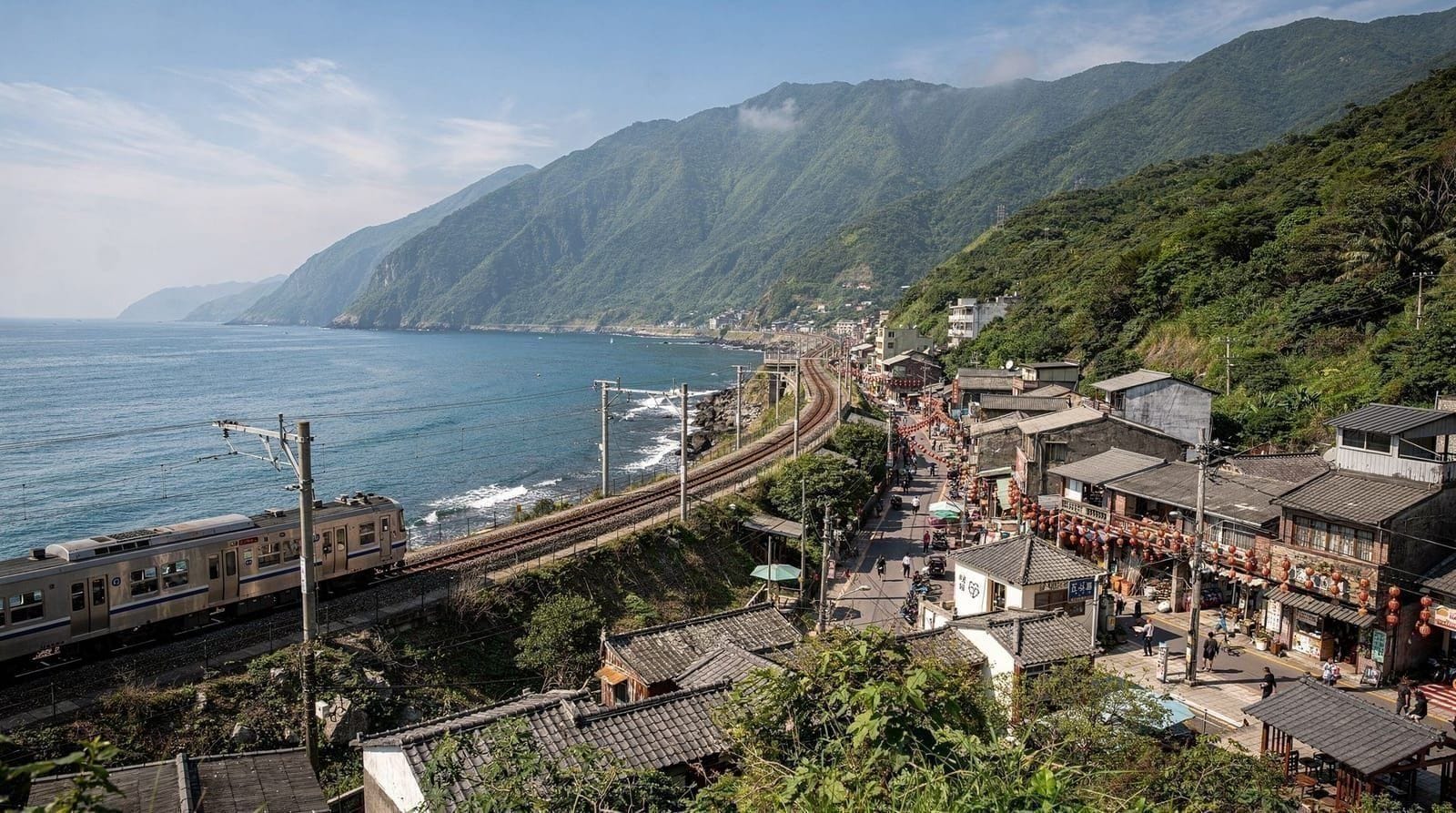
Jiufen vs Shifen — which should you visit (or can you do both)?
Taipei: Yehliu Jiufen Shifen guided tour
Duration: 9 hours
Should I go to Jiufen or Shifen from Taipei?
Do both if you have the time — they're only 30 minutes apart and complement each other well. Jiufen offers atmosphere (tea houses, hillside alleys, lantern-lit evenings) while Shifen delivers activities (sky-lantern releases, waterfall, heritage railway). Most day tours combine them with Yehliu Geopark in a single 9-hour trip.
Two very different experiences
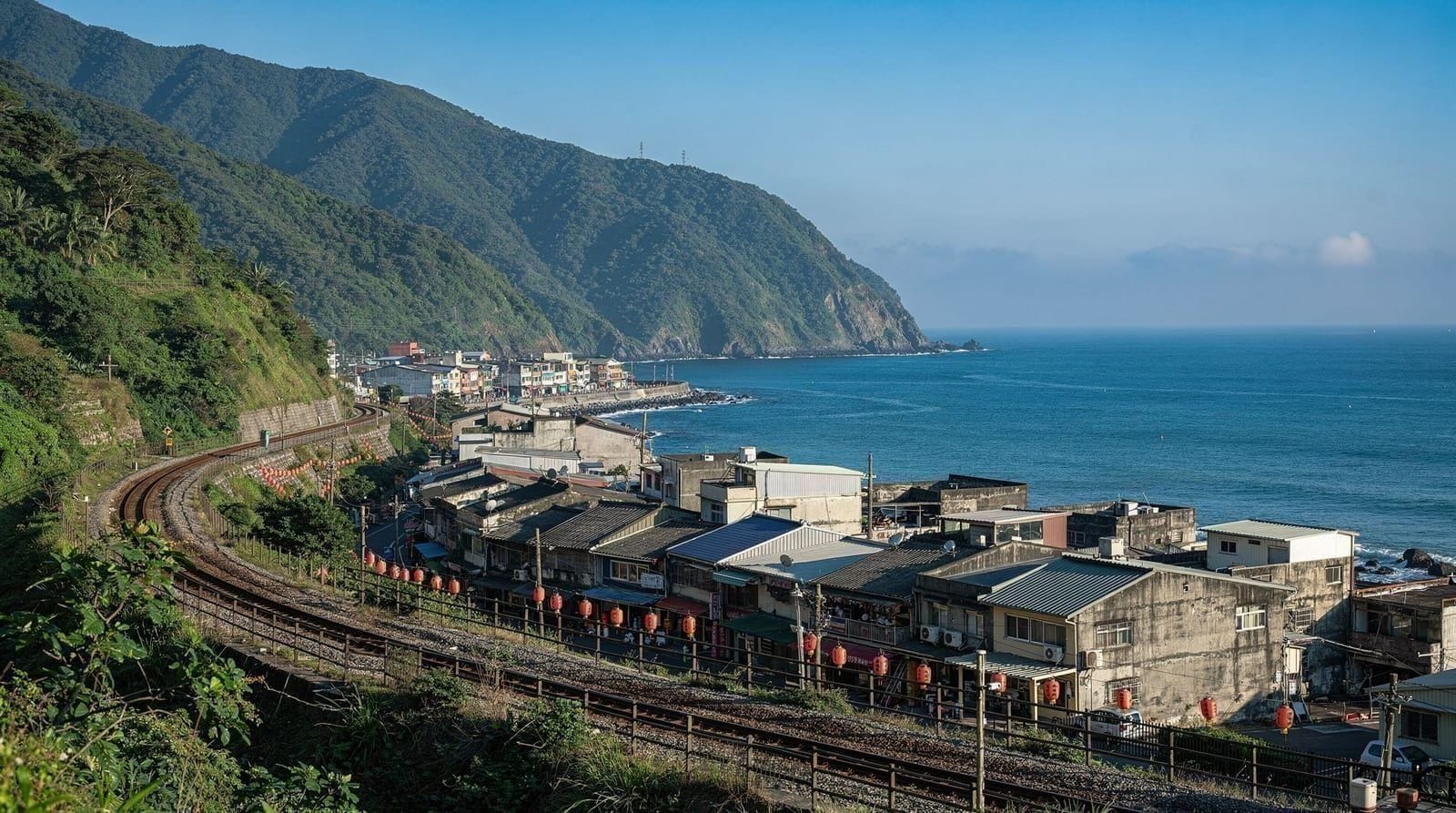
Jiufen and Shifen are often lumped together as “the northern Taiwan towns” and sold as a single day-trip package. They’re close in distance but completely different in character:
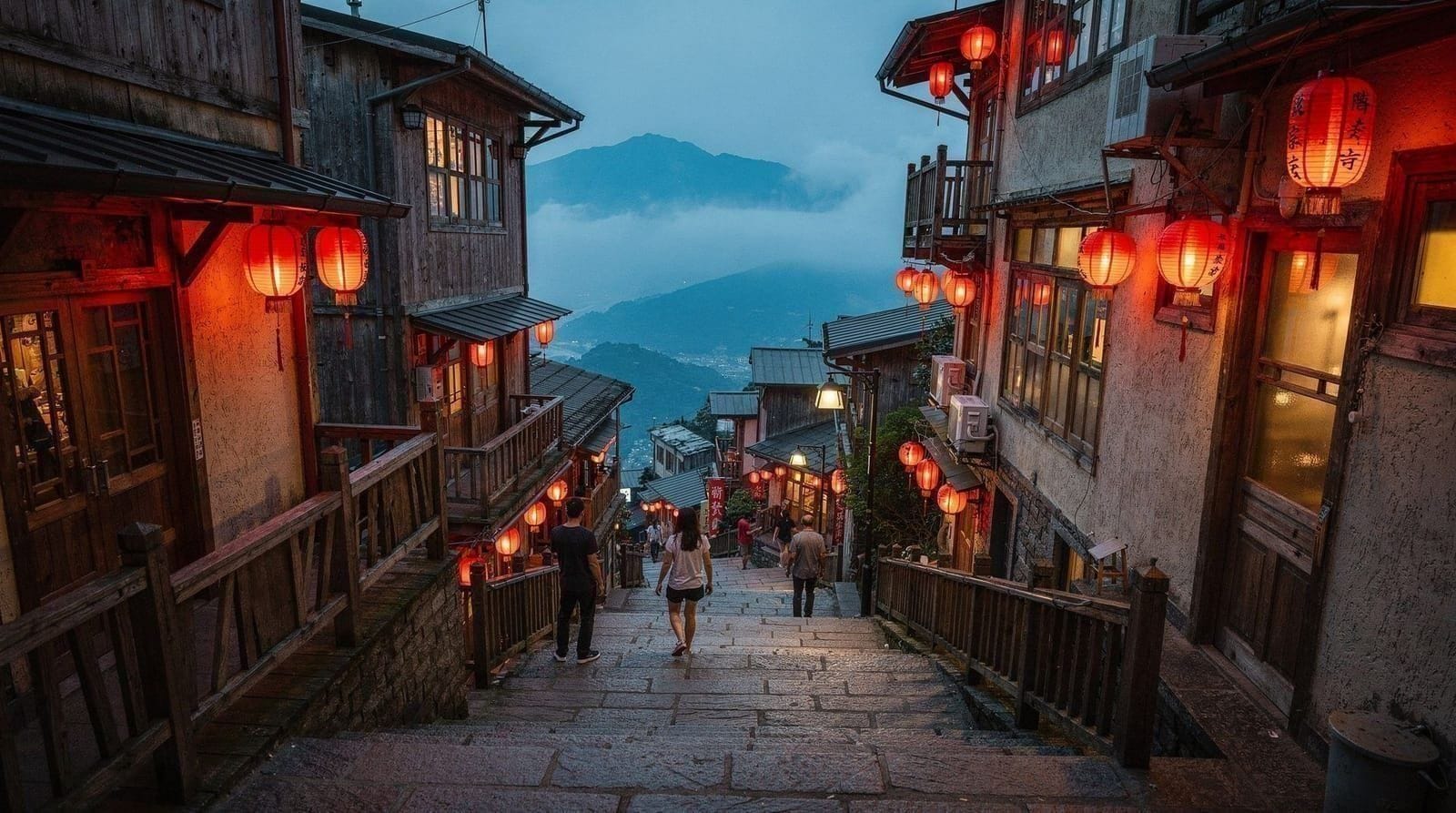
- Jiufen is about atmosphere and history — a hillside gold-rush town with narrow alleys, traditional teahouses, and views over the Pacific. It rewards slow exploration and is best at dusk.
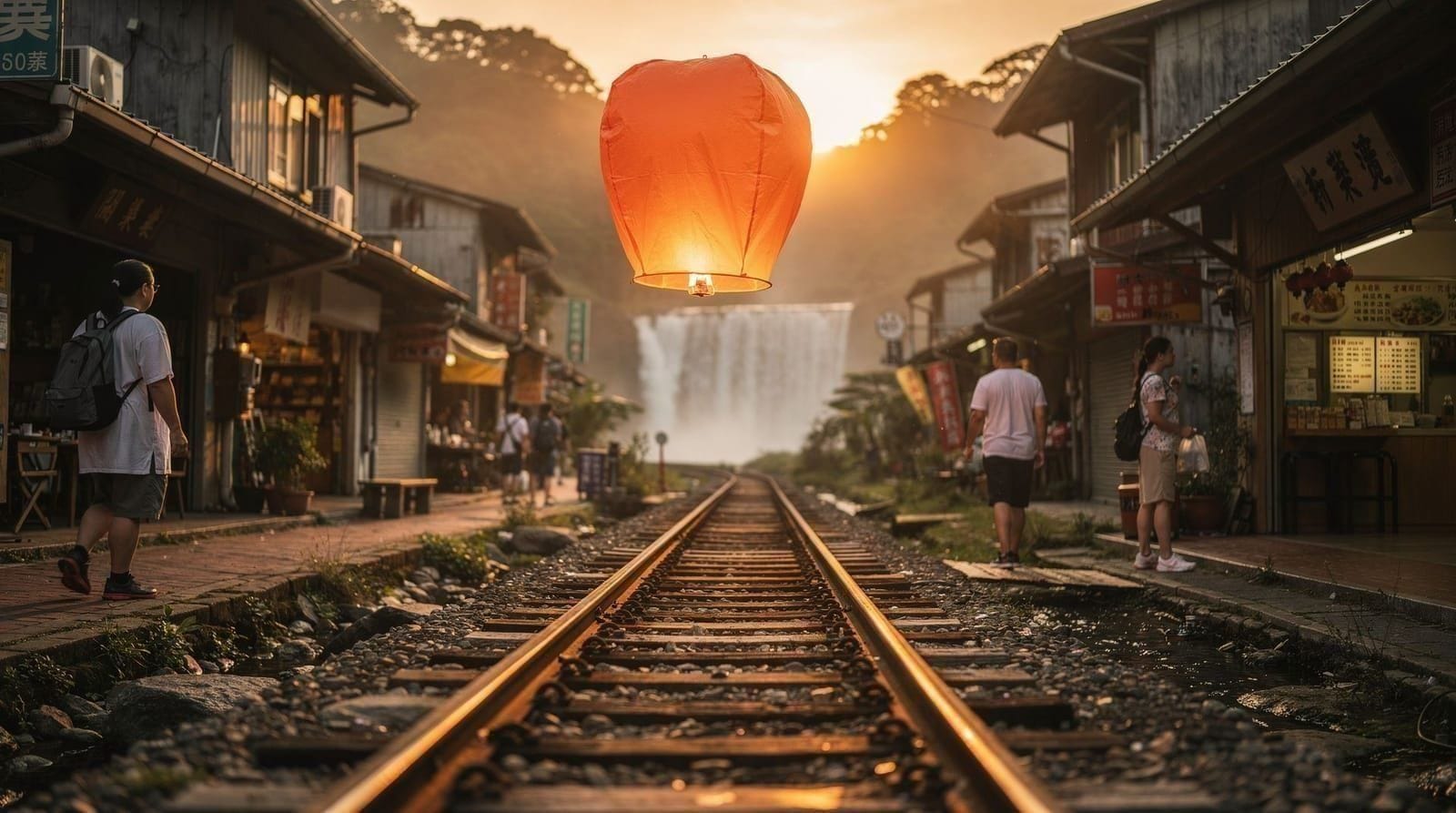
- Shifen is about activity and scenery — sky lanterns on a working railway track, a dramatic waterfall, and a village-scale old street. It’s more kinetic and photogenic.
They’re not interchangeable. Visiting both makes sense. If forced to choose one, the deciding factor is what you’re after: atmosphere versus activities.
| Distance apart | ~25–35 min by taxi/car; no direct bus |
| Combined cost | Around TWD 400–600/person including lanterns |
| Time needed | Full day (9–10 hrs) if doing both |
| Getting there | Both via Ruifang from Taipei Main Station |
| Best time | Jiufen at dusk; Shifen anytime |
For the deep dive on each individually, see the Jiufen day trip guide, the Shifen sky lantern guide, and — if you’re adding a third stop — the Yehliu Geopark guide.
Jiufen: the case for visiting
What makes it special
Jiufen (九份) sits on a steep hillside above the northeast coast, originally built during Taiwan’s gold-rush era in the late 19th and early 20th centuries. When the mines closed, the town fell into relative obscurity until the 1989 film A City of Sadness (侯孝賢) put it back on the map. The Japanese animation connection came later — whether or not it’s accurate, it brought millions of visitors.
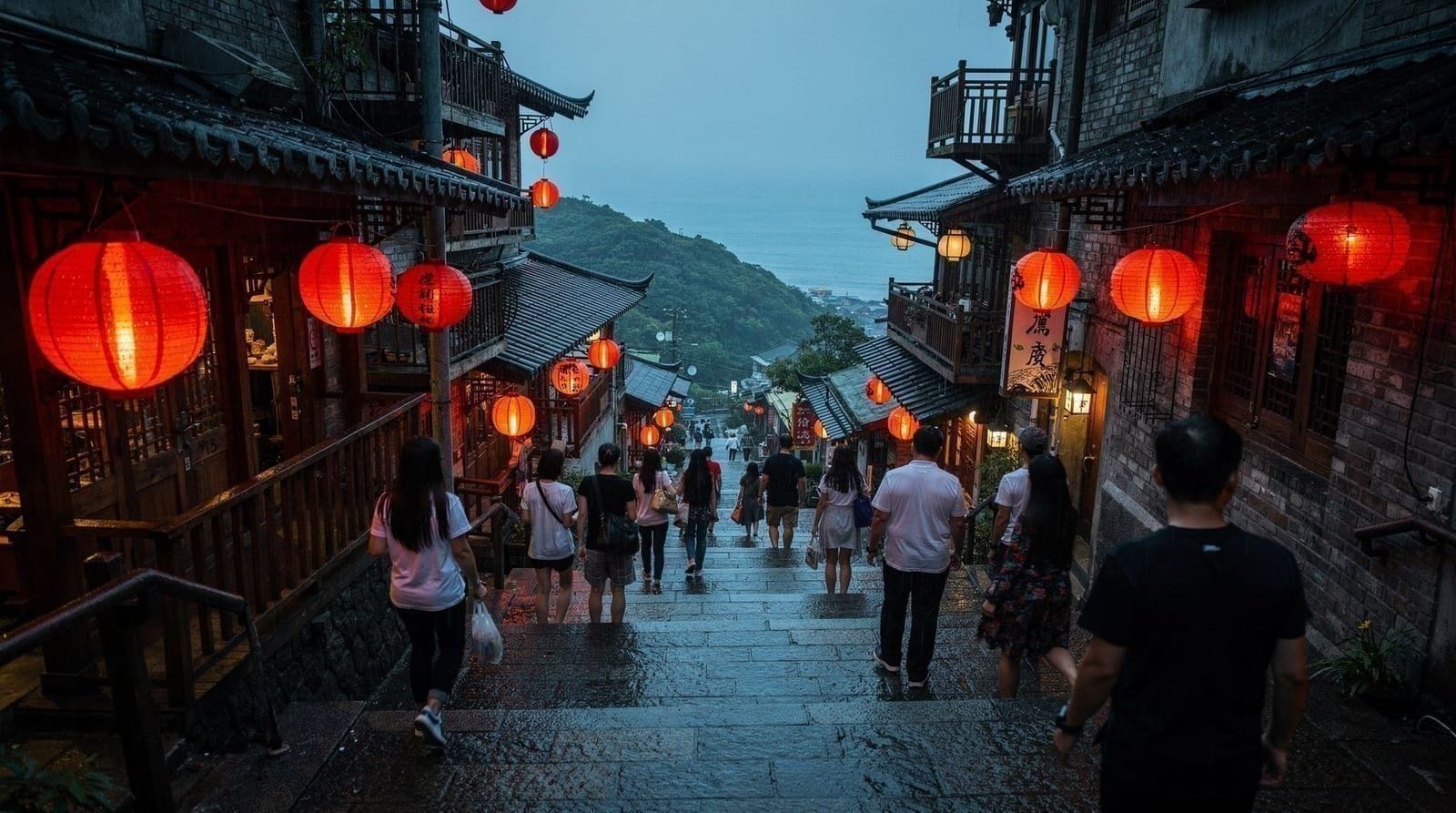
The reason people come back in person is simpler than any film connection: the visual quality of the place at dusk is extraordinary. Red paper lanterns line covered stone staircases. Tea house balconies project over the hillside, framing Pacific views. The mist that regularly settles over the mountain in the late afternoon adds atmosphere that no photograph quite captures.
What to actually do in Jiufen
- Jiufen Old Street (九份老街) — the main commercial lane. High tourist density but unavoidable; good for a quick walk to understand the layout.
- Jishan Street (基山街) — the main lane with most food stalls and souvenir shops. Fish balls, taro balls (芋圓), and red-bean desserts are the standard snacks.
- A-Mei Teahouse area (阿妹茶樓) — the most-photographed staircase. The teahouse itself sells tea in a traditional setting for TWD 200–400 per person. Worth it for the view from the balcony; the tea is decent but not exceptional.
- Shu Qi Teahouse and other traditional teahouses — alternatives to A-Mei that are quieter and less Instagram-driven.
- Jiufen Old Street Lookout — the view from various points at the top of the old street over the coast is the defining Jiufen visual.
- Mining Museum area — the former gold-rush history is documented at Jinguashi (near Jiufen); the Jinguashi Heritage Park and Gold Ecological Park charge small entry fees.
Jiufen timing: critical notes
- Weekday mornings (9–11 am): Quiet, locals doing daily shopping, atmosphere without crowds.
- Weekday late afternoon/evening (4–8 pm): The lanterns light up, mist often rolls in, excellent.
- Weekend afternoons: Very crowded — the alley approaches to A-Mei Teahouse can become single-file queues.
The Jiufen red lanterns are electrically powered and on all evening — this isn’t a temporary seasonal display. Any evening visit captures the visual.
Jiufen gold-rush town guided night tourShifen: the case for visiting
What makes it special
Shifen (十分) sits in the Pingxi Valley along the old Pingxi branch rail line — the same narrow-gauge railway that once transported coal. The main attraction is the sky-lantern release: you buy a paper lantern from street operators, write wishes or names on the sides, light it with a burner, and release it into the sky. Hundreds of these drift over the valley throughout the day.
The secondary attraction is Shifen Waterfall — Taiwan’s widest waterfall, about 1.5 km from the main village. The falls are approximately 20 metres high and 40 metres wide, tucked in forest. The walk along the stream to reach it passes small pools and interesting rock formations.
What to actually do in Shifen
- Sky-lantern release — the standard experience. Operators line the main street near the active railway track; trains pass through the street itself (bystanders step back to let them through — this is real railway infrastructure). Lanterns cost TWD 150–200 for a set of 4 colours, each representing a different wish theme.
- Shifen Waterfall (十分瀑布) — 20-minute walk along a trail from the main street, or pay a small taxi fee. Check the official park information for entry conditions. Popular for photography; less crowded than the lantern area.
- Railway and bridge photography — the combination of the stone arch bridge, railway track, and valley scenery is photogenic.
- Old Street food — smaller selection than Jiufen; good sausages and local snacks at the stalls near the station.
Sky lanterns: the honest picture
Sky lanterns at Shifen are a commercial operation — there’s no cultural ceremony here, just friendly operators with ready-made lanterns. That’s not necessarily a problem; the experience is still enjoyable. A few things worth knowing:
- You write on the lantern with provided paint brushes; operators take a photo for you.
- Pricing is listed clearly; TWD 150–200 is standard and not extortionate.
- The lanterns do float away over the valley; some land in nearby forests (environmental concern — legitimate but widely accepted locally).
- You don’t need to pre-book sky lanterns; operators on the street have ample stock throughout the day.
Comparison table: Jiufen vs Shifen
| Factor | Jiufen | Shifen |
|---|---|---|
| Best time to visit | Late afternoon/evening | Anytime |
| Main attraction | Atmosphere, teahouses, views | Sky lanterns, waterfall |
| Crowds | Very high on weekends | High on weekends |
| Time needed | 2–3 hours minimum | 1.5–2 hours |
| Entry costs | Free (tea houses charge separately) | Free village; ~TWD 200 for lanterns |
| Food options | Good range in Old Street | Limited but adequate |
| Transport from Taipei | 40–60 min by train to Ruifang, then bus | 50–70 min by train to Shifen Station |
| Covered rain option | Some covered alleys | Limited cover |
Combining both: the standard day-trip route
The vast majority of visitors do Jiufen and Shifen together, typically combined with Yehliu Geopark to make a full northern-Taiwan circuit. The classic order:
- Morning: Yehliu Geopark (coastal rock formations; less crowded in the morning before tour buses arrive around 10 am).
- Midday: Shifen (sky lanterns, waterfall walk; arrives when light is good).
- Afternoon/evening: Jiufen (arrive 3–4 pm; stay for the lanterns at dusk).
This order has two advantages: Jiufen is visited in optimal (late afternoon/evening) light, and Yehliu is done before it crowds.
Jiufen, Shifen and Yehliu guided day tour from TaipeiTour vs DIY for this route
This route is genuinely better by guided tour for most visitors. The transfer logistics between Yehliu, Shifen, and Jiufen are complicated without a car — public transport requires multiple changes and significantly extends travel times. A guided tour handles all transfers, gives you a local context for each site, and typically returns you to central Taipei hotels in the evening.
For a detailed tour vs. independent travel comparison, see our tour vs DIY day trips guide.
If you can only choose one
Choose Jiufen if: you value atmosphere over activities, prefer evening sightseeing, and are willing to manage the crowds in exchange for one of Taiwan’s most distinctive visual experiences.
Choose Shifen if: you want a specific activity (sky lanterns), you have children (the lanterns are a hit), or you prefer outdoor/waterfall scenery to covered alley browsing.
Both choices are valid. Most day-trip packages cover both; the marginal cost of adding one to the other is low.
If you’re traveling with young children, Shifen tends to be the easier single choice — the sky-lantern activity gives kids something hands-on to do, the village is flatter and easier to navigate with a stroller, and the waterfall walk is a manageable length. Jiufen’s steep staircases and weekend crowd density are harder going with a tired toddler, though an early weekday morning visit softens both issues considerably.
If you’re a photographer prioritising one shot, Jiufen wins clearly — the dusk lantern-lit staircase view is the more distinctive, widely sought composition, and no equivalent exists at Shifen. Shifen’s photography is pleasant (the railway-and-lantern combination, the waterfall) but less singular.
How to pace each town once you arrive
Jiufen rewards a loose plan. Walk the main lane once to get your bearings, then step off it: the side staircases and quieter corners are where the town feels least staged. Leave room for a teahouse stop, because sitting down with a pot of tea is the best way to let the crowds pass and wait for the light to change. If tea is the part that appeals to you, the Taipei tea culture guide explains what to expect, and Jiufen teahouses vs Maokong helps you decide where to drink it.
Shifen works the other way round: it is compact, so a loose plan is not needed. Decide early whether the waterfall is on your list, release your lantern first while the street is calmer, and walk out to the falls afterwards. Keeping the order simple avoids doubling back along the tracks when trains and visitors share the same narrow space.
Whichever town you are in, wear shoes with real grip. Jiufen’s stone steps and Shifen’s trail to the falls both turn slippery in wet weather, and rain is common enough in northern Taiwan that it is worth planning for. The Taipei in the rain post covers how to adapt, and Taipei typhoon season matters if you travel in the summer and autumn months.
Choosing by season and travel style
The right pick also depends on when and how you travel. Visitors who like to linger into the evening usually get more from Jiufen, and the Jiufen at night post describes what the town feels like after the day-trippers leave. Those who want the lantern experience in a festival setting can read about Pingxi sky lantern festival dates, since the wider valley is the heart of that tradition.
If you would rather see more than two stops without rushing, the Pingxi line day trip shows how Shifen fits among its neighbouring stations, and the north coast day trip itinerary lays out a ready-made day that includes the coast. For a wider view of your options beyond these two towns, browse the best day trips from Taipei.
Travellers on a tight budget can lean on the free parts of both towns: wandering the lanes, watching the railway, and taking in the views cost nothing. The Taipei on a budget guide shows how to stretch a day trip without missing the highlights.
Getting there independently
To Jiufen
From Taipei Main Station: Taiwan Railways Administration (TRA) train to Ruifang Station (~42–55 minutes, TWD 57–80). From Ruifang, take Bus 788 or 965 to Jiufen (20 minutes, TWD 19–25). Buses run frequently on weekends during peak season.
Taxis from Ruifang to Jiufen: approximately TWD 200–250 (fixed rate at the taxi stand).
See our transport guide from Taipei to Jiufen.
To Shifen
From Taipei, take the Pingxi Line: TRA to Ruifang, then change to the local Pingxi branch line to Shifen Station. Total journey 60–80 minutes from Taipei Main Station. This rail journey through the valley is pleasant in itself.
Alternatively, TRA to Shifen Station direct via Keelung on some services. Check the TRA app or website for current schedules.
For the wider destination context, see Jiufen and Shifen.
What first-time visitors get wrong
The most common mistake is treating this as a half-day add-on to something else. Both towns reward unhurried time — Jiufen especially, since its best light is at dusk, which means an early-afternoon arrival followed by rushing back for dinner reservations undersells it. The second most common mistake is skipping Shifen Waterfall because it’s a 20-minute walk beyond the lantern street; it’s the quieter, less commercial half of the Shifen visit and worth the extra time.
Frequently asked questions about Jiufen vs Shifen — which should you visit (or can you do both)?
How far is Jiufen from Shifen?
Can I do Jiufen and Shifen in one day?
Which is more crowded, Jiufen or Shifen?
Is Jiufen the town from Spirited Away?
Are the sky lanterns at Shifen worth it?
Is Jiufen overrated?
What are the entry fees at Jiufen and Shifen?
Top experiences
Bookable activities with verified prices and instant confirmation on GetYourGuide.