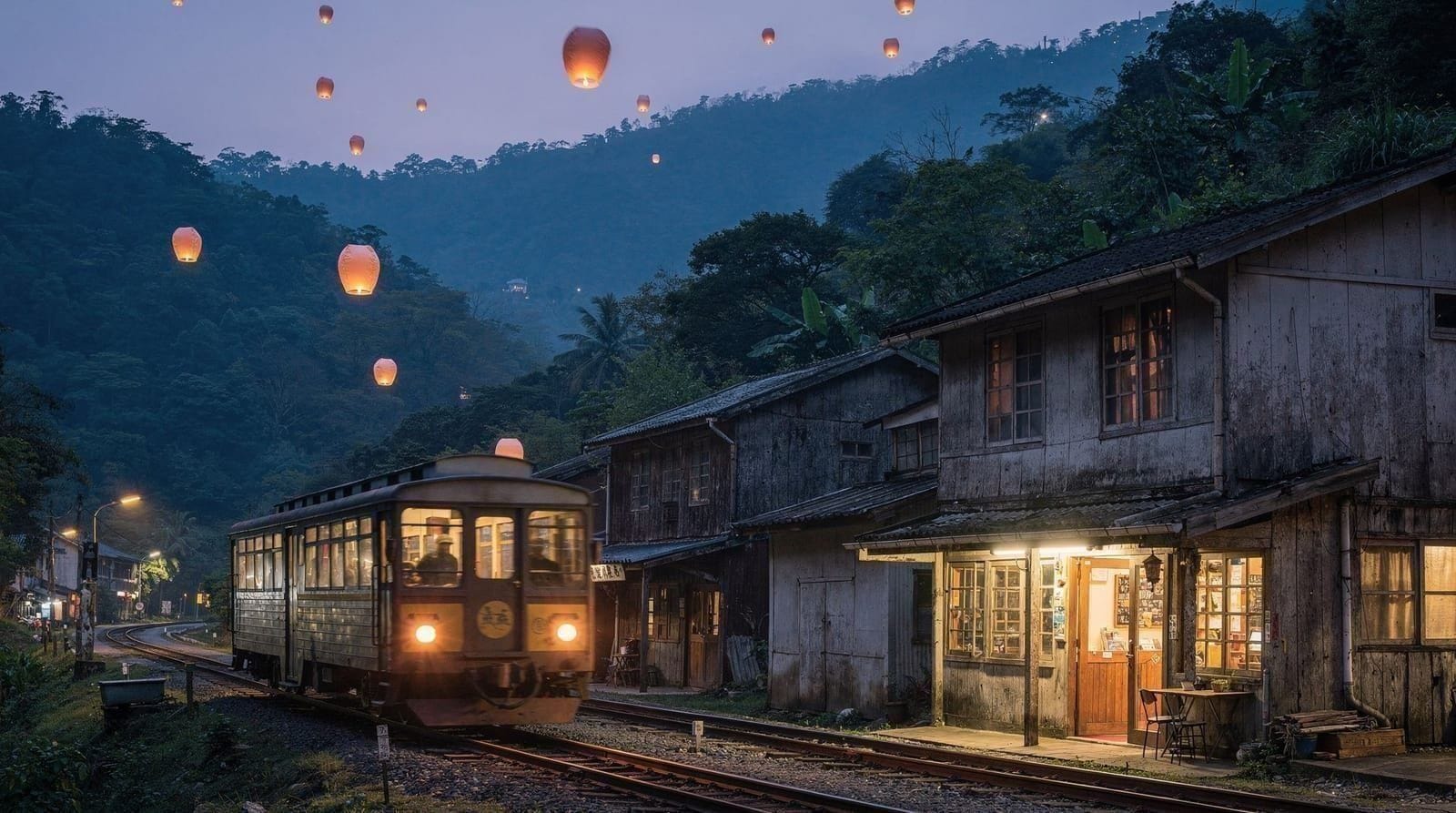
Jiufen day trip guide — transport, what to see, and when to visit
Taipei: Yehliu Jiufen Shifen guided tour
Duration: 9 hours
How do I get to Jiufen from Taipei?
Take the TRA train from Taipei Main Station to Ruifang (35–40 min, NT$49–61), then Bus 788 or a shared taxi 15 min uphill to Jiufen Old Street. Total door-to-door around 60–75 minutes. Trains run every 20–30 minutes throughout the day.
What Jiufen actually is
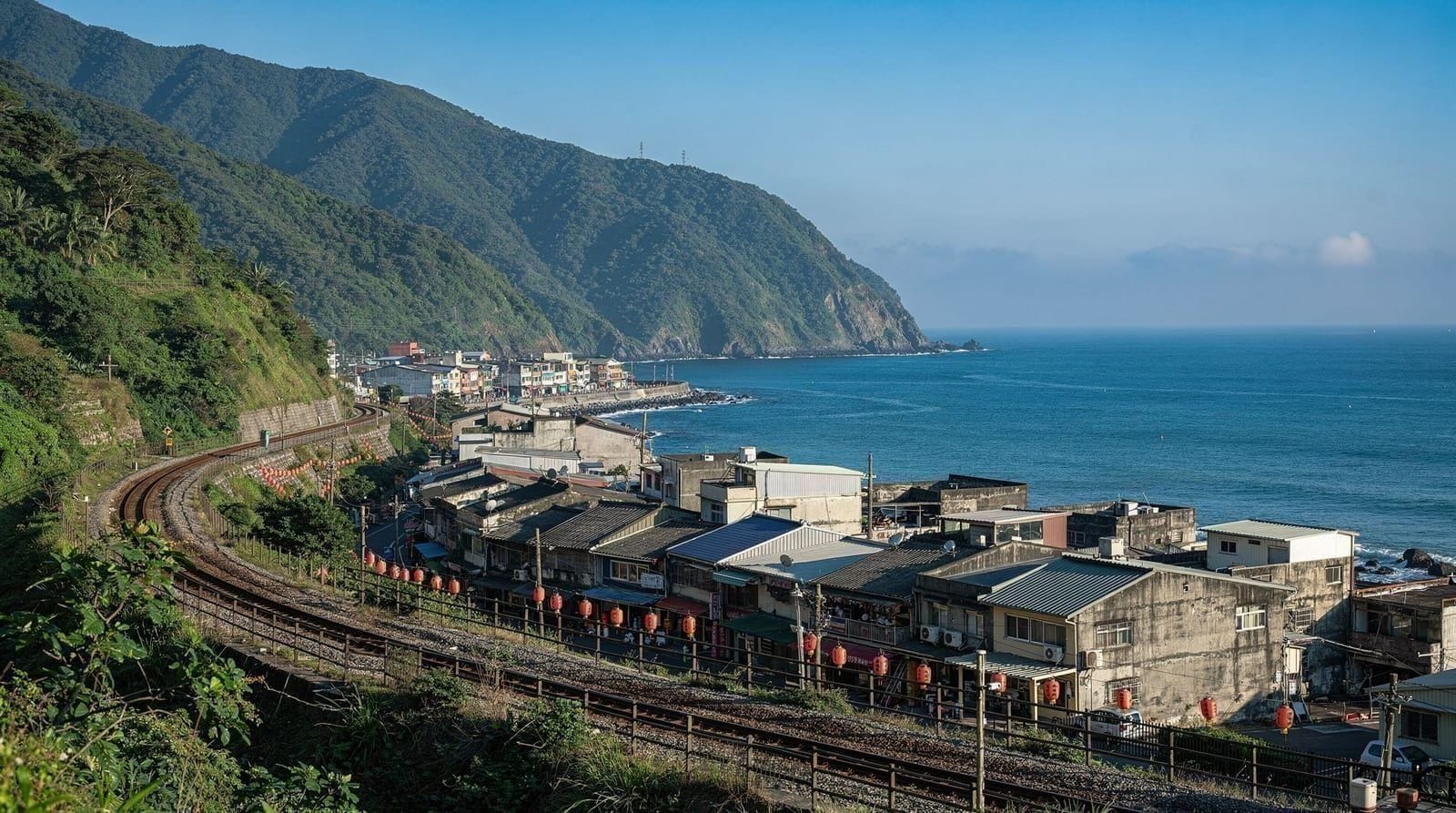
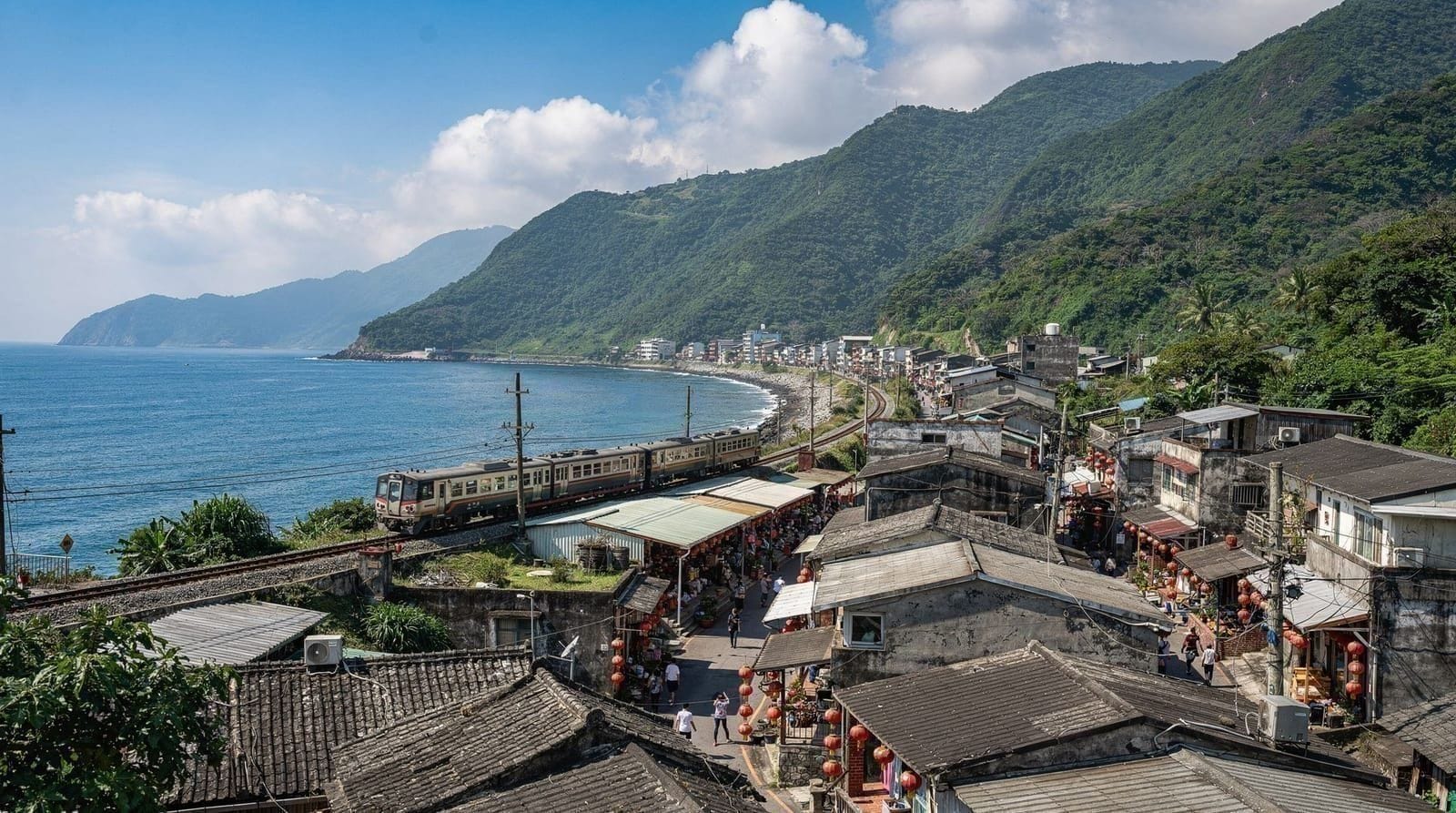
Jiufen (also spelled Jioufen or Jiofen) is a former gold and copper mining town on a steep hillside above the Pacific coast, about 40 kilometres northeast of Taipei. Mining ceased in the 1970s, and the town has since reinvented itself around tourism — partly because the alleyway aesthetic of its sloping lanes and tea rooms bears a visual resemblance to settings in animated films, which launched a wave of Japanese and international visitors from the 1990s onward.
The honest version: Jiufen is very photogenic, has genuinely good traditional food, and the red lanterns at dusk are legitimately beautiful. It is also one of the most-visited day-trip destinations in Taiwan and can be hectic on weekend afternoons. Go on a weekday or time your visit to avoid peak congestion.
| Where | Ruifang, New Taipei City, ~40km northeast of Taipei |
| Cost | Around NT$180–250 return by train + bus |
| Time needed | 2–4 hours, half-day if combined with Shifen |
| Getting there | TRA train to Ruifang, then Bus 788 uphill |
| Best time | Weekday morning (before 11:00) or dusk (17:00–20:00) |
Our Jiufen destination page has more on the town’s atmosphere and surroundings if you want the wider picture beyond this transport-and-timing guide.
Getting there: the standard route
Train from Taipei Main Station to Ruifang
Trains run from Taipei Main Station via the Northern line to Ruifang Station. The journey takes 35–40 minutes and costs NT$49 on a regional train (puyma) or NT$61 on an express (tze-chiang). Trains depart roughly every 20–30 minutes from platforms 8–9 (underground level). Ruifang is a clear stop — you cannot accidentally miss it.
From Ruifang to Jiufen
Exit Ruifang Station and turn right. Bus 788 (toward Jiufen Old Street/Jinguashi) departs from the stop on your right. The fare is NT$15–25 by EasyCard; the journey takes about 15 minutes uphill. Buses run every 10–20 minutes during the day.
Alternatively, licensed taxis wait at the station exit and charge NT$100–150 fixed rate to Jiufen. Convenient if you are with a group or have luggage. Negotiate before getting in, or use the metered rate.
Return: Last bus from Jiufen Old Street to Ruifang departs around 22:30 most evenings (confirm the schedule at the stop). Ruifang to Taipei trains run until around 23:00.
If you want a guided day trip
Group day tours from Taipei covering Jiufen (often combined with Yehliu and Shifen) are widely available and cost NT$900–1,800 per person. These include hotel pickup, a guide, and transport to all three sites. They make sense if you want a no-planning option or are combining three sites in a single day:
Yehliu, Jiufen and Shifen guided group day tourFor a private tour focused on Jiufen and Shifen specifically:
Jiufen and Shifen private day tourIf you would rather compare the two lantern-town options before committing, Jiufen vs Shifen lays out the trade-offs, and the Pingxi Line day trip covers the branch railway that connects Ruifang to Shifen. Paying with an EasyCard keeps the bus and train legs simple, and our EasyCard guide explains how it works.
What to see and do
Jishan Street (the old street)
This is the main tourist artery — a narrow stone staircase street lined with food stalls, souvenir shops, and small restaurants. It runs from near the bus stop up toward the key viewpoints. On weekends it can be packed shoulder-to-shoulder; on weekday mornings it is manageable. Most food stalls on this street are legitimate local operators, not tourist traps — prices are fair (NT$40–120 for most items).
The lantern staircase viewpoint
About halfway up Jishan Street, a stone staircase descends left toward the ocean-view teahouses. This is the most photographed spot in Jiufen: a steep alley lined with red lanterns, viewed from above with the dark Pacific Ocean as a backdrop. For the classic shot without people, arrive before 09:30 or after 19:00 when crowds thin.
Upper streets and Shuqi Road
Above the main tourist alley, Shuqi Road and the parallel lanes are quieter, more residential, and more atmospheric. These streets have local residents going about their days alongside a smaller number of visitors. Several genuinely good teahouses with views sit along here — smaller, less famous, and often better for an actual tea experience.
Gold mining heritage at Jinguashi
A 15-minute bus ride or 30-minute walk from Jiufen toward the coast brings you to Jinguashi, the adjacent former mining complex. The Gold Ecological Park (NT$50 entry) covers the history of gold and copper mining in the area and includes a walk-in mine tunnel. The Crown Prince Chalet ruins on the hillside above Jinguashi are photogenic and free. If you have an extra 2–3 hours and have already seen Jiufen, Jinguashi adds genuine historical depth.
What to eat
Taro balls (yuyuan/芋圓): The signature Jiufen snack. Sweet potato and taro balls served warm or cold in a sweet ginger or red bean soup. NT$50–80 per portion. Multiple stalls compete on the main street; quality is fairly uniform. Ah-Zhu Peanut and Taro Balls (阿珠) near the top of Jishan Street is reliably good.
Peanut ice cream roll (花生捲冰淇淋): A thin crispy peanut-flour crepe wrapped around vanilla ice cream and coriander (ask for no coriander if you prefer). An unusual combination that works. NT$50–60.
Fishball soup: Light broth with handmade fishballs from several stalls on the main street. NT$40–60 per bowl.
Grilled squid: Whole squid on skewers, grilled to order. NT$80–120. Better toward the upper end of the street where there is more space and airflow.
Oyster vermicelli (蚵仔麵線): Small oysters and pork intestines in a thick starch broth with black vinegar. An acquired taste but genuinely traditional. NT$50–70.
What to skip: the sit-down restaurants with English menus near the bus stop area charge double the street-stall prices for similar food.
Teahouses: the real experience vs the backdrop
The most famous building in Jiufen is a large multi-level wooden structure that overlooks the lantern staircase — it is frequently photographed and widely assumed to be the “best” teahouse. It is primarily a backdrop; the tea service inside is adequate but overpriced (NT$300–500+ per person for a tea set) and the tables by the view fill quickly.
Better approach: walk 5–10 minutes uphill from the main alley to one of the smaller teahouses on Shuqi Road. A pot of oolong or baozhong costs NT$150–250 and comes with complimentary small snacks. The service is more personal and the setting is quieter.
If you want a structured red lantern experience with cultural context:
Jiufen red lantern blessing experienceIf tea is the main reason you are coming, the Jiufen teahouses vs Maokong comparison helps you decide where to spend an afternoon, and the wider Taipei tea culture guide gives background on what you are tasting.
Practical timing
Arrival: 09:30–10:30 is ideal for low crowds. The main street is quiet, food stalls are setting up, and the upper viewpoints are clear.
Midday–afternoon (12:00–17:00): The most crowded period, especially on weekends. If you arrive in this window, go directly up to the upper streets and skip the main artery until early evening.
Dusk and evening (17:00–20:00): The red lanterns illuminate and the light is spectacular. Many visitors find this the best time despite more people — the atmosphere is at its peak when the sun drops below the ridge.
Combining with Shifen
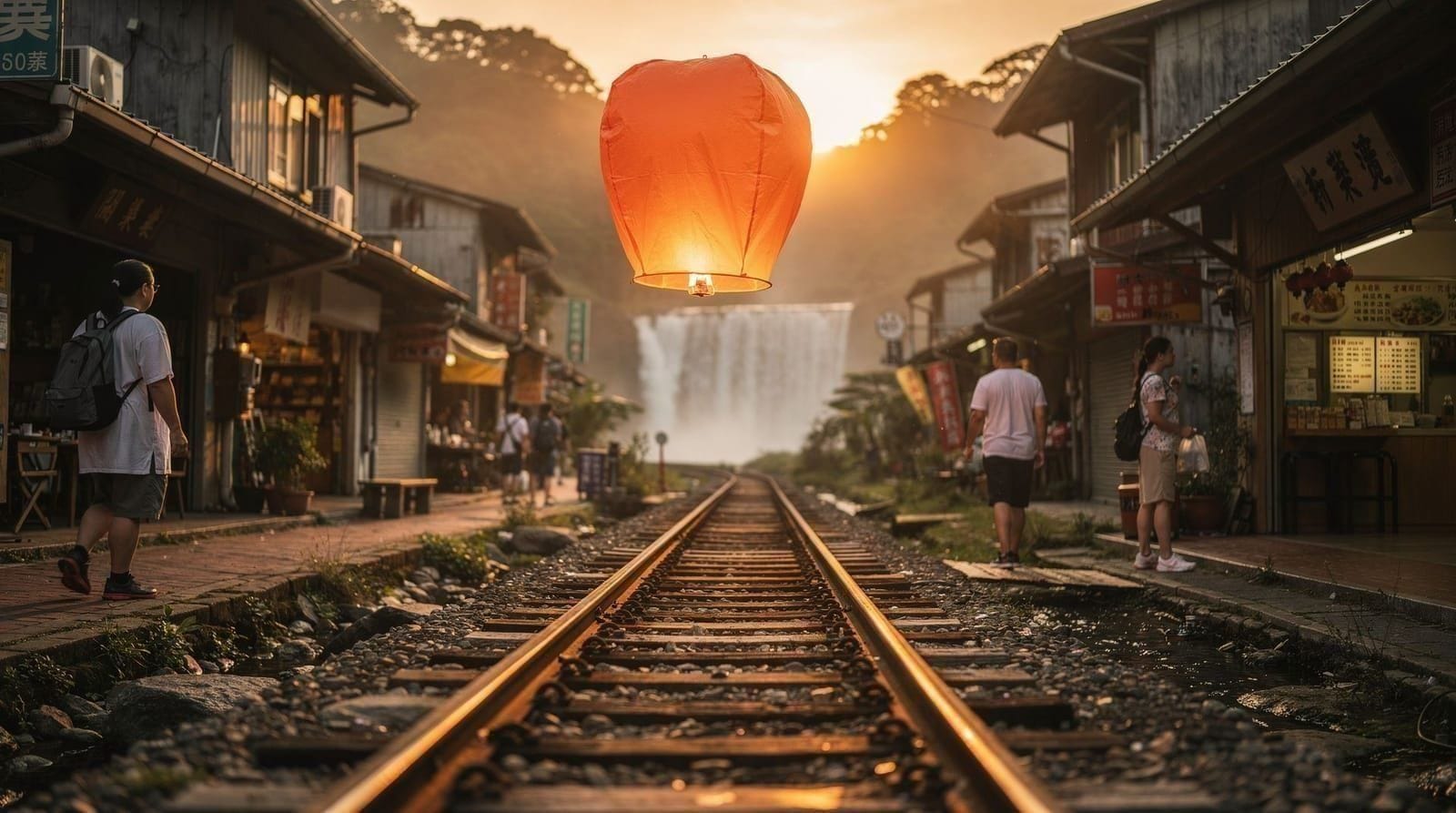
The easiest combination: arrive at Ruifang by train, take the bus directly to Jiufen for morning and lunch (09:30–13:00), return to Ruifang by bus (about 20 minutes), then take the Pingxi Line local train to Shifen (about 30 minutes, NT$15). Do sky lanterns at Shifen and Shifen Waterfall in the afternoon, return to Ruifang by 17:00, and take the TRA train back to Taipei.
Total transport cost: approximately NT$180–250 per person return. Total time out of Taipei: 10 hours for a full day.
See Shifen sky lantern guide for the Shifen component. For the three-site north coast loop, see north coast loop guide.
For night tour options that combine Jiufen’s evening lanterns with a Shifen sky lantern and a night market:
Jiufen night view, Shifen and Raohe market tourWhat most guides get wrong
The “Spirited Away” comparison: Jiufen is consistently described online as “the inspiration for Spirited Away.” The director has stated the film was not based on Jiufen. The visual resemblance is real; the direct inspiration claim is not well-supported. The town is worth visiting regardless.
Overestimating the time needed: Two to three hours is enough for most visitors. You do not need a full day here unless you are a slow traveller, a serious food person, or you want to stay for sunset and evening.
Going only in the afternoon on weekends: Weekend afternoons are the single worst time to visit. Either go earlier, go on a weekday, or go in the evening.
Skipping Jiufen because it’s “too touristy”: This criticism has some truth to it during peak hours, but it undersells a genuinely worthwhile stop. The fix is timing, not avoidance — the same alleys that feel like a crowded market at 2pm on Saturday feel completely different at 9:30am on a Tuesday. Judge the town by its quiet hours, not its busiest ones.
Assuming rain ruins the visit: Light rain actually suits Jiufen well — the wet stone steps reflect the lantern light, and crowds thin noticeably. Bring a compact umbrella (sold cheaply at convenience stores near Ruifang Station if you forget one) rather than cancelling.
Jiufen’s history: gold, war, and reinvention
Understanding Jiufen’s history makes the visit more resonant. The name “Jiufen” (九份, literally “nine portions”) dates to the Qing Dynasty, when the village had nine households — deliveries were always made in nine portions, giving the place its name.
Gold was discovered on the hillsides in the 1890s, and the mining boom that followed transformed Jiufen into a busy mountain town with restaurants, teahouses, and a red-light district serving the mine workers. The Japanese colonial government consolidated mining operations after 1895 under the Taiwan Gold Mining Company; production peaked in the 1930s and 1940s.
After World War II the Kuomintang government continued operations for a time, but gold reserves diminished and the mine closed in 1971. The population dropped sharply as residents left for Taipei and other cities. By the 1980s Jiufen was an overlooked former boomtown.
A 1989 film — “A City of Sadness” (悲情城市) by director Hou Hsiao-hsien, which won the Golden Lion at Venice — used Jiufen’s preserved Japanese-era architecture as its setting. The film brought visitors; the visitors brought cafés and souvenir shops; the cafés and shops attracted more visitors. The reinvention was underway.
The visual comparison to certain animated films came later and is partly valid (the aesthetic of steep alleyways, red lanterns, and teahouses in mountain settings is genuinely similar) and partly an internet-driven myth that has become more prominent than the actual history. The Hou Hsiao-hsien film and its connection to real events — the 228 Incident massacre of 1947 — is the more important cultural context.
The upper village: what most visitors miss
Most visitors stick to Jishan Street (the lower old street) and the famous teahouse viewpoint. The upper portions of Jiufen, accessible by continuing uphill from the viewpoint, are worth exploring:
Shuqi Road and the ridge walk: Continuing past the teahouse district, Shuqi Road loops around the hillside with views alternating between the Pacific Ocean and the valley toward Keelung. The road is narrow, residential, and quiet except on peak weekend days. Local dogs sleep in doorways; laundry hangs across lanes; small vegetable gardens occupy corners. The contrast with the tourist density below is significant.
Jiufen Old Street’s upper extension: The stone steps continue above the main tourist zone into a quieter section of alleyways. Several small family-run shops here sell incense, traditional medicine, and local agricultural products rather than souvenirs. Less photogenic in the Instagram sense; more genuinely interesting.
Jinguashi and the Gold Ecological Park: 15–20 minutes’ walk or a short bus ride from Jiufen (toward the coast) brings you to Jinguashi — the companion mining town focused on copper production. The Gold Ecological Park (NT$50 entry) has a walk-in mine tunnel, preserved mine infrastructure, and the Crown Prince Chalet ruins on the hill above (the Japanese royal family’s holiday residence, now atmospheric ruins, free to approach). Many visitors to Jiufen are unaware that Jinguashi exists — adding 2 hours here makes the day significantly more historically interesting.
Accommodation in Jiufen: staying overnight
Most visitors do Jiufen as a day trip, but staying overnight fundamentally changes the experience. After the day-trippers leave (around 19:00–20:00), Jiufen becomes genuinely quiet. The lanterns glow without crowds. Local restaurants serve evening meals to a handful of guests rather than tour groups.
Several small guesthouses and B&Bs operate in Jiufen, typically in converted traditional houses with views. Rates range from NT$1,500–3,500 per night. Booking essential on weekends; availability is better midweek. The trade-off is that Jiufen has limited room supply and no large hotels — the experience is intimate but options are constrained.
Practically, an overnight only makes sense if you also want the Jinguashi mining heritage or a slower ridge walk on Shuqi Road the next morning before the day-trip crowds arrive around 10:00. If your itinerary is otherwise tight, the day-trip version described above captures the core experience without sacrificing a night elsewhere on your trip.
For a full overview of how Jiufen fits in a Taipei itinerary, see best day trips from Taipei. For transport basics, see Taipei MRT guide and Taipei to Jiufen transport guide. For the destinations themselves: Jiufen, Keelung.
Rain, typhoons and winter chill can all change how a visit feels, so it is worth reading about Taipei typhoon season and the best time to visit Taipei before fixing your date. For an overnight-free loop that strings the coast together, the north coast day trip itinerary shows one way to do it, and tour vs DIY day trips goes deeper on the choice below. For after dark, the blog post on Jiufen at night is a good companion read.
DIY vs guided tour: which makes more sense
| DIY (train + bus) | Guided day tour | |
|---|---|---|
| Cost | ~NT$180–250 per person | NT$900–1,800 per person |
| Flexibility | Full control of timing, can stay for dusk | Fixed schedule, usually returns by early evening |
| Covers Yehliu too? | Only with a separate trip | Often included in the same day |
| Best for | Solo/couple travelers comfortable with transfers | Families, first-time visitors, limited time |
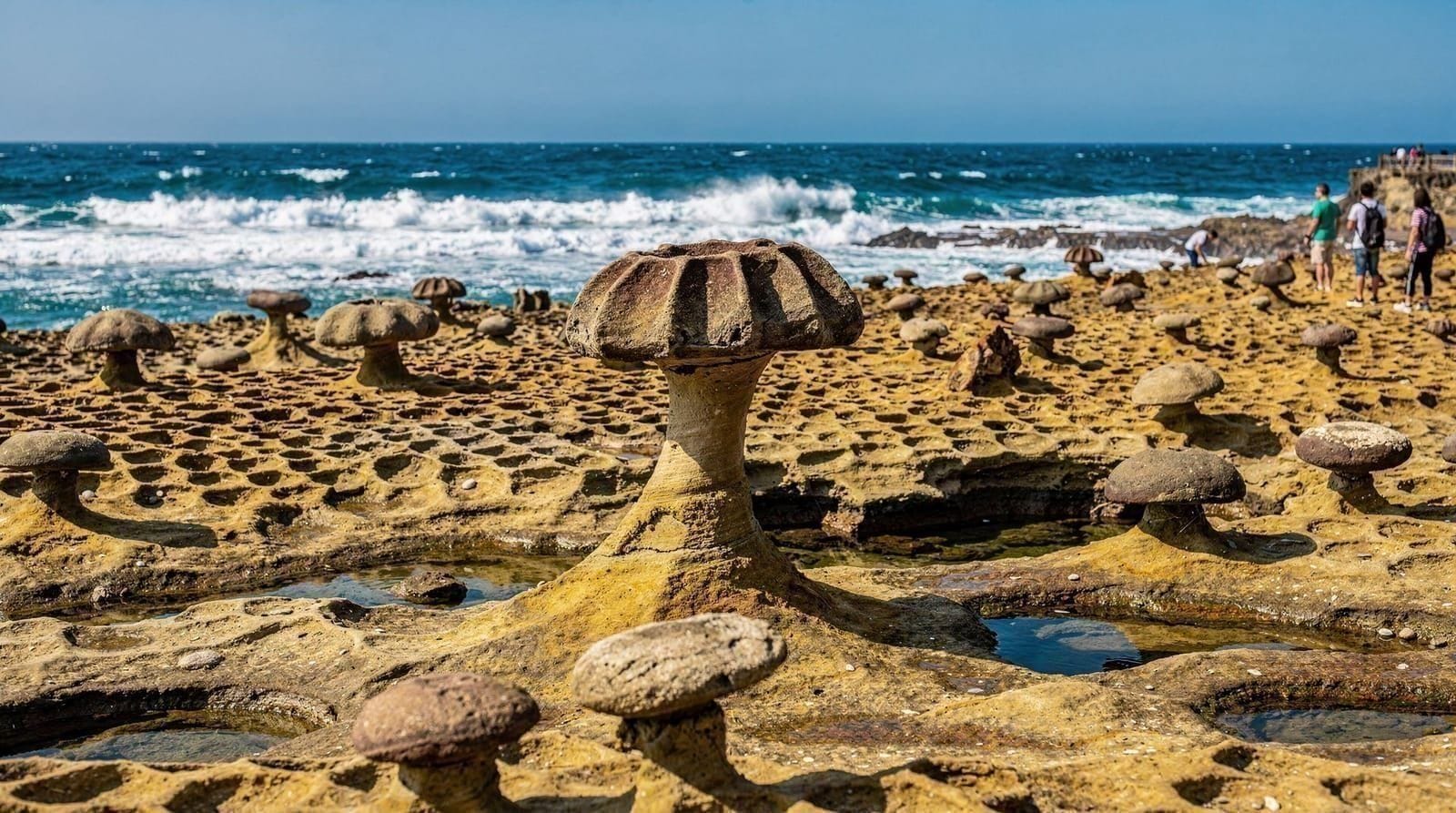
If Yehliu Geopark is on your list and you only have one day, a guided tour is usually the more efficient choice — it’s genuinely awkward to reach independently. If Jiufen and Shifen are enough, DIY is cheaper and gives you control over catching the sunset light.
Frequently asked questions about Jiufen day trip guide — transport, what to see, and when to visit
Is Jiufen worth visiting despite the crowds?
How long do you need in Jiufen?
What should I eat in Jiufen?
Which teahouse in Jiufen is worth visiting?
Can I combine Jiufen and Shifen in one day?
Is Jiufen safe at night?
Top experiences
Bookable activities with verified prices and instant confirmation on GetYourGuide.