Pingxi Sky Lantern Festival dates, what to expect, and how to plan your visit
Two different lantern experiences: know which one you want
Before getting into dates, it’s worth separating two things that often get conflated in travel content: the Pingxi Sky Lantern Festival (a specific annual event, usually in February) and the year-round lantern releases that happen daily at Shifen along the railway tracks.
| Where | Pingxi and Shifen, Pingxi Branch Line |
| Festival date (2026) | March 3, peak window Feb 28–Mar 3 |
| Cost | around NT$150–200 per lantern, any day |
| Getting there | TRA to Ruifang, then Pingxi Branch Line |
| Best for calm release | weekday afternoons, outside festival dates |
If you want the mass spectacle — thousands of lanterns rising simultaneously, crowds of 10,000+, coordinated releases at dusk — you’re looking for the festival, and timing matters.
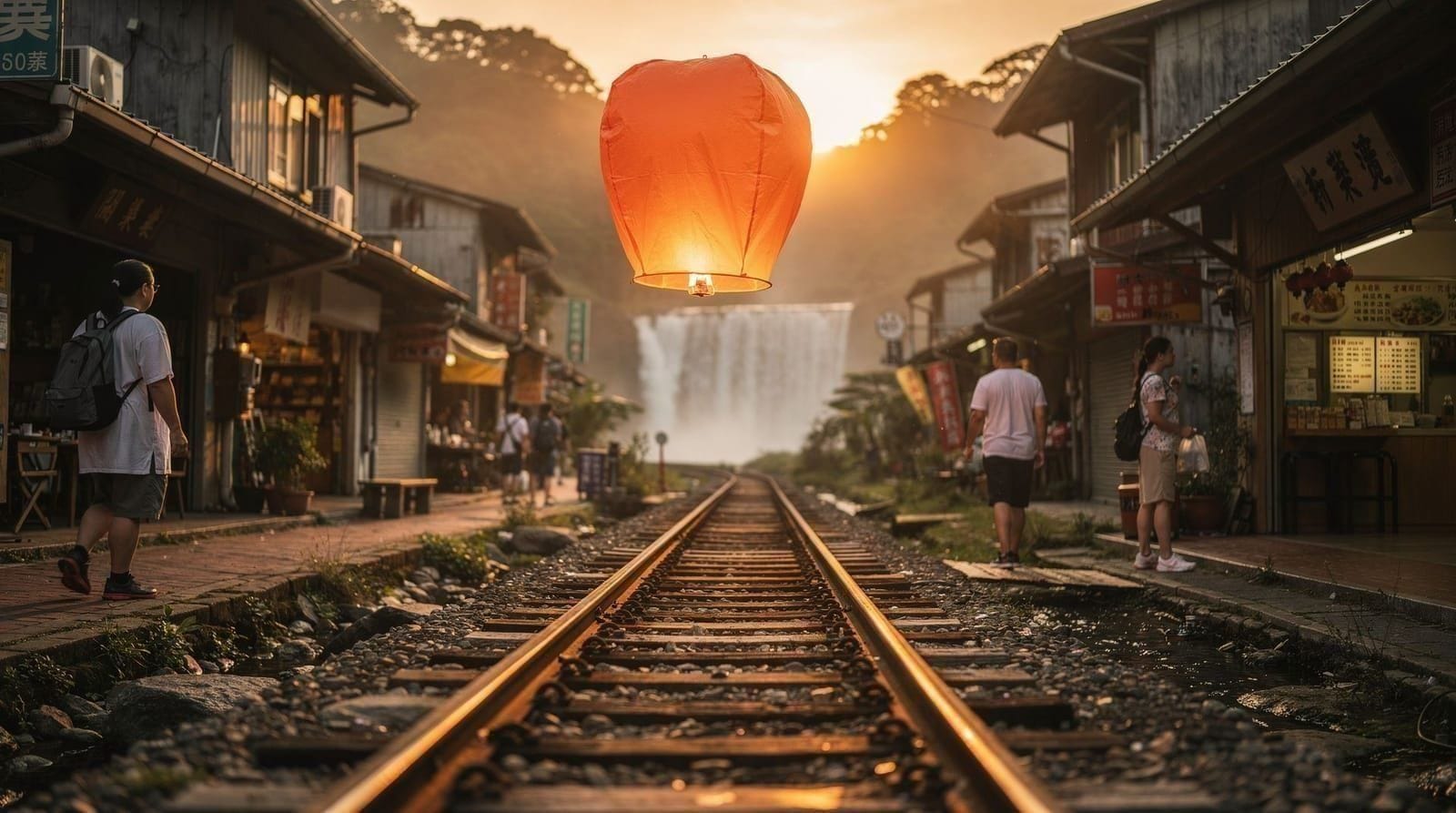
If you want to release a lantern yourself on any day you happen to be in Taiwan, Shifen Old Street is the answer. Lantern vendors operate every day of the year, from morning until dusk, and you can paint a message on your lantern before release. This is a more personal, quieter experience — at least on weekdays outside festival season.
When is the Pingxi Lantern Festival in 2026?
The Pingxi Sky Lantern Festival falls on the 15th day of the first lunar month — the Lantern Festival (元宵節, Yuánxiāo Jié), which marks the end of Chinese New Year celebrations.
In 2026, the Lantern Festival falls on March 3. The main event in Pingxi and Shifen is concentrated around this date, typically spanning a weekend on either side (so approximately February 28 to March 3, 2026 for the peak period). The New Taipei City government organises group lantern releases with cultural programming throughout this window.
Important caveat: the exact schedule of coordinated mass releases changes each year based on government permits and environmental guidelines. Announced dates and times for 2026 should be confirmed via the official New Taipei City Tourism website closer to the event.
What the festival actually looks like
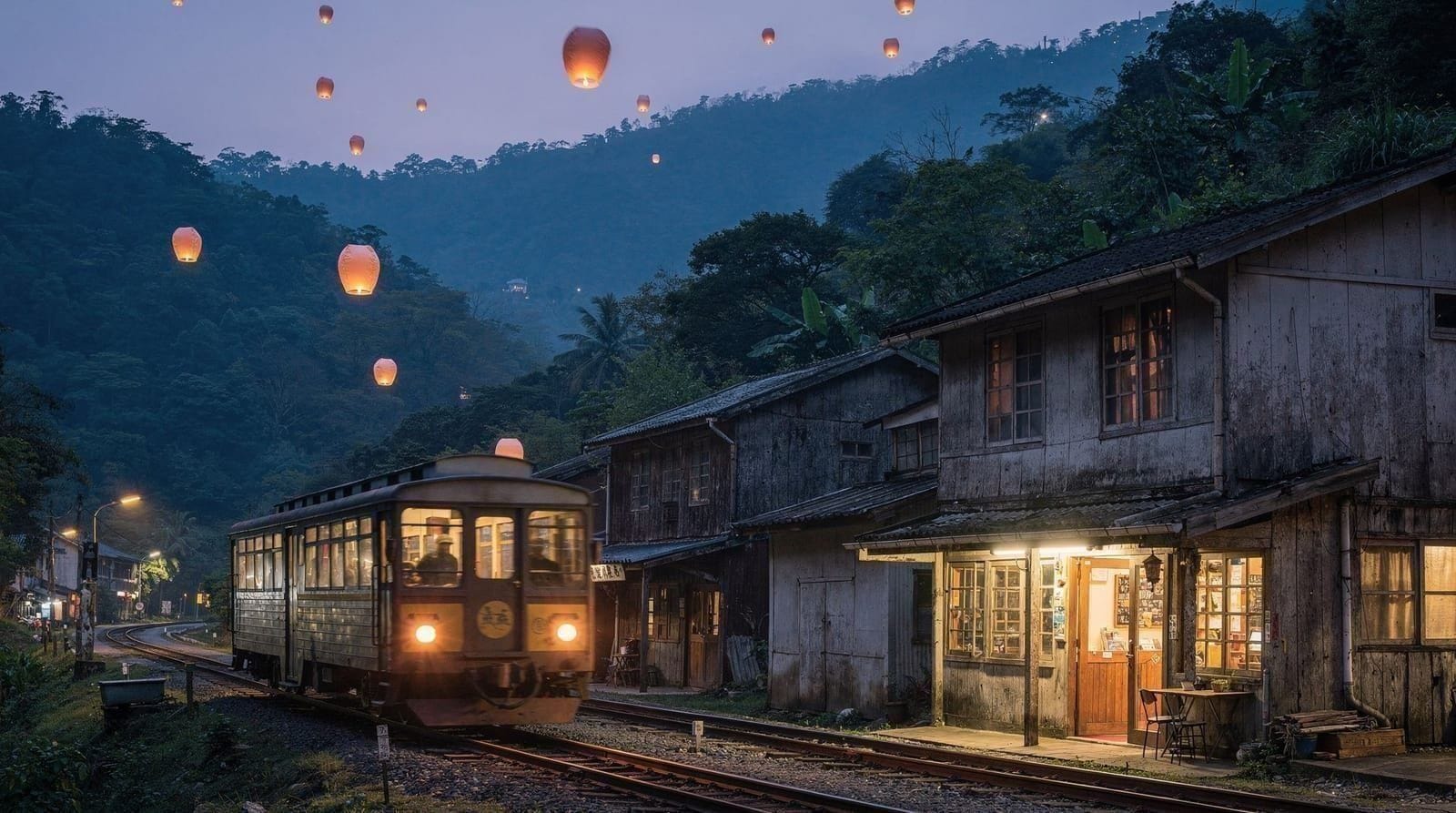
The Pingxi Lantern Festival draws both domestic and international visitors. During the mass release moments — typically at dusk on the main festival day — the sky fills with hundreds of lanterns simultaneously. The effect is genuinely striking. The logistics, however, are challenging.
- Crowd size: 10,000–20,000 people in a valley town normally built for a fraction of that number
- Access: Special shuttle buses operate from Ruifang Station (the main junction on the route from Taipei) and from designated parking areas; the local Pingxi branch railway line runs reduced-frequency services on festival day and gets extremely congested
- Alcohol and safety: Participants are asked to keep crowds orderly near release zones; fallen lanterns are collected, but some inevitably drift into forests — a legitimate environmental concern
- Photography: To photograph the mass release well, arrive 2–3 hours early to secure a position; long exposure is standard (tripod recommended)
During the festival itself, Pingxi becomes a logistical challenge rather than a peaceful mountain town. If you’re after atmosphere without the density, arriving the day before the main release (February 28) gives you proximity to the preparations, access to stalls and cultural events, without the peak crush.
Off-season: releasing lanterns at Shifen any day
For most travellers not planning their trip around the February festival, Shifen Old Street offers a year-round alternative that’s arguably more satisfying. Lantern vendors sell painted bamboo-frame lanterns pre-marked with luck symbols (red for happiness, yellow for wealth, green for health, white for peace). You can also paint your own message.
- Cost: NT$150–200 per lantern, including a flame starter
- Process: You paint the lantern, the vendor helps you position it on the railway track, and you light it together — it rises slowly as the heat builds, then floats upward with a satisfying whoosh
- Timing: Lanterns are released along the active railway line. Trains pause briefly while the lanterns are released, then the track clears — this is normal operating procedure and not dangerous
- Best time of day: Late afternoon, 15:00–17:00, gives soft golden-hour light for photos without the hard morning shadows
Weekday visits to Shifen are genuinely calm. Weekend visits, even outside festival season, draw significant crowds from Taipei day-trip packages.
Taipei: Pingxi Sky Lantern and Shifen waterfall tourGetting to Pingxi and Shifen from Taipei
Both towns are on the Pingxi Branch Line, a short scenic railway that connects to the main TRA (Taiwan Railways Administration) network at Ruifang Station.
From Taipei Main Station by train:
- Take a TRA train to Ruifang Station (~45–55 min, NT$49)
- Transfer to the Pingxi Branch Line (small two-car train, runs every 20–60 min)
- Shifen is 4 stops from Ruifang (~25 min)
- Pingxi is 2 more stops (~10 min beyond Shifen)
A one-day Pingxi Branch Line pass costs NT$80 (about €2.20 / US$2.50) and allows unlimited rides on the branch line — worth buying if you’re stopping at multiple stations.
During festival dates, Ruifang Station gets extremely congested. Arrive early or take the first available train; return trains in the late afternoon are often full.
By organised tour: Several day-trip operators combine Pingxi, Shifen, and Jiufen in a single loop. This is the most efficient option during festival days when independent transport is strained.
New Taipei: Taipei Shifen Pingxi Sky Lantern tourCombining Pingxi with the rest of the Ruifang area
The Pingxi line connects a cluster of small towns that each have something distinct:
- Houtong: Cat village — former coal town, now home to 200+ resident cats and a small cat museum. 1 stop before Shifen from Ruifang.
- Shifen: Lanterns, a 40-metre wide waterfall (Shifen Falls, 20-min walk from the station), and a small exhibition on the area’s coal-mining history
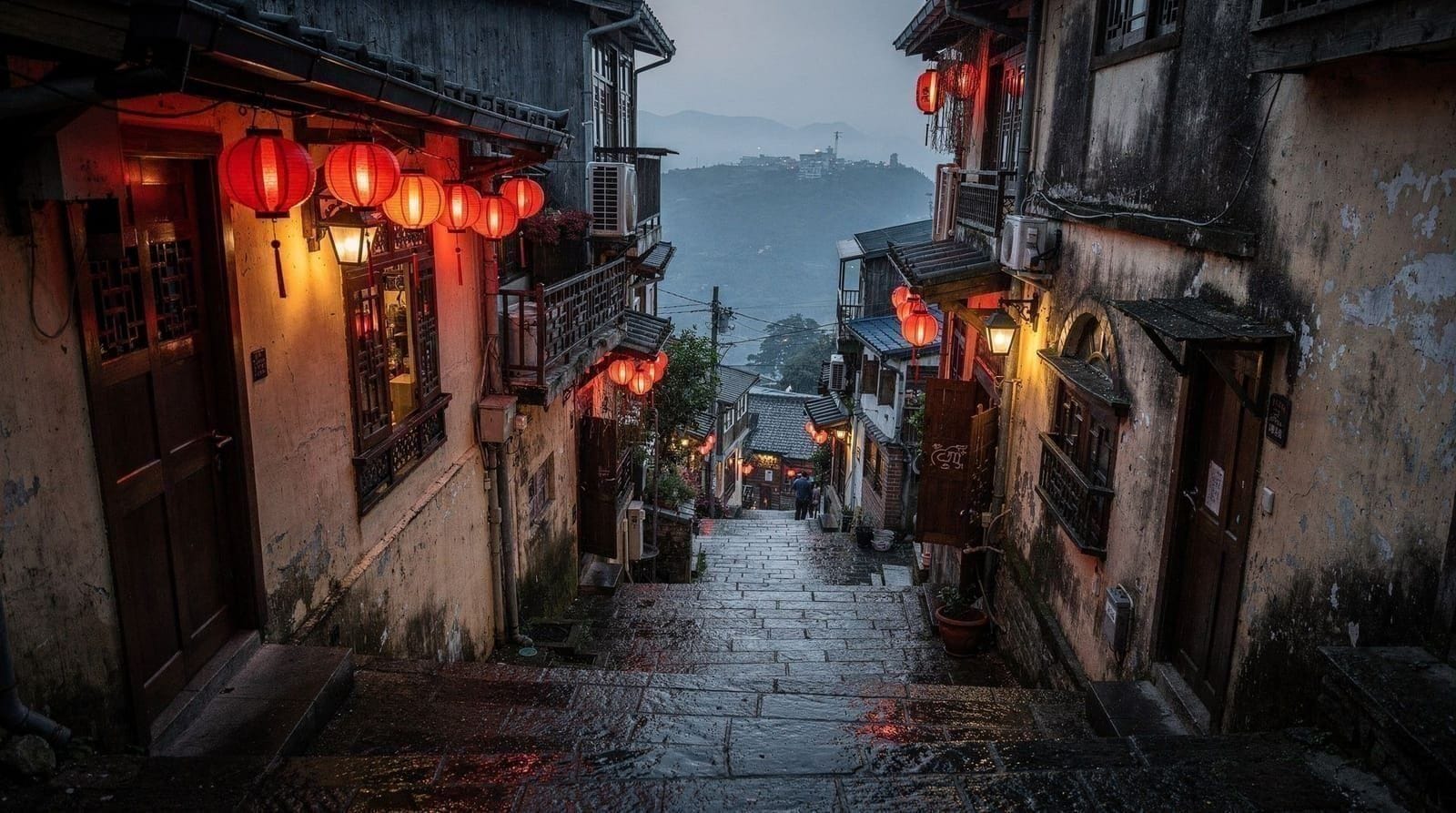
- Pingxi: Traditional architecture, small temples, scenic valley views — the most atmospheric of the three towns for walking around slowly
If you’re combining all three with Jiufen, start early (08:00 from Taipei) and note that Jiufen is best reached by bus from Ruifang separately — the two locations don’t share a railway line.
Environmental note
Sky lanterns are made of combustible rice paper on a bamboo frame. The New Taipei City government has been working with operators to improve lantern biodegradability and post-release clean-up. During the official festival, collection teams operate in the landing zones. For year-round releases at Shifen, the same vendors are responsible for post-event recovery.
If environmental impact is a concern for you, it’s a legitimate consideration. The scale of the festival releases (thousands of lanterns at once) has more impact than an individual release on a quiet Tuesday afternoon.
Choosing your lantern colour and message
Vendors at Shifen sell lanterns in colours tied to specific wishes — red for happiness and safety, yellow for wealth, pink for love, purple for career success, blue for health, green for wisdom or study, and white for peace or resolving problems. Many visitors write in Chinese characters copied from a vendor’s reference sheet, but writing in your own language works just as well; the ritual is personal, not linguistic. Some vendors sell multi-colour lanterns with four panels so you can write four separate wishes — slightly more expensive (NT$200–250) but popular with groups or couples who want to combine wishes on one lantern.
Accommodation and crowding around festival dates
If you’re planning your trip specifically around the 2026 festival, be aware that hotel demand in Taipei itself spikes through the whole late-January-to-early-March window, not just on the festival day — this coincides with the tail end of Chinese New Year travel. Booking 2–3 months ahead for the festival weekend specifically is a reasonable precaution; prices in Ruifang and Jiufen’s limited guesthouse stock rise sharply closer to the date. If your dates are flexible, visiting the week before or after the main festival day still gets you the New Taipei government’s supplementary lantern displays and cultural programming with a fraction of the crowd.
Practical planning notes
| Festival (late Feb–early Mar) | Year-round at Shifen | |
|---|---|---|
| Crowd level | Very high | Low (weekdays) to moderate (weekends) |
| Advance planning needed | Yes — book accommodation months ahead | No |
| Lantern release type | Mass coordinated release | Individual, anytime |
| Transport | Shuttle bus recommended | Regular train |
| Cost per lantern | NT$150–200 | NT$150–200 |
For anyone planning around Taiwan’s seasonal calendar, the lantern festival falls at the tail end of Chinese New Year — so accommodation in Taipei itself is still at peak rates through early March. For a quieter version of northern Taiwan, October–November is unambiguously the better timing for day trips from Taipei.
Frequently asked questions about Pingxi Sky Lantern Festival
When exactly is the Pingxi Lantern Festival in 2026?
The main festival day is March 3, 2026. Events typically span the surrounding weekend, approximately February 28 to March 3.
Do I need a ticket for the Pingxi Lantern Festival?
The festival is a public event and generally free to attend. However, coordinated group lantern releases may require pre-registration; check the New Taipei City government website for 2026 details.
Can I release a sky lantern in Pingxi outside of festival dates?
Yes — Shifen, two stops before Pingxi on the branch line, offers year-round daily lantern releases. Pingxi itself has some vendors outside festival season but the density is much lower.
How crowded does it get during the festival?
Very crowded. Expect 10,000+ visitors on the main festival day and significant transport disruption. Arriving early (09:00–10:00) gives you better positioning and a calmer experience.
Is Houtong Cat Village worth combining with Pingxi?
Yes, if you enjoy cats or have children. It adds 1–2 hours and is 1 stop before Shifen on the branch line from Ruifang. See the Houtong guide.
What lantern colour should I choose at Shifen?
Colours correspond to specific wishes — red for happiness and safety, yellow for wealth, blue for health, green for study or wisdom. Multi-colour lanterns let you write several wishes on one lantern.