Shifen sky lantern guide — how to release a lantern and what else to do
Taipei: Yehliu Jiufen Shifen guided tour
How do I release a sky lantern at Shifen?
Take the TRA train from Taipei Main to Ruifang (35 min), then the Pingxi Line local train to Shifen Station (30 min). Lantern stalls line the tracks on arrival. One lantern costs NT$150–200 and includes writing your wish with ink brushes before the vendor lights and releases it with you. The whole process takes about 20 minutes.
Sky lanterns without the festival: the year-round experience
The Pingxi Sky Lantern Festival in February–March is one of Asia’s most photographed events, but what most guides underemphasise is that you can release a sky lantern at Shifen on any given day of the year. The village’s lantern stalls operate every day from morning until evening. No special dates, no festival required.
This makes Shifen one of the most accessible bucket-list experiences in Taiwan — a 70-minute train journey from Taipei, no advanced planning, costs NT$150–200.
| Where | Pingxi Branch Line, New Taipei City, about 70 min from Taipei |
| Cost | Around NT$150–200 per lantern, plus NT$72–84 train fare |
| Time needed | 2–3 hours for lanterns and waterfall; 4–5 hours unhurried |
| Getting there | TRA to Ruifang, then Pingxi Branch Line to Shifen |
| Best time | Weekday mornings; year-round, no festival dates required |
Getting to Shifen from Taipei
The journey uses the TRA (Taiwan Railways) regional service from Taipei, not the MRT. Two steps:
Step 1: Taipei Main Station to Ruifang Take the TRA train (Northern/Yilan Line) to Ruifang Station. Travel time 35–40 minutes. Cost NT$49 (regional puyma) or NT$61 (express). Trains depart from underground platforms approximately every 20–30 minutes. Buy your ticket at the machine or use an EasyCard (the EasyCard guide explains how to get and top up one). If you are still working out the city’s rail network, the Taipei MRT guide is a useful companion, and the Taipei to Jiufen transport guide covers the Ruifang connection from the other direction.
Step 2: Ruifang to Shifen via Pingxi Line At Ruifang Station, follow signs to the Pingxi Branch Line platform (exit the main fare gates, re-enter at a separate smaller gate). The local train to Shifen runs approximately every 30–60 minutes (less frequent than the main line — check the schedule board). Journey: Ruifang to Shifen 30 minutes, NT$23.
The total one-way journey from Taipei to Shifen takes approximately 70–80 minutes and costs NT$72–84.
Return: The last Pingxi Line train back to Ruifang runs around 22:00 (confirm at the station on arrival). Last TRA trains from Ruifang to Taipei run until approximately 23:00.
If you want a guided experience that handles transport:
Pingxi sky lantern and Shifen waterfall tour from TaipeiThe lantern release: step by step
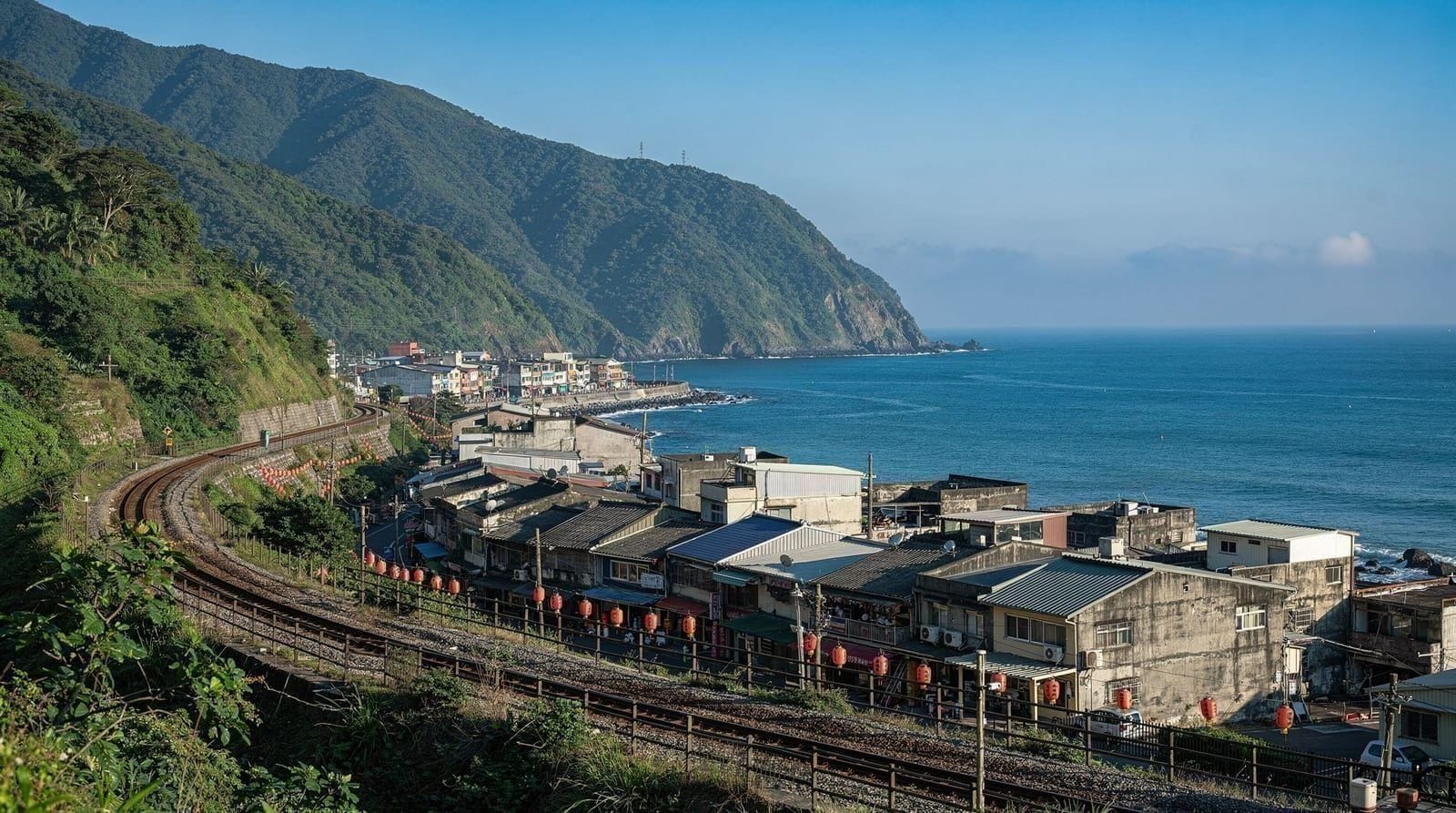
When you exit Shifen Station, lantern stalls line both sides of the railway track immediately in front of you. The process is simple:
-
Choose a stall. Any stall along the tracks is fine — prices and lanterns are essentially identical. The stall owners are accustomed to international visitors and most speak basic English.
-
Select your lantern. Standard paper lanterns with one or two sides for writing (NT$150–180). Four-sided lanterns let four people each write on one face (NT$200–250). Colours are said to carry meanings (red for good luck, yellow for wealth, green for health) though this is partly a marketing convention.
-
Write your wishes. The vendor provides ink brushes and red paint and will demonstrate. Take your time — the writing is part of the experience. Staff will help with Chinese characters if you want them.
-
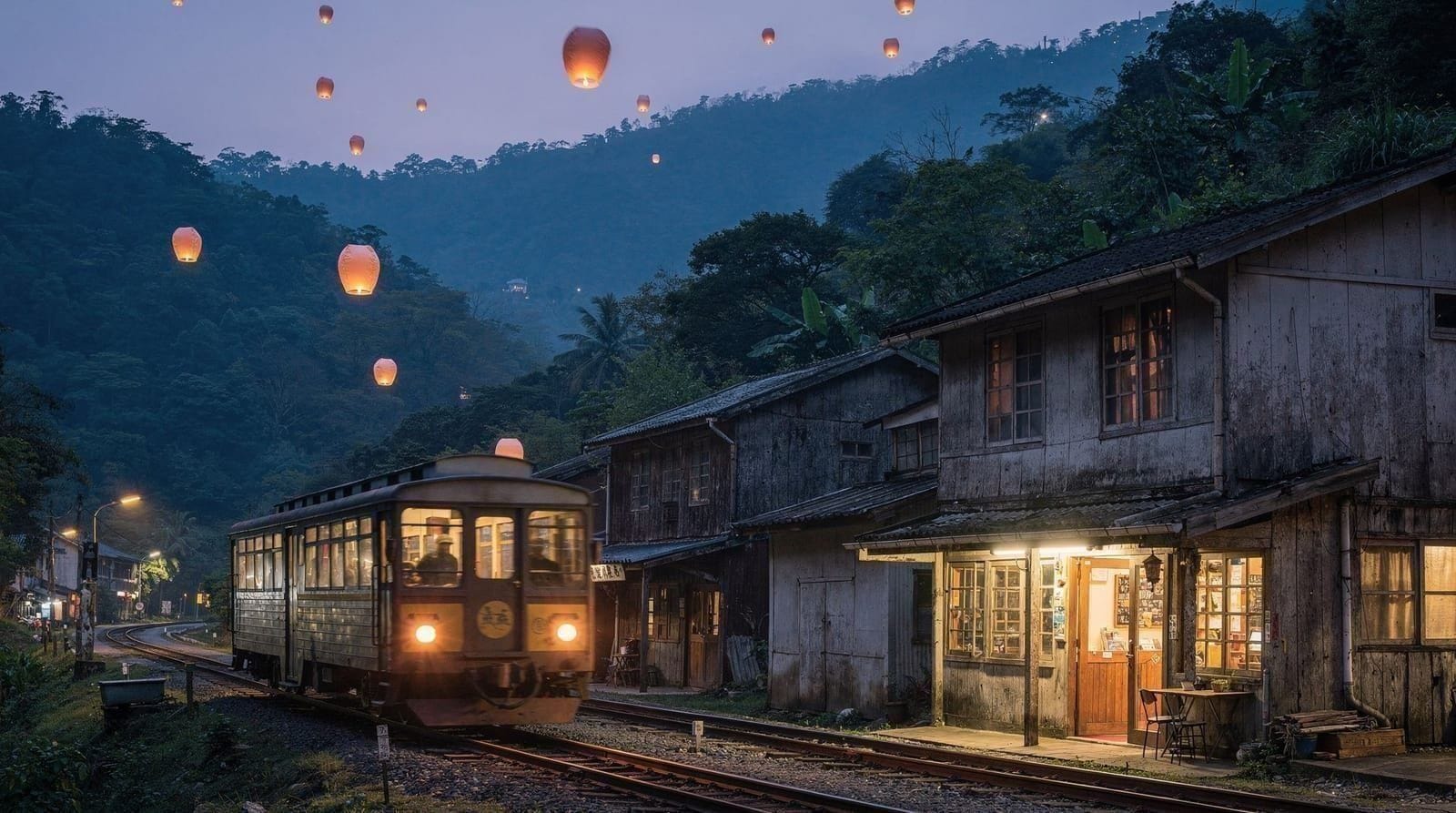
Release. The vendor lights the fuel at the bottom of the lantern. You hold the frame for 30–60 seconds as the air inside heats. When it is ready to ascend, you let go. The lantern rises over the tracks and river valley, typically gaining altitude quickly. Most lanterns drift north with the prevailing wind.
The whole process from payment to release takes 15–25 minutes. Photography is easy because the vendor positions you well — the railway track as foreground and the lantern ascending above the valley is the classic shot. For nearby waterfall hiking with fewer crowds, see the Sandiaoling section of the Taipei best hikes guide.
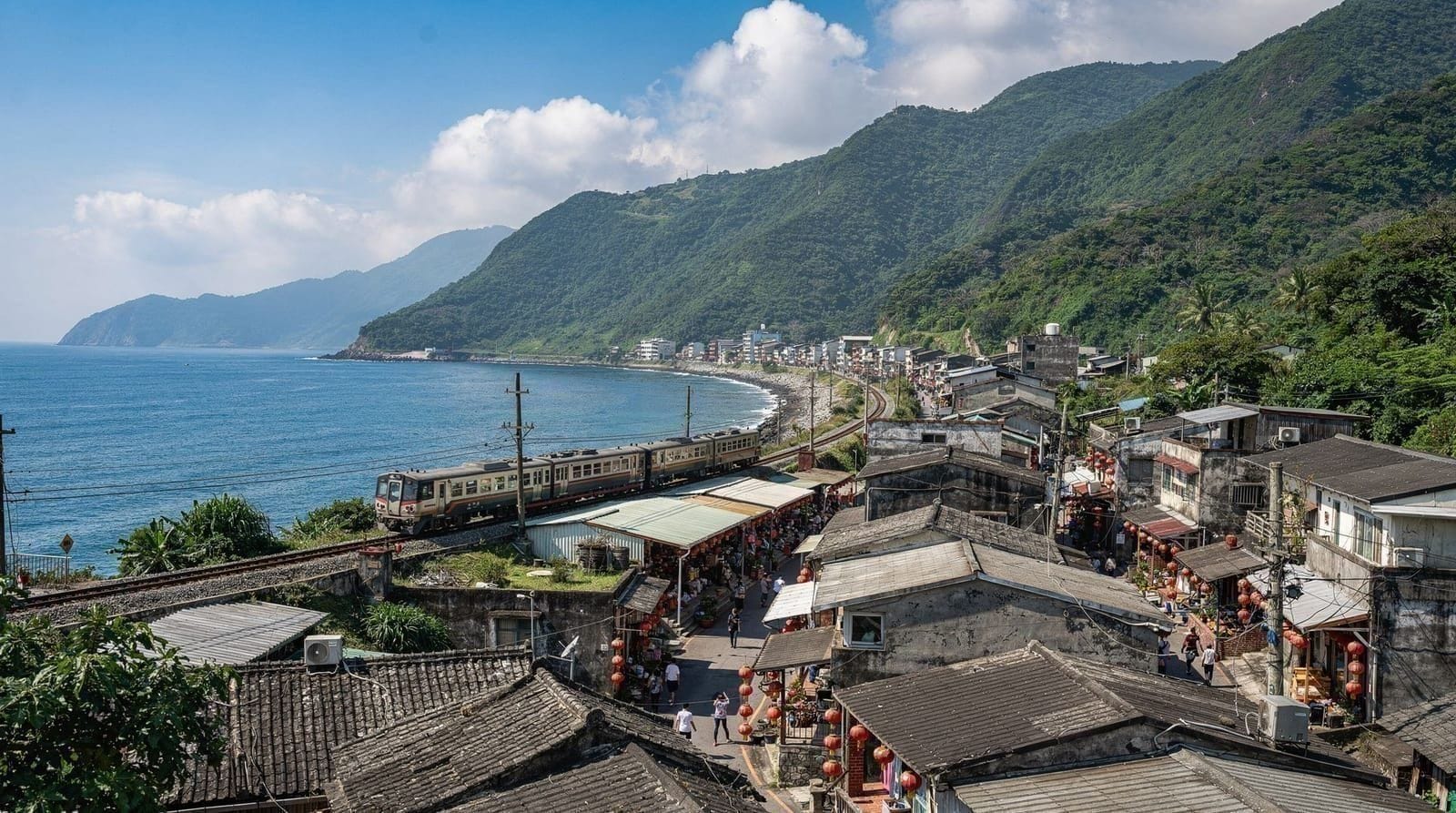
When trains pass: The vendor will alert you to pause if a train is approaching (trains run every 30–60 minutes on the Pingxi Line). You step aside to the small platform area. The train passes slowly. You continue. This happens smoothly and without incident every day.
Shifen Waterfall
From Shifen Station, a flat riverside trail leads 1.2km to Shifen Waterfall. The walk takes 15–20 minutes each way through forest and along the Keelung River. The waterfall is 40m wide and drops about 20m in a horseshoe shape — the broadest waterfall in Taiwan. For current entry conditions to the viewing area, check the official Shifen Waterfall Park (New Taipei City) information.
The walk is straightforward and suitable for all fitness levels. The waterfall is most impressive in the wet season (June–August) and after rain, when the flow is strongest. In dry periods (Oct–Dec) it is smaller but still worth the walk.
Time budget: Lanterns + waterfall round trip = approximately 2 hours. Add 30–45 minutes for lunch and the village itself.
The Pingxi Line pass
If you plan to visit multiple villages on the Pingxi Line in one day (Shifen, Pingxi, Sandiaoling, and others), consider the branch line day pass for NT$80. This allows unlimited travel on the Pingxi Branch Line for one day and is sold at Ruifang Station or Taipei main railway station. It is good value if you plan to stop at more than two stations; for Shifen only, it is cheaper to buy single tickets.
See Pingxi Line day trip guide for the multi-village route.
Eating in Shifen
The village along the tracks has a handful of simple restaurants and street stalls. Prices are moderate — a bowl of noodles costs NT$80–120, grilled meats NT$60–100. The riverside restaurants adjacent to the waterfall trail charge a slight premium for the scenery.
For lunch, the local specialty is mountain boar (shanzhu) at a few of the Pingxi-area restaurants — a regional dish you will not easily find elsewhere in the Taipei orbit.
Private options for couples or groups
A private tour of Jiufen, Shifen waterfall, and Pingxi sky lanterns covers all three in a single flexible-schedule day:
Private tour: Jiufen, Shifen waterfall and Pingxi sky lanternCombining Shifen with Jiufen
This is the most popular combination. The standard routing:
- Morning: Take the TRA train from Taipei to Ruifang
- Branch onto Pingxi Line to Shifen (09:30–11:30): lanterns and waterfall
- Return to Ruifang by Pingxi Line
- Bus 788 from Ruifang to Jiufen (25 min): old street, teahouse, lunch (12:00–16:00)
- Return bus to Ruifang; TRA train back to Taipei
- Total transport: approximately NT$200 per person
The alternative routing — Jiufen first, then Shifen — works equally well and is often better for afternoon lanterns when the light for photography is warmer.
Deciding between Shifen and its neighbours
If you only have room for one stop, the Jiufen vs Shifen comparison lays out what each village does best. Jiufen suits people who want old-street atmosphere and teahouses, which the Jiufen day trip guide and the Jiufen destination page cover in detail. Shifen suits people who want one hands-on moment — writing a wish and watching it rise. The Pingxi destination page describes the quieter villages further along the same branch line.
If cats appeal more than lanterns, the Houtong cat village guide fits neatly into the same railway corridor, and the north coast day trip itinerary shows how to stretch the day toward the sea. Travellers who would rather not manage trains and buses can weigh the trade-offs in tour vs DIY day trips.
Seasonal notes and the festival
Year-round: Individual lantern releases work any day, any month.
February–March (Lantern Festival / Yuan Xiao): The official Pingxi Sky Lantern Festival takes place on specific dates tied to the lunar calendar, including the 15th day of the first lunar month. Mass releases with thousands of lanterns ascending simultaneously are genuinely spectacular. Expect very large crowds (buses, trains, and roads saturated). The festival dates shift each year — check the New Taipei City Tourism Bureau for exact dates in the current year.
Typhoon season (July–September): Stalls close in rain and wind. The Pingxi Line occasionally suspends service during typhoon warnings. Check forecasts, and read the Taipei typhoon season guide before booking anything non-refundable. For picking the right month overall, see the best time to visit Taipei, and the blog post on Pingxi sky lantern festival dates explains how the festival calendar works.
Cherry blossom season (February–March): Yangmingshan is the primary blossom destination, but a few cherry trees near Pingxi Station bloom around the same time, creating a pleasant incidental backdrop.
The Pingxi sky lantern tradition: context and history
Sky lanterns (天燈, tiān dēng — “sky lantern” or literally “heaven lamp”) have a history in the Pingxi area that goes back to the Qing Dynasty. The origin story most commonly cited is that the lanterns were used as communication signals between mountain villages during periods when banditry made overland messenger travel dangerous. Lit lanterns from the village sent a “safe” signal to those in the hills.
The practice evolved into a cultural tradition around the Chinese New Year period. The modern mass-festival format dates from 1990s tourism development, when local authorities formalised the Pingxi Sky Lantern Festival as a draw for the lunar new year period. The year-round individual release practice that operates today at the track-side stalls in Shifen is a more recent commercial extension of the tradition. For an evening angle on the same region, the blog post on Jiufen at night pairs well with a late lantern release.
Environmental note: Sky lanterns are paper, bamboo, and fuel — biodegradable materials that fall after the fuel extinguishes (typically 3–10 minutes after release, within a few kilometres). Critics have raised concerns about fire risk to forests and farmland, and some countries have banned the practice. Taiwan has maintained it within designated areas. The lanterns are visually spectacular and the tradition is genuine; awareness of the environmental question is fair context.
The Pingxi Line’s coal-mining past
The railway line you ride to reach Shifen was built specifically to haul coal. The Pingxi Branch Line opened in 1921 to connect the coal mines in the Pingxi valley to the main Yilan Line at Ruifang. Coal from the Pingxi mines fed Taiwan’s industrial development during the Japanese colonial period and the early postwar decade.
The mines began closing in the 1970s and 1980s as coal became uneconomical versus oil and the accessible seams were exhausted. The branch line — now serving tourists — was originally designated for closure as well. Local advocacy and the growing tourism interest in the lantern tradition saved it.
The old railway infrastructure is still partially visible in the village areas: coal sorting structures, mine shaft openings, and worker housing that has been converted to restaurants and guesthouses. Shifen’s Coal Mine Museum (free, small) near the village centre covers this history with exhibits and some preserved equipment.
The Shifen Waterfall in detail
Shifen Falls (十分瀑布) is often described as Taiwan’s most spectacular waterfall, and the claim has merit — at 40m wide and approximately 20m drop, it is the broadest waterfall in Taiwan. The horseshoe shape means the falling water wraps around the viewing area rather than appearing as a narrow curtain.
The walk from Shifen Station to the falls takes 15–20 minutes along a riverside path. The path is flat, paved for most of its length, and suitable for all fitness levels. There are a few riverside viewpoints along the way before the main falls platform.
Entry to the falls viewing platform: NT$50 per adult. The platform is a series of observation decks at different distances from the base. The closest deck receives spray from the falls when flow is high — bring a light waterproof layer if rain has fallen recently.
Best flow conditions: The waterfall is most dramatic after significant rainfall. Wet season (May–August) consistently provides strong flow. October and November can be drier, reducing the visual impact. If you are visiting specifically for the waterfall rather than the lanterns, a rainy-week visit actually improves the experience.
The gorge above the falls: A short trail above the viewing platform leads into the gorge behind the falls — a narrow canyon with the river, forest, and the falls visible upstream. This section is less visited and genuinely scenic. Allow an extra 30 minutes.
Photography at Shifen
Sky lanterns: Position yourself slightly back from the track (10–15m) with the valley and mountains as background. The lantern rises quickly — have your camera ready before the release begins. Burst mode or continuous shooting catches the ascent. Dusk and late afternoon light are best for colour saturation on the lantern itself.
Shifen Waterfall: The observation platform closest to the base gives the widest view but the spray can affect lenses. A longer zoom from the far platform captures the full arc of the falls more cleanly. Morning has softer light and fewer people.
The railway village: Wait for a train to pass — the narrow-gauge trains moving through the village with the buildings on either side is a distinctive image. Trains run every 30–60 minutes; ask at the lantern stall when the next train is due.
Practical budget for a Shifen day trip
| Item | Cost |
|---|---|
| TRA Taipei → Ruifang return | NT$122 |
| Pingxi Line day pass | NT$80 |
| Sky lantern (1 person) | NT$150–200 |
| Shifen Waterfall entry | See official park information |
| Lunch (local noodles) | NT$80–120 |
| Total per person | NT$432–522 (before any waterfall park entry) |
For context on how Shifen compares to other day trips, see best day trips from Taipei. For combining Shifen with the Yehliu geopark, see north coast loop guide. For the destination: Shifen.
Frequently asked questions about Shifen sky lantern guide — how to release a lantern and what else to do
Can you release sky lanterns at Shifen every day of the year?
How much does a sky lantern cost at Shifen?
Is it safe to release lanterns on the railway tracks?
How long does Shifen take as a day trip?
When is Shifen busiest?
What is Shifen Waterfall and is it worth seeing?
Top experiences
Bookable activities with verified prices and instant confirmation on GetYourGuide.