Taipei neighborhoods guide — district by district
Taipei: Old town walking tour
How many neighborhoods should I explore in Taipei?
A 5-day visit can cover 4–5 distinct districts without feeling rushed. Zhongshan, Daan, Xinyi, Ximending, and Dadaocheng each reward a half-day to full-day of walking. Beitou and Tamsui work as standalone half-day excursions.
| Core districts | Zhongzheng, Wanhua, Zhongshan, Daan, Xinyi, Shilin |
| Best for first-timers | Zhongshan or Daan |
| Standalone half-days | Beitou, Tamsui |
| Getting between them | MRT, NT$20–65 per trip |
| Time needed | 4–5 districts comfortably over 5 days |
How Taipei’s districts work
Taipei is not a single-character city. Within its 30-km perimeter you can move from glass towers to 300-year-old temple courtyards, from Japanese colonial streets to aboriginal cultural museums, within a 20-minute MRT ride. Understanding which district contains what helps enormously when planning where to spend limited time.
The city is divided into 12 districts. For tourists, the relevant ones cluster into a manageable inner ring: Zhongshan, Zhongzheng, Wanhua, Daan, Xinyi, Songshan, and Shilin. The outer districts — Beitou, Tamsui (actually in New Taipei City), Neihu, Nangang — serve specific purposes but are not day-to-day walking territory.
Zhongzheng — the city’s functional center
Zhongzheng surrounds Taipei Main Station, the city’s largest transit hub. Most visitors pass through here repeatedly without necessarily spending much time exploring it.
What is here beyond transport: Chiang Kai-shek Memorial Hall (free, grounds open 24 hours), the Presidential Office Building (viewable from outside), Zhonghua Road’s old shopping underground, and the start of Zhongxiao Road — the city’s main east-west commercial axis.
The area north of Taipei Main Station, around Zhongshan North Road and Dihua Street, transitions into a distinct character. South of the station, toward Gongguan (National Taiwan University area), the neighborhood becomes younger and more student-focused.
Practical: This is where regional trains depart for Jiufen, Shifen, Houtong, and where you board the Airport MRT. Whatever else you do, you will start many days from Taipei Main Station. See the Taipei MRT guide for line maps.
Zhongshan — galleries, quiet streets, a Japanese legacy
Zhongshan is one of Taipei’s most interesting districts for aimless wandering. Its street grid largely follows the Japanese colonial layout, and several buildings from that era survive: the 1914 Building (now a contemporary art complex), Cinema Park (Spot Taipei), and stretches of Lin’an Street with low-rise shops.
Zhongshan North Road from Section 1 through Section 3 is the area’s spine. Below the MRT station, galleries and design shops cluster. Further north, the neighborhood becomes calmer — residential with good local restaurants and fewer tourists.
What to eat: Zhongshan has above-average Japanese food (a legacy of the colonial era and Taiwan’s Japan tourism popularity), plus excellent coffee and brunch options on the smaller alleys around Minsheng community (technically Songshan but adjacent).
Walking route: Start at Zhongshan MRT → walk north on Zhongshan North Road → turn into alley toward Chifeng Street (vintage and design shops) → continue to Xingtian Temple (free, business deity, atmospheric) → return via Linsen North Road.
Wanhua — Taipei’s oldest district
Wanhua is where Taipei began, and the streets still carry that origin. Longshan Temple (built 1738) is the district’s anchor: a working temple with incense smoke, fortune-telling stalls, and nightly gatherings of locals that bear no resemblance to the curated “cultural experience” language in tourist brochures.
Around the temple, the neighborhood is honest about its age and its grit. The Huaxi Street Night Market (Snake Alley) is a tourist trap and not recommended — the snake meat performances are staged and the food is poor value. Skip it. Instead, walk Bopiliao Historic Block, a preserved lane of Qing-era shophouses, and the Bangka Park area that gives the district a breathing space.
Peering House: The area west of Longshan Temple has brothels and older male-oriented entertainment — this is historically significant but not threatening. Day visitors will not notice; just do not wander those blocks at midnight expecting a night market.
Wanhua is a short walk or one MRT stop from Ximending (Ximen station), making the two easy to combine.
Ximending — commercial, youthful, always on
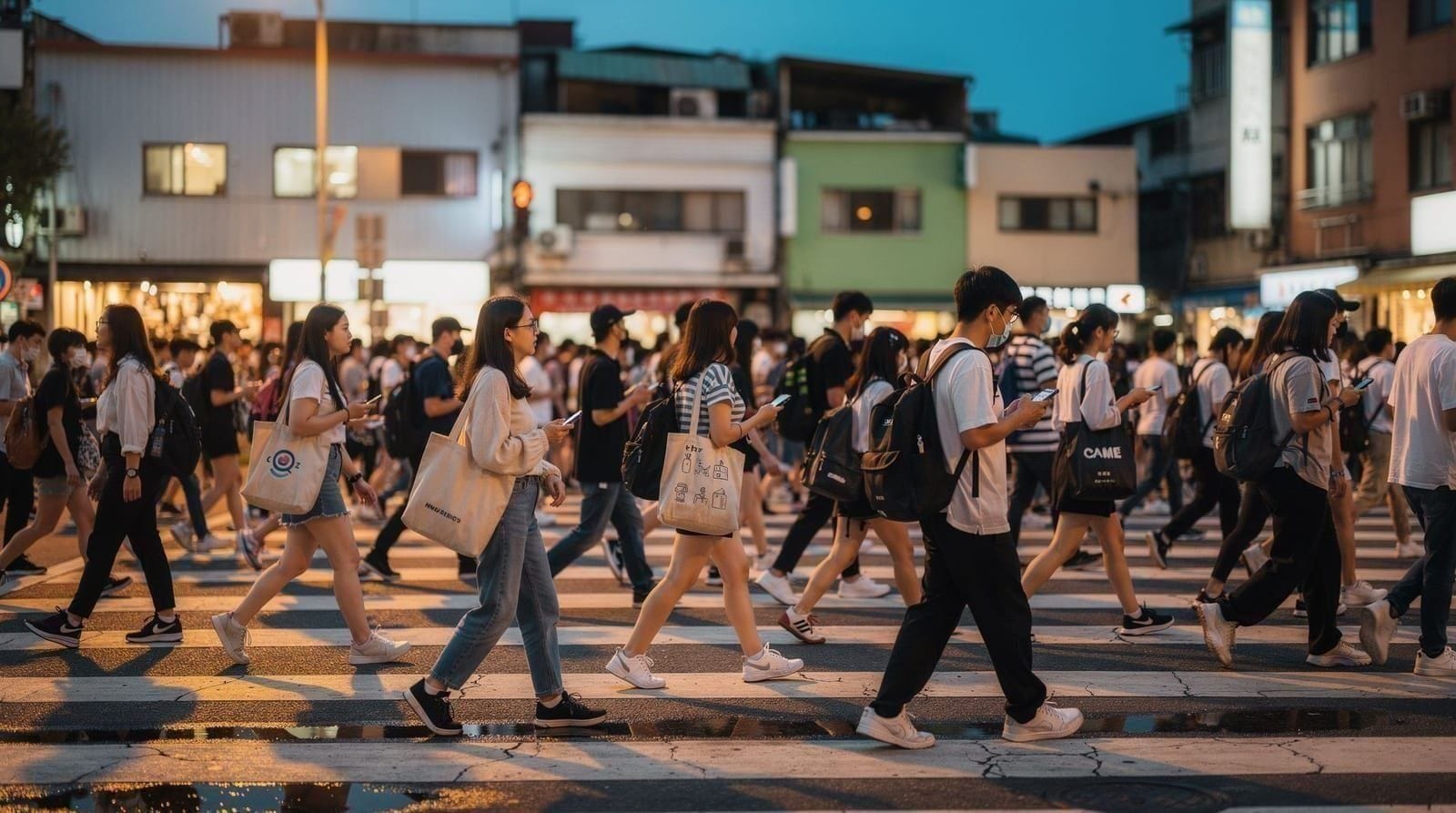
Ximending is Taipei’s most obviously touristy district and remains worth visiting. It is best described as the intersection of Harajuku energy and Southeast Asian street market density — pedestrianized, dense, and operating at full speed from 10:00 to 23:00.
The Red House (Ximen Red House) is the area’s most interesting fixed point — a Japanese-era octagonal market building now converted into art galleries and LGBTQ+-friendly bar terraces. The surrounding streets offer cosplay shops, bubble tea in every configuration, and more stinky tofu vendors per square meter than anywhere else in Taipei.
Read more: Ximending guide Old town walking tour covering Wanhua, Dadaocheng, and historic Taipei
Dadaocheng — the merchant quarter, preserved
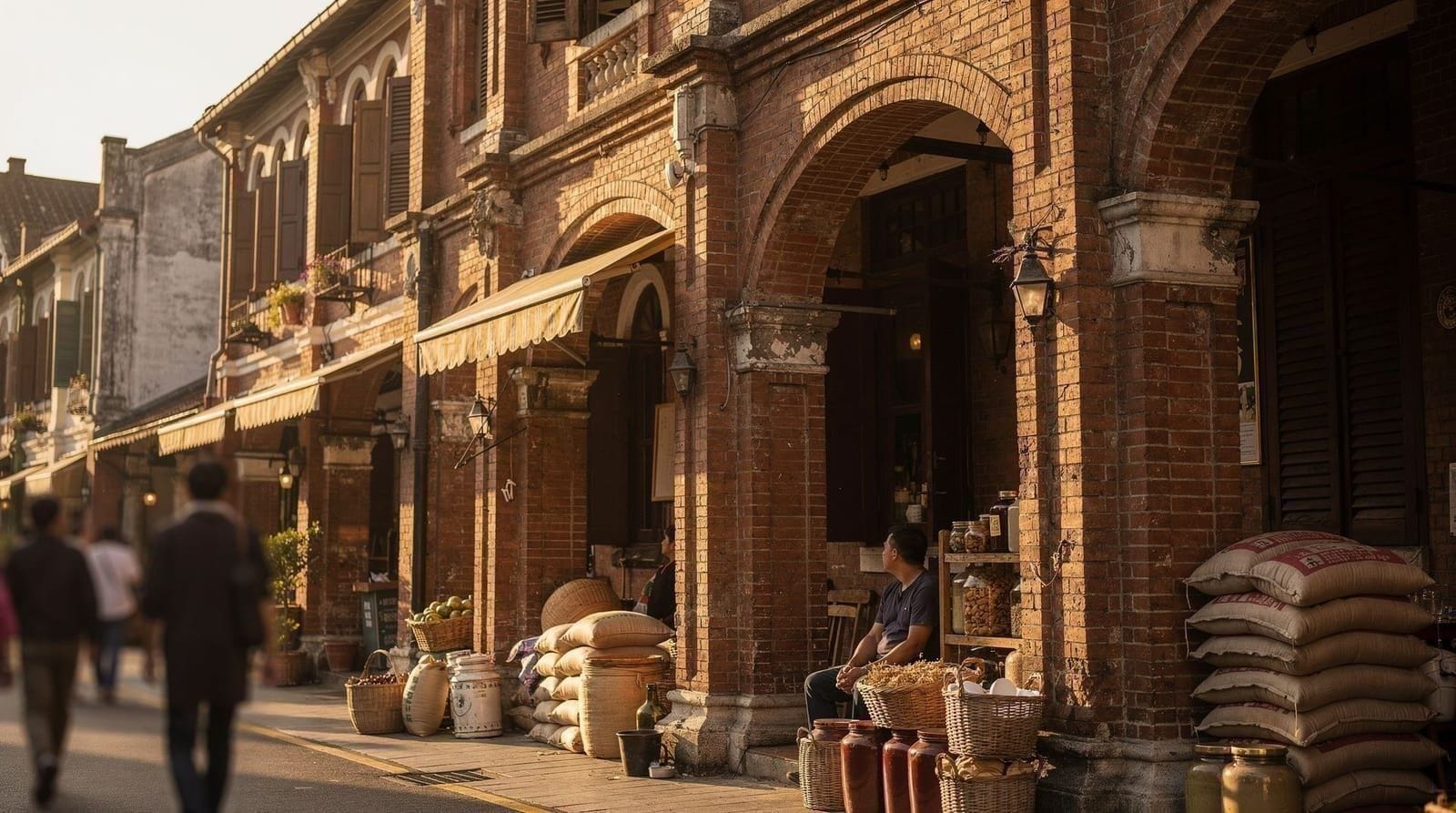
Dadaocheng was Taipei’s most important trading district in the late Qing and Japanese colonial eras, built on tea, fabric, and medicinal herbs. The main commercial axis, Dihua Street, looks like a film set of that period — except it is real, and the shops are operating.
Traditional herb shops and fabric traders still occupy their original storefronts. In recent years, younger entrepreneurs have inserted coffee bars, gin distilleries, and lifestyle shops into ground-floor spaces that look identical to their 1920s predecessors from outside. The contrast — old man in a traditional herb shop, next door a specialty coffee bar with exposed brick — is genuinely interesting rather than forced.
What to buy: Preserved goods (dried plum, spring onion pancake mix, Taiwanese tea), fabric, Lin Mao Sen dried goods shop (operating since 1894).
Timing: Weekday mornings are best. Weekend afternoons bring crowds and a more curated market feel.
Read more: Dadaocheng and Dihua Street guide
Zhongshan North Road and the gallery quarter
North of Zhongshan Station, Sections 2 and 3 of Zhongshan North Road have a very different character from the commercial south. Tree-lined, with older apartment blocks and occasional modernist interventions, the area is where galleries, antique dealers, and design-oriented shops cluster.
The Linquan Street area (a small grid north of Minquan West Road MRT) has some of Taipei’s best independent restaurants and cafes. It is not on tourist maps and the English signage is sparse — which is part of the appeal.
Daan — the neighborhood most visitors wish they had known earlier
Daan is where Taipei feels most livable. Da’an Forest Park provides a genuine green space with outdoor exercise stations, a pond, and morning tai chi gatherings. Yongkang Street, the district’s food corridor, holds the original Din Tai Fung location, multiple bubble tea shops (Ice Monster, Smoothie House), and a rotating cast of excellent small restaurants.
The neighborhood grades from student-heavy around National Taiwan University (south end) to quieter residential and boutique hotel territory near Zhongxiao Dunhua. Revolver, a jazz bar; Vinyl Force, a record shop; Rufous, a coffee institution — Daan has the density of independent businesses that makes city neighborhoods interesting.
For day-trip logistics, Daan is not the most convenient base. Take 8 minutes by MRT to Taipei Main Station and you are fine.
Xinyi — the modern downtown
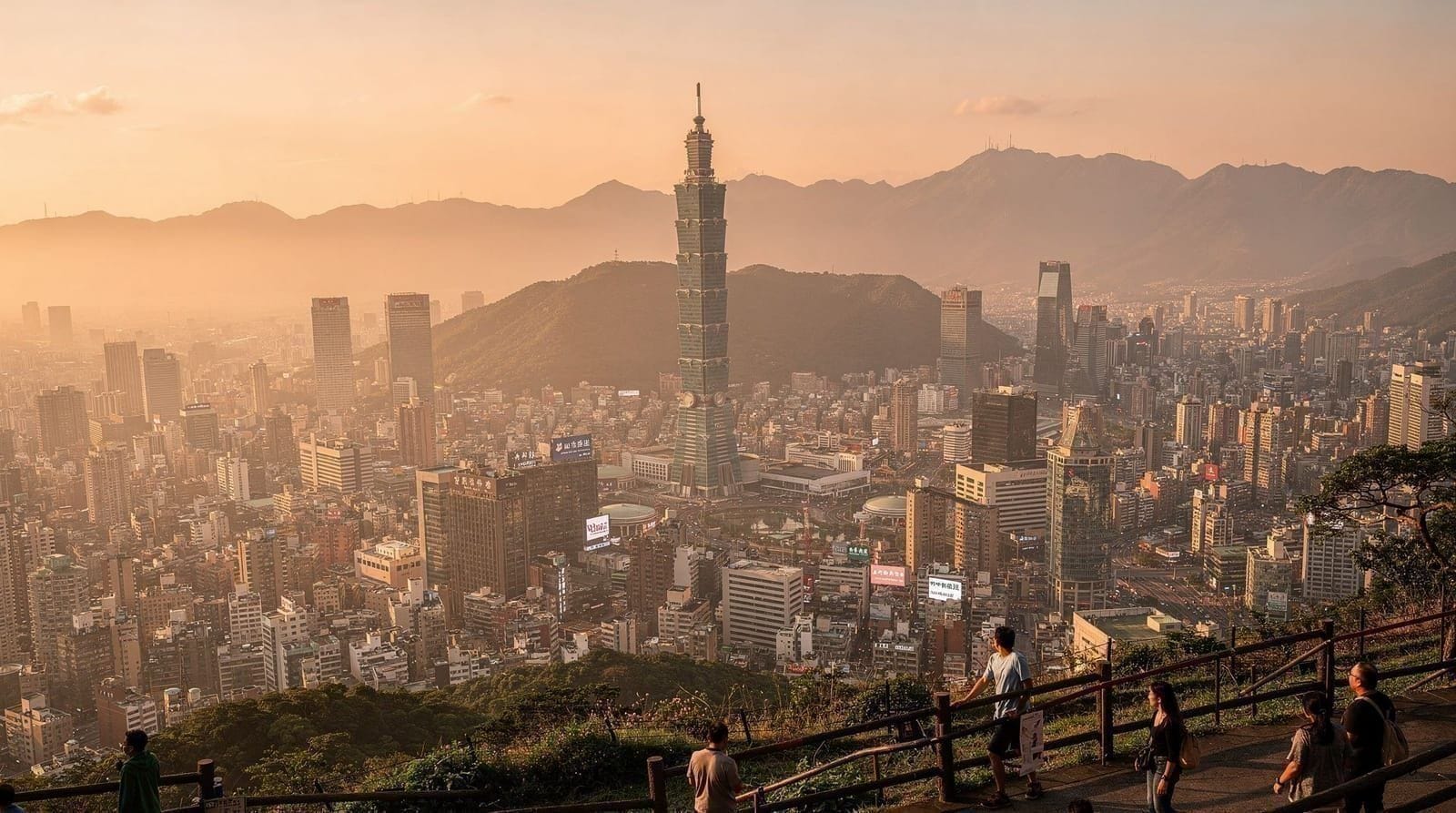
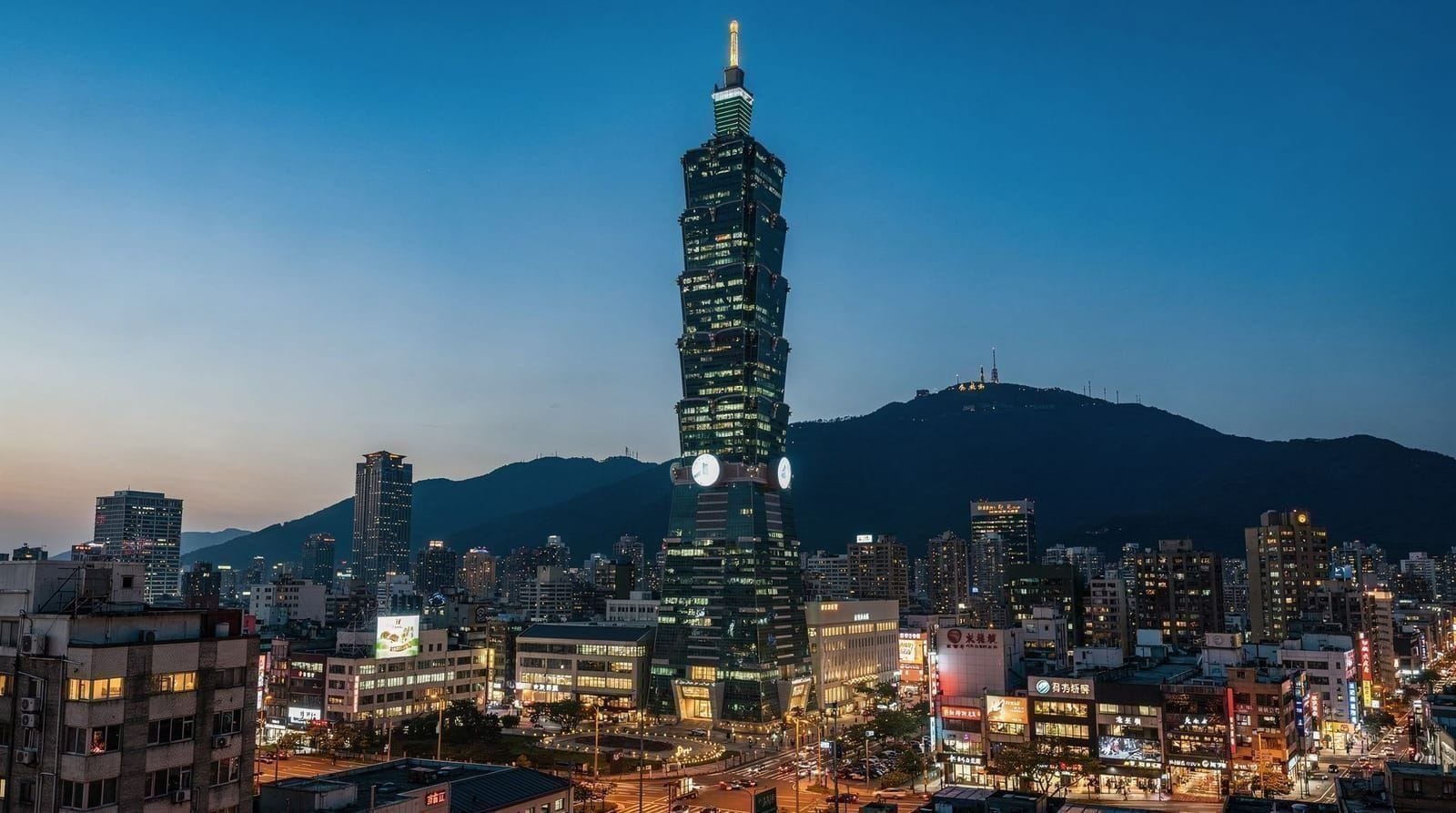
Xinyi is Taipei’s financial and retail center. The district exists at a different scale from the rest of the city: Taipei 101 is one of Asia’s tallest buildings, the malls are international luxury, and the roads are wide enough for the scale.
For tourists, Xinyi provides the observatory experience (worth doing once), access to the city’s best rooftop bars (Amba Taipei Songshan hotel bar, W Taipei’s WOOBAR), and the Elephant Mountain hike (free, rewarding, 30-minute trail to city views from the ridge east of Taipei 101).
The neighborhood is short on “local” texture. Restaurants inside malls are reliable but expensive. The surrounding residential streets have some good food but no single standout corridor.
Read more: Xinyi district guide
Shilin — the night market that became a brand
Shilin is a residential district that became internationally famous for one thing: its night market. The Shilin Night Market is Taiwan’s largest and most tourist-trodden. This creates a useful tension: the market itself (underground floor for food, street-level maze of clothing and accessories) delivers on the night market experience, but prices are slightly higher than local markets and the crowds from tour buses can be overwhelming on weekends.
If you want to see a night market that is large, photogenic, and comprehensively documented, Shilin works. If you want a night market where you feel like a participant rather than a tourist exhibit, Raohe (Songshan) or Ningxia (Datong) are better.
Beyond the market, Shilin has the National Palace Museum — Taiwan’s most important museum, holding Chinese imperial artifacts relocated from the mainland in 1948. Allocate 2–3 hours minimum. No photography of permanent collection items.
Beitou and the northern outskirts
Beitou sits 20 minutes north by MRT (Red Line to Xinbeitou branch). It functions more as a day-trip destination than a neighborhood to base from, though hot spring hotel packages are popular for weekend wellness trips.
The district has a genuinely different atmosphere from central Taipei: slower, greener, with steaming stream sections visible from the riverside walkway. The Thermal Valley (free, boiling green sulfurous pool) and Hot Spring Museum (free, former Japanese public bath) give context before paying for a private bath.
Connected: Yangmingshan is accessible by bus from Beitou — the two combine well for a full-day nature and hot spring itinerary.
Neihu and Nangang — tech district, east Taipei
These two eastern districts hold Taipei’s tech industry (Neihu Technology Park), large shopping malls (Miramar with Ferris wheel, Costco), and the Nangang Exhibition Center. Tourists visit primarily for the Maokong Gondola (Maokong Station, Brown Line) which climbs to tea plantation country above Neihu. For sightseeing, there is limited reason to base here.
Navigating between districts
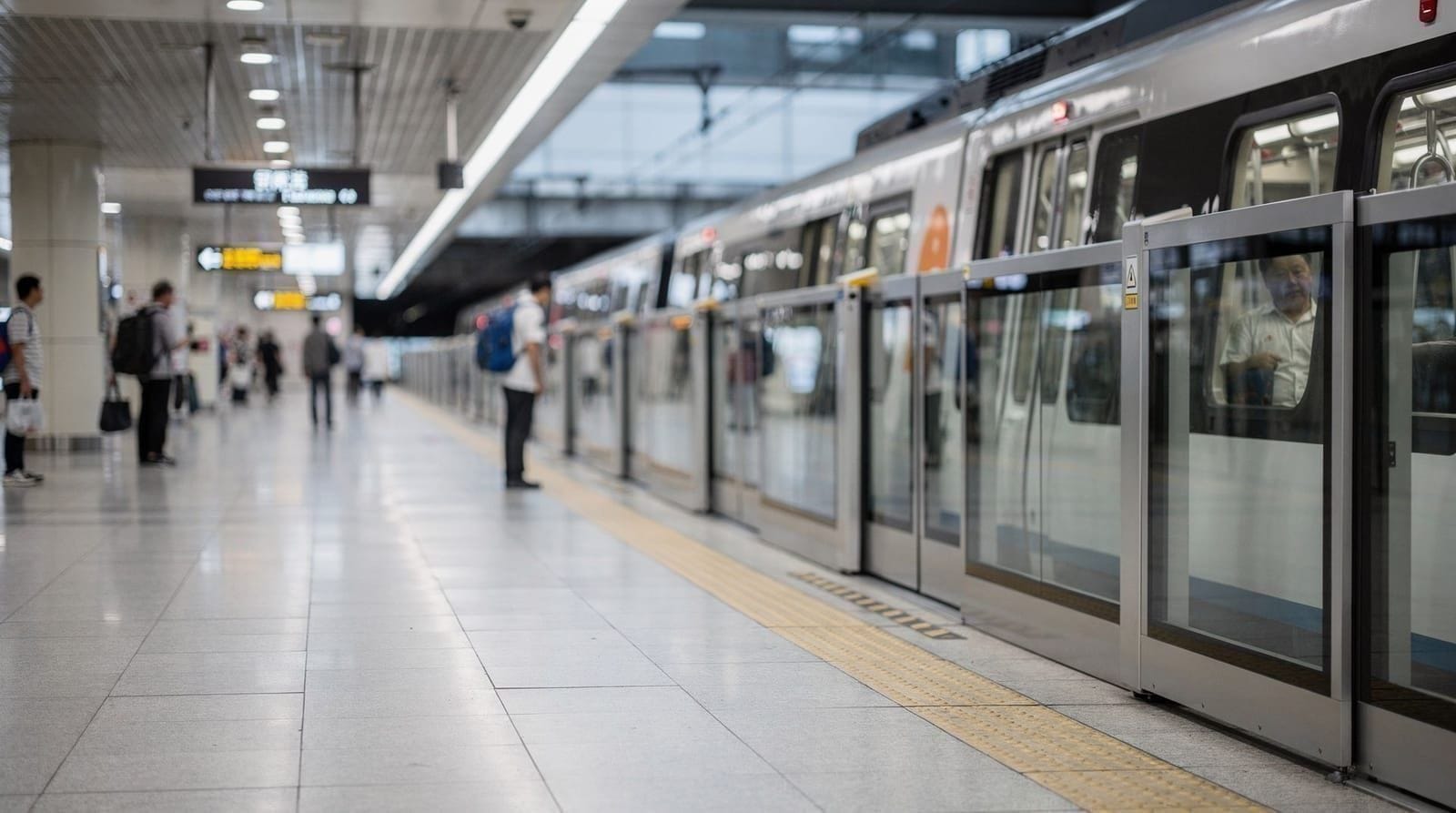
The Taipei MRT guide and the EasyCard guide together explain how to get between districts efficiently. The MRT fares are low (NT$20–65 for most in-city trips), and the system runs 06:00–24:00 on weekdays and slightly later on weekends.
A practical walking note: Taipei’s streets in residential districts have elevated pavements, occasional motorbike parking on the footpath, and shade variations. Morning and evening walks are dramatically more comfortable than midday walks between June and September.
Guided walk through Longshan Temple, Dihua Street, and Taipei 101Navigating Taipei on foot — sidewalks, motorbikes, and urban realities
Taipei is walkable within districts but has some friction that first-time visitors notice:
Sidewalks: Most major roads have sidewalks. Some residential alleys do not — you walk on the road alongside slow-moving traffic. This is normal and not dangerous. The bigger issue is motorbike parking on sidewalks: scooters often occupy half the pavement width, requiring you to walk into the road briefly. It is a minor irritation rather than a hazard.
Underpasses: Many intersections in central Taipei have underground pedestrian underpasses accessed by stairs. These are well-lit and used widely. On MRT-adjacent streets, underground walkways connect districts across several blocks (the Zhongxiao Fuxing–Zhongxiao Dunhua underground shopping corridor is extensive).
Street addresses: Taipei addresses use a system of road sections (Section 1, 2, 3, etc. along a single named road) and lane numbers. “Lane 107, Alley 6, Yongkang Street” is a real address that requires knowing to turn into Lane 107 off Yongkang Street, then find Alley 6. Google Maps handles this accurately; walking without a phone map is harder. Download offline maps.
Heat and shade: June–September, midday streets in Taipei reach 32–36°C with high humidity. Taipei’s building canopies, covered walkways, and MRT underground connections exist in part because walking in the heat is genuinely unpleasant. Plan outdoor exploration for 08:00–11:00 and 17:00–20:00; do museums and air-conditioned spaces during the hottest midday hours.
Districts outside the tourist circuit worth brief mention
Gongguan (公館) — the university area: Around National Taiwan University, Gongguan has a student-district character: cheap food, bookshops, independent music venues, affordable clothing. The night market here (Gongguan Night Market, adjacent to the MRT station) is less famous than Shilin but has excellent student-friendly pricing. MRT Green Line, Gongguan Station.
Tianmu (天母) — the expat enclave: Northwest Taipei, accessible by bus from MRT Shilin or Zhishan. Tianmu has a significant Japanese and Western expat population, giving it international restaurants, foreign supermarkets (Wellcome with imported goods), and a comfortable suburban atmosphere. Not worth a special visit unless you specifically want a non-Chinese restaurant.
Neihu Tech Zone: Home to most of Taipei’s tech companies (semiconductor, hardware, software firms). Tourist relevance is limited except for the nearby Miramar Shopping Center (with Ferris wheel observation ride) and the Maokong Gondola base station (MRT Brown Line). The Ferris wheel at Miramar is most visible at night when the structure is lit.
Luzhou and Sanchong (New Taipei City): The MRT Orange Line extends into these New Taipei suburbs. Unless you are staying here for budget hotel reasons, there is limited tourist pull. The Luzhou area does have some excellent traditional noodle shops frequented by locals who know.
The districts you will actually use — a frank summary
Most tourists in Taipei circulate through 5–6 districts in a typical 5-day visit:
- Zhongzheng / Taipei Main Station (transport hub, day-trip trains, some sightseeing)
- Wanhua (Longshan Temple, Ximending adjunct)
- Zhongshan / Dadaocheng (gallery district, colonial streets, Dihua Street)
- Daan (Yongkang Street food, Da’an Forest Park, mid-range accommodation)
- Xinyi (Taipei 101, Elephant Mountain, one visit)
- Shilin or Songshan (night market, National Palace Museum direction)
Beitou is a separate half-day or overnight; Tamsui is a Red Line day trip. Understanding which MRT line connects which districts makes the city feel manageable in a way that looking at a map initially does not suggest.
Guided walk through Longshan Temple, Dihua Street, and Taipei 101Neighborhoods and the MRT — the key connection
Every district described here is served by at least one MRT line. The Red Line is the most tourist-relevant backbone:
- North end: Danshui (Tamsui), then stations south through Beitou, Shilin, Zhongshan, Taipei Main, CKS Memorial Hall, Daan, to Xiangshan (Elephant Mountain / Xinyi)
This single line covers most of what most tourists do in Taipei. Add the Blue Line for east-west travel (Ximending, Xinyi City Hall, Nangang) and the Green Line for Daan Forest Park and Gongguan, and you have the full picture.
For transportation details, see the Taipei MRT guide. For accommodation decisions by district, see where to stay in Taipei. For connecting your neighborhood exploration with day trips, the Taipei itinerary guide suggests which district pairings work by day.
Districts compared at a glance
| District | Vibe | Best for | MRT line |
|---|---|---|---|
| Zhongzheng | Functional, transit hub | Day-trip departures, CKS Memorial | Red + Blue |
| Zhongshan | Galleries, quiet colonial streets | Aimless wandering, Japanese food | Red + Green |
| Wanhua | Oldest, gritty, honest | Longshan Temple, history | Blue |
| Ximending | Youthful, dense, always on | Shopping, people-watching | Red + Green |
| Dadaocheng | Preserved merchant quarter | Tea, fabric, cafes in old shophouses | Red + Brown (nearby) |
| Daan | Livable, food-forward | Yongkang Street, Da’an Forest Park | Red + Green |
| Xinyi | Modern, financial center | Taipei 101, Elephant Mountain, rooftop bars | Blue |
| Shilin | Residential, market-famous | Night market, National Palace Museum | Red |
| Beitou | Slower, hot springs | Half-day wellness trip | Red (branch) |
Which neighborhood suits which traveler
First-time visitors with 3–5 days get the most out of Zhongzheng (arrival orientation), Wanhua (Longshan Temple), Ximending, and Xinyi — the classic core covered in the 3-day itinerary.
Food-focused travelers should prioritize Daan (Yongkang Street), Dadaocheng, and one of the night-market districts — Shilin, or better, Raohe or Ningxia which sit outside this guide’s core list but are easy add-ons.
Travelers who dislike crowds get more from Zhongshan’s quieter northern stretches, Dadaocheng on a weekday morning, and Linquan Street’s independent restaurant scene — all covered above — rather than repeat visits to Ximending or Shilin at peak hours.
Solo travelers and business trips tend to do best in Zhongshan or Daan — both have a high density of independent cafes and restaurants suited to eating alone, strong late-night MRT connections, and a broad choice of hotel price points from budget to boutique. Xinyi suits business travel logistically but has less character for evenings off; pair a Xinyi stay with an evening walk through Zhongshan or a night at Raohe Night Market to balance it out.
Taipei highlights walking tour — covers the core districts with a guide who explains context you’d otherwise missCheck availabilityFrequently asked questions about Taipei neighborhoods guide — district by district
Which Taipei neighborhood is best for a first-time visitor to stay in?
Is Wanhua safe for tourists to visit?
Top experiences
Bookable activities with verified prices and instant confirmation on GetYourGuide.