Dadaocheng and Dihua Street — Taipei's historic quarter guide
Taipei: Dadaocheng market tour taiwanese cooking class
Duration: 3 hours
Is Dadaocheng worth visiting in Taipei?
Yes — Dadaocheng is the most authentically historical neighborhood in Taipei and the best place to see traditional commerce still functioning in 19th-century shophouses. Dihua Street and the Yongle Fabric Market are genuinely used by local traders and residents. Allow 2–3 hours; combine with Longshan Temple for a half-day in old Taipei.
| Where | Dihua Street, Datong District |
| Cost | Free to walk; TWD 300–500 for a full morning |
| Time needed | 2–3 hours |
| Getting there | MRT Beimen Station, exit 3, 5-min walk |
| Best time | Weekday mornings 9am–noon |
What Dadaocheng is
Dadaocheng (大稻埕 — “large rice-drying ground”) is Taipei’s oldest commercial district — established in the 1850s by settlers who moved north from the original Wanhua settlement after a flood, and expanded significantly after Dihua Street became the main trading axis for tea, camphor and textiles in the late 19th century.
The district was Taipei’s commercial heart for nearly 100 years, and it shows in the architecture: Dihua Street has the highest density of preserved late Qing and Japanese-colonial-era shophouses in the city — three to four stories of stone and brick with recessed colonnaded arcades at ground level, ornate neoclassical or baroque facade details, and traditional Chinese courtyard interiors behind. Most are still in use as shops, not museums.
Unlike similarly preserved historic streets elsewhere in Asia, Dadaocheng has not been sanitized into a souvenir mall. The ground floor of the Yongle Market building is still a working wet market; the upper floors are still used by fabric traders; the dried goods shops on Dihua Street still sell dried seafood, traditional Chinese medicine herbs and specialty ingredients to local restaurants.
How Dadaocheng came to exist
The neighborhood’s origins are rooted in one of the more dramatic episodes in early Taipei history: the Ting-Chiang Incident of 1853 (頂下郊拚). This was an armed conflict between two Fujianese migrant groups — the Tong’an clan (from Tong’an County) who controlled the original Wanhua (Manka) settlement, and the Ting-Chiang settlers (from Tong An and San Yi counties) who were based further inland. The conflict, which involved arson, displacement and several deaths, resulted in the Ting-Chiang group and their Anxi county allies being expelled northward — where they established a new settlement at the then-undeveloped riverbank that became Dadaocheng.
The displaced settlers were fortunate in their timing. The riverbank they occupied proved ideal for the emerging export trade in Taiwanese oolong and black tea, which European and American merchants were beginning to source through Formosa in the 1860s. The key figure in this development was a Scottish trader named John Dodd, who arrived in Taiwan in 1864. Dodd recognized the quality of the highland oolong from the mountains behind Taipei, advanced credit to local farmers to expand cultivation, arranged shipping through Dadaocheng’s river port, and successfully marketed “Formosa Tea” to buyers in New York and London.
By the 1880s, Dadaocheng was the most important tea export center in East Asia. The foreign trading houses — including Jardine Matheson, Brown and Company, and Dodd’s own Dodd and Company — maintained warehouses and offices along the waterfront. The wealth generated by this trade funded the elaborate shophouse construction that defines Dihua Street today.
The tea boom receded in the 1890s as Japanese colonial rule (1895–1945) restructured the economy, but the built environment survived largely intact — preserved partly through inertia, partly through the continuing function of the dried goods and textile trades that replaced tea as the district’s commercial anchor.
The architecture: what you are looking at
The shophouses on Dihua Street represent a hybrid architectural type sometimes called “Taiwan Baroque” — a Fujian structural tradition overlaid with European decorative elements absorbed during the Japanese colonial period. The base structure is the southern Fujianese shophouse: a narrow frontage (typically 4–6 meters), deep plan (up to 30 meters), with rooms arranged in series behind a street-facing commercial ground floor.
The facades, particularly those built or renovated in the 1910s–1930s, add European neoclassical details: pilasters, arched windows, dentil moldings, occasionally art deco geometric patterns. Because each shophouse was commissioned by a different merchant family, the specific decorative choices vary significantly — one might have Roman columns, the next Baroque scrollwork, the next an art deco parapet. The consistency is structural, not decorative, which gives Dihua Street its visual rhythm without uniformity.
Look for the date plaques on some buildings — several retain their original construction dates in Chinese numerals, typically from the Meiji or Taisho eras (1880s–1920s). The patina difference between original stone facing and later cement repairs is usually visible on close inspection.
What to see and do
Dihua Street (迪化街)
The main artery of Dadaocheng runs north–south, roughly 800m from the Minsheng West Road intersection (south) to the old north gate area. The best section for architecture and traditional shops is between Nanjing West Road and Minsheng West Road — a stretch of about 400m.
Walk slowly and look up: the facade details above the arcaded ground floors are elaborate and varied — each building was commissioned by a different merchant family, resulting in a mixture of aesthetic choices within a consistent structural typology.
What to buy/look at:
- Dried goods and specialty ingredients: several shops still sell Chinese medicinal herbs (dong quai, goji berry, dried chrysanthemum) in open wooden drawers; the visual and olfactory experience is distinctive
- Pineapple cake: Lee’s Pineapple Cake (Lee Tai) on Dihua Street sells one of the better non-tourist-shop versions in Taipei (TWD 40–55 per cake)
- Traditional food packaging: some stalls still sell goods wrapped in traditional red-and-white pattern plastic bags — the same bags used by Taiwanese families for decades
- Design and lifestyle shops: in recent years, several independent design shops and cafés have moved into restored shophouses on side streets; Dihua Street 247 (No.
- is a particularly well-renovated example
Yongle Market (永樂市場)
A multi-story market building at No. 21 Dihua Street. The ground floor is a traditional wet market — fish, vegetables, pickles, tofu — functional and local. Upper floors (2nd and 3rd) are the fabric market, where wholesale and retail fabric traders have operated for decades. The range is extraordinary: traditional embroidered silk, cotton printed fabrics, polyester novelty prints, haberdashery, tailoring accessories.
The fabric market is busiest on weekday mornings (9am–noon). It is completely genuine — most customers are local garment workers, small fashion designers and home sewers. No English menus, but pointing and Google Translate work fine.
Basement food hall: The basement level of Yongle Market has a small canteen selling traditional Taiwanese comfort food — lu rou fan (braised pork rice), oyster vermicelli, sesame noodles — at prices aimed at the market workers. Open from early morning. TWD 60–100 (€1.65–2.80) per dish.
Dadaocheng market tour and Taiwanese cooking class — explore the market and cook what you findCheck availabilityXiahai City God Temple (霞海城隍廟)
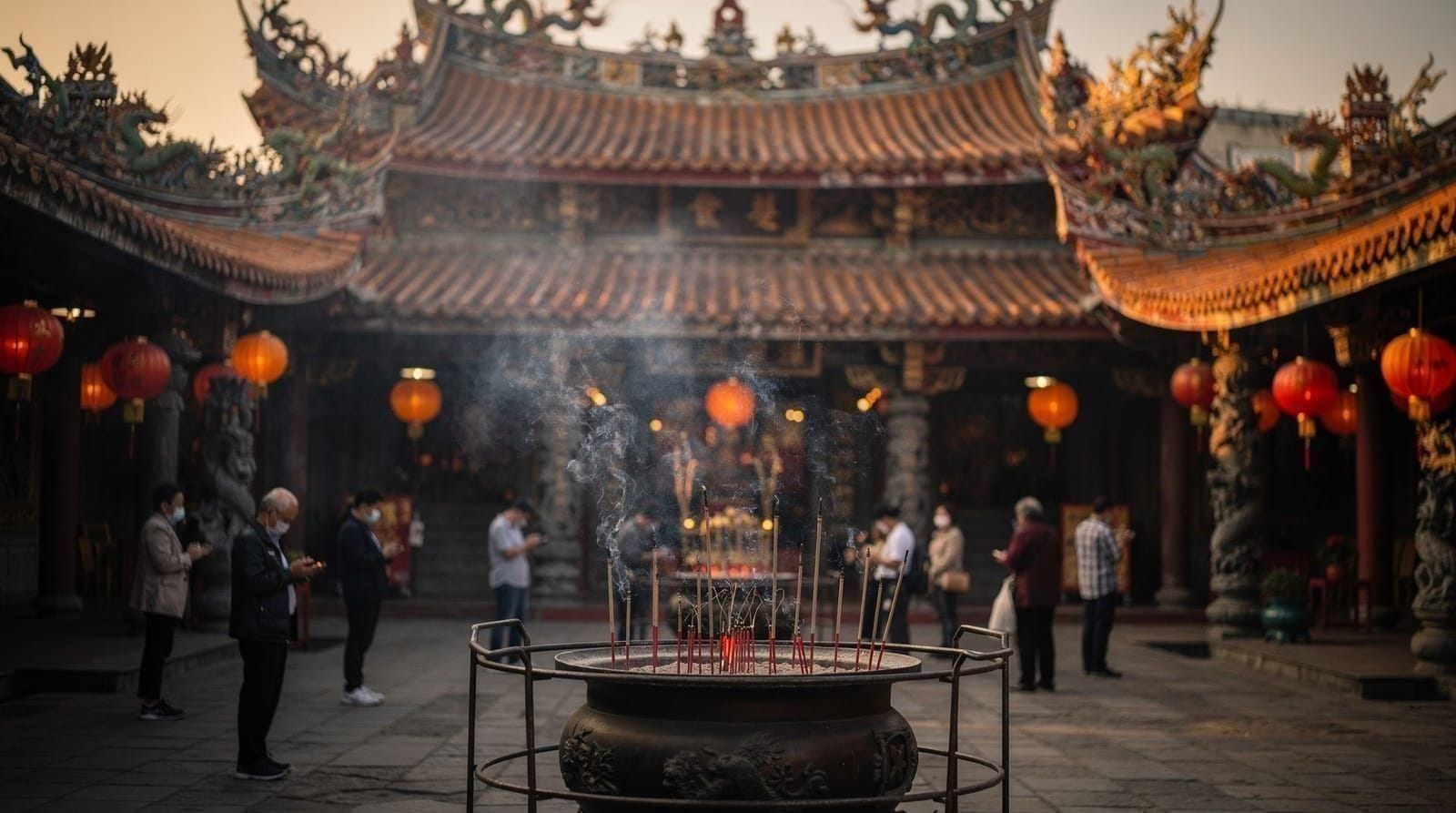
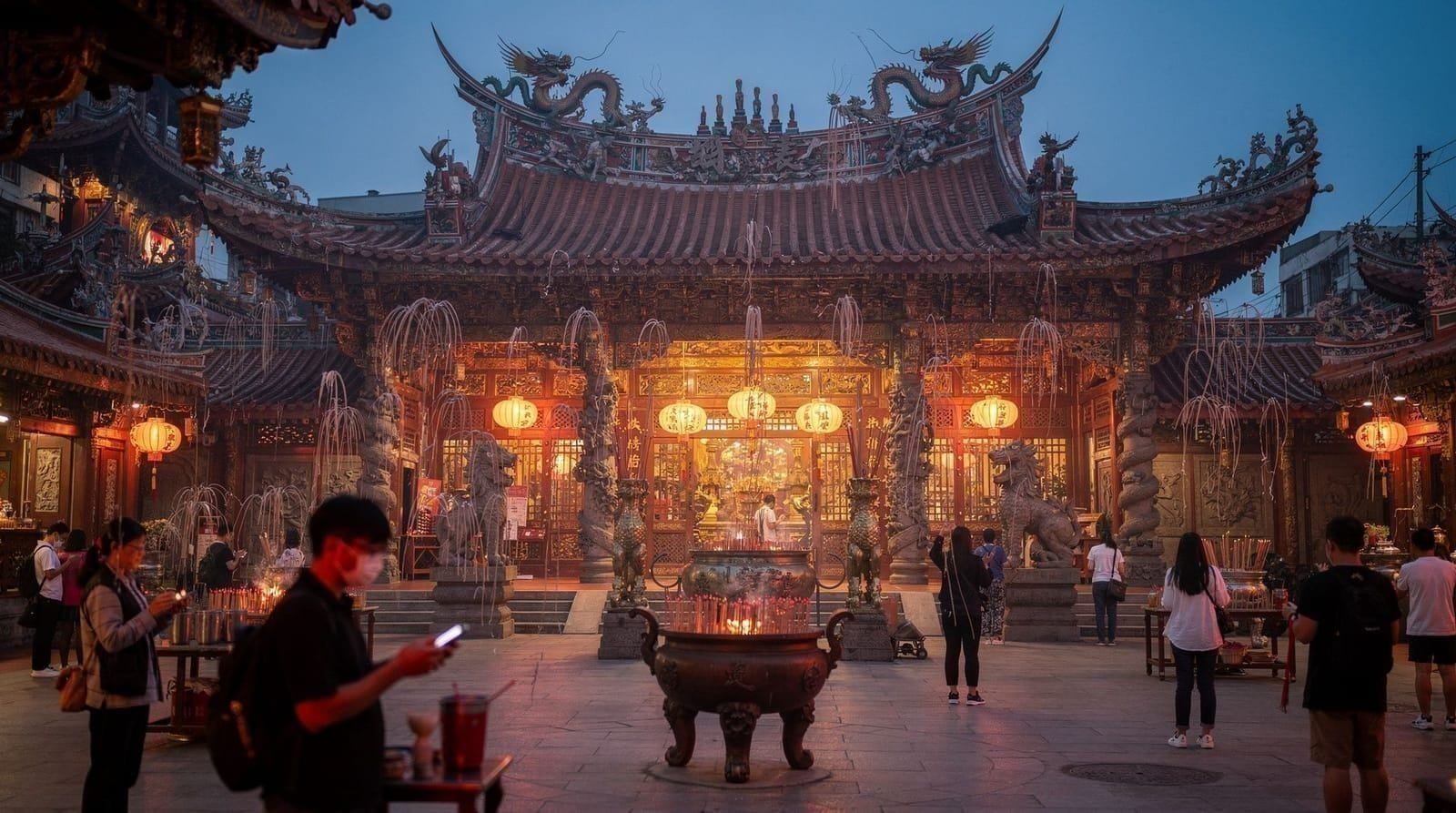
At No. 61 Dihua Street, about halfway along the main commercial stretch, sits one of the most important and actively worshipped temples in Taiwan — the Xiahai City God Temple (霞海城隍廟). This small, crowded shrine receives hundreds of thousands of visitors annually, primarily because of its reputation as the most effective matchmaking temple in Taipei.
The temple was founded in 1859 and dedicated to the Xiahai City God (霞海城隍), whose origin legend is unusual: the deity is said to be the spirit of a man from Xiamen who died defending the original Dadaocheng settlers during the 1853 Ting-Chiang Incident. His 38 companions who died alongside him are also venerated here as subsidiary deities.
The matchmaking altar features Yue Lao (月老 — the God of Marriage) with red thread available to tie around your wrist as a connection to your prayer. The temple records claim that over 300,000 successful marriages have been mediated at this altar since the 1950s — a number that is impossible to verify but not implausible given the consistent line of visitors outside on any weekday afternoon.
The ritual at the matchmaking altar is more accessible here than at most temples: English-language instructions are posted at the entrance, and the staff are accustomed to non-Chinese visitors. Incense, red thread and prayer papers are available for TWD 50–100 (€1.40–2.80). This is not a tourist performance — the people queuing ahead of you are genuinely hoping.
Taipei Xinfu Market (新富市場)
50m south of the main Dihua Street area, at 70 Sanshui Street. A renovated Japanese-era covered market (1935) that now functions as a cultural and food venue — the original horseshoe-shaped market hall is preserved, with a small museum about the history of the market and a café in the courtyard. Open 9am–6pm (closed Mondays). Entry: TWD 30 (€0.85) for the museum section.
This is less famous than Dihua Street and more interesting for context — the Japan-period market architecture is unusual in Taipei, where most Japanese-era buildings were demolished after 1945.
URS creative spaces
The Urban Regeneration Station (URS) program placed creative spaces inside renovated shophouses along Dihua Street in the 2010s. The most accessible are:
URS127 (No. 127 Dihua Street): A design and exhibition space in a restored shophouse, hosting rotating shows of Taiwanese design, craft and illustration. Free entry. Open Tuesday–Sunday, 11am–6pm.
URS329 (No. 329 Dihua Street): Further north, a larger space used for community events, pop-up markets and cultural workshops. Check current programming on arrival. Free entry when open.
These spaces represent Dadaocheng’s gradual shift from purely functional commerce toward a mixed economy that includes design culture and food — a transition that is still incomplete, which is why the neighborhood retains its non-sanitized character.
Tamsui River waterfront
Dihua Street runs parallel to the Tamsui River. The riverside promenade (accessed via Guiyang Street or Liuhe Street) is a good evening walk — the industrial gantry cranes that operated here for a century are preserved as public art, and the sunset over the river toward Guandu is frequently dramatic. The promenade connects north to Dajia Riverside Park.
What to eat and drink in Dadaocheng
Traditional breakfast and congee
The streets around Dihua Street have several traditional diners serving early breakfast (6–10am) — xifan (rice congee) with preserved eggs and salted pork, fresh soy milk, and fried dough sticks. Look for plastic stools and steaming pots on side streets off Dihua around the market building.
Small food stalls on Dihua Street
Lai Ah Ji Tangyuan (at No. 226 Dihua Street): Glutinous rice ball soup with peanut and sesame filling — one of those hole-in-the-wall operations that have been in the same location for decades. TWD 40–60 (€1.10–1.65).
Traditional herb tea (青草茶): Several vendors sell bitter herb tea from large enamel pots — a cooling drink believed to reduce internal heat. TWD 20–30 (€0.55–0.85) per cup. Acquired taste.
Fresh tofu: The tofu vendor at the south end of the Dihua Street covered market section (look for the wooden cart) sells soft silken tofu from blocks, served with ginger syrup — one of those foods that requires no explanation to enjoy. TWD 30–40 (€0.83–1.10).
Cafés and design spaces
The secondary streets off Dihua (particularly Guiyang Street and Liuhe Street) have several good independent cafés in renovated spaces — single-origin coffee, matcha drinks and small snacks at prices TWD 120–180 (€3.30–5.00) per drink. These are notably less crowded than Da’an district cafés.
Ningxia Night Market
Ten minutes walk east of Dihua Street (or one MRT stop to Zhongshan, then a 12-minute walk west) is Ningxia Night Market (寧夏夜市) — a smaller, more local-feeling night market than Shilin or Raohe that is worth combining with a Dadaocheng afternoon. It operates from around 5:30pm and the specialty items include oyster vermicelli (蚵仔麵線, TWD 60–80/€1.65–2.20), pig blood cake on a stick (TWD 30–40/€0.83–1.10), and run bing (潤餅, spring rolls with peanut powder, TWD 50–70/€1.40–1.95). For a full comparison of Taipei’s night markets, see the taipei night markets guide.
Taipei foodie history tour — includes Dadaocheng, traditional markets and street foodCheck availabilityGetting there
MRT: Beimen Station (Blue/Songshan-Xindia Line), exit 3 — 5-minute walk to the south end of Dihua Street. Alternatively: Shuanglian Station (Red Line), 10-minute walk west through Ningxia Night Market area to Dihua.
By foot from Longshan Temple: Walk north on Kangding Road or Xining Road (~20 minutes), crossing the Zhongxiao West Road overpass.
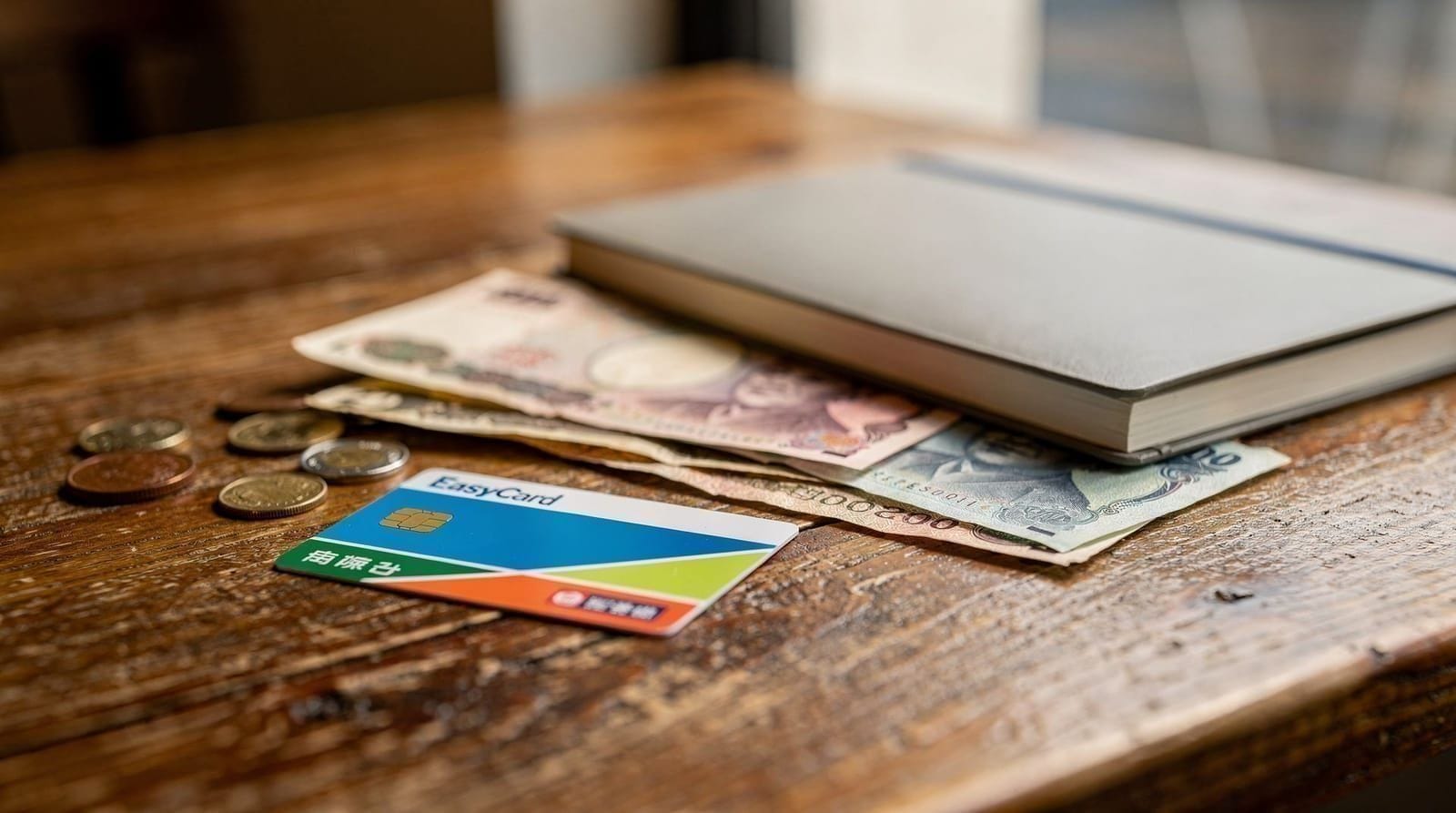
Using an EasyCard for the MRT is straightforward — single-ride fares from the main tourist areas are TWD 20–35 (€0.55–0.97).
Best time to visit
Weekday mornings (9am–noon): The market is most alive — fabric traders, wet market sellers, restaurant buyers all active simultaneously.
Chinese New Year period (2–3 weeks before the holiday): Dadaocheng hosts one of Taipei’s most famous pre-New Year markets, with dried goods, preserved meats, traditional candies and peanut sweets sold from stalls in the street. Extremely crowded but extraordinary — the mercantile energy of the 19th century briefly returns. See best time to visit Taipei for seasonal planning context.
Avoid: Weekend afternoons in August and September (peak heat + typhoon season + large crowds). The area gets much hotter than Taipei’s air-conditioned malls.
Budget and costs
A morning in Dadaocheng can be done very cheaply — breakfast TWD 80–120 (€2.20–3.35), Xiahai City God Temple entry free, market browsing free, a herb tea TWD 20 (€0.55). A mid-range visitor spending on pineapple cakes, a café coffee and market snacks should budget TWD 300–500 (€8.35–13.90) for the morning. The Xinfu Market museum section is TWD 30 (€0.85). Nothing requires significant expenditure. See Taipei on a budget for the broader cost context.
Dadaocheng and tea culture
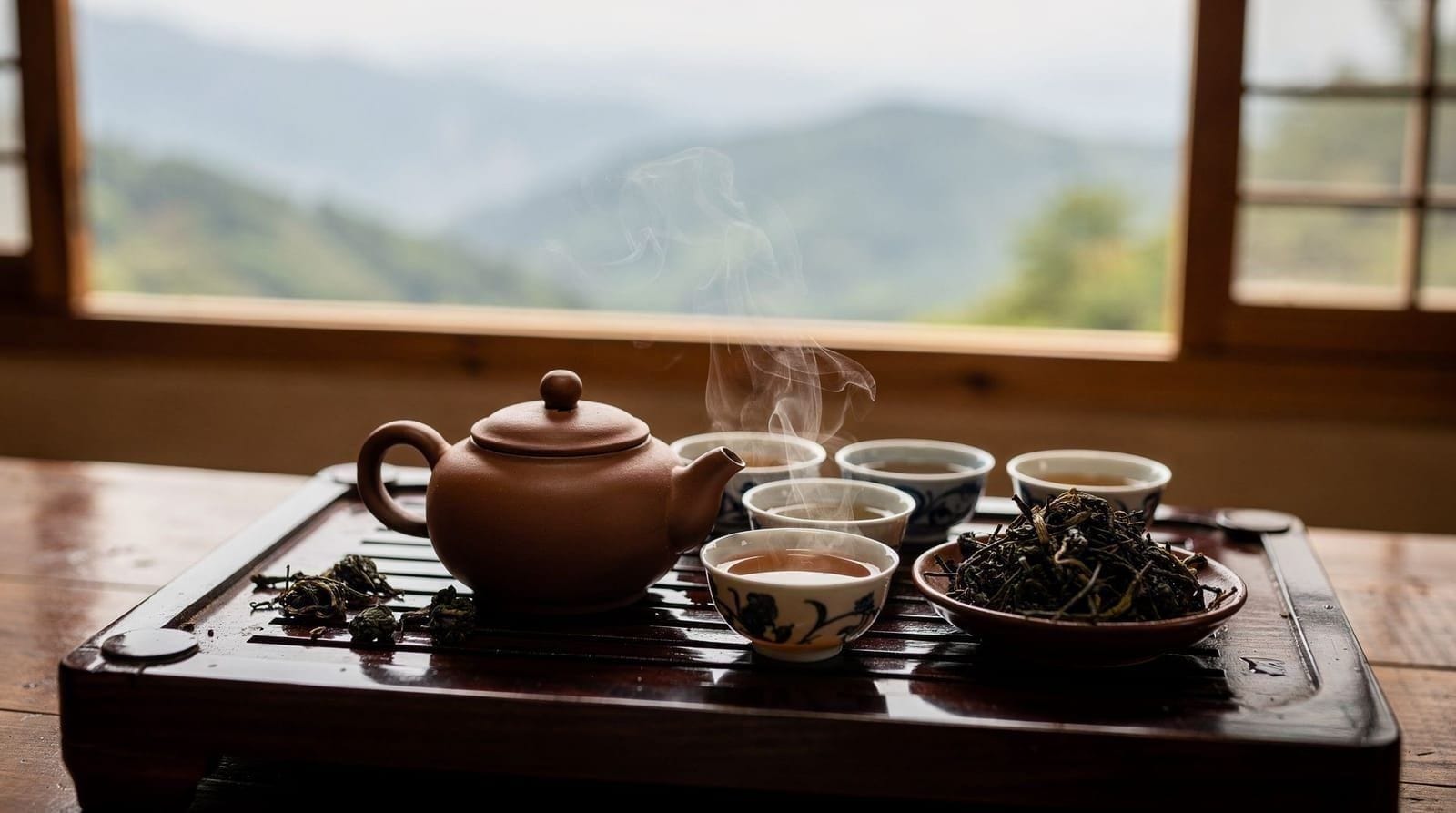
The neighborhood that made Taiwan’s tea trade is still connected to it. Several shops on and around Dihua Street sell traditional Taiwanese teas — Alishan high mountain oolong (TWD 400–800/€11.10–22.25 per 75g), Dongding oolong, Oriental Beauty, and the cheaper Tieguanyin grown in the Muzha hills. These are not tourist souvenir shops; they are wholesale suppliers that also sell retail. Prices are close to what Taiwanese tea buyers pay. For background on Taiwan’s tea culture, see the taipei tea culture guide.
Combining with other neighborhoods
Longshan Temple (Wanhua): 20 minutes on foot south, or 2 MRT stops. Together they make the definitive half-day in historical Taipei — morning in Dadaocheng for fabric and food, afternoon at Longshan for temple atmosphere.
Bao’an Temple + Confucius Temple: 20 minutes walk northeast. The combination of Dadaocheng’s commercial history with Datong’s religious architecture makes a full day.
National Palace Museum: MRT from Beimen or Shuanglian to Shilin takes about 25–30 minutes. Morning in Dadaocheng, afternoon at the National Palace Museum is a reasonable full-day cultural itinerary.
The Xiahai City God Temple
At No. 61 Dihua Street, tucked between the fabric and dried goods shops, is Xiahai City God Temple (霞海城隍廟) — one of the smallest but most visited temples in all of Taiwan. The City God (城隍爺) is the deity of the city and its residents, responsible for maintaining justice and social order. But Xiahai’s real fame comes from a secondary altar: Yue Lao (月老), the God of Marriage and Romantic Fortune.
The legend attached to Xiahai’s Yue Lao — that over 300,000 marriages have been facilitated through prayers here — is probably apocryphal but reflects a genuine phenomenon. On weekday evenings and particularly on weekends, the queue to pray at the Yue Lao altar extends into the street. Many visitors are young, unmarried Taiwanese. The ritual involves filling in a prayer card (in Mandarin; staff can help), presenting offerings (a specific set of sweets, a comb and other items — packaged and sold at the temple entrance for TWD 150/€4.15), and requesting the god’s assistance.
Visitors are welcome to observe and participate; the space is small (about the size of a large living room), so crowding is inevitable at peak times. Visit early morning for a calmer experience.
The Dihua Street architecture in detail
The buildings along the core section of Dihua Street represent three distinct periods of construction, visible if you know what to look for:
Qing dynasty style (pre-1895): Brick and stone shophouses with traditional Chinese eave forms and recessed ground-floor colonnades. The narrowest examples — some only 3–4 meters wide, extending 30–40 meters deep — reflect the high value of street frontage in the 19th-century market. Rarely pure examples survive; look for brick construction with no stucco cladding.
Taiwan Baroque / Taiwanese colonial (1895–1945): Facades resemble neoclassical European architecture applied to a traditional shophouse structure — pediments, pilasters, arched openings, decorative crowns. The Japanese colonial government introduced building codes that required facade upgrades; many shophouse owners responded with elaborate neoclassical frontages while keeping traditional interiors. Numbers 154–160 on Dihua Street are well-preserved examples.
Post-war reinforced concrete (1945–1970s): Plainer facades, often tiled in the beige or pale green ceramics common to mid-century Taiwanese construction. Less attractive individually but now providing historical context — the block-by-block visual variety of Dihua Street comes from this layering of periods.
The Dihua Street preservation effort began in the 1990s, when the city government identified the area for potential redevelopment. Residents and cultural advocates organized successfully to designate the core section as a heritage conservation zone — one of the earlier such efforts in Taiwan and a model for later heritage projects.
Shopping in Dadaocheng
Beyond the fabric market and dried goods, Dadaocheng has developed a secondary retail layer of design-oriented shops in the past decade. These occupy restored shophouses on Dihua Street and adjacent lanes:
DAD (Design Art Design): Gallery and retail space at No. 21, Lane 14, Dihua Street — contemporary Taiwanese product design, ceramics, textiles.
Yongle Cloth Market (upper floors): Still the most practical shopping for fabric — silk by the meter from TWD 200–800 (€5.55–22.25), cotton from TWD 60–150 (€1.65–4.15), embroidered table linens at fair prices.
Traditional Chinese medicine shops: Along the stretch between Nanjing West and Minsheng West roads, several pharmacies still operate as traditional Chinese medicine dispensaries. The visual experience — walls of wooden drawers, scales, dried ingredients — is evocative even if you have no intention of purchasing.
Southern goods and dried seafood: The northern end of Dihua Street (near Minsheng West Road intersection) has the highest concentration of dried seafood shops — dried scallops, shrimp, abalone, and specialty items for Chinese New Year food gifts. Prices are wholesale-adjacent; buying here rather than in supermarkets saves significantly for anyone cooking traditional Taiwanese dishes.
Seasonal note: Chinese New Year market
The two to three weeks before Chinese New Year (January–February) transform Dadaocheng completely. The regular shops are joined by hundreds of temporary stalls selling: dried goods, preserved meats, traditional candy and sweets, Taiwanese specialty items for gift-giving, red paper and couplets (for door decoration), and festive snacks. The market hours extend to late evening and the crowds are substantial — this is the single busiest period in Dadaocheng’s annual calendar.
If your visit coincides with this period, go on a weekday morning for a manageable experience. If you want the full atmosphere, go on a Saturday evening and accept the crowd as part of the experience.
See the Longshan Temple guide and best temples in Taipei for routing. For how Dadaocheng fits in the broader neighborhood picture, see taipei neighborhoods guide and taipei itinerary guide.
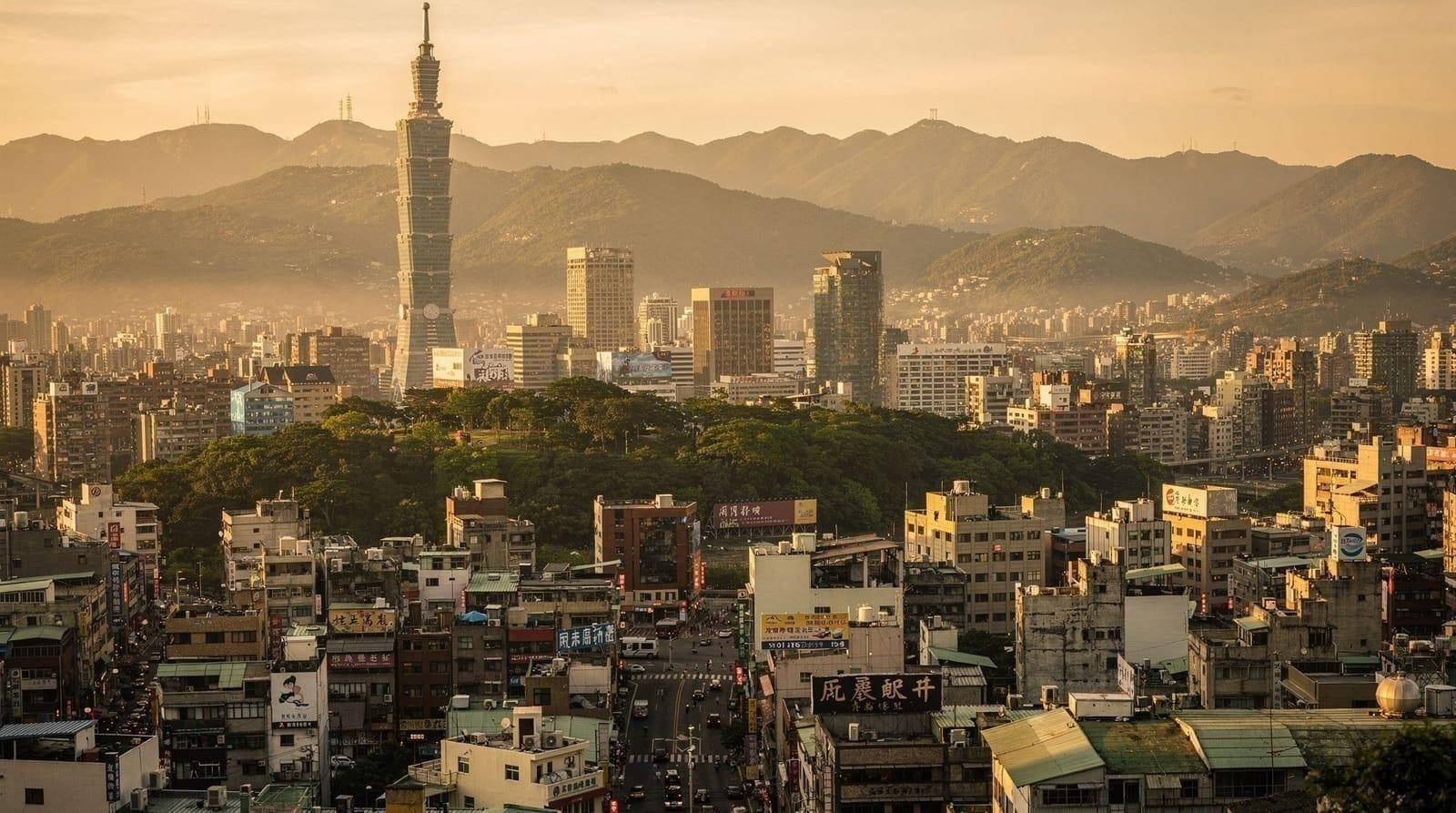
Tour combining Longshan Temple, Dihua Street and Taipei 101 — an efficient overview of three distinct Taipei erasCheck availabilitySouvenirs worth actually buying here
Dadaocheng is one of the few places in Taipei where souvenir shopping does not feel like a tourist tax. Dried longan, dried mushrooms and Chinese medicinal herbs are sold at prices close to what local restaurants pay wholesale — a small bag of dried shiitake (TWD 150–300) travels well and is genuinely useful.
Loose-leaf oolong from the tea wholesalers on Dihua Street is priced far below what the same grade costs in tourist-facing tea shops elsewhere in the city — expect to pay TWD 400–800 for 75g of good Alishan high mountain oolong. Fabric offcuts and small embroidered items from the Yongle Market upper floors make distinctive, lightweight gifts. The one thing to avoid buying here: pre-packaged “gift box” versions of dried goods aimed at tourists, which cost 2–3 times the same product sold loose.
Is Dadaocheng worth it if you’re short on time?
If your Taipei trip is under 3 days, Dadaocheng competes for time against the National Palace Museum, Longshan Temple and the night markets — all strong claims on a limited schedule. The honest answer: Dadaocheng is the best choice if you want to see a neighbourhood that still functions as itself rather than a curated tourist attraction, and if you have any interest in tea history or traditional shophouse architecture.
It’s a lower priority if your time is genuinely limited to 2 days and you have to choose between it and Longshan Temple — pick Longshan first, since it’s more singular an experience, and add Dadaocheng if a third or fourth day opens up. For most 5-day-plus itineraries, both fit comfortably in the same morning or afternoon given their 20-minute walking distance apart.
Photography and etiquette in a working market
Dadaocheng is a living commercial district, not a museum, and that changes how you should behave with a camera. The Yongle Market’s wet market ground floor and fabric traders upstairs are working businesses — ask before photographing vendors directly, and be mindful that narrow aisles get congested if photographers block foot traffic. The Xiahai City God Temple’s matchmaking altar is genuinely important to the people praying there; photograph the temple’s exterior and general atmosphere freely, but avoid pointing a camera directly at someone mid-prayer. Street photography of the shophouse facades themselves is completely unrestricted and is, honestly, the main reason most visitors bring a camera to Dihua Street at all.
Top experiences
Bookable activities with verified prices and instant confirmation on GetYourGuide.