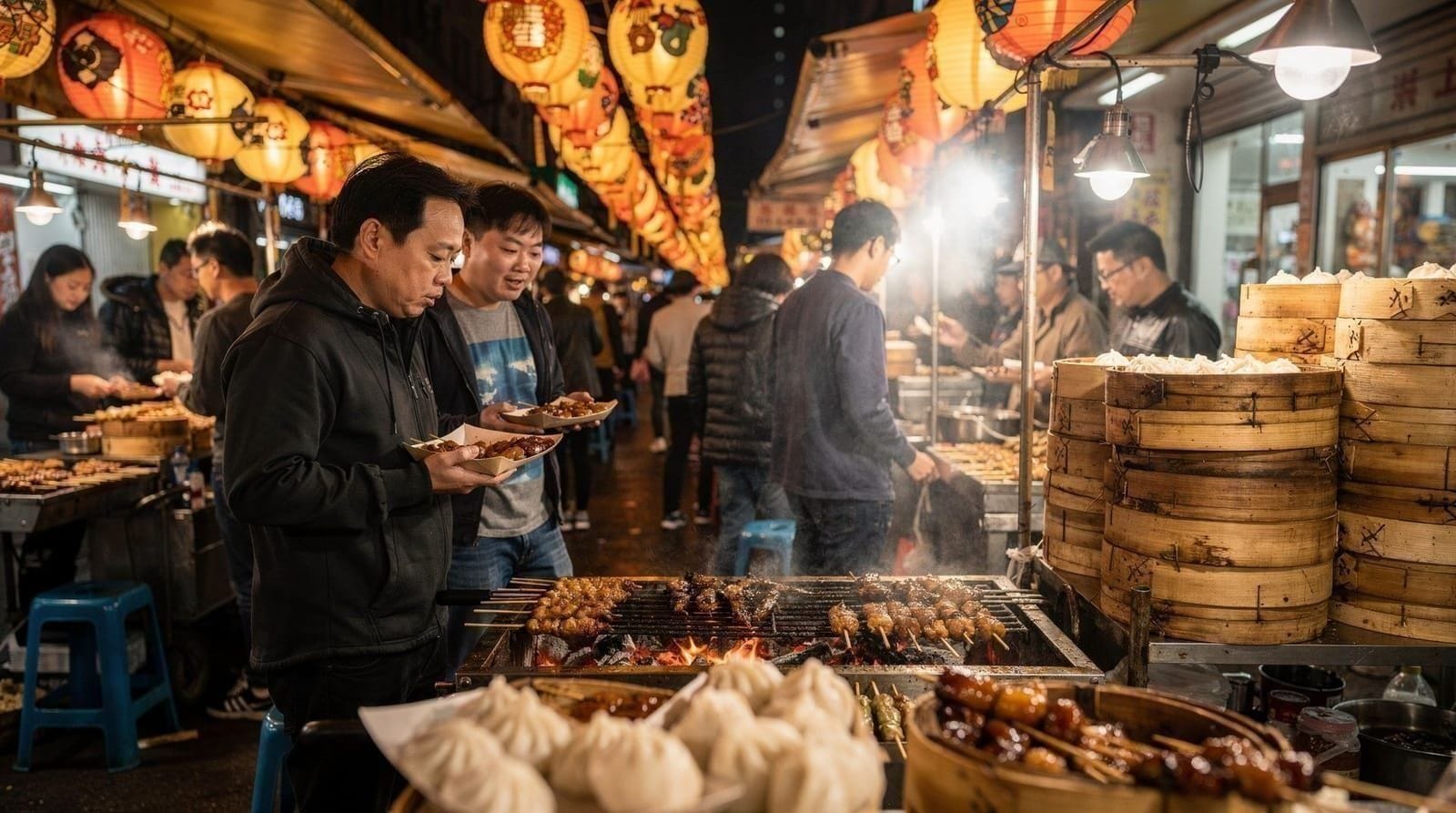
Taipei night market food tour — honest review
Taipei: Street food hidden eats night market food tour
Duration: 3 hours
Do you need a guide for Taipei night markets?
The short answer is no — and the longer answer includes “but.” Taipei’s night markets are more accessible to independent visitors than Bangkok’s street food or Hong Kong’s wet markets. The stalls have photos, the pricing is posted, and the transaction is simple. The question is whether you want context alongside the food, which is where a guide earns their fee.
This review covers the most widely booked food tour format (guided group, NT$1,700–2,200/person, 3 hours) and the private tour alternative, plus an honest assessment of what you’re actually paying for beyond the food itself.
| Where | Ningxia, Raohe, Linjiang/Tonghua or Shilin markets |
| Cost | Around NT$1,700–4,300/person depending on format |
| Time needed | 2–3 hours |
| Getting there | MRT to the relevant station per market (below) |
| Best time | 19:00–21:00 for widest stall selection |
What the food tour experience is like
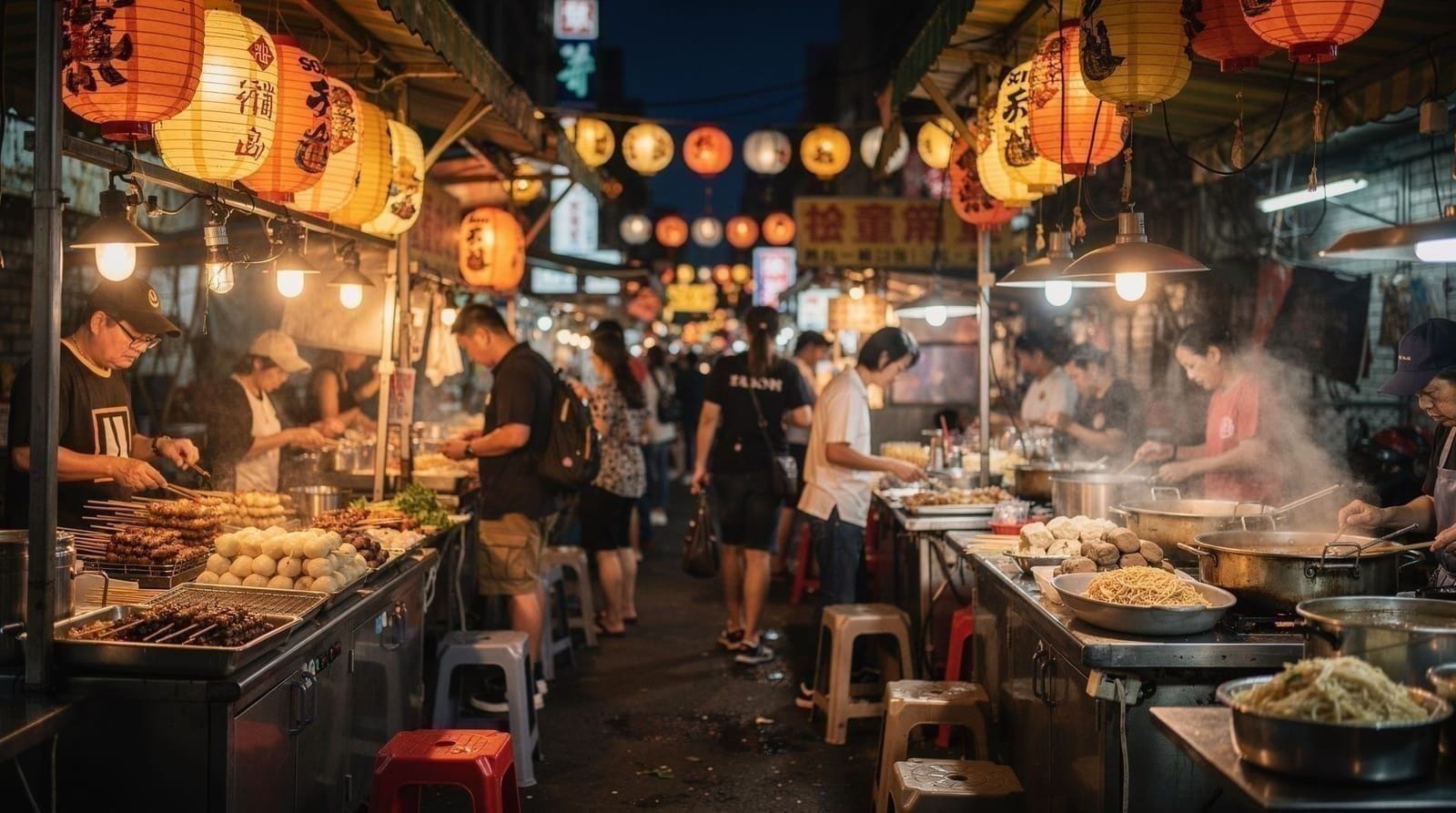
The hidden eats format: The most popular Taipei food tour format deliberately bypasses the tourist-heavy markets (Shilin especially) in favour of smaller, more locally-oriented markets — Ningxia, Raohe, Linjiang Street, or combinations of smaller neighbourhood night markets that most visitors never find on their own.
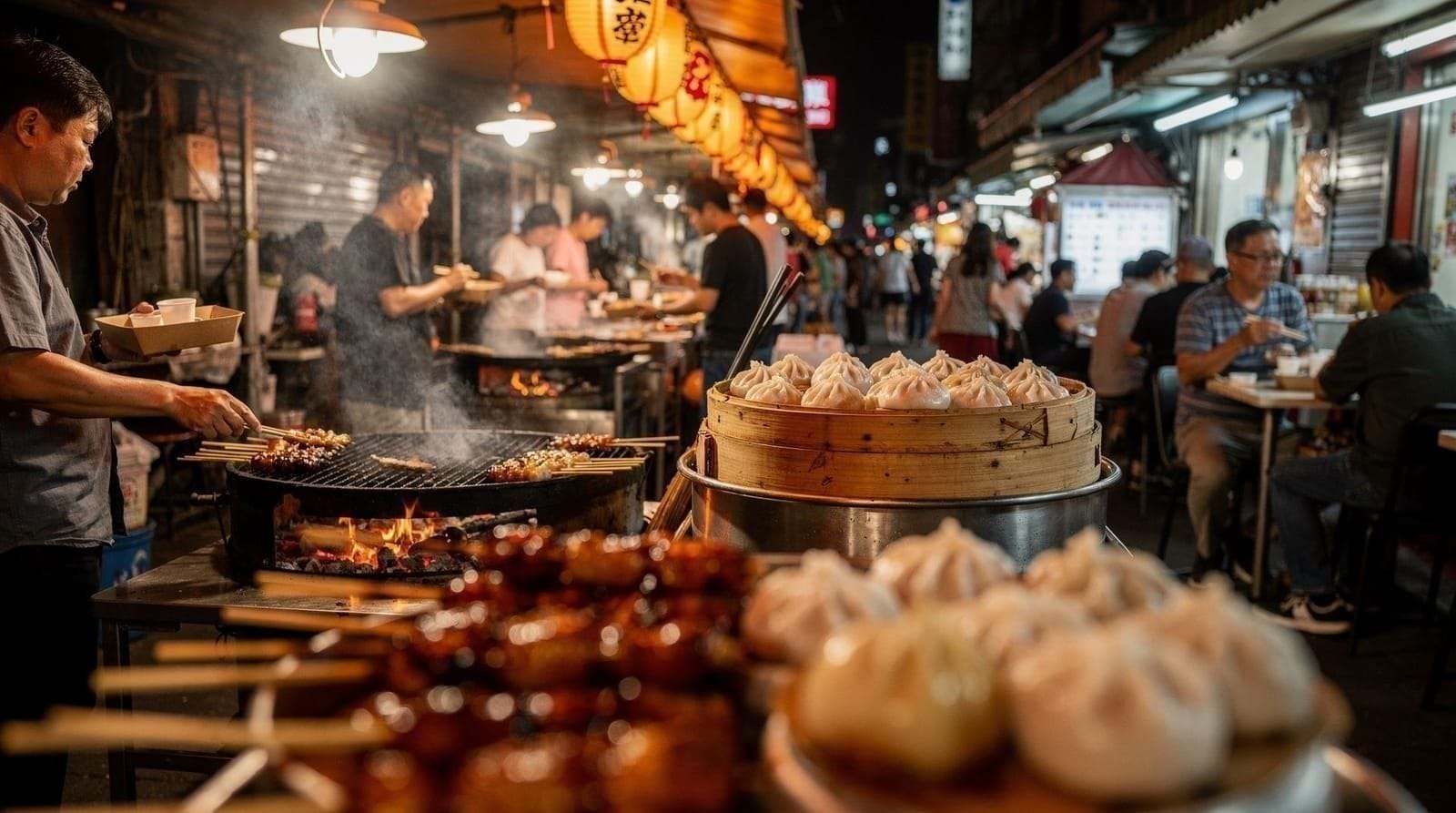
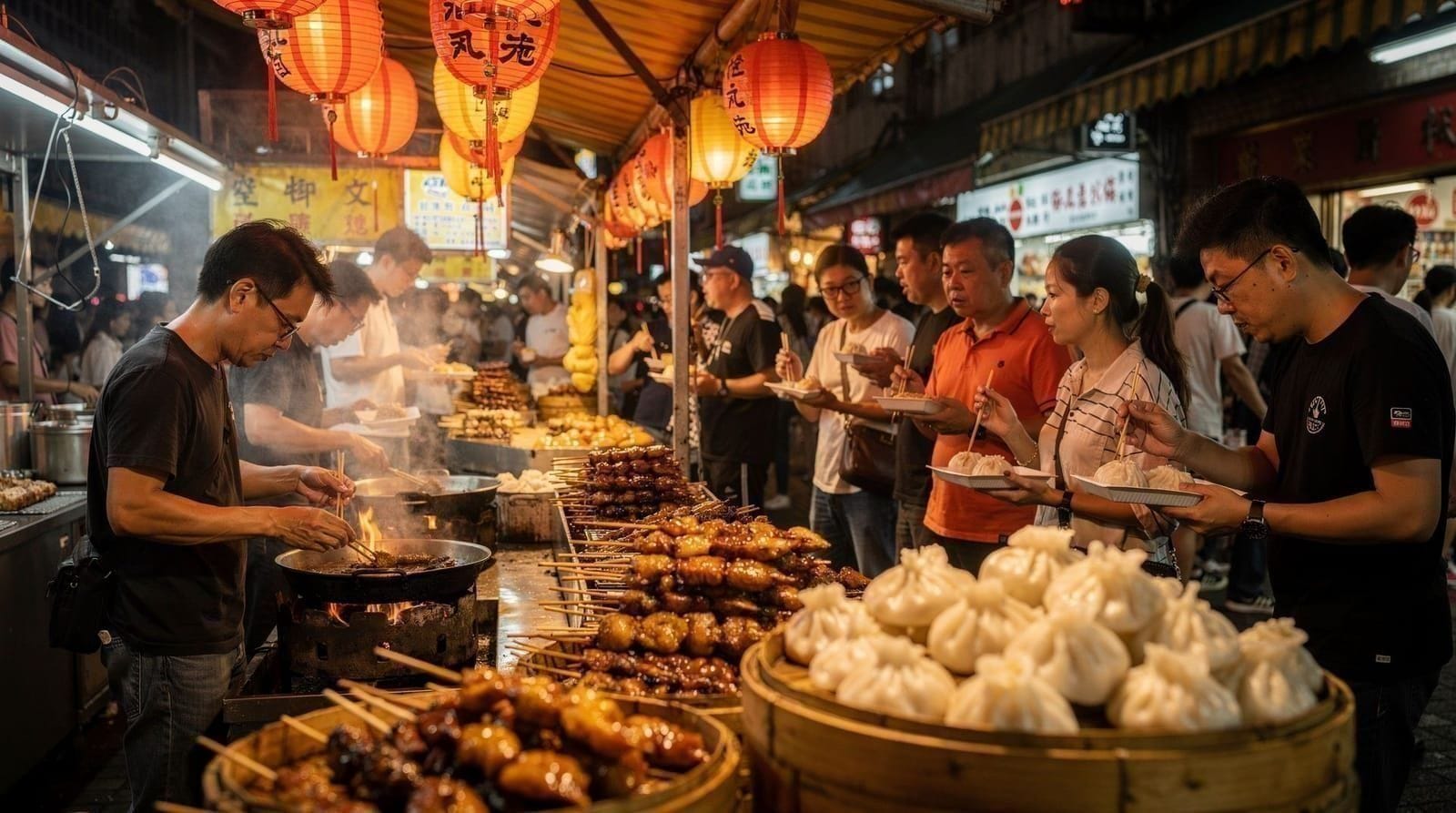
This 3-hour hidden eats night market tour (NT$1,700/person) covers spots across two markets with 8+ food tastings and deliberately avoids the tourist-inflated stalls. The guide’s specific stall selection is the main value — quality varies enormously between neighbouring stalls selling the same dish, and a guide who’s been doing this for years knows which oyster vermicelli is worth the NT$65 and which is made with inferior oysters.Check availabilityTypical itinerary for a 3-hour food tour:
- 17:30: Meet at designated market entrance (usually Ningxia or Zhongshan area)
- 17:45–18:30: First market — guide covers 4–5 stalls with specific items; explanation of cooking methods, ingredients, and cultural context
- 18:30–19:30: Transit to second market/food street; continuation of tastings
- 19:30–20:30: Dessert-focused stalls, bubble tea introduction, Q&A with guide, farewell at MRT station
What a guide genuinely adds:
- Knowledge of specific stall quality within the same market (which stall’s oyster omelette is the reference version)
- Cultural context that transforms “here’s a weird food” into “here’s why this dish exists and what it means”
- Navigation — night markets are spatially confusing after dark, especially Shilin
- Real-time ordering and translation for the stalls without photo menus
What a guide cannot add:
- The ability to take your time at your favourite stall — guided groups move at group pace
- Flexibility to return to something you loved for a second helping
- The serendipity of wandering off and discovering something yourself
Tipping and etiquette: Tips aren’t expected on either guided or self-guided food outings — Taiwan doesn’t have a tipping culture at street food stalls, and offering one can occasionally cause confusion. A polite “謝謝” (xièxiè, thank you) after ordering goes further than a tip would.
The private tour alternative
The private food tour with 10 tastings and locals (3 hours, NT$4,300/person) sounds expensive but works out reasonably for couples or small groups who want to linger at each stall, adjust the pace to their appetite, and have a guide focused entirely on them rather than managing a group.Check availabilityPrivate tours also allow real dietary accommodation — the guide can plan the route around your restrictions rather than adapting a set group itinerary. For vegetarians, this makes a significant difference.
Doing it yourself — the honest guide
For confident independent travellers, the guided tour is not necessary. Here’s what to do instead:
Ningxia Night Market (Zhongshan area): MRT to Zhongshan Station, 10-minute walk west. The most honest of Taipei’s major markets: one compact block, limited tourist signage, prices on the lower end.
Must-eat at Ningxia: oyster vermicelli (蚵仔麵線, NT$65) from the stall at the north entrance; braised pork rice (NT$40) from the elderly couple halfway down the street; taro ball shaved ice (NT$80) from the permanent stall at the south end.
If you want Ningxia specifically with a guide who knows each stall owner personally, this 2-hour walking tour (NT$1,200/person) is narrower in scope but deeper in local context than the more general city-wide food tours.Check availabilityRaohe Night Market (Songshan): MRT to Songshan Station (Red Line from Taipei Main Station). Single 250-metre street, easy to navigate. Essential: black pepper buns from the temple-front stall (NT$55, 15-minute queue, worth it); herbal medicine pork ribs soup (NT$80).
This 2-hour Raohe night market tour (NT$1,200/person) focuses specifically on Raohe’s distinctive dishes and the Songshan Ciyou Temple context — useful if you want the historical and religious dimension alongside the eating.Check availabilityShilin Night Market: Do the basement food court only (enter the main market building, take the escalator down). The outdoor stalls are tourist-priced; the basement is more honest. Oyster omelette, giant chicken steak, stinky tofu. Budget NT$200–300 for a basement dinner.
Which market to choose for your first visit
| Market | Best for | Avoid if |
|---|---|---|
| Ningxia | Most authentic, local, compact | You want variety over depth |
| Raohe | Single-street, manageable | You hate queuing (black pepper buns) |
| Linjiang/Tonghua | Young, hip, less touristy | You want classic Taiwanese dishes |
| Shilin (basement) | Maximum variety | Authentic atmosphere matters to you |
| Shilin (outdoor) | — | Generally: go elsewhere |
The night markets guide covers all of Taipei’s major markets with detailed stall recommendations. The Shilin vs. Raohe comparison addresses the most common dilemma directly. For a dish-by-dish rundown across the whole city rather than market-by-market, the best street food in Taipei guide is the companion reference.
Building a food-focused day around the markets
Night markets work best as the evening half of a food-focused day rather than a standalone activity — pairing an afternoon of dumplings or a tea house with an evening market avoids over-eating in one three-hour stretch and gives more variety overall. The Taipei food lovers itinerary sequences a full day this way, and the Taipei destination overview has the wider neighbourhood context if the market you choose sits outside your usual routes.
Bubble tea — context on the mandatory stop
Every food tour includes bubble tea (珍珠奶茶, zhēnzhū nǎichá — “pearl milk tea” in Taiwan). The drink was invented in Taichung in the 1980s, and Taiwan remains the reference. Chun Shui Tang Tea Room (春水堂, Zhongshan District) is often cited as the original invention site — tea NT$80–120. The chains (Tiger Sugar, 50 Lan, CoCo) are consistently decent and cheaper (NT$50–80). The bubble tea guide covers quality tiers and what to order.