Best street food in Taipei — what to eat and where
Taipei: Private food tour 10 tastings with locals
Duration: 3 hours
What is the best street food in Taipei?
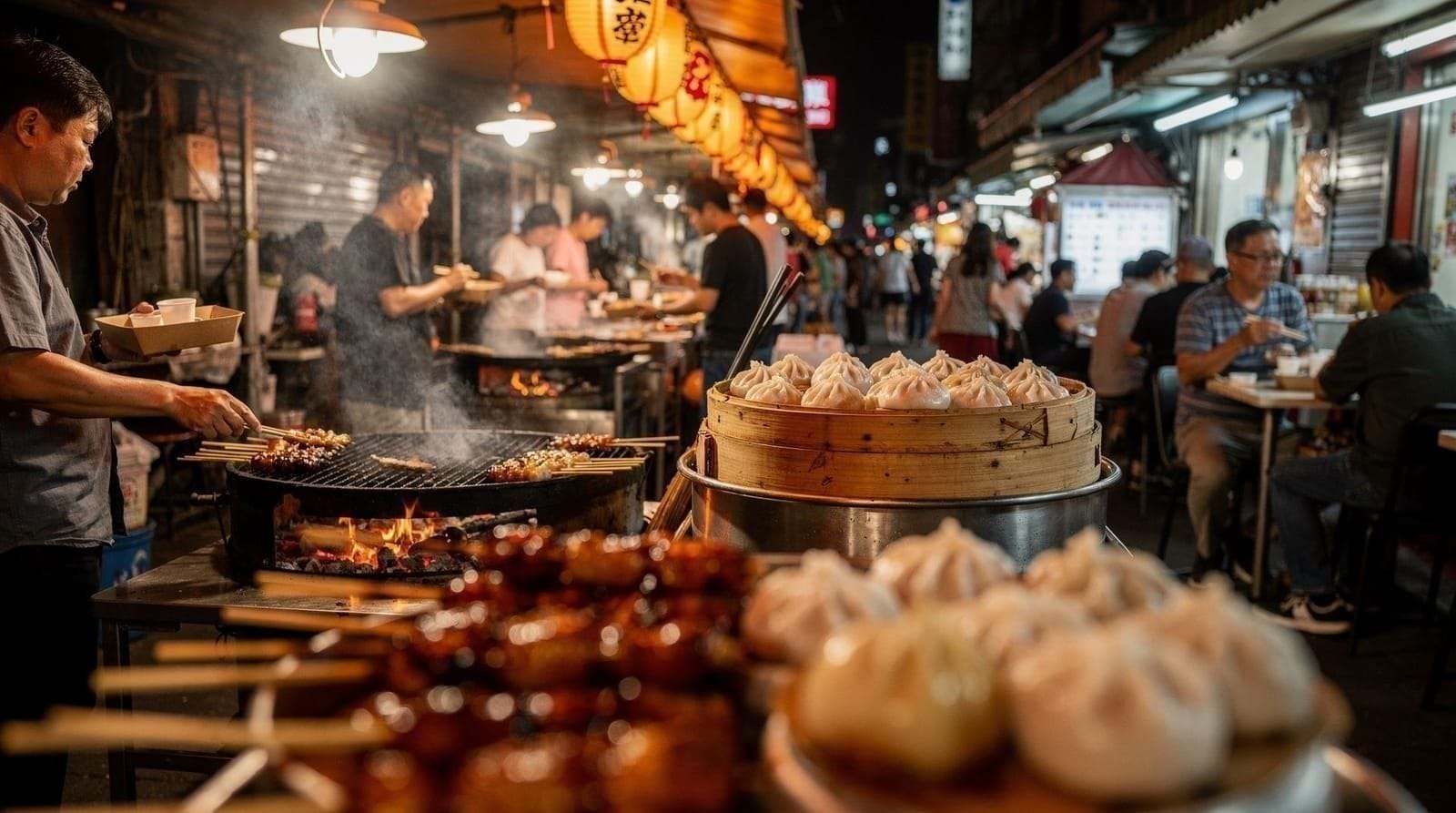
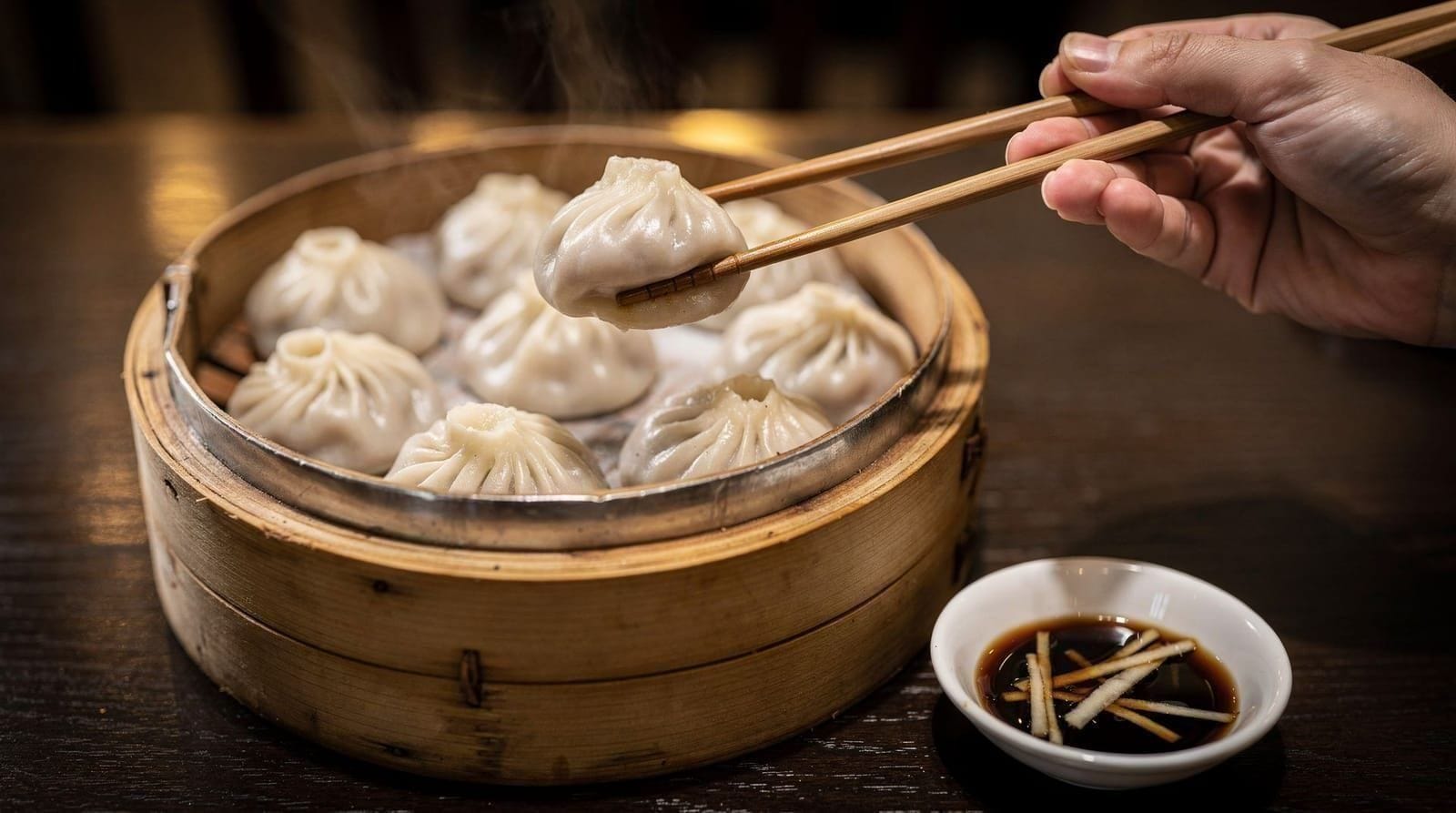
The non-negotiables are peppercorn pork buns at Raohe Night Market (TWD 60), oyster omelette at any major night market (TWD 60–80), beef noodle soup at Yong Kang Beef Noodle (TWD 200–280), scallion pancake at any breakfast diner (TWD 30–40), and xiaolongbao at Din Tai Fung (TWD 250–350 for 10). Street food in Taipei is consistently cheap and very good.
| When | Night markets 6pm–midnight; breakfast diners 5am–noon |
| Cost | TWD 420–450 (~€12) for a full day of eating well |
| Payment | Cash essential; some LINE Pay/JKO Pay at Shilin |
| Must-try | Peppercorn pork bun, oyster omelette, braised pork rice |
| Best first market | Ningxia — compact, local, less overwhelming than Shilin |
How street food works in Taipei
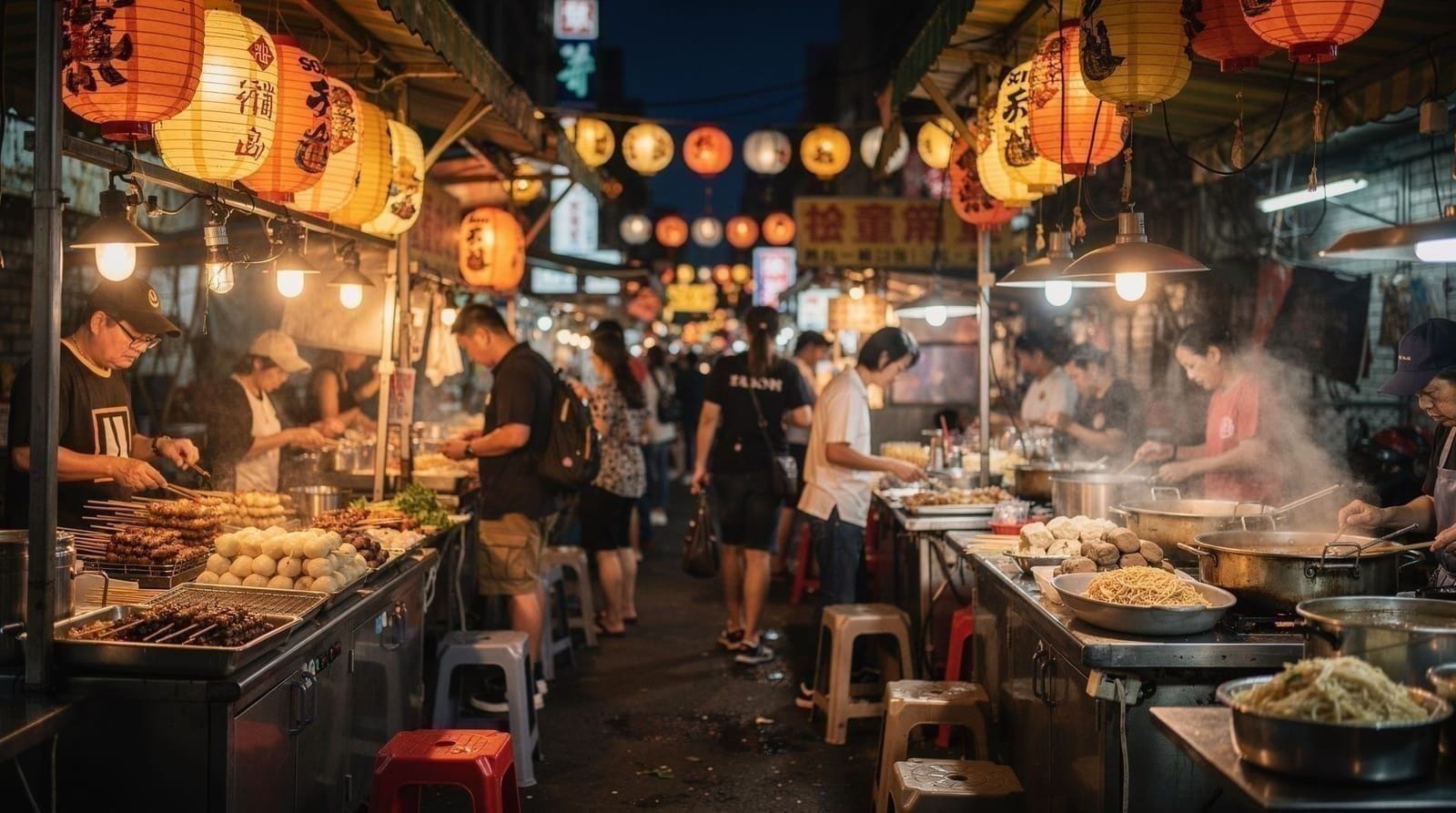
Street food in Taipei operates at three main venues: night markets (evening, 6pm–midnight), traditional breakfast diners (morning, 5am–noon), and dedicated lunch spots around office districts (noon–2pm). The cheapest and most interesting food is at night markets; the most Taiwanese experience is at a traditional breakfast diner.
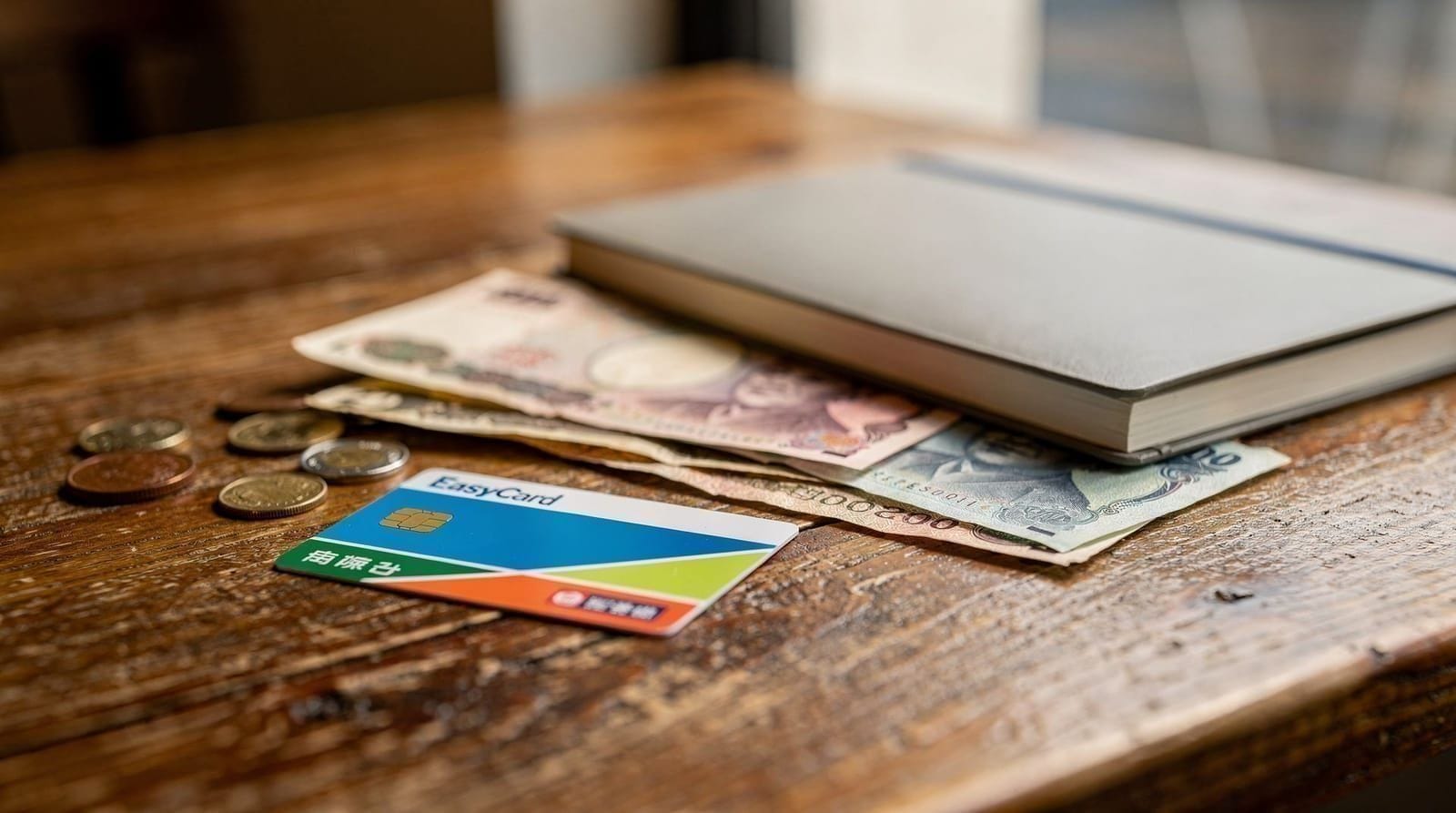
Cash is essential — most stalls accept nothing else. Have small bills (TWD 50, 100) ready. LINE Pay and JKO Pay are accepted at some Shilin stalls, but do not count on it. An EasyCard loaded with TWD 2,000–3,000 covers most transport and some convenience-store meals but does not help at street vendors. See the EasyCard guide for how to load it at airport machines.
The general rule: if it smells good and has a queue of locals, order it. Taipei’s food hygiene standards are consistently high across all price points — street stalls are inspected, and foodborne illness is genuinely uncommon. The main exception is produce eaten raw during typhoon season (July–September), when flooding can contaminate leafy greens.
The 15 dishes to try
1. Peppercorn pork bun (胡椒餅)
Where: Fu Zhou Shi Zu stall at Raohe Night Market entrance, or Fuzhou Shizu Peppercorn Bao near Dongmen Cost: TWD 55–70 (€1.55–1.95) What it is: A bun baked in a tandoor-style coal oven, filled with minced pork, green onion and black pepper. The crust is flaky; the interior is very juicy and hot. Do not eat immediately — you will burn yourself.
This is, by reasonable consensus, one of the top 5 street food items in all of Taiwan.
2. Oyster omelette (蚵仔煎)
Where: All major night markets; best at Raohe and Ningxia Cost: TWD 60–80 (€1.65–2.20) What it is: Fresh oysters with egg and sweet potato starch, pan-fried with a sweet red sauce. Texturally different from a Western omelette — stickier, with a gelatinous quality from the starch. Order the large (大) version.
3. Scallion pancake (蔥油餅)
Where: Traditional breakfast diners; street vendors in most districts Cost: TWD 25–50 (€0.70–1.40) What it is: Layers of flaky wheat dough with green onion, pan-fried. Often served with an egg on top. The best versions are from breakfast diners that make them fresh — not the frozen pre-prepared versions that some market stalls sell.
4. Beef noodle soup (牛肉麵)
Where: Yong Kang Beef Noodle (永康牛肉麵), 17 Hangzhou South Road, Da’an; Liu Shanjian at Zhongshan; Lin Dong Fang Beef Noodles near MRT Zhongxiao Xinsheng Cost: TWD 200–320 (€5.55–8.90) What it is: Braised beef in a spiced broth (red-braised or clear broth, depending on the shop), served over chewy wheat noodles. Taiwan’s beef noodle soup is a distinct style — richer and more complex than most mainland Chinese versions. Yong Kang Beef Noodle is famous but now has queues; Liu Shanjian is less known and equally good.
5. Braised pork rice (魯肉飯)
Where: All night markets, traditional diners, and lunchtime restaurants throughout Taipei Cost: TWD 35–60 (€0.95–1.65) What it is: Slow-braised pork belly and skin, minced finely, over white rice with braising liquid. A national comfort food in Taiwan. Jin Feng Braised Pork Rice (金峰魯肉飯) near Jinhua Street in Da’an is famous for its version.
6. Stinky tofu (臭豆腐)
Where: All night markets; Shilin has several famous versions Cost: TWD 50–80 (€1.40–2.20) What it is: Fermented tofu, deep-fried, with a pungent smell that is difficult to describe charitably and a taste that converts many skeptics. Served with pickled cabbage and chili sauce. The smell reaches you before you see the stall — follow your nose.
7. Oyster vermicelli (蚵仔麵線)
Where: Raohe Night Market midpoint; Ay-Chung on Shilin’s Dadong Road Cost: TWD 55–75 (€1.55–2.10) What it is: Thin wheat vermicelli in a thickened savory broth with fresh oysters and pork intestine. More of a stew than a soup. Add vinegar at the condiment station.
8. Taro balls (芋圓)
Where: Jiufen’s Ah-Gan Ah Ji Taro Balls; Ningxia Night Market; Gongguan Night Market Cost: TWD 50–80 (€1.40–2.20) What it is: Chewy balls made from taro, sweet potato or purple yam, served hot in sweet broth or cold over shaved ice. The original famous version is in Jiufen (see the Jiufen day trip) — the market stalls are copies, though decent.
9. Grilled squid (烤魷魚)
Where: All major night markets; Keelung Miaokou Night Market has excellent versions Cost: TWD 80–150 (€2.20–4.15) depending on size What it is: Fresh or dried squid, grilled over charcoal and brushed with savory-sweet sauce. Keelung is a port city and does this better than Taipei’s landlocked markets.
10. Fried chicken steak (雞排)
Where: Shilin Night Market; chain shops like Hot Star (Dà Jī Pái) throughout Taipei Cost: TWD 75–120 (€2.10–3.30) What it is: A large piece of chicken breast, flattened, breaded and deep-fried. As big as your hand. Often with basil leaves. This is a Taiwanese invention that has spread across East Asia.
11. Scallion roll / hua juan (花捲)
Where: Traditional breakfast diners, rarely in night markets Cost: TWD 15–25 (€0.42–0.70) per roll What it is: Steamed wheat dough rolls with sesame oil and scallion. Plain, perfect. Not glamorous street food but a staple of the breakfast diner experience. Order with warm soy milk (豆漿, TWD 20–30) and a fried dough stick (油條, TWD 15–20).
12. Pineapple cake (鳳梨酥)
Where: Dedicated bakeries — Chia Te Bakery (佳德糕餅) near Songshan Station is the most famous Cost: TWD 35–60 each, or sets of 10 from TWD 300 (€8.35) What it is: Buttery shortcrust pastry filled with pineapple jam (the best versions use actual pineapple, not winter melon). The premier souvenir food from Taiwan. Chia Te sells out of its most popular varieties by mid-afternoon — go before noon.
Taipei pineapple cake workshop and historical city tour — includes making your ownCheck availability13. Shaved ice with toppings (剉冰 / 芋圓冰)
Where: Night markets, dessert stalls throughout the city Cost: TWD 60–120 (€1.65–3.30) What it is: Fine shaved ice with a base of sweetened condensed milk or fruit syrup, topped with your choice of taro balls, mango, red bean, grass jelly, lychee or fresh fruit. Summer essential.
14. Taiwanese sausage wrapped in glutinous rice (大腸包小腸)
Where: Shilin Night Market; Gongguan Night Market; street vendors near MRT stations Cost: TWD 60–90 (€1.65–2.50) What it is: A grilled pork sausage (the small intestine) inside a grilled glutinous rice sausage (the large intestine) — essentially a Taiwanese hot dog. Sweet, savory, slightly smoky. Good with a pickled vegetable topping.
15. Spring rolls (潤餅)
Where: Traditional market stalls; Qingming Festival vendors; some night markets Cost: TWD 50–80 (€1.40–2.20) What it is: A thin wheat flour crepe wrapped around bean sprouts, cabbage, carrot, pork and peanut powder. Lighter than the deep-fried variety. The peanut sugar coating is distinctive and good.
Private Taipei food tour with 10 tastings — structured introduction to the full street food rangeCheck availabilityStreet food by neighborhood
Taipei’s food scene is decentralized — every district has its own rhythm, its own staples and its own version of the classics. Here is what to prioritize in each area.
Da’an is the middle-class residential district best suited for serious sit-down eating rather than pure street snacking. The streets around Yong Kang Street (MRT Dongmen, Exit 5) form Taipei’s densest concentration of good independent restaurants. Jin Feng Braised Pork Rice is here. So is Yong Kang Beef Noodle. The side streets off Heping East Road have excellent lunch diners where a complete meal of braised pork rice, soup and a vegetable dish runs TWD 100–130. This is not tourist territory and menus are usually Chinese-only.
Zhongzheng and Ximending (MRT Ximen, Exits 1 and 6) are high-traffic tourist zones. Ximending’s pedestrian street has decent fried chicken and bubble tea, but the stalls on Hanzhong Street facing the old Red House Theatre — the unofficial food strip — are better value than anything in the main shopping arcade. Ningxia Night Market, a 20-minute walk north or two stops on the 262 bus, is a compact, locals-focused market far less intimidating than Shilin. Highly recommended for a first night market visit.
Dadaocheng and Dihua Street (MRT Daqiaotou, Exit 1) is the old merchant quarter. The street is lined with dry goods shops selling mushrooms, dried seafood, traditional herbal candies and tea. It is not a night market district — daytime only. The area around Minle Street has excellent traditional Taiwanese lunch spots. For context on the neighborhood’s history, see the Dadaocheng guide.
Xinyi and Taipei 101 (MRT Taipei 101/World Trade Center, Exit 4) is the expensive district. The basement food halls of the Breeze Xinyi and Eslite Spectrum malls have good Taiwanese food at mid-range prices (TWD 180–350 per dish), but for actual street food value you are better off leaving the district entirely. The exception is the cluster of traditional rice shops and noodle diners on Songde Road, two blocks west of the 101 tower, which serve office lunches at normal prices. See more in the Xinyi guide.
Shilin (MRT Jiantan, Exit 1) houses Taipei’s most famous night market. The indoor food hall section on Jihe Road is geared toward tourists; the outdoor streets behind it — Danan Road and Xiaobei Street — have better versions of the same dishes at lower prices. The Shilin vs Raohe comparison breaks down which market suits which type of visitor.
Traditional breakfast — the underrated meal
The most quintessentially Taiwanese food experience is not at a night market but at a traditional breakfast diner between 6 and 9am. These cafés serve: warm soy milk (hot or cold, sweet or savory), fried dough sticks (油條), sesame flatbread (燒餅), scallion pancakes and egg rolls. Many diners do not have English menus; point at what neighboring tables are eating.
Four specific places worth knowing:
Shi Jia Dou Jiang (世家豆漿), Section 2 of Heping East Road, Da’an: open 05:30–11:00. A classic neighborhood diner, always full of retired locals by 7am. Order the savory soy milk (鹹豆漿, TWD 25) — it curdles slightly when vinegar is added, creating a texture somewhere between soup and soft tofu. Add a sesame flatbread with fried dough stick (燒餅油條, TWD 35). The combination costs TWD 60.
World Soy Milk King (世界豆漿大王), Section 4 of Bade Road, Songshan: open 24 hours, famous since the 1950s. The menu is extensive. Their egg crepe (蛋餅, TWD 30–45) is better than most. Gets crowded on weekend mornings. MRT Houshanpi, then a 10-minute walk.
Fu Hang Dou Jiang (阜杭豆漿), above Huashan Market, Zhongzheng: open 05:30–12:30, closed Mondays. This is Taipei’s most-written-about breakfast diner and has a queue by 7am on weekends. Worth the wait once, but it is genuinely overrated as a daily stop — the food is good, not exceptional. Go early on a weekday. MRT Shandao Temple, Exit 1.
Yong He Dou Jiang (永和豆漿大王), Yonghe (just across the river, 15 minutes by taxi from central Taipei): the original location of what became a nationwide breakfast chain. The chain version in Taipei is mediocre; the Yonghe original, open since 1955, is the real thing and worth the detour if you care about breakfast diners specifically. Open 24 hours.
Iconic Taiwanese drinks beyond bubble tea
Bubble tea is everywhere, but it is far from the only drink worth tracking down.
Sugarcane juice (甘蔗汁): Fresh-pressed at street stalls in night markets and near temples. TWD 30–50 for a large cup. Light, sweet, faintly grassy. Best cold. The stalls use large mechanical presses — you will hear them before you see them.
Winter melon tea (冬瓜茶): A concentrated block of cooked winter melon and sugar, dissolved in cold water. Darker, less sweet than it sounds, with a slightly earthy finish. Common at traditional tea shops in Dadaocheng and Wanhua. TWD 20–40.
Aiyu jelly lemonade (愛玉檸檬): One of Taiwan’s genuinely original drinks. Aiyu is a jelly made from the seeds of a fig-like plant, set in water without heat or additives. Served in lemonade with ice, it has an almost imperceptible flavor of its own and a soft, slippery texture. TWD 40–70. Found at Gongguan Night Market and dedicated aiyu shops in Da’an.
Herbal tea (青草茶): Bitter, medicinal, served from street carts near Longshan Temple in Wanhua. TWD 20–30. An acquired taste; locals drink it as a digestive and cooling agent in summer. Not sweet at all.
Fresh papaya milk (木瓜牛奶): Blended fresh papaya with cold milk, no added sugar when well-made. A Taiwanese staple and the correct answer to “what do locals drink at a fruit stall.” TWD 60–80. Available at any juice stand.
For the full tea culture context, including where to find traditional teahouses in Maokong and the mountains, that guide covers the sitting-down-with-a-pot-of-oolong experience in detail.
Ordering without Chinese
Most visitors get through Taipei’s street food scene without speaking any Mandarin, but a few strategies help.
Point directly at the item or at what someone nearby is eating. Stall vendors are experienced with this. Hold up fingers for quantity: one finger, two fingers. Nod for yes, shake your head for no.
Learn three words: 這個 (zhège, “this one”), 一個 (yī gè, “one of this”), 謝謝 (xièxiè, “thank you”). You do not need tones to be understood at a market stall — context does the work.
Use photos on your phone. Screenshot the Chinese characters for dishes you want from this page before you leave your accommodation. Show the stall vendor the characters directly.
Know what to expect for payment: the vendor will hold up fingers, use a calculator or say a number in English (most know 1–10 in English). Pay the amount shown; small change is always returned.
At sit-down diners: many have picture menus, especially near tourist areas. Traditional breakfast diners often have the menu written on wall boards in Chinese — this is the hard case. The workaround is to watch what arrives at nearby tables and indicate that you want the same.
Night markets are more forgiving of language gaps than restaurants. For a structured introduction with English explanation of what you are eating, a guided food tour removes all the friction. The Taipei foodie history walking tour covers Dadaocheng and Wanhua with narrated context.
Taipei foodie history walking tour — Dadaocheng and Wanhua with an English-speaking guideCheck availabilityFood hygiene and safety at night markets
Taipei’s night markets are safe by any reasonable standard. The city’s food hygiene inspections are regular and enforced. That said, a few practical points:
Cooked food is almost always fine. High-heat frying, grilling and braising kill pathogens. The oyster omelette, stinky tofu and grilled meats at established stalls carry negligible risk.
Raw produce carries seasonal risk. During typhoon season (July–September), flooding can contaminate leafy greens and root vegetables. Avoid raw salad items and unpeeled fruit from vendors during this period. Fruit that is peeled in front of you, and cooked vegetables, are fine year-round.
Tap water is treated and technically safe to drink in Taipei, but the pipe infrastructure in older buildings introduces uncertainty. Most locals do not drink tap water directly; they boil it or use filtered dispensers. In hotels, the tap water is fine for brushing teeth. For drinking, buy bottled water at a convenience store (TWD 20–30 per litre) or use the filtered water stations in MRT stations.
Ice at night market stalls is commercial block ice made from purified water — not from tap water frozen at the stall. This is the standard across Taiwan and is safe.
Shellfish — oysters in omelettes and vermicelli — come from farmed sources and are cooked. The risk profile is no higher than at a restaurant. If you have a shellfish allergy, the dishes to avoid are clearly identifiable: oyster omelette (蚵仔煎) and oyster vermicelli (蚵仔麵線) are the two main ones.
Budget eating — how cheap can you eat in Taipei
If you are following the Taipei budget guide, the street food numbers are worth knowing precisely.
A full day of eating well on a tight budget looks like this:
- Breakfast at a traditional diner: savory soy milk + sesame flatbread + fried dough stick = TWD 60 (€1.65)
- Lunch: braised pork rice at a local diner + soup + one vegetable dish = TWD 120–150 (€3.35–4.15)
- Afternoon: sugarcane juice + scallion pancake = TWD 70 (€1.95)
- Dinner at a night market: oyster omelette + peppercorn bun + aiyu jelly lemonade = TWD 170 (€4.70)
- Total: TWD 420–450 (€11.65–12.50) for a full day of genuinely good eating
This is not difficult eating — these are excellent foods, not budget fallbacks. The braised pork rice lunch at Jin Feng is better than meals costing three times as much in most European capitals. The peppercorn bun at Raohe is objectively one of the better things you can put in your mouth for under TWD 70 on this planet.
The main area where spending escalates is beef noodle soup (TWD 200–320) and Din Tai Fung (TWD 400–600 for two). Both are worth doing once. Beyond those, the street food budget stays low without any sacrifice.
For accommodation cost context alongside food, see where to stay in Taipei.
Cooking class option
If you want to learn techniques rather than just eat: the Dadaocheng market cooking class (3 hours, includes market tour, TWD 2,700–3,200/€75–89) is well-regarded and takes a small group through a local market followed by a proper session in a residential kitchen. See also the Dadaocheng guide.
Dadaocheng market tour and Taiwanese cooking class — includes buying ingredientsCheck availabilityWhat to skip
Tourist-targeted bubble tea shops in Ximending charge TWD 100–160 for drinks that identical local chains sell for TWD 50–75. See the bubble tea guide for recommended chains. Similarly, the Din Tai Fung in Taipei 101 is the most expensive branch — the Xinyi branch on Songgao Road is slightly cheaper and often has a shorter queue. For the full xiaolongbao picture, see the Din Tai Fung guide.
The Shilin Night Market indoor food hall (the new building on Jihe Road) is a tourist processing facility. The food is adequate but overpriced by local standards — TWD 20–40 more per dish than the outdoor stalls on surrounding streets. Go to the indoor hall to see it once, then eat outside.
Souvenir pineapple cake at airport shops: prices at Taoyuan airport for Chia Te and Sun Cake pineapple cakes run TWD 80–100 per piece versus TWD 35–60 at the Songshan source. The airport stocks are also older. Buy at the bakery, not the departure gate.
The Longshan Temple area street food near Longshan Temple in Wanhua: the stalls immediately in front of the temple are tourist-oriented and charge 30–40% above the rate for identical food two streets away. The Huaxi Street Night Market nearby is better value, though its famous snake-wine shops are a gimmick that has not changed since the 1980s.
Night market games and snacks near Taipei 101: the Xinyi district is not a night market area — the occasional pop-up markets near Elephant Mountain trail head charge inflated prices and have a thin selection. Spare yourself and go to Raohe or Ningxia instead.
For the complete night market picture, see Taipei night markets guide and Shilin vs. Raohe. For planning how many days to allocate to eating your way through the city, see how many days in Taipei.
Street food for kids and first-timers
Not every dish on this list is an easy entry point. If you’re travelling with children or with someone nervous about unfamiliar food, start with the least confronting items: fried chicken steak, scallion pancake, braised pork rice and taro balls are all approachable in flavour and texture. Save stinky tofu and oyster vermicelli for once everyone’s warmed up — the smell of the former and the gelatinous texture of the latter are the two most common sticking points for first-timers.
Pineapple cake makes a safe, sweet reset between savoury dishes. Night markets are genuinely family-friendly environments — wide walkways, seating areas, and a low-pressure browsing culture where nobody minds if you look and move on. See Taipei with kids for more on managing a family day around night market food.
Dietary restrictions on the street
Vegetarian eating is manageable but requires some vigilance. Braised pork rice, oyster omelette and most noodle soups use meat or seafood stock even when the main ingredient looks plant-based, so ask (齋 / 素, zhāi / sù, “vegetarian”) before ordering. Taiwan has a large Buddhist vegetarian tradition, and dedicated vegetarian buffet restaurants (自助餐, zizhu can) are common — look for the swastika symbol (a Buddhist symbol, unrelated to its co-opted use elsewhere) marking vegetarian eateries.
Vegan is harder: most vegetarian dishes still use egg or dairy. Gluten is present in most noodle dishes and many sauces (soy sauce contains wheat); rice-based dishes like braised pork rice on plain rice are a safer bet. Peanuts appear widely — in taro ball toppings, spring rolls, and sauces — so allergy sufferers should ask specifically (花生, huāshēng).
Seasonal street food
Certain dishes are genuinely tied to season rather than available identically year-round. Shaved ice with fresh mango is at its best May through September, when Taiwanese mangoes are in peak season — off-season versions use frozen fruit and are noticeably worse. Hot, sweet soups (like taro balls in warm syrup rather than over ice) shift to being the default preparation once temperatures drop below about 20°C, typically November through March.
Moon cakes and pomelo appear everywhere around Mid-Autumn Festival (September–October), sold from temporary stalls outside regular bakeries. If your trip coincides with typhoon season (July–September), expect some outdoor night market stalls to close early or not open at all during active storm warnings — indoor food courts and 24-hour diners are the reliable fallback.
Top experiences
Bookable activities with verified prices and instant confirmation on GetYourGuide.