The best night market foods in Taipei — what to eat and where
What you’ll actually eat (and what to skip)
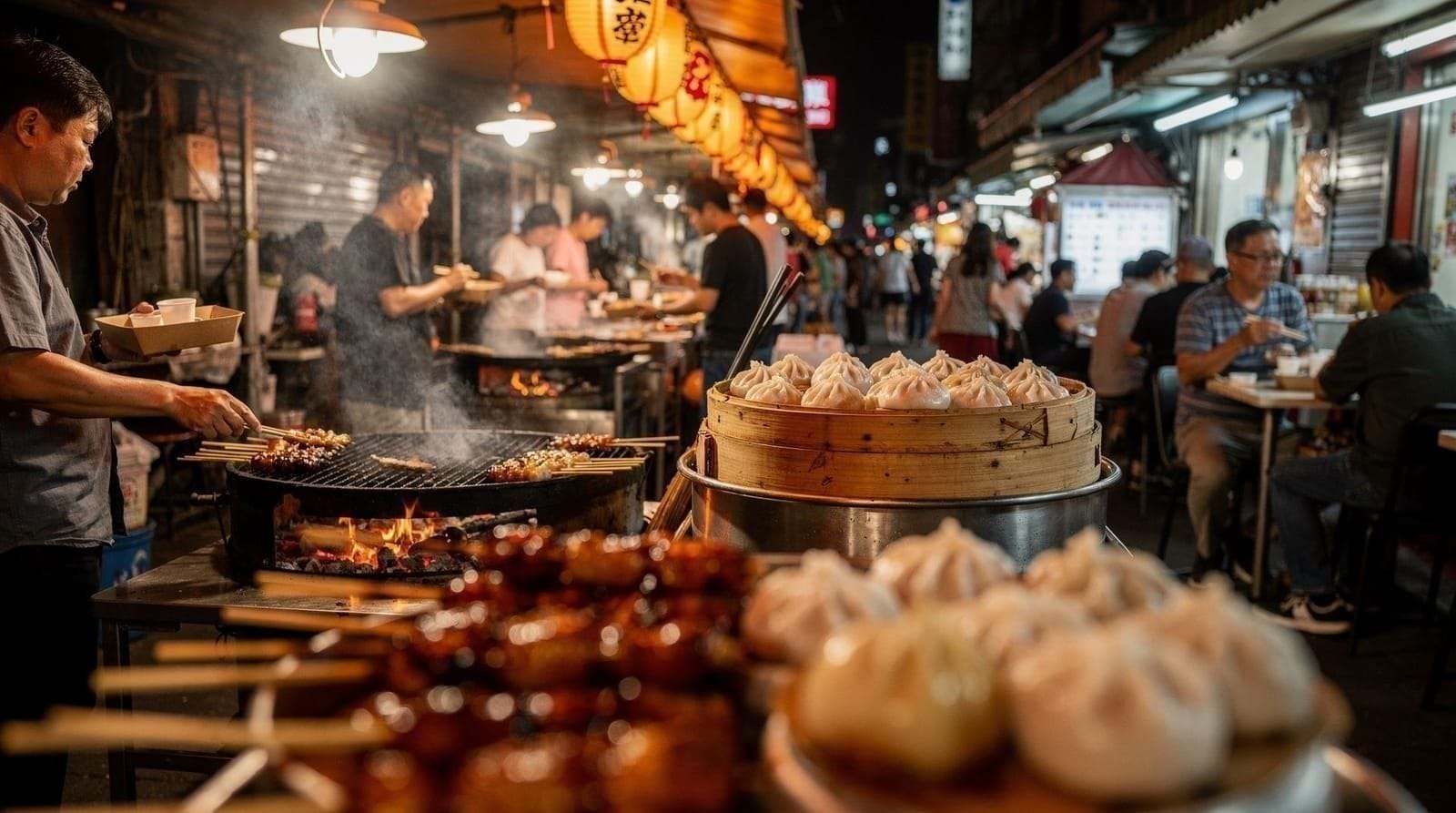
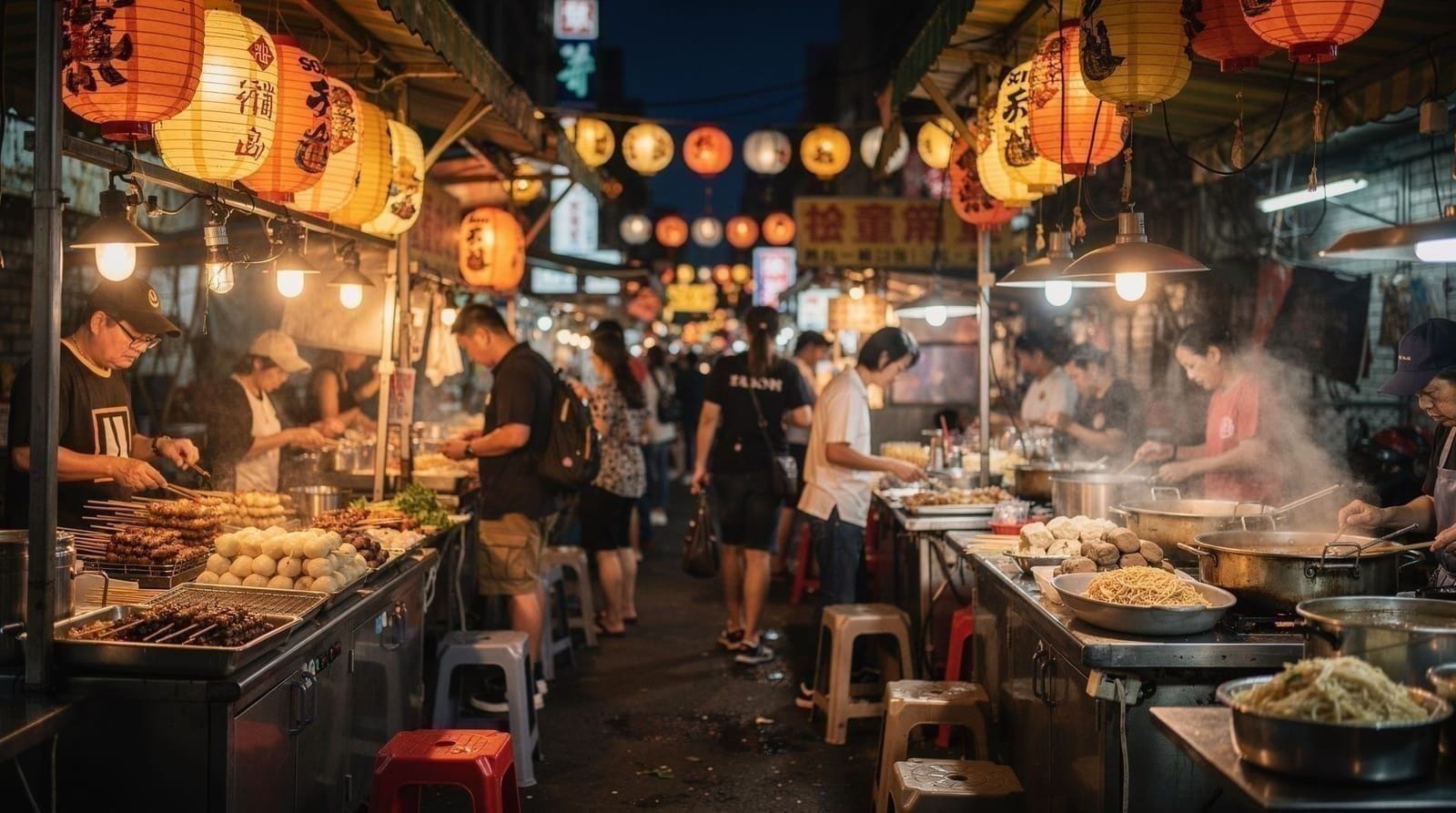
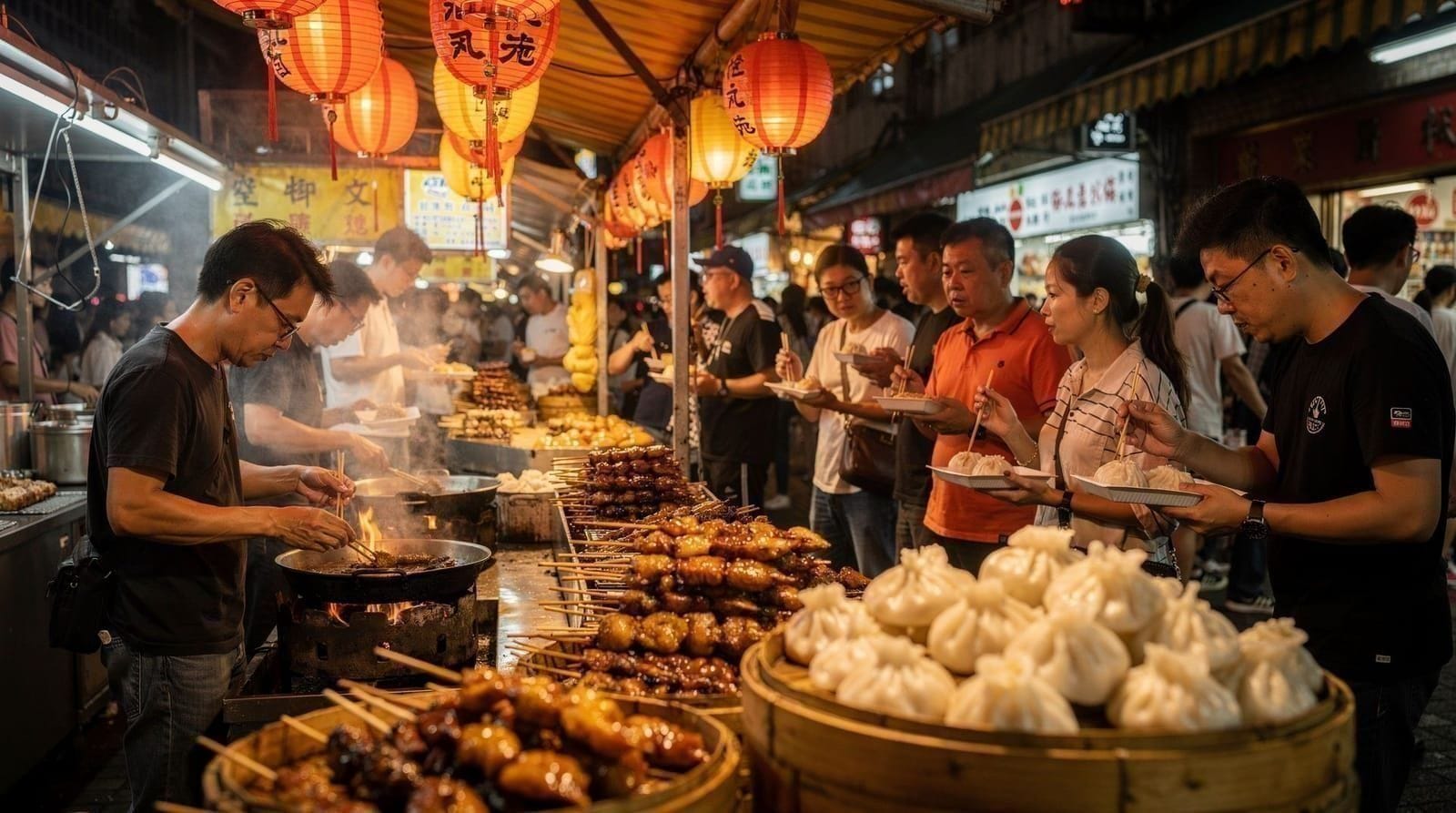
Taipei’s night markets have a reputation that often outpaces the reality. Walk into Shilin on a Saturday evening and you’ll find yourself shoulder-to-shoulder with selfie sticks and vendors selling novelty items of questionable culinary value. But buried inside every major market — and very much at the centre of the smaller ones — is genuinely good food, sold by people who’ve often been making the same dish for decades.
| Where | Shilin, Raohe, Ningxia, Keelung |
| Cost | around NT$200–400 per person per market |
| Time needed | 1.5–2.5 hours per market |
| Getting there | MRT to Jiantan, Songshan or Zhongshan |
| Best time | weeknights 18:00–20:00, before peak crowds |
This isn’t a list of “must-try” superlatives. It’s a practical breakdown of the dishes that are actually worth queueing for, the stalls that are genuinely well-regarded by locals, and the things you can skip without regret.
Shilin Night Market: the big one
Shilin is the market foreigners visit most, and there’s a reason it gets complicated reviews. The outdoor section around Jiantan MRT has deteriorated into a tourist trap — inflated prices, identical sausage stalls, phone case vendors. The underground food hall beneath it, however, is a different story.
Oyster omelette (蚵仔煎, ô-á-chian) at stall B26 in the basement remains one of the city’s better versions of the dish: a thick, gelatinous pancake of egg, sweet potato starch and fresh oysters, dressed with a sweet-and-savoury red sauce. It costs around NT$80 (about €2.20 / US$2.50). The texture puts off some visitors — sticky and soft rather than crispy — but that’s the point.
Large fried chicken cutlet (雞排, ji-pái) vendors are everywhere in Shilin, but HOT-STAR (豪大大雞排) near the main entrance is the original. The cutlets are bigger than your face, lightly spiced and genuinely crunchy. Around NT$80–90 each. Expect a queue of 10–15 minutes on weekends.
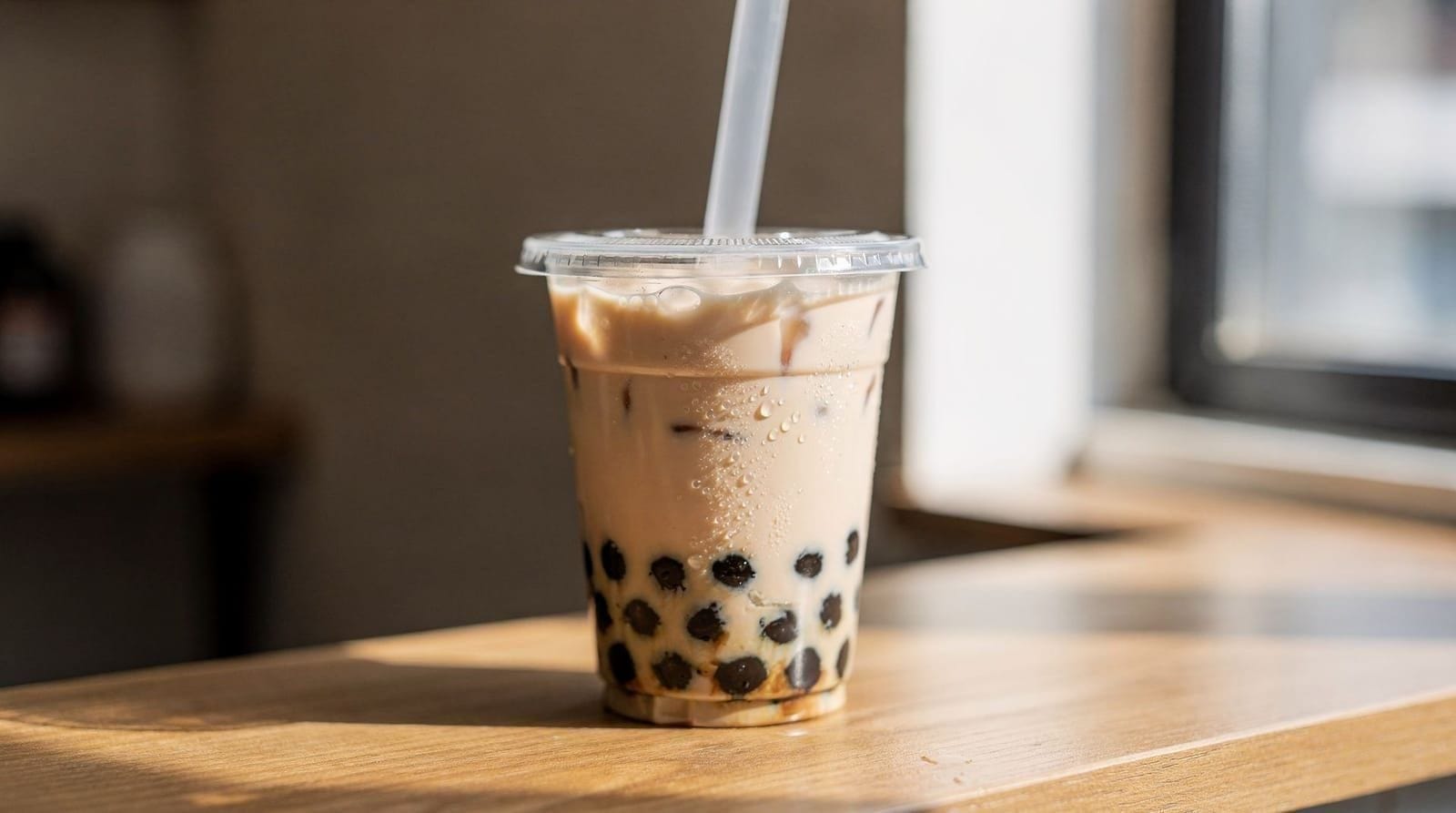
Bubble milk tea from any of the traditional Taiwanese shops inside the food hall is reliably good. The chains outside (Tiger Sugar, Gong Cha) are fine, but you’re paying a premium for the Instagram aesthetic.
For a guided circuit that takes you past stalls locals actually recommend — rather than the tourist row — consider joining a small-group food tour.
Taipei street food and hidden eats night market tourRaohe Night Market: better for serious eating
Raohe gets overshadowed by Shilin in tourist guides, which is exactly why it’s the better market for anyone who actually wants to eat well. It’s a single straight street — 600 metres, no underground labyrinth, no souvenir shops disguised as food stalls — lined with vendors who’ve been cooking the same things for years.
Pepper pork bun (胡椒餅, hú jiāo bǐng) at the stall just inside the Songshan Temple gate is the most justified queue in Taipei. The bun is baked in a clay oven, the pork filling is seasoned aggressively with white pepper, and the ratio of charred crust to juicy interior is close to ideal. NT$60 per bun. Expect 20–30 minutes during peak hours (19:00–21:00). Worth it.
Braised pork rice (滷肉飯, lǔ-bah-pñg) — there are several vendors here doing the classic version: fatty pork belly braised until it’s almost molten, spooned over white rice with a pickled vegetable. NT$40–60 per bowl. It’s not fancy, but it’s one of the most distinctly Taiwanese comfort foods you’ll find.
Stinky tofu (臭豆腐, chòu dòufu) divides people cleanly into two camps. At Raohe, the deep-fried version comes from a few stalls mid-street that use tofu fermented longer than average — the smell is a genuine challenge, but the interior is soft and mild with a crispy shell. Serve with pickled cabbage. NT$60–70 per portion. If the smell alone is offputting, skip it — there’s no virtue in eating something you don’t enjoy.
For a focused Raohe circuit, a two-hour guided tour covers the highlights without the guesswork:
Taipei 2-hour Raohe night market food tourNingxia Night Market: the local’s choice for traditional snacks
Ningxia is small, easy to overlook, and better than both Shilin and Raohe for traditional Taiwanese snacks. It’s not trying to be anything other than what it is: a neighbourhood market that happens to make excellent food.
Taro ball soup (芋圓湯) here is a matter of texture — the balls should be chewy without being rubbery, and the broth (or shaved ice version in summer) should be sweet but not cloying. Several vendors on the street’s north end do this well. NT$50–60.
Pork liver soup (豬肝湯, zhū gān tāng) at stall #22 is a test of whether you trust a market — it’s offal, cooked simply in a clear broth with ginger and rice wine. Around NT$50 per bowl. Silky and mild; nothing like the liver you’re imagining.
Coffin bread (棺材板, guāncai bǎn) originated in Tainan but several Ningxia vendors do a credible version: a thick slice of toast, hollowed out and filled with a creamy chowder of seafood or chicken. NT$70–90. Messy and satisfying.
Ningxia night market food walking tourKeelung Night Market: the underrated detour
If you’re doing the North Coast day trip combining Jiufen and Yehliu, finishing at Keelung Night Market is one of the better evening decisions in northern Taiwan. The market surrounds a small temple, is almost entirely local-facing, and has a few dishes you won’t easily find in central Taipei.
Mochi (麻糬, má shǔ) from the stalls near Miaokou: sticky rice pounded until smooth, filled with peanut or sesame paste, rolled in more ground peanut. NT$30–50 per piece.
Pan-fried buns (生煎包, shēng jiān bāo) — similar to Shanghai-style pan-fried dumplings, filled with pork and spring onion, crisped on the bottom and steamed on top. NT$40–50 for four pieces.
What’s overrated (an honest note)
Taiwan sausage (香腸) is served everywhere and is often described as essential. It’s fine — sweet, slightly fatty — but the quality varies enormously. The grilled versions from random carts in tourist markets are frequently mediocre and overpriced at NT$60–100 per link.
Corn on the cob is a strange staple in several markets, often sold as if it’s a cultural experience. It’s corn. With butter. Skip.
Night market scallion pancakes (蔥油餅) are delicious but suffer from widely inconsistent execution. The worst are under-crisped and oily; the best are almost flaky. When you see a short queue of locals, that’s the one to try.
Practical tips
Getting to the markets: Shilin is at Jiantan MRT (Red Line), 3 stops from Zhongshan. Raohe is a 10-minute walk from Songshan Station (Green Line). Ningxia is near Zhongshan Station.
Timing: 18:00–22:00 is peak. Some stalls open as early as 17:00 and sell out popular items by 21:30. Weeknights are significantly less crowded than weekends.
Payment: Most street food vendors are cash-only. ATMs are available at 7-Eleven stores (ubiquitous) with no international withdrawal fee using most foreign cards.
Hygiene: Taiwan has strict food-safety regulations and inspections are regular. Concerns about street food cleanliness are, in practice, well-managed.
Prices: Budget NT$200–400 per person for a proper market meal — that’s roughly €5.50–11 / US$6–13. If you’re spending significantly more than that, you’ve wandered into the tourist-facing section.
For anyone new to Taipei’s food scene or navigating the night market options, the honest summary is this: the best food at any of these markets is at the stalls with the shortest queues that are still moving, the ones where the vendor is visibly focused on the food rather than the signage.
You can also pair a night market visit with the Taipei first-timer guide to plan the rest of your evening — several good markets are within walking distance of temples and neighbourhood streets worth exploring after dark.
Which market for which priority
| Priority | Best market | Why |
|---|---|---|
| First-timer, limited time | Raohe | Single street, high food density, no tourist filler |
| Deepest variety | Shilin (underground hall) | Largest selection, but skip the outdoor tourist row |
| Local, low-key atmosphere | Ningxia | Small, traditional, almost no souvenir stalls |
| Combining with a day trip | Keelung | Natural end point after Jiufen and Yehliu |
| Photography and lantern-lit stalls | Raohe (Songshan Temple gate) | Temple entrance lighting plus the pepper bun queue |
What to drink alongside the food
Food gets most of the attention, but the drink stalls are worth the same scrutiny. Fresh-squeezed sugarcane juice (甘蔗汁) is a genuine Taiwanese staple, cold and faintly grassy, usually NT$40–60. Papaya milk (木瓜牛奶) is thicker and sweeter, a good counter to spicy or fried food, also around NT$40–60. Avoid the pre-bottled “fresh juice” sold at some tourist-facing stalls — it’s rarely fresh and overpriced at NT$80–100. For something with more character, several Raohe and Ningxia vendors sell winter melon tea (冬瓜茶), brewed from slow-cooked sugared winter melon; it tastes closer to a spiced caramel than to actual melon, and pairs well with fried and grilled dishes.
A realistic one-evening plan if you only have time for one market
If your trip only allows one night market evening, go to Raohe. Arrive by 18:00, start with the pepper pork bun queue immediately since it only gets longer, work down the street trying braised pork rice and one thing you wouldn’t normally order, and finish near Songshan Station for the MRT back. Budget 90 minutes to two hours; longer than that and you’re repeating dishes rather than discovering new ones. If you have a second evening free, Ningxia rewards a slower, more exploratory pace precisely because it’s smaller — you can genuinely see the whole market in one visit.
Frequently asked questions about Taipei night markets
Which Taipei night market is best for first-timers?
Raohe is the easiest entry point: manageable size, high food density, no tourist-trap sections. Shilin is worth visiting for the underground food hall but skip the outdoor commercial area.
Is the food at Taiwanese night markets safe to eat?
Yes. Taiwan has rigorous food-safety standards and regular inspections. The bigger concern is allergies — menus are rarely in English, and cross-contamination between ingredients is common.
How much should I budget for a night market meal?
NT$200–400 (€5.50–11 / US$6.30–12.60) covers a full spread of 4–6 dishes at most markets, including drinks.
What time do Taipei night markets open?
Most open 17:00–18:00 and wind down around 23:00–midnight. Weekdays are noticeably less crowded.
Can I visit multiple night markets in one evening?
Shilin and Ningxia are both accessible from Zhongshan Station and could be combined. Raohe and Keelung are better as standalone evenings — both are a 30-minute MRT ride from central Taipei.
What should I drink at a Taipei night market?
Fresh sugarcane juice and papaya milk are the most reliably good options, both around NT$40–60. Avoid pre-bottled “fresh juice” at tourist-facing stalls — it’s rarely fresh and overpriced.