Din Tai Fung and xiaolongbao in Taipei — the honest guide
Taipei: Din tai fung restaurant voucher
Is Din Tai Fung in Taipei worth the queue?
Yes — the xiaolongbao (soup dumplings) at Din Tai Fung are genuinely exceptional, not just famous. The pleating technique (18 folds per dumpling) and the consistency of the broth-to-pork ratio justify the wait. Go to the Xinyi Anhe or Zhongxiao Dunhua branch for shorter queues than the flagship Taipei 101 location.
| Where | Xinyi Rd (flagship), Taipei 101, Zhongxiao Dunhua |
| Cost | TWD 250–280 for 10 pork xiaolongbao |
| Queue | 15–90 min; shortest at Zhongxiao Dunhua |
| Best time | Weekday mornings, arrive by 9:45am |
| Booking | No reservations except groups 10+; voucher = priority queue |
What xiaolongbao actually is
Xiaolongbao (小籠包, literally “small basket buns”) are steamed dumplings filled with pork and gelatinized broth. The trick is in the filling: the broth is added as a solid (pork and gelatin mixed cold) and melts during steaming into hot liquid inside the dumpling. When you bite through the thin skin, the soup releases into your mouth.
Done correctly, each dumpling contains a distinct pocket of hot broth plus seasoned pork filling, all contained within a wrapper thin enough to be translucent but strong enough not to burst when lifted with chopsticks. This is technically demanding — Din Tai Fung’s training for dumpling folders takes months before they are allowed to work at a customer-visible station.
The most common mistake first-timers make: eating xiaolongbao whole, immediately. The result is a burned mouth from the soup. The correct technique: place the dumpling in a soup spoon, add a small amount of ginger-infused black vinegar, bite a small hole in the skin to release some steam, then eat the whole thing.
The origins of xiaolongbao
Xiaolongbao originated in Shanghai — specifically in the town of Nanxiang, a suburb northwest of the city, where a dim sum maker named Huang Mingxian is credited with creating the soup dumpling format around 1871 by incorporating cold pork aspic (jelly made from slow-cooked pork skin and bones) into the dumpling filling before steaming.
The format spread through Shanghai and became closely associated with the city’s teahouse culture, particularly the City God Temple area in the old city. By the early 20th century, xiaolongbao was a fixture of Shanghainese dining, eaten for breakfast and brunch at teahouses with black vinegar and thin-sliced ginger.
The Taiwanese connection comes from 1949. When Nationalist government officials, military families and urban professionals evacuated from mainland China to Taiwan, they brought their regional food cultures with them. Shanghainese cooking — including xiaolongbao — arrived in Taipei and established itself in specific neighborhoods, particularly in Da’an and Zhongzheng districts. Din Tai Fung’s founder Yang Bingyi was from Shanxi Province originally, but the cuisine he popularized came from this Shanghai transplant tradition.
In Taiwan, the dumpling evolved slightly: the skin became thinner and the filling lighter than the original Shanghainese version, reflecting local pork breeds and the preferences of the Taiwanese market. The version now considered canonical — the Din Tai Fung version — is arguably a Taiwanese refinement of a Shanghainese original.
Din Tai Fung: the flagship and the myth
Din Tai Fung (鼎泰豐) started as a cooking oil company in Taipei in 1958. The founder, Yang Bingyi, pivoted to selling steamed dumplings in 1972 at a small shop on Xinyi Road. The Michelin guide included it in its 1993 New York Times list of top 10 restaurants in the world — which was unusual for a restaurant serving primarily street food-derived dishes at relatively affordable prices.
The restaurant has since expanded to 170+ locations globally, but the original Taipei branches retain the benchmark quality. The chain is not cheap by Taipei standards — but it is cheap compared to equivalently regarded restaurant experiences elsewhere.
The Din Tai Fung quality control system
Part of what makes Din Tai Fung distinctive is the degree of standardization applied to what is essentially handmade food. Each pork xiaolongbao must weigh exactly 21g before steaming, with the wrapper weighing 5g and the filling 16g. The pleating must include exactly 18 folds, which is sufficient to create a tight seal while leaving a visible crown at the top.
Dumpling folders train for approximately three months before they are permitted to work at a customer-facing station — the glass kitchen windows that face into the dining rooms of the main branches are not just theater, they are a quality display strategy. Customers watching the production line can verify the consistency themselves.
The broth-to-filling ratio is also strictly calibrated: each finished dumpling should contain enough gelatinized broth to produce a distinct mouthful of soup when bitten. Batches are tested regularly. This level of standardization, applied to a product that requires manual skill, is unusual in any food production context.
Which Din Tai Fung branch in Taipei?
Xinyi Road branch (original flagship)
194 Xinyi Road, Section 2, Da’an District MRT: Dongmen Station (Red/Green Lines), exit 5 Hours: 10am–9pm weekdays, 10am–9:30pm weekends
Queue: Typically 30–90 minutes at weekends, 15–30 minutes on weekday mornings. The queue is managed efficiently — take a number at the door and browse nearby until called. Queuing starts before opening; arrive by 9:45am for a minimal wait.
This is the most famous branch and where the Din Tai Fung experience is most fully expressed — the glass kitchen window showing dumpling makers is at its most impressive here.
Taipei 101 Mall branch (B2)
Inside Taipei 101 Shopping Mall, B2 MRT: Taipei 101/World Trade Center Station (Red Line), exit 4 Hours: 11am–9:30pm (10pm weekends)
Queue: Often the longest in Taipei, sometimes 1.5–2 hours on weekends. The mall location captures both shopping traffic and international tourists. The kitchen quality is equivalent to the flagship, but the setting is a mall food court.
Practical advice: If you are already visiting Taipei 101 for the observatory, combine it with a weekday lunch here — arrive at 10:30am (the restaurant opens at 11) to get into the first service. Weekend queues at this branch are painful. The Xinyi district has enough to fill a half-day around the meal.
Zhongxiao Dunhua branch
No. 216, Zhongxiao East Road, Section 4, Da’an MRT: Zhongxiao Dunhua Station (Blue Line), exit 5 Hours: 11am–9pm (10pm weekends)
Queue: Shortest of the three main branches, particularly on weekday lunchtimes. Near the Zhongxiao Dunhua shopping and café strip — good to combine with afternoon exploring. The Eslite Spectrum bookshop is 5 minutes walk.
What to order
Essential
Pork xiaolongbao (豬肉小籠包): The benchmark. Order a basket of 10 as the minimum (TWD 250–280/€6.95–7.80). The filling-to-skin ratio and the broth volume are judged against this dish.
Pork and crab xiaolongbao (蟹粉小籠包): Seasonal addition (available year-round at most branches). The crab roe adds richness and color — orange-tinted filling, slightly sweet from the roe. TWD 360–420 for 10 (€10–11.70). Worth ordering one basket alongside the regular pork for comparison.
Steamed pork dumplings (鮮肉蒸餃): Larger than xiaolongbao, with more filling and a thicker skin. Different texture experience — more dumpling, less soup. TWD 200–230 for 10 (€5.55–6.40).
Recommended additions
Wontons in chili oil (紅油抄手): Plump pork wontons in a red oil sauce. Excellent. TWD 220–260 (€6.10–7.25).
Steamed pork chop noodle soup (排骨蛋花湯麵): The house noodle dish. Light, clear broth with a soft-bone pork rib. TWD 280–320 (€7.80–8.90).
Cucumber with garlic (蒜泥黃瓜): The essential vegetable side — cold, crisp, lightly dressed with garlic and sesame. Clears the palate between dumpling courses. TWD 160–180 (€4.45–5.00).
Fried rice (蛋炒飯): The fried rice at Din Tai Fung is genuinely excellent — each grain separated, egg evenly distributed. TWD 260–320 (€7.25–8.90).
Shrimp and pork shao mai (蝦仁燒賣): Open-topped dumplings with shrimp and pork, distinct from the closed xiaolongbao format. TWD 280–320 (€7.80–8.90) for 10.
Seasonal and limited menu items
The Taipei branches occasionally run limited seasonal menus. Truffle xiaolongbao appear briefly in autumn (TWD 420–480 for 10, €11.70–13.35) — the truffle scent is detectable but the addition changes the character of the dish more than it improves it; a curiosity rather than an upgrade. Black sesame xiaolongbao appear sometimes around the Lunar New Year period as a sweet dessert variant.
The flagship Xinyi Road branch is most likely to offer these additions first. The 101 and Zhongxiao Dunhua branches typically follow 2–3 weeks later if at all.
Vegetarian and dietary considerations
Din Tai Fung’s menu is heavily pork-focused. Vegetarian options are limited:
- Steamed spinach and mushroom dumplings (available at most branches)
- Vegetable fried rice
- Cucumber side dishes
The kitchen uses shared steaming equipment, so cross-contamination cannot be completely excluded. Staff can communicate dietary requirements in English at all main branches; a printed dietary card in Chinese is helpful for more specific needs.
Skip
Red bean xiaolongbao (小籠湯圓): Dessert version with sweet red bean filling. Made with the same skill but the format does not translate well — the soup is too sweet and the skin texture does not work with sweet filling the same way. Fine, but not why you came.
How much to order for a table of two
A reasonable order for two people: 1 basket pork xiaolongbao (10 pcs), 1 basket pork and crab xiaolongbao (10 pcs), 1 cucumber, 1 fried rice or noodle soup. Total: TWD 1,200–1,500 (€33–42). You will be full. Add wontons in chili oil if you have larger appetites.
Din Tai Fung restaurant voucher — book in advance to skip the walk-in queueCheck availabilityThe queue and reservation situation
Din Tai Fung does not take conventional reservations for most branches (the flagship Xinyi Road accepts group bookings of 10+). Walk-in queuing is the standard system:
- Arrive, take a number from the host stand
- Fill in an order form while waiting (forms in multiple languages, staff with English available)
- You are seated when your number is called
- The food arrives quickly after seating — Din Tai Fung’s kitchen turnaround is impressive
The online voucher option (via GetYourGuide or Klook) typically gives priority queuing access — useful for weekends or if you have a tight schedule. It works as a pre-payment toward your bill rather than a reservation.
Evening tour with Din Tai Fung xiaolongbao dinner includedVisiting with children or large groups
Din Tai Fung is genuinely good for families with children. The food arrives quickly, the environment is clean and air-conditioned, and the glass kitchen window provides genuine entertainment for children watching the dumpling-makers work. High chairs are available at all main branches.
For children, the trickiest moment is the xiaolongbao technique — they need to be old enough to understand the “wait and vent” approach to avoid burning their mouths on the broth. The shao mai and steamed dumplings (thicker skin, less liquid) are safer choices for younger children.
For groups of 8 or more, the Xinyi Road flagship accepts reservations. Arrive early with the full group together — the wait system requires all diners to be present before seating, which can be logistically awkward for large groups meeting from different hotels. See taipei with kids for the broader context of family dining in Taipei.
Budget comparison: Din Tai Fung vs alternatives
| Venue | Typical cost for 2 people | Queue? | Character |
|---|---|---|---|
| Din Tai Fung (Xinyi Rd) | TWD 1,200–1,500 (€33–42) | Yes, 30–90 min | Benchmark, glass kitchen |
| Hang Zhou Xiao Long Tang Bao | TWD 350–500 (€9.70–13.90) | Minimal | Local, authentic, no frills |
| Su Hang restaurant | TWD 800–1,200 (€22–33) | Rarely | Shanghainese, full menu |
| Kao Chi (高記) | TWD 1,000–1,500 (€27.80–42) | Rarely | Upscale Shanghainese |
| Night market dumplings | TWD 80–150 (€2.20–4.15) | None | Variable quality, atmosphere |
If budget is the priority, Taipei on a budget covers the full range of eating options. For context on what Din Tai Fung costs relative to a full Taipei trip budget, see Taipei travel budget.
Alternatives if Din Tai Fung is too crowded
Su Hang (蘇杭餐廳) in Zhongzheng district — a traditional Shanghainese restaurant with excellent xiaolongbao at lower prices and without tourist queues.
Hang Zhou Xiao Long Tang Bao (杭州小籠湯包) near Dongmen MRT — smaller operation, more local clientele, very good xiaolongbao at TWD 100–130 for 6 pieces.
Kao Chi (高記) in Da’an — upscale Shanghainese restaurant, more expensive than Din Tai Fung but excellent quality and frequently no wait at lunchtime.
What to do in the neighbourhood after eating
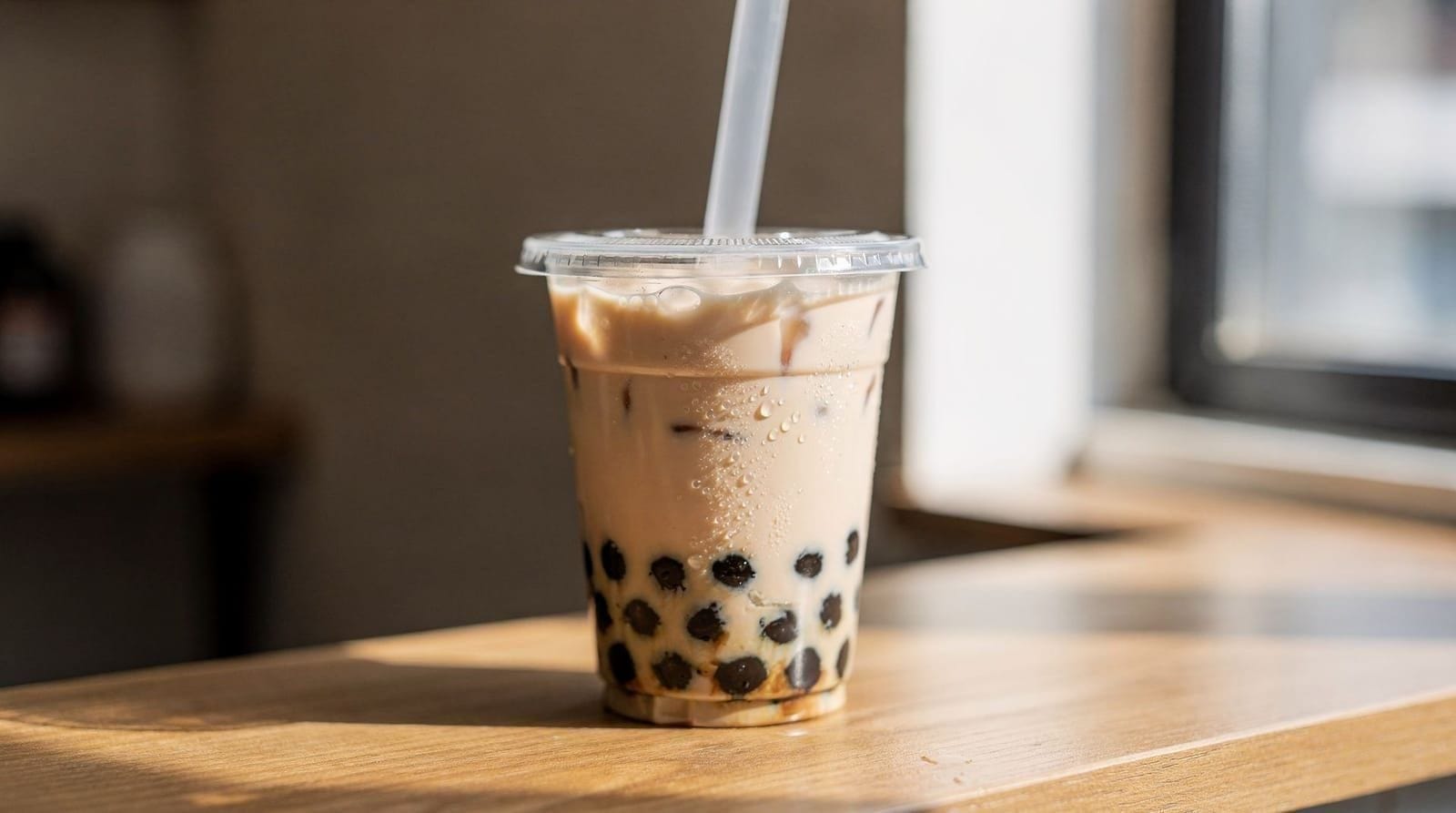
From the Xinyi Road (Dongmen) branch: Yongkang Street is a 3-minute walk — a quiet residential street with independent cafés, bookshops and the famous Yongkang beef noodle shop (永康牛肉麵, TWD 220–280/€6.10–7.80). Da’an Forest Park is 10 minutes north, good for a post-meal walk. The best bubble tea in Taipei covers the tea shops in this area.
From the Taipei 101 branch: The observatory (89th floor, TWD 600/€16.70) is in the same building and worth combining into the same visit. The Xinyi district surrounding 101 has the highest concentration of designer retail and department stores in Taiwan.
From the Zhongxiao Dunhua branch: The Dunhua South Road area has the best concentration of independent lifestyle shops and cafés in Taipei. The Eslite Spectrum (誠品生活) at Songgao is a 10-minute walk east.
Xiaolongbao beyond Din Tai Fung
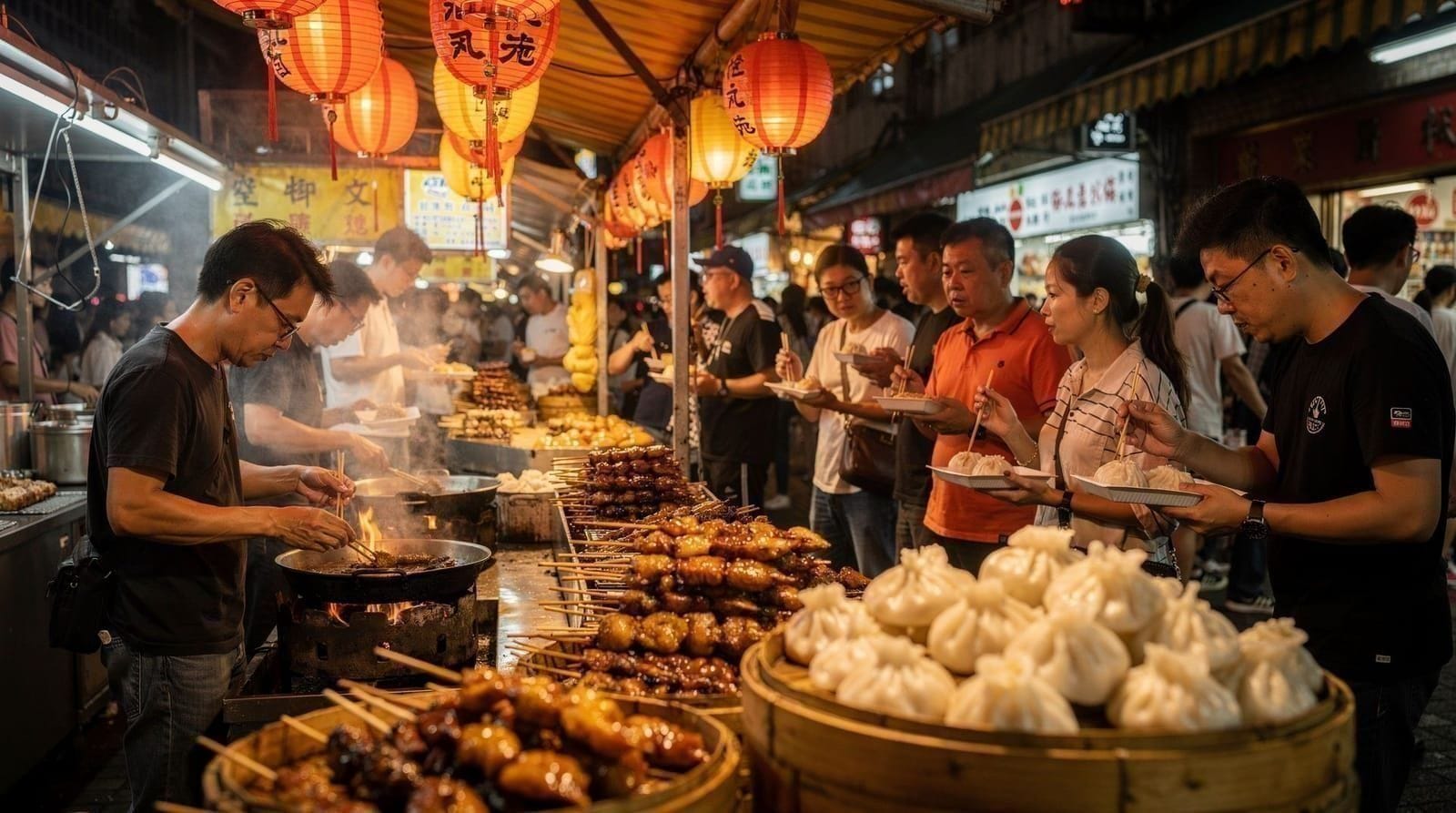
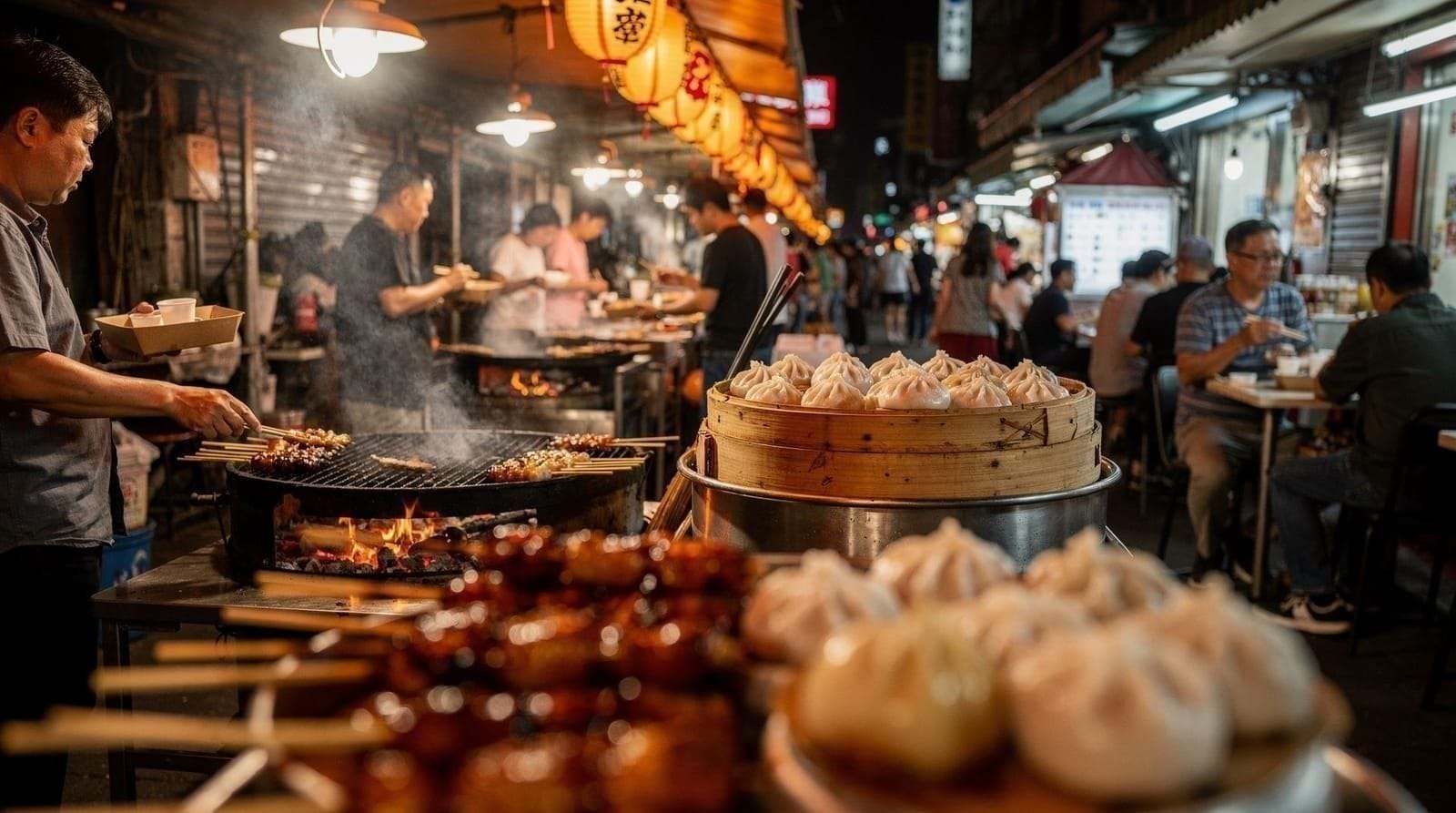
The dumpling culture in Taipei extends well beyond Din Tai Fung. Traditional breakfast diners (yonghe doujiang style) sometimes serve guotie (potstickers) and xiao wonton soup alongside the scallion pancakes. Ningxia Night Market has a couple of vendors selling small portions of pork dumplings for TWD 50–80. The Dihua Street area in Dadaocheng has several traditional dumpling shops.
For the broader picture of eating in Taipei, see best street food in Taipei and the night market guide.
Din Tai Fung with dietary restrictions
Vegetarians and vegans: The standard xiaolongbao contain pork and pork broth. Din Tai Fung does offer vegetarian options — vegetable and shrimp dumplings are available, and the restaurant can serve steamed rice and sautéed vegetables without meat. However, the broth used in soups is pork-based, and vegetarian versions of the soup dumplings are not standard menu items. Call ahead (English-speaking staff are available at the Xinyi Road and 101 branches) if vegetarian or vegan needs are complex.
Gluten-free: Not possible. Xiaolongbao wrappers are wheat-based; soy sauce (used in dipping vinegar and seasoning) contains wheat. Gluten-free options at Din Tai Fung do not exist.
Shellfish allergy: Shrimp appears in several dishes (shrimp fried rice, shrimp dumplings) — the kitchen does not use shellfish in pork xiaolongbao, but cross-contamination in a shared kitchen is possible.
Children: Din Tai Fung is one of the better upscale restaurants to visit with children in Taipei. The kitchen window is engaging for kids to watch; the dumplings are easy for children to handle; the noise level is sufficient that a toddler’s outburst will not silence the room. High chairs are available on request.
Seasonal and limited menu items
The standard menu is available year-round. Seasonal additions change quarterly:
Crab roe xiaolongbao (蟹粉小籠包): Available year-round at most branches, though peak crab season (October–November) sees the best roe quality. TWD 360–420 per 10 pieces.
Truffle xiaolongbao: A periodic special menu item, not always available. When offered, TWD 600–800 per 10 (€16.70–22.25) — the truffle aroma is distinct and genuine, though the format debate (does truffle belong in soup dumplings?) is ongoing among food critics.
Black truffle fried rice: Occasionally on the special menu. TWD 380–420 per serving (€10.55–11.65).
Check the Din Tai Fung website or call the specific branch ahead of a visit if the seasonal items matter to your decision.
The gift shop and takeaway
The Xinyi Road branch has a small retail section selling packaged pineapple cakes, frozen dumplings and branded merchandise. Frozen Din Tai Fung xiaolongbao are sold in vacuum-sealed trays — they travel reasonably well in checked luggage if wrapped in a cooling bag. The cooking instructions are in Chinese; staff can write out English instructions.
Packaged items make the most practical souvenir from the restaurant — meaningful to food-interested people who can cook them at home.
Where Din Tai Fung fits in Taipei’s food scene
Din Tai Fung is famous internationally, which creates a slight distortion in how travelers allocate their eating time in Taipei. It is genuinely excellent — but it is one style of food in a city with extraordinary range. For a full Taipei itinerary, it works well as one dinner or lunch experience, not as the defining meal of the trip.
The experiences that cannot be replicated outside Taiwan — good beef noodle soup, the specific char of a night market scallion pancake, braised pork rice at a 6am diner — deserve equal attention. Use Din Tai Fung for the xiaolongbao benchmark it provides, then spend the rest of your food budget at smaller places. That balance gives a much fuller picture of what Taipei actually eats.
For more on eating in Taipei, see best street food in Taipei, the night market guide, and bubble tea in Taipei. For planning your overall visit, see the taipei first-timer guide.
Taipei 101 and Din Tai Fung combo city landmarks tourOrdering etiquette and pacing
Din Tai Fung’s paper order form (available in English at all main branches) is filled in before you’re seated, which speeds up service considerably — decide roughly what you want while queuing rather than after sitting down. Dishes arrive as they’re ready rather than all at once, so xiaolongbao often lands before your noodle soup or fried rice — eat the dumplings hot rather than waiting for the rest of the table to arrive. Refills of black vinegar and ginger are available on request; don’t hesitate to ask staff, who are used to the request. Tipping is not expected or customary in Taiwan, including at Din Tai Fung — a 10% service charge is typically already included in the bill.
Is Din Tai Fung actually worth the hype?
The honest answer, having eaten at all three main Taipei branches and the well-regarded local alternatives: yes, but for narrower reasons than the reputation suggests. The technical execution — the exact 21g dumpling, the 18 folds, the consistent broth ratio — is genuinely remarkable and rarely matched elsewhere. What Din Tai Fung is not is the single best xiaolongbao experience available in Taipei on flavour alone; several of the local alternatives listed above produce dumplings that taste as good or better to many palates, just without the same visual theatre or international name recognition.
The value of Din Tai Fung is the combination of reliability, cleanliness, English-friendly service and the kitchen-window spectacle — not a flavour advantage so dramatic it justifies a 90-minute queue on every visit. If your time in Taipei is short, go once for the experience; if you have more time, split your dumpling budget between Din Tai Fung and a local alternative like Hang Zhou Xiao Long Tang Bao for a fuller picture.
Timing your visit around the queue
Queue length at each branch follows a predictable pattern. Weekday lunch (11:30am–1:30pm) and weekend dinner (6:30–8:30pm) are the worst times at all three branches. The best windows are weekday mid-afternoon (2:30–4:30pm, between lunch and dinner services) and the first 30 minutes after opening on a weekday. If you’re combining a Din Tai Fung meal with sightseeing at Taipei 101, eating at the 101 branch right when it opens at 11am beats the observatory-then-lunch order, since post-observatory crowds tend to arrive at the restaurant closer to noon.
Top experiences
Bookable activities with verified prices and instant confirmation on GetYourGuide.