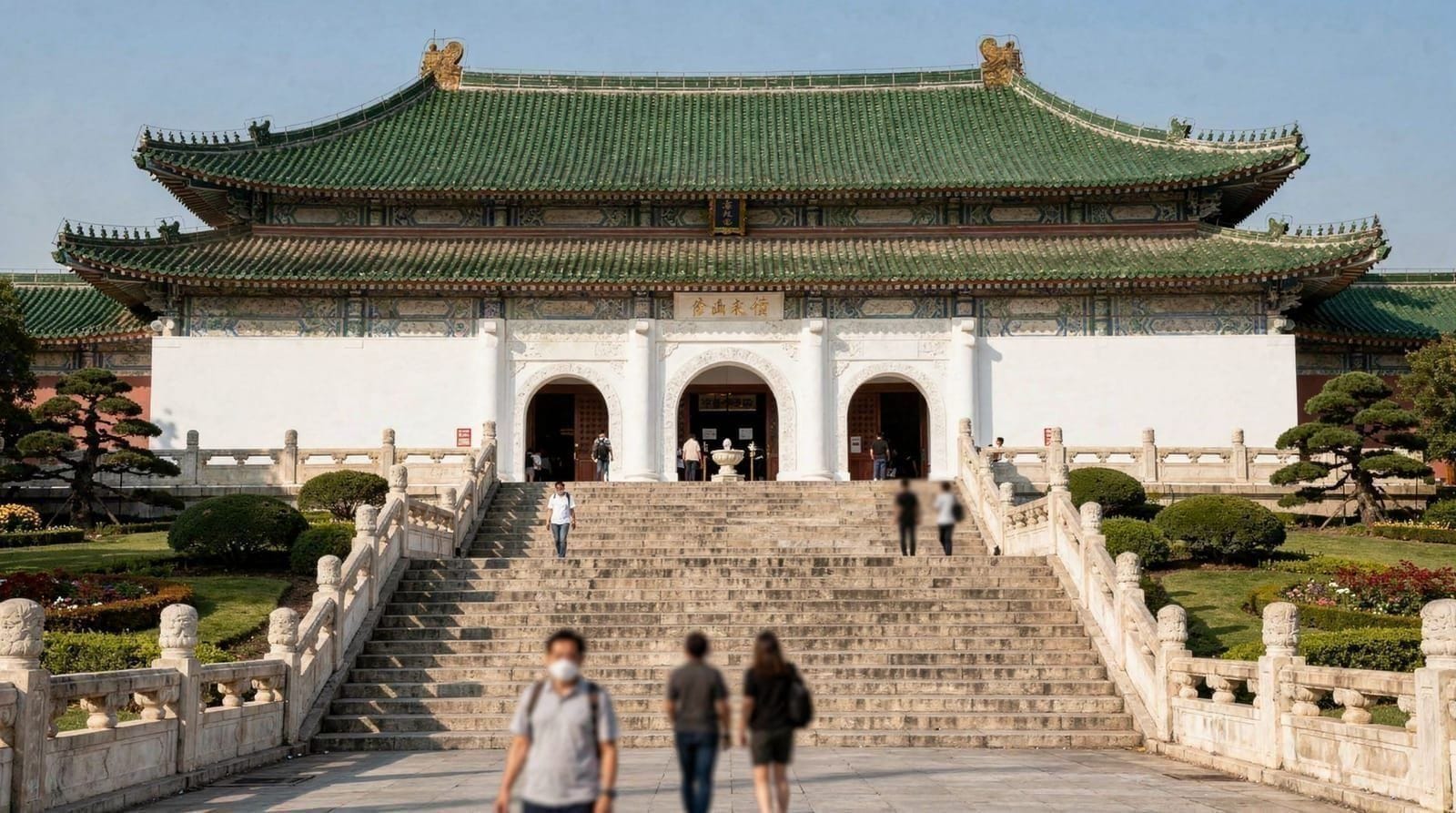
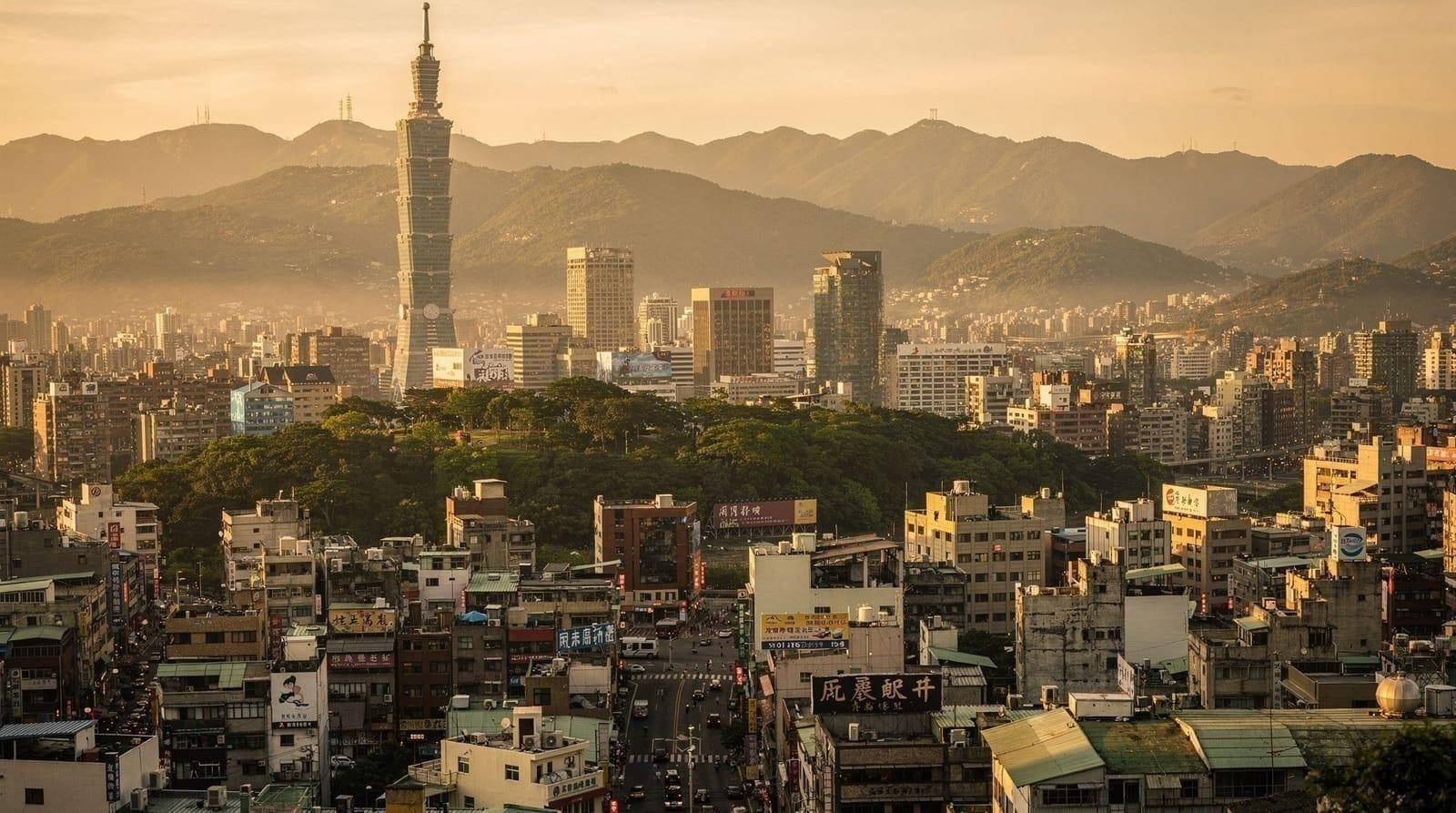
Best museums in Taipei — which ones are worth your time
Taipei: National Taiwan Museum 4 Museum entry ticket
Which museums in Taipei are most worth visiting?
The National Palace Museum is essential — one of the world's great collections. After that, the choice depends on your interests. The Taipei Fine Arts Museum is good for modern art; the National Taiwan Museum for colonial-era natural history; the Shung Ye for aboriginal cultures; and the Miniature Museum of the World is genuinely delightful as a rainy-day option.
Overview
Taipei has over 100 registered museums — but most visitors should focus on a small number that offer genuinely distinctive collections. The museums listed here are ranked by overall visitor value, not prestige. A world-class collection that takes 20 minutes to exhaust ranks below a smaller one that rewards 3 hours of attention.
All prices in TWD with EUR equivalents as of June 2026.
| Essential | National Palace Museum — TWD 350, half-day |
| Best value | National Taiwan Museum combo — TWD 100 for 4 venues |
| Best for rain | Miniature Museum of the World — fully underground |
| Best free | Lin An Tai Historical House, Beitou Hot Spring Museum |
| Skip if short on time | CKS Memorial exhibitions, Sun Yat-sen interior |
Tier 1: Do not miss
National Palace Museum (國立故宮博物院)
Admission: TWD 350 (€9.70) Location: Shilin District MRT: Shilin Station (Red Line) + Bus 255/304 Hours: 9:00am–5:00pm, Tuesday to Sunday (closed Mondays)
The non-negotiable. 700,000 objects from the Chinese imperial collection, including objects not surpassed anywhere in the world — Song dynasty Ru ware ceramics, Zhou dynasty bronzes, Ming lacquer, Qing jade and ivory carving. The jadeite cabbage alone justifies the visit.
Plan 3–4 hours minimum. See the complete National Palace Museum guide for priorities.
Guided National Palace Museum tour — English guide covers the most significant objects with contextCheck availabilityTier 2: Recommended for interested visitors
Taipei Fine Arts Museum (台北市立美術館)
Admission: TWD 30–70 (€0.83–1.95) depending on exhibition; sometimes free Location: Zhongshan District, near Yuanshan MRT Hours: 9:30am–5:30pm (to 8:30pm Saturdays); closed Mondays
Taiwan’s premier modern and contemporary art museum, in a brutalist-modernist building from 1983 — the building itself is architecturally interesting. The permanent collection covers Taiwanese and international modern art; the rotating exhibitions are the reason to visit, typically featuring either local artists or significant international shows.
The price is low enough that it is worth checking what is on before you arrive, and going if the current show interests you. Free on the last Sunday of each month.
The surrounding Zhongshan area (Yuanshan Station) has Bao’an Temple and the Confucius Temple within walking distance — good to combine for a half-day in Datong.
Adjacent to the museum is the Taiwan Story House (故事館, No. 181-1 Zhongshan North Road, Section 3) — a 1914 Baroque-style wooden villa that served as a foreign-owned residence during the Japanese colonial period. Now operating as a café and cultural space, it is architecturally the most photogenic building in the Zhongshan area, and worth 20 minutes of your time before or after the main museum. Entry to the grounds is free.
National Taiwan Museum (國立臺灣博物館)
Admission: TWD 30 (€0.83); TWD 100 (€2.80) combined ticket for 4 affiliated venues Location: 2 Xiangyang Road, Zhongzheng District (inside 228 Peace Memorial Park) MRT: NTU Hospital Station (Red/Green Lines) or Zhongzheng Memorial Hall Station Hours: 9:30am–5pm; closed Mondays
The oldest museum in Taiwan, founded in 1908 during the Japanese colonial period. Housed in a neoclassical building that is impressive by itself — one of the better pieces of colonial-era architecture in Taipei.
The permanent collection covers Taiwan’s natural history (geology, flora, fauna) and indigenous peoples. The colonial-era specimens and exhibits are interesting for their documentation of Taiwan’s natural environment. The Palaeontology Hall (a separate building, included in the combined ticket) covers prehistoric Taiwan.
The museum is compact enough that 60–90 minutes covers it well. The 228 Peace Memorial Park surrounding it is a pleasant urban green space — the memorial to the 1947 massacre is within the park.
National Taiwan Museum 4-venue combo ticket — covers the main building and three associated venuesCheck availability228 Memorial Museum (二二八紀念館)
Admission: TWD 30 (€0.83) Location: Inside 228 Peace Memorial Park, Zhongzheng District MRT: NTU Hospital Station or Zhongzheng Memorial Hall Station Hours: 10am–5pm; closed Mondays
One of the most important and least visited museums in Taipei for anyone wanting to understand modern Taiwan. The 228 Incident of February 28, 1947 was a Taiwanese civilian uprising against the Nationalist Chinese administration that had assumed control of Taiwan after Japan’s defeat in 1945. The government’s suppression killed between 10,000 and 30,000 people — an event that shaped Taiwanese political identity and remained an official taboo until the 1990s.
The museum occupies a 1931 colonial-era radio broadcasting station building (the governor’s radio address was broadcast from here during the suppression). Exhibits cover the lead-up, the incident, the suppression and the subsequent White Terror period (1949–1987). English-language labels throughout. Plan 60–90 minutes.
This is not comfortable viewing, but it is essential context for understanding why Taiwan’s relationship with mainland China is what it is, and why Taiwanese identity is distinct from Chinese identity in ways that go beyond politics.
Shung Ye Museum of Formosan Aborigines (順益台灣原住民博物館)
Admission: TWD 150 (€4.15); combined with National Palace Museum available Location: 282 Zhishan Road, Shilin (across the road from National Palace Museum) Hours: 9am–5pm; closed Mondays
A specialist museum covering Taiwan’s 16 official indigenous peoples — their histories, material cultures, ritual practices and languages. Small (4 floors), well-curated, English signage throughout. Covers everything from prehistoric stone artifacts to contemporary indigenous arts.
The indigenous peoples of Taiwan (Austronesian, linguistically and genetically distinct from the Han Chinese majority) are the origin population of Taiwan — their ancestors were on the island for at least 6,000 years before the first Han settlers arrived. The museum contextualizes them substantively rather than treating them as curiosities.
Combined with the National Palace Museum (directly across the road), this is a logical pairing: 2 hours at Shung Ye, then 3 hours at the Palace Museum.
Museum of Contemporary Art Taipei (台北當代藝術館, MoCA)
Admission: TWD 50–100 (€1.40–2.80) depending on exhibition Location: 39 Chang’an West Road, Datong District MRT: Zhongshan Station (Red Line), 5-minute walk Hours: 10am–6pm; closed Mondays
MoCA occupies a Japanese-colonial-era school building (1921) — a heritage structure that is elegant and well-preserved. The contemporary art shown here is Taiwan-focused, with occasional international shows, and tends toward the adventurous end of exhibition programming.
Check what is currently showing on the MoCA website. When the exhibitions are interesting, the combination of the architecture and the work makes for a rewarding 90 minutes. When they are not (contemporary art being variable), the building is still worth 20 minutes.
In the same area as Dihua Street — good to combine with a Dadaocheng visit.
Combo entry ticket for National Taiwan Museum, MoCA and the Miniature MuseumCheck availabilityTier 3: Niche but worthwhile
Miniature Museum of the World (袖珍博物館)
Admission: TWD 250 (€6.95) Location: B1, 96 Jianguo North Road, Section 1, Zhongshan MRT: Zhongshan Junior High School Station (Brown Line) Hours: 10am–6pm (to 7pm weekends); closed Mondays
A collection of miniature reproductions — dollhouses, rooms and complete environments at 1:12 scale. Sounds gimmicky; is genuinely impressive. The craftsmanship of the best pieces (Victorian parlors, art nouveau bedrooms, a complete French chateau) is extraordinary, and the level of detail rewards a slow walk. Kids love it; adults are frequently surprised by how engaging it is.
Best for: rainy days, families with children, anyone with interests in interior design or craft. See taipei with kids for other family-friendly museum options.
Lin An Tai Historical House (林安泰古厝)
Admission: Free Location: 5 Binjiang Street, Zhongshan District (near the Binjiang riverside park) MRT: Jiannan Road Station (Brown Line), then 15-minute walk; or taxi from Zhongshan Hours: 9am–5pm; closed Mondays and the last day of each month
A genuine 18th–19th century Taiwanese merchant’s residence, relocated brick by brick from its original Da’an district site in 1978 when it was threatened by road construction. The house was built by the Lin family in stages between 1783 and 1823, following traditional Fujian architectural principles: a series of courtyards arranged on a central axis, with secondary residential wings flanking each courtyard.
The relocation was meticulous — over 3,000 labeled components were disassembled, transported and reassembled at the current riverside site. The result is the most complete surviving example of traditional Taiwanese domestic architecture in the city, set in a garden with bamboo plantings and a small pond.
Less visited than the bigger-name museums, it rewards 45–60 minutes and is one of the more unusual free experiences in Taipei.
Museum of Drinking Water (台北自來水博物館)
Admission: TWD 50 (€1.39) Location: 1 Siyuan Road, Da’an District (near National Taiwan University, Gongguan MRT) MRT: Gongguan Station (Green Line), 10-minute walk Hours: 9am–5pm; closed Mondays (extended hours on some weekends)
Housed in a 1908 colonial-era pumping station — a brick and stone building constructed by British and Japanese engineers as part of Taipei’s first modern water supply system. The steam-powered pumping engines (some still operational) are the centerpiece; the building’s Victorian industrial architecture is surprisingly attractive.
The museum documents Taipei’s water supply history from the colonial period, with some of the original equipment displayed in situ. For anyone interested in industrial heritage, infrastructure history or Victorian engineering, this is one of the more interesting stops in Taipei at its price point. 30–45 minutes is enough.
Located in Gongguan, near the National Taiwan University campus and the Treasure Hill Artist Village — good to combine into a southern Da’an afternoon.
Beitou Hot Spring Museum (北投溫泉博物館)
Admission: Free Location: 2 Zhongshan Road, Beitou District MRT: Xinbeitou Station (Red Line), 10-minute walk Hours: 9am–5pm; closed Mondays
A short stop on any Beitou day trip. The museum is housed in a 1913 Japanese-era bathhouse — the finest remaining example of its type in Taiwan. The ground floor has a large Roman-style hot spring pool (now displayed, not usable) and traditional changing rooms. Exhibits cover the history of Beitou as a spa resort under Japanese rule.
Worth 30–45 minutes if you are visiting Beitou for the hot springs. Not a substitute for actually soaking in a bath.
Taiwan Literature Base (台灣文學基地)
Admission: Free Location: 5 Qingdao East Road, Zhongzheng District MRT: Shandao Temple Station (Blue Line), 5-minute walk Hours: 10am–6pm; closed Mondays
The former Japanese consul’s residence (1931) — a two-story colonial villa with a garden, converted into a literary cultural space. The building is beautifully restored; the garden is one of the quieter outdoor spaces in the Zhongzheng area. Hosts author events, reading programming and rotating exhibitions on Taiwanese literature.
Worth visiting primarily for the building and garden — 20–30 minutes — combined with a trip to the nearby Zhongzheng district attractions.
Museum combo tickets
The National Taiwan Museum offers a combined ticket (TWD 100/€2.80) covering the main building plus the affiliated Palaeontology Hall, NTW South Railway Department Building (currently under renovation) and the Forestry Bureau site. Good value if you plan to visit multiple sites.
The GetYourGuide combo ticket for National Palace Museum + Shung Ye is the most practical pairing — adjacent locations, complementary content.
Free entry days
| Museum | Free admission |
|---|---|
| Taipei Fine Arts Museum | Last Sunday of each month |
| National Taiwan Museum | Select national holidays |
| MoCA | First Wednesday of each month |
| Lin An Tai Historical House | Always free |
| Taiwan Literature Base | Always free |
| Beitou Hot Spring Museum | Always free |
Using an EasyCard on the MRT is the practical way to visit multiple museums in a day — single rides cost TWD 20–45 (€0.55–1.25).
How to sequence visits across multiple days
For a 3-day Taipei visit: Day 1 — National Palace Museum (half-day, morning); Day 2 — National Taiwan Museum + 228 Memorial Museum (both in the peace park, 2–3 hours total); Day 3 — Fine Arts Museum or MoCA depending on current exhibitions.
For a 1-day museum focus: National Palace Museum morning (9:00am–noon), Shung Ye across the road (1–3pm), return to the city. That is 4–5 hours and covers the two most distinctive collections without rushing.
Rainy day fallback: Miniature Museum of the World is entirely underground — ideal for rain. The National Taiwan Museum and 228 Memorial Museum are both close to the MRT and have interior focus.
Practical advice: what to skip
Chiang Kai-shek Memorial Hall: The 238,000 sqm complex (Memorial Hall, National Concert Hall, National Theater) is more politically interesting than culturally rich. The changing of the guard ceremony (on the hour, 9am–5pm) is worth 10 minutes. The main hall with the enormous seated statue of CKS is free to enter. Skip the exhibitions in the basement unless you have a specific interest in Cold War Taiwanese political history.
National Dr. Sun Yat-sen Memorial Hall (Xinyi District): Similar situation — the modernist 1972 building is architecturally notable and the park is pleasant for a walk or break, but the interior exhibits require a specific interest in Sun Yat-sen’s political legacy to be worthwhile. The changing of the guard is the same format as CKS Memorial, and the park connects to the Xinyi shopping district.
Taipei Children’s Amusement Park Museum: Only relevant for families with children under 8.
Additional museums worth knowing about
228 Memorial Museum (二二八國家紀念館)
Admission: TWD 30 (€0.83) Location: 3 Nan Hai Road, Zhongzheng District (near the National Taiwan Museum, in the 228 Peace Memorial Park) MRT: NTU Hospital Station or Zhongzheng Memorial Hall Station Hours: 10am–5pm; closed Mondays
A compact but essential museum for anyone wanting to understand modern Taiwan’s political history. It is housed in a 1931 Japanese-era radio broadcasting station — a handsome neoclassical building with interior details largely preserved from the original construction.
The museum documents the February 28 Incident of 1947 — a popular uprising against the Nationalist government that arrived from mainland China in 1945, followed by a brutal military suppression in which an estimated 18,000–28,000 Taiwanese were killed. The massacre and subsequent decades of martial law (lifted only in 1987) shaped Taiwan’s political identity profoundly. Understanding this history makes much of what you observe in Taiwanese public life — the complex relationship with mainland China, the pride in Taiwan’s democratic transition, the particular character of Taiwanese identity — significantly more legible.
The exhibition is in Chinese with English translations throughout. Allow 60–90 minutes. The memorial park outside (with its white marble memorial structure) is free to walk through at any time.
Combine with: National Taiwan Museum (same park), then walk 15 minutes to Dadaocheng for the afternoon.
Lin An Tai Historical House (林安泰古厝)
Admission: Free Location: 5 Binjiang Street, Zhongshan District (near Binjiang Market) MRT: Xingtian Temple Station, 15-minute walk east Hours: 9am–5pm (to 7pm weekends); closed Mondays
A Minnan-style merchant residence built between 1783 and 1823 — among the oldest surviving domestic structures in Taipei. The house was originally on Zhongxiao East Road but was dismantled brick by brick and relocated to its current riverside site in the 1970s to make way for road widening.
The complex includes the main residential building, ancestral hall, secondary halls, and a garden. The architecture is characteristic of the Fujian merchant class — red brick, upturned rooflines, carved window screens, courtyard layout. Free guided tours in Mandarin run on weekends; English-language audio guides can be downloaded from the museum website.
Worth an hour if you are interested in domestic architecture and traditional spatial organization. Rarely crowded.
Museum of Drinking Water (自來水博物館)
Admission: TWD 50 (€1.40) Location: 1 Siyuan Street, Zhongzheng District (near Gongguan MRT) MRT: Gongguan Station (Green Line), 10-minute walk Hours: 9am–5pm; closed Mondays
A Victorian-era pump station (built 1908–1909 by the Japanese colonial government) that served Taipei’s drinking water supply until the 1970s. The pump house and engine room are preserved as a museum with working steam-powered pumps demonstrated on special occasions.
The building itself — a graceful example of industrial colonial architecture — is the attraction. The surrounding grounds have a park and reservoir. This is a 45-minute visit at most, but it is the kind of low-key, genuinely interesting heritage site that rewards visitors who look beyond the major tourist circuits.
Near: Gongguan Night Market (student market, evening) and the National Taiwan University campus (free to walk through).
Taipei Story House (台北故事館)
Admission: Free (garden); TWD 50 (€1.40) for interior Location: 181-1 Zhongshan North Road, Section 3, Zhongshan District (adjacent to the Fine Arts Museum) MRT: Yuanshan Station (Red Line), 10-minute walk Hours: 10am–5:30pm; closed Mondays
A 1914 late-Victorian/Baroque villa built by a Taiwanese merchant as a private residence — one of the few Japanese-era private buildings in Taipei to survive intact. The interior has been restored and is used for cultural exhibitions on everyday life in colonial-era Taipei.
The combination of the Taipei Fine Arts Museum and the Story House makes a natural 3-hour morning visit to the Yuanshan area — finish at Bao’an Temple 15 minutes south.
Museum free-entry days
| Museum | Free entry days |
|---|---|
| Taipei Fine Arts Museum | Last Sunday of each month |
| National Taiwan Museum | Free for children under 6 |
| MoCA Taipei | Check website — occasional free days |
| Taipei Zoo | First Wednesday of each month |
| Chiang Kai-shek Memorial Hall | Always free |
| 228 Memorial Museum | Free for children under 6 |
| Lin An Tai Historical House | Always free |
| Beitou Hot Spring Museum | Always free |
For the specific National Palace Museum visit, see the full guide. For general trip planning, see taipei itinerary guide and how many days in Taipei.
Museum-hopping by neighbourhood
Grouping museums geographically saves the most time. Zhongzheng cluster: National Taiwan Museum, 228 Memorial Museum and 228 Peace Memorial Park sit within the same park — walkable in a single 3-hour block. Shilin cluster: National Palace Museum and Shung Ye Museum face each other across the same road — the natural half-day pairing.
Zhongshan cluster: Taipei Fine Arts Museum, Taipei Story House and MoCA are all within a 20-minute walk of each other along Zhongshan North Road, with Bao’an Temple as a bonus stop nearby (see best temples in Taipei). Planning around these clusters rather than jumping across the city cuts transit time roughly in half compared to visiting the same museums in a scattered order.
Museum passes and combo tickets — do they save money?
The National Taiwan Museum 4-venue combo (TWD 100) is unambiguously worth it if you plan to see more than one of its affiliated sites — a straight discount with no downside. The 4-museum ticket covering National Taiwan Museum, MoCA and the Miniature Museum is worth comparing against buying tickets separately: it only pays off if you genuinely intend to visit all three, since the discount per venue is modest. For most travellers focused mainly on the National Palace Museum, a standalone ticket or guided tour is the simpler choice — combo passes built around it and Shung Ye make sense mainly if you’re already planning to visit both.
Photography rules across Taipei’s museums
Policies vary more than visitors expect. The National Palace Museum permits photography without flash in most galleries, though a handful of rooms housing the most fragile pieces (calligraphy, some jade and lacquer works) prohibit photography entirely — signs are posted at each gallery entrance. The 228 Memorial Museum and 228 Memorial Museum (national) both allow photography throughout, appropriate given their documentary purpose. MoCA and the Taipei Fine Arts Museum restrict photography during specific loan exhibitions, usually flagged at the ticket counter. When in doubt, check with staff before raising your phone — enforcement is inconsistent but the fines for photographing restricted items at the National Palace Museum are real.
Top experiences
Bookable activities with verified prices and instant confirmation on GetYourGuide.