How many days do you need in Taipei?
Taipei: Classic landmarks day tour
How many days should I spend in Taipei?
Three days is the minimum to see the city highlights — Taipei 101, Longshan Temple, a night market, and one day trip. Five days is the sweet spot for most travelers, adding Jiufen, Beitou hot springs, and proper neighbourhood time. Seven or more days lets you escape to Sun Moon Lake or Taroko Gorge without feeling rushed.
The honest answer: it depends on your style
Most travel guides dodge this question with a hedge. Here is the direct version.
| Minimum | 3 days — city core plus one day trip |
| Sweet spot | 5 days — city, two day trips, breathing room |
| Best time | October–November for weather; February–April for cherry blossoms |
| Base yourself | Near Taipei Main Station for maximum flexibility |
| Getting around | MRT + EasyCard covers almost everything |
3 days: city core only. You will see the famous sights and one day trip — enough to feel you visited Taipei without feeling you understood it.
5 days: the sweet spot. Covers the city properly (temples, markets, neighbourhoods, Taipei 101), one full day trip and a breathing day for wandering or eating your way through a specific district.
7 days: adds regional Taiwan — a night at Sun Moon Lake, a day in Taroko Gorge, or a slower pace in Tamsui and Beitou without clock-watching.
10+ days: you are exploring Taiwan, not just Taipei. This opens Yilan, Taichung and the south.
What each day unlocks
Day 1: Old Taipei and a night market
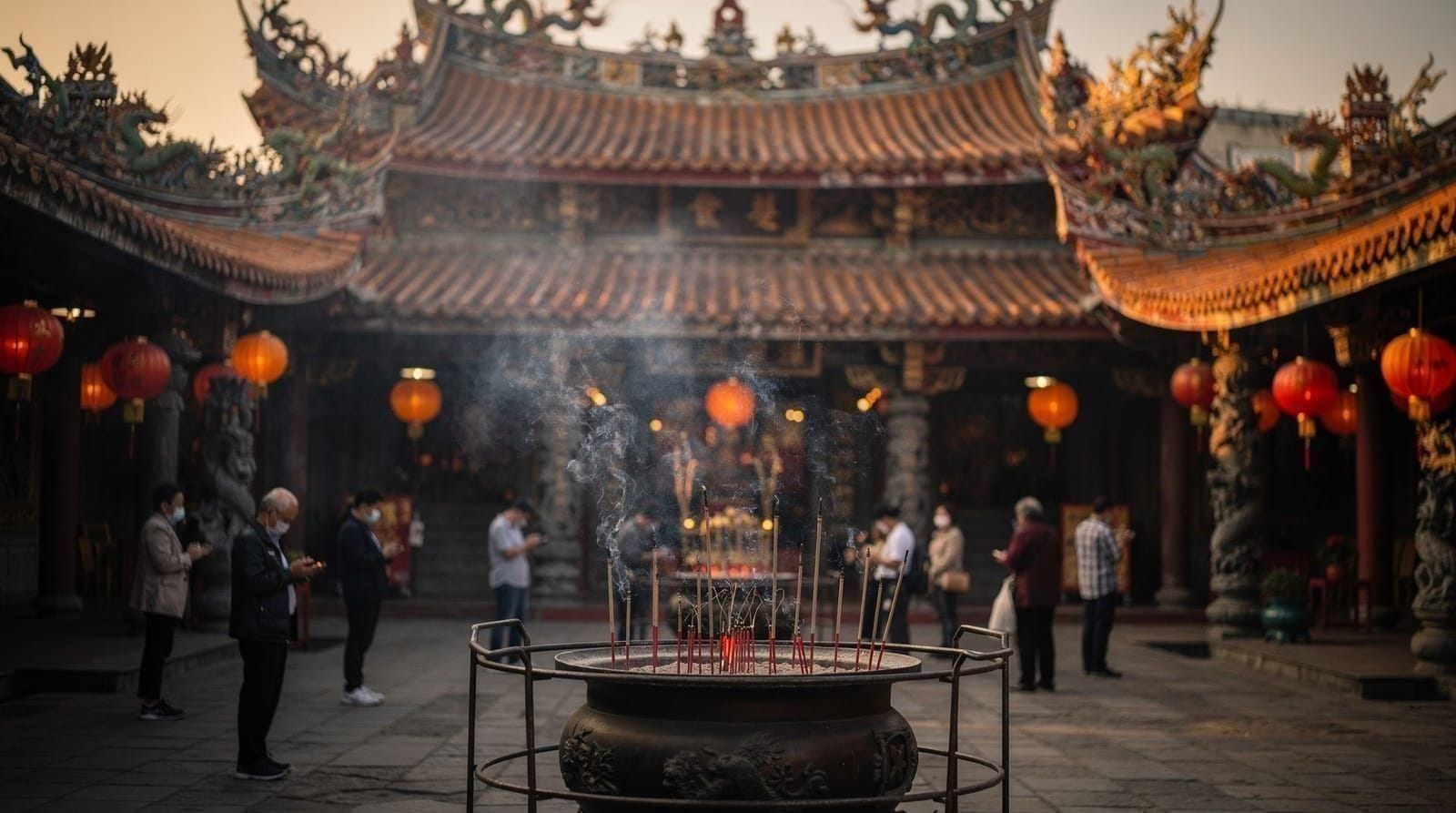
Start at Longshan Temple (free, opens 6am, busiest at noon for worshippers), then walk north to Ximending — Taipei’s pedestrianised shopping district, best after 4pm when the crowds thin. Head back east to Shilin Night Market by 7pm; it runs until midnight. Use the MRT the whole day — an EasyCard covers everything.
Day 2: Modern Taipei and history
Morning in Dadaocheng (Dihua Street) for fabric shops, dried goods and the covered market. Walk along the Tamsui River front. Afternoon: take the MRT to Xinyi for Taipei 101 — buy the observatory ticket in advance to avoid queues. Evening in the Xinyi malls or the Tonghua Night Market (smaller and more local than Shilin).
Day 3: First day trip
Jiufen + Shifen is the classic pairing — train from Taipei Main to Ruifang (35 min, ~TWD 50/€1.40), bus to Jiufen (15 min). Spend 2–3 hours in the old street, then bus back to Shifen for the sky lantern release (TWD 150–200/€4–5.50 per lantern). Return train from Shifen to Taipei (1 hr). Total cost under TWD 500 (€14) excluding lanterns.
If you prefer nature over lanterns: Beitou hot springs are 20 minutes on the MRT Red Line. The Thermal Valley (Diyu Gu) is free; public bath houses cost TWD 150–600 (€4–17).
Guided day trip combining Jiufen, Shifen and Yehliu GeoparkDay 4 (5-day trip): Neighbourhoods
Pick one district and go deep. Da’an has the best coffee shops and bookstores. Zhongshan has mid-century architecture, small galleries and the Ningxia Night Market (locals’ favourite, smaller and less touristy than Shilin). Songshan District around Raohe Night Market is the most accessible for a slow afternoon + evening market.
Day 5 (5-day trip): Yangmingshan or Beitou
Take the morning bus to Yangmingshan National Park — dormant volcano, fumaroles and hiking trails. In spring (February–April), the cherry blossoms and calla lily fields are worth the detour. Return for afternoon in the Beitou hot spring area if you haven’t been yet.
Days 6–7 (7-day trip): Regional escape
Options ranked by effort vs. reward:
| Destination | Travel time | Overnight needed? | Best for |
|---|---|---|---|
| Sun Moon Lake | 2–2.5h (HSR + bus) | Recommended | Scenery, cycling, slow travel |
| Taroko Gorge | 2.5–3h (HSR + shuttle) | Yes for hiking | Dramatic nature |
| Yilan | 45–60 min (train) | Optional | Hot springs, local food |
| Tamsui | 20 min (MRT) | No | Riverside half-day, budget day |
Sun Moon Lake and Taroko both deserve overnight stays — the distances make day trips exhausting without a private car.
The itinerary by traveler type
Budget backpacker (3–4 days)
Taipei is your best-value base in East Asia. MRT single tickets cost TWD 20–65 (€0.55–1.80). Street food meals: TWD 60–120 (€1.70–3.30). An EasyCard gives you 20% off bus fares. Stick to Jiufen/Shifen and Beitou as day trips — both under TWD 300 (€8.30) round-trip from Taipei. See also: Taipei on a budget guide.
First-timer (5 days)
Use days 1–2 for the icons (Longshan, 101, Dadaocheng, a major night market), day 3 for Jiufen, day 4 for Beitou/Yangmingshan, day 5 free. The first-timer guide has the exact routing.
Classic Taipei landmarks day tour — good orientation for day 1Culture and temple enthusiast (5–7 days)
Add the National Palace Museum (half a day minimum — one of the world’s great collections), Bao’an Temple in Datong, Xingtian Temple in Zhongshan, and the Confucius Temple near Bao’an. Dadaocheng deserves a half-day, not an hour. See best temples in Taipei.
Food traveler (4–5 days)
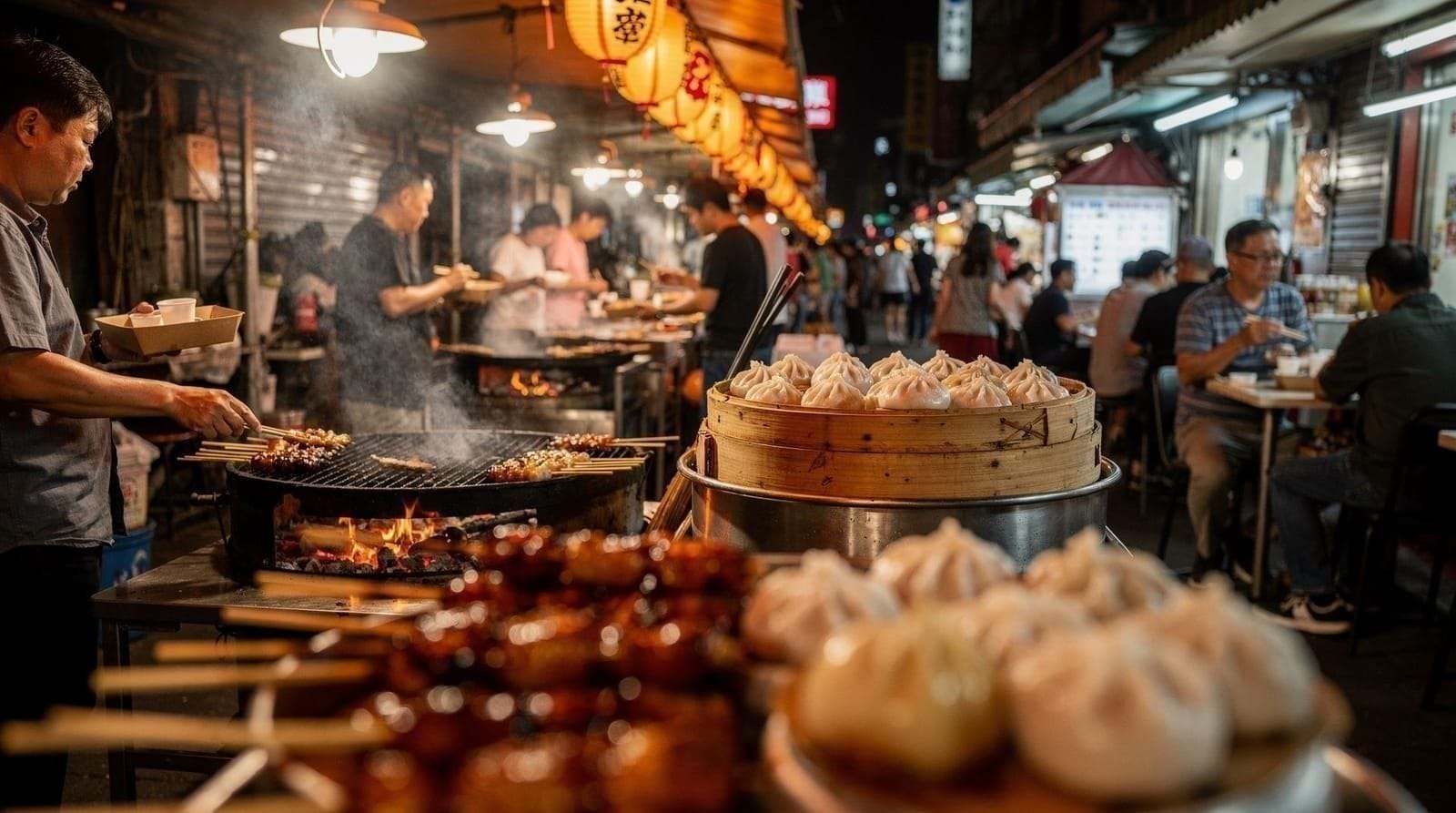
Taipei is one of Asia’s great food cities. Allocate at least three evenings to different night markets — Shilin, Raohe, Ningxia. Breakfast at a traditional diner (congee, scallion pancake, warm soy milk) is a ritual worth waking up for. Din Tai Fung queues at the Xinyi flagship start at 11am — arrive at 10:30 or book ahead. See the full street food guide.
Families (5–6 days)
Kids tend to love the interactive elements — sky lanterns at Shifen, the Maokong Gondola, Taipei Zoo (one of Asia’s best, free on the first Wednesday of each month). Avoid peak typhoon season. More in Taipei with kids.
What trips NOT to include in a short stay
Sun Moon Lake as a day trip is technically possible but involves leaving Taipei at 7am and arriving back after 10pm. You see the lake for 3 hours. Not recommended without an overnight.
Taroko Gorge same-day from Taipei is brutal — 2.5 hours each way by train, then a shuttle that may not align with your schedule. Plan an overnight in Hualien.
Alishan is better placed from Taichung or Chiayi. Adding it to a Taipei-based itinerary inflates travel time disproportionately.
What people wish they’d known before deciding
A pattern shows up repeatedly in traveler feedback and forums: people who book 3 days almost always say afterward they wish they’d had 5, while people who book 7 rarely say they wish they’d had fewer. That asymmetry is worth weighing when you are deciding between flight fare savings and an extra couple of nights — 5 days is close to the point of diminishing regret for most travelers, and 3 days is the point where the trade-offs start to bite (usually cutting either Jiufen or Beitou, sometimes both).
The other common miscalculation is treating day trips as “free” time-wise because they’re outside the city. A Jiufen and Shifen day genuinely consumes 9–10 hours door to door once you include the train, the bus queue at Ruifang, and the walk back down Jiufen’s steep lanes. Budget it as a full day, not a half-day with sightseeing bolted on.
Matching day count to trip type
Not every trip to Taipei has the same shape, and the “right” number of days depends heavily on what kind of trip you’re actually taking.
A stopover on the way elsewhere in Asia: 2–3 days is a legitimate choice here — you’re not trying to see everything, just get a genuine taste. Prioritise one temple, one night market and Taipei 101 or a day trip, not both. See is Taipei worth visiting for how it compares as a standalone versus stopover destination.
A dedicated Taiwan trip with Taipei as the base: 5–7 days lets you treat the city properly and still fit in the north-coast day trips that make Taipei distinctive — Jiufen, Shifen, Beitou. This is the most common and most satisfying shape for a first visit.
A honeymoon or slow-travel trip: 7+ days, weighted toward fewer things done well — a Maokong tea afternoon, a Beitou hot spring evening, a Tamsui sunset — rather than a checklist. The Taipei itinerary guide has a slower-paced framework that suits this style.
A family trip: 5–6 days minimum. Kids need more downtime between activities than the pacing above assumes, and destinations like the Maokong Gondola or Taipei Zoo work better as a relaxed half-day than a rushed stop. See Taipei with kids for age-specific pacing.
How to structure the trip practically
MRT vs. day tour operator
For Jiufen, Shifen, Yehliu: independent travel by train + bus is cheaper (under TWD 300 round-trip) and flexible. Guided group tours cost TWD 1,500–2,500 (€42–70) per person but include Yehliu, which is harder to reach independently. For families or time-constrained travelers, the guided option is worth it.
Taipei must-see walking tour — good for day 1 orientationEasyCard
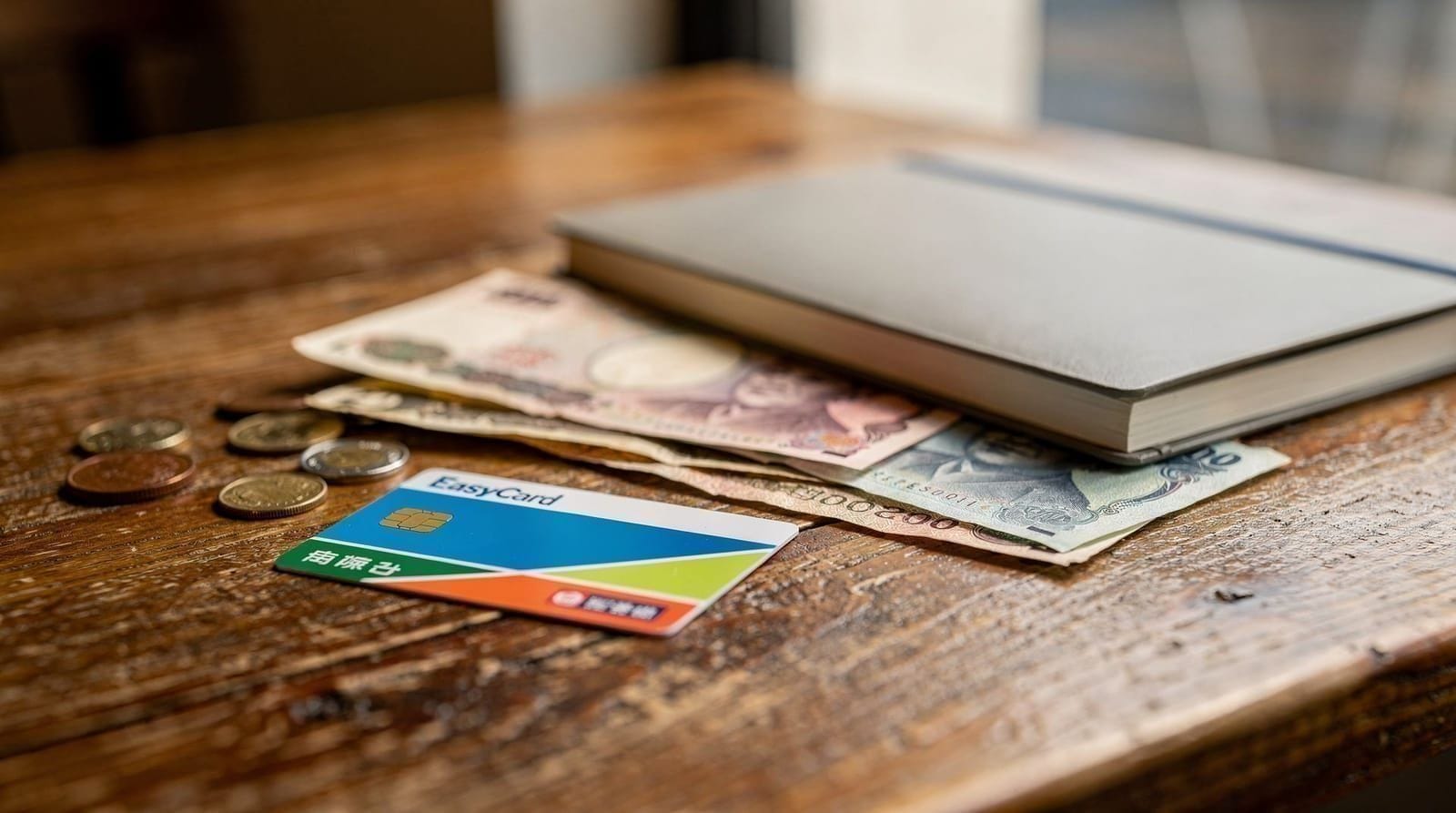
Buy one at any MRT station (TWD 100 card price + desired top-up). Works on MRT, buses, YouBike rental, and increasingly at convenience stores. Any remaining balance can be refunded at the end of your trip; the card price is not returned. More detail in the EasyCard guide.
Getting from the airport
Taoyuan Airport MRT Express runs every 15 minutes to Taipei Main Station — 35–37 minutes, TWD 160 (~€4.50). First train around 6am, last around midnight. Do not take a taxi unless you have heavy luggage and are sharing costs — taxis cost TWD 1,000–1,400 (€28–39) depending on traffic.
Seasonal notes for planning duration
October–November: best weather, all attractions accessible, festivals like Jiufen’s lantern evenings. Ideal for any trip length.
February–April: cherry blossom season on Yangmingshan (mid-February to late March) justifies a longer stay — 5–7 days lets you combine the city with the mountain bloom.
July–September: typhoon risk means day trips may get cancelled. Beitou and Yangmingshan trails close in heavy rain. A 3-day city-focused trip is safer than a longer itinerary dependent on outdoor day trips.
Chinese New Year (January–February): many restaurants close for 3–7 days, transport is overbooked, and domestic tourism peaks. Unless you want to see the celebrations, it is the worst time to visit. Book everything months in advance.
For a full seasonal breakdown, see best time to visit Taipei.
Quick-reference day count
| Trip length | What fits | What’s missing |
|---|---|---|
| 2 days | City core only | Night markets, day trips |
| 3 days | City + 1 day trip | Yangmingshan, second market |
| 5 days | City + 2 day trips + free time | Regional Taiwan |
| 7 days | City + 3 day trips + 1 overnight escape | Southern Taiwan |
| 10+ days | Full Taiwan circuit | Nothing — you’ve earned it |
The single most common regret we hear: rushing Jiufen. Give it a full day (morning through dusk), not a 2-hour afternoon stop on a combo tour.
Planning by arrival point
Where you stay shapes the natural order of your days — and Taipei is compact enough that the difference is measured in 10-minute MRT rides, not hours. Still, sequencing your sightseeing around your base saves unnecessary backtracking.
Staying in Wanhua or Zhongzheng (near Longshan Temple MRT on the Blue Line, or Taipei Main Station on the Red/Blue interchange): you are already inside old Taipei. Start day 1 on foot — Longshan Temple is minutes away, Ximending is a short walk north, and Dadaocheng is reachable by Blue Line in two stops from Longshan Temple to Beimen or Zhongshan Station. Save Xinyi and Taipei 101 for day 2, when you take the Red Line south from Taipei Main to Taipei City Hall (three stops, 8 minutes).
Staying in Xinyi or Da’an (Taipei 101/World Trade Center MRT, or Daan Park on the Green Line): flip the sequence. Start with Taipei 101 on arrival day when you still have jet-lag energy and the evening light on the tower is worth it. Cross to the old city on day 2 via a direct Blue Line connection from Taipei City Hall to Longshan Temple (four stops).
Staying in Zhongshan or Songshan (Zhongshan Station on the Red Line, or Songshan MRT on the Green Line): you are centrally positioned. Zhongshan gives you easy access north to Shilin (Red Line, five stops) for the night market, and south to Taipei Main in two stops for onward connections. Songshan suits food travelers — Raohe Night Market is a 10-minute walk and the area is quieter than central Xinyi.
For a full breakdown of which district suits which style of trip, see the Taipei neighbourhoods guide and the where to stay in Taipei guide.
One practical note: Taipei Main Station is the hub for almost everything — airport MRT, TRA trains for the northeast coast (Ruifang/Jiufen), HSR for Sun Moon Lake and the south, and the main underground bus terminal. Staying within two MRT stops of Taipei Main gives you flexibility that hotels near Xinyi Anhe (at the southern end of the Red Line) cannot match for early-morning departures.
What to do on a rainy day in Taipei
Taipei gets heavy afternoon downpours in summer, and drizzle is common in winter. The good news: the city is unusually well set up for rainy days, with covered options across every price range.
National Palace Museum is the obvious anchor. Take the Red Line to Shilin Station, then bus 255 or 304 to the museum stop (about 15 minutes from Shilin, ~TWD 15/€0.40 per bus). Entry is TWD 350 (€9.70); the permanent collection alone takes 3–4 hours if you go at a considered pace. The jade cabbage and meat-shaped stone are the famous draws, but the ceramics galleries and calligraphy hall are equally worth your time. See the National Palace Museum guide for a room-by-room breakdown.
Eslite Spectrum Songyan (MRT Xinyi Anhe, Green Line, exit 2) is a 24-hour bookstore and lifestyle concept spread across Songshan Cultural Creative Park. Even if you don’t read Chinese, it is one of the best-designed retail spaces in Asia — stationery, design objects, Taiwanese food brands, and a basement food hall with serious coffee. Arrive late afternoon when natural light fills the upper floors.
Huashan 1914 Creative Park (MRT Zhongxiao Xinsheng, Blue Line, exit 1 — 5-minute walk) is a repurposed winery turned arts district. Entry to the grounds is free. Most of the covered pavilions are exhibition spaces and independent cafes. On a rainy afternoon it is somewhere between a gallery stroll and a slow coffee stop. Check what is showing before you go — the programming varies.
Din Tai Fung Xinyi (near Taipei City Hall MRT, exit 3) is genuinely worth treating as a rainy-day activity in itself. The queue for the main flagship typically starts before opening; budget 45–90 minutes for the wait and 60–90 minutes for the meal. A full xiaolongbao lunch with soup, seasonal greens and dessert dumplings runs TWD 500–900 per person (€14–25). Read more in the Din Tai Fung and xiaolongbao guide.
The underground mall from Taipei Main to Zhongshan is Taipei’s most underrated rainy-day option and it is completely free. The Z-shaped underground passage connects Taipei Main Station through to Zhongshan Station on the Red Line and further to Shuanglian, passing through a continuous covered mall of shops, restaurants and cafes. Locals use it daily as a dry commuter route; visitors discover it by accident. It keeps you entirely under cover for over a kilometre and ends near the Zhongshan neighbourhood’s above-ground cafe strip, which picks up under the awnings when it rains.
Five days vs. seven days: the real difference
The gap between five and seven days is not just two extra days — it is the difference between choosing between things and fitting them all in.
On a five-day trip, you are still making trade-offs. If you spend day 3 on Jiufen, you cannot also do Beitou unless you compress one of them into a half-day. Yangmingshan versus Beitou becomes a genuine either/or. You leave knowing there were experiences you parked for next time.
On a seven-day trip, those trade-offs mostly disappear within the Taipei region. The full picture looks like this: two days on the city core (temples, markets, 101, Dadaocheng), one day on Jiufen and Shifen, one day on Beitou hot springs — including the Beitou Public Library, a beautiful sustainable wooden building open free to visitors and worth 30 minutes even if you don’t read Chinese — one afternoon in Tamsui drifting along the waterfront to Fisherman’s Wharf for sunset over the strait, and still an evening in Maokong for tea.
The Maokong Gondola departs from Taipei Zoo MRT station (Brown Line terminus) and costs TWD 180 one-way (€5.00) in a standard cabin. The journey takes about 25 minutes through forest and hillside tea gardens. At the top, a string of teahouses open from early afternoon to late evening — order a pot of Tieguanyin, a tray of tea-flavoured snacks, and watch the city lights appear below. The Taipei tea culture guide covers the teahouse options and what to order.
Seven days also changes the texture of the trip at the regional level. With five days you can technically add one night outside Taipei — Sun Moon Lake or Yilan. With seven, you can add one proper overnight escape (Hualien for Taroko, or the lake) without the rest of the trip feeling compressed. For a full breakdown of regional day-trip options ranked by effort and reward, see best day trips from Taipei.
The concrete list of what seven days unlocks that five days does not: Beitou Library, Fisherman’s Wharf at sunset, Maokong evening tea, a slow morning in Shilin without rushing to catch a train, and the ability to take the overnight option to Hualien without sacrificing anything in Taipei itself.
What locals notice visitors get wrong about time
Ask a Taipei local what surprises them about visitor itineraries and the answer is usually the same: too much city, not enough stillness. Visitors often plan every hour around a landmark — 101, Longshan, Jiufen, a night market — and treat the gaps between as travel time to be minimised. Locals tend to build their own free days around a single neighbourhood and a long lunch, letting the afternoon go wherever it goes. If your schedule allows it, borrow that instinct for at least one day of your trip, ideally in Da’an or Dadaocheng, where the reward is proportional to how little you plan.
Pacing tips
Don’t stack temples and museums on the same day
Longshan Temple and the National Palace Museum are both excellent. Doing both back to back produces a blur. The temple takes 45–60 minutes at a considered pace; the museum takes 3–4 hours minimum. On the same day, one of them becomes a box-tick. Better to pair the temple with a neighbourhood walk and save the museum for a standalone half-day.
Let night markets follow quieter daytimes
The best night market evenings are the ones where you arrive unhurried and hungry. If you have spent the day in Dadaocheng sampling dried fruits and teas, or in a hot spring bath at Beitou, arriving at Shilin or Raohe at 7pm feels like a reward. If you have already walked 18,000 steps through Xinyi and the National Palace Museum, the crowds at Shilin will feel like punishment. The taipei night markets guide covers which markets suit which energy levels.
Arrive at Jiufen early
Tour buses from Taipei start arriving at Jiufen between 10am and 11am. If you take the 7:30–8am train from Taipei Main to Ruifang independently, you have the old street almost to yourself for two hours — the teahouse lanterns are already lit, the vendors are setting up, and the hillside views are unobstructed. By 11am the steps are busy. By 2pm they are difficult. Arriving early also means you can linger until dusk, when the lanterns come into their own, and still catch a return train without competing for standing room.
The MRT closes at midnight
Shilin Night Market runs until midnight or later. The Red Line’s last train from Jiantan (the Shilin MRT stop) varies by direction but is typically around 11:40pm–midnight. Factor this in — an easy mistake is to lose track of time at the market and find yourself paying for a taxi that costs ten times the MRT fare. Alternatively, Raohe Night Market near Songshan City Hall MRT stays busy until midnight and is slightly easier to exit on a late MRT.
Book the National Palace Museum around your rainy days, not around a fixed slot
If your itinerary has any flexibility, hold the National Palace Museum in reserve rather than scheduling it on a fixed day. It is the single best rainy-day option in the city — indoors, air-conditioned, and genuinely world-class regardless of weather — so shifting it to whichever day turns out wet protects your outdoor day-trip days from being wasted. This only works on trips of 5+ days where you have a spare slot to shuffle; on a tight 3-day trip, book it early rather than gambling on the forecast.
A slow mid-trip day is not wasted time
On a five-day or longer trip, scheduling one morning with no fixed plan — a long breakfast in a Da’an cafe, a browse through an indie bookstore on Yongkang Street, a YouBike ride along the riverside cycling path — pays dividends. Taipei is a city where the best moments are often unscheduled: a temple courtyard you walked past, a dumpling shop with a queue of regulars, a view from a footbridge you didn’t plan to cross. The Taipei itinerary guide builds in this margin deliberately. Fighting it by overscheduling is the most common planning mistake on a first visit.
How to end your trip
The final morning is usually the one people plan least carefully — and it shows. A 10am flight from Taoyuan means leaving your hotel by 7:30am. A 2pm flight gives you a usable morning. Here is how to handle both.
For early departures: store your luggage the night before if possible. Taipei Main Station has left-luggage lockers on the B1 level, open from 7am to 10pm, costing TWD 30–80 per day (€0.85–2.20) depending on locker size. This lets you spend your last evening at a night market without dragging bags. On the morning itself, the Airport MRT Express departs from Taipei Main Station every 15 minutes from around 6am; the journey to Taoyuan Terminal 1 or 2 takes 35–37 minutes.
For afternoon departures: you have a real morning. The best use of it depends on where you are staying, but options that work well with luggage stored nearby include a long breakfast at one of the traditional soy milk shops near Taipei Main (Yonghe Doujiang on Fuxing South Road is a classic — open from 5:30am), a final walk through the underground mall to Zhongshan for coffee, or a quick visit to Zhongzheng Memorial Hall and Liberty Square (free, 15 minutes from Taipei Main by MRT Blue Line to CKS Memorial Hall Station, exit 5).
If you are based near Xinyi, the area around Taipei City Hall MRT has reliable luggage storage at several hotels that accept non-guest storage for a fee (typically TWD 100–150/€2.80–4.20 per bag per day). From there you are two stops from Taipei Main and the Airport MRT.
Before you leave, remember to get any remaining EasyCard balance refunded at an MRT information counter — or keep the card for your next visit (the TWD 100 card price is not refunded). Full details in the EasyCard guide.
Quick-reference day count
The summary version, if you are still deciding:
Three days is a visit. Five days is a proper trip. Seven days is the version you will actually remember.
Taipei rewards slowing down more than almost any city in Asia. The neighbourhood you walked past on day 2 turns out to have been worth a morning on day 4. The temple district you rushed through at noon is different at dusk. The hot springs town you added as a half-day was really a full day. Build more time than you think you need — you will use it.
Longshan Temple, Dihua Street and Taipei 101 in one guided tourFrequently asked questions about How many days do you need in Taipei?
Is 2 days in Taipei enough?
What can you do in Taipei in 3 days?
Is 5 days enough for Taipei?
Is 7 days too long in Taipei?
When is the best time to visit Taipei?
How many day trips can you fit in a week?
Should I stay in Taipei or travel around Taiwan?
Is Taipei good for a long weekend?
Do I need more time in Taipei if I'm visiting during Chinese New Year?
What's the minimum number of days to combine Taipei with one regional trip?
Top experiences
Bookable activities with verified prices and instant confirmation on GetYourGuide.