Best temples in Taipei — which ones are actually worth visiting
Taipei: S origin Longshan temple Taiwan cultural tour
Which temples in Taipei are most worth visiting?
Longshan Temple (Wanhua) for atmosphere and accessibility. Bao'an Temple (Datong) for architectural craftsmanship and the annual arts festival. Xingtian Temple (Zhongshan) for genuine local devotion with zero tourists. Guandu Temple for a half-day excursion with good scenery. All are free.
| Essential | Longshan Temple (Wanhua) — atmosphere, central |
| Most beautiful | Bao’an Temple (Datong) — finest craftsmanship |
| Most devotional | Xingtian Temple (Zhongshan) — no tourists |
| Best half-day combo | Guandu Temple + Tamsui riverside |
| Cost | Free at every major temple |
Overview: temple culture in Taipei
Taipei has over 100 registered temples in the city limits, ranging from neighborhood shrines (土地公廟, tudigong — earth god shrines, on almost every block) to major complexes receiving millions of visitors annually. All major temples charge no admission.
Taiwan’s religious culture is a syncretic blend of Buddhism, Taoism and folk religion — most temples combine all three traditions, with different halls dedicated to Buddhist bodhisattvas alongside Taoist deities. This is neither confusion nor inconsistency; it is a deliberate accommodation of multiple spiritual needs within a single space.
Understanding Taiwanese syncretic religion
To make sense of what you see in Taipei’s temples, it helps to understand that Taiwan never went through the kind of religious consolidation that created clear institutional boundaries between Buddhism and Taoism in other parts of East Asia. Folk religion in Taiwan is syncretic by design — the same worshipper might light incense to Guanyin (Buddhist) in the morning and seek guidance from Guan Di (Taoist) in the afternoon, without contradiction.
This is organized around a principle sometimes called Sanbojiao (三寶教) — the three treasures tradition — though in practice Taiwanese folk religion draws on more sources than that formal label suggests. The deities worshipped include historical figures (Guan Yu, Confucius), Buddhist bodhisattvas (Guanyin, Dizang), Taoist immortals (the Eight Immortals, the Three Pure Ones) and purely local folk figures (the Earth God, the City God, the God of Marriage) who have no direct equivalent in mainland Chinese canonical religion.
The neighborhood earth god shrines (土地公廟, tudigong) are the most pervasive expression of this — small rectangular shrines, typically housing a white-bearded seated figure, found on almost every block in Taipei’s older neighborhoods. These are the most local of all deities, governing specific streets and buildings. The quality of the neighborhood’s shrine, and how recently it was renovated, is a reasonable proxy for the economic and social health of the surrounding block.
Temple festivals (raojing — 繞境) involve the deity’s statue being transported through the neighborhood in a procession, blessing the area under its protection. These processions, with their traditional music, costumed performers and firecracker barrages, are the most vivid expression of living Taiwanese folk religion — more so than any single temple visit.
Tier 1: Essential visits
Longshan Temple (龍山寺)
District: Wanhua MRT: Longshan Temple Station (Blue Line), exit 1 Hours: 6am–10pm daily Founded: 1738
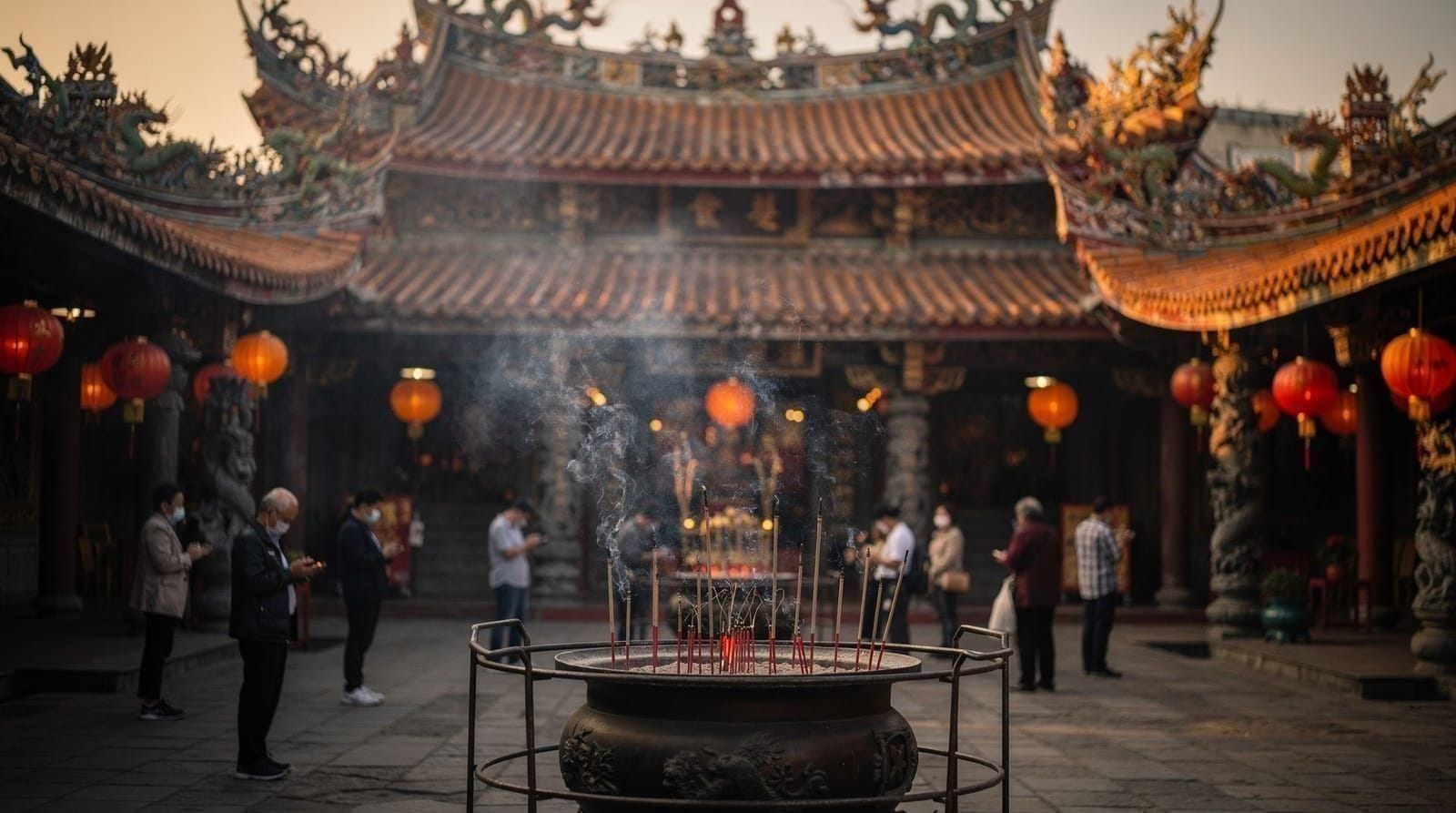
The most visited temple in Taipei and the most atmospherically powerful. The combination of incense smoke, daily worshippers (not just tourists), elaborate 18th–20th century architecture and central location makes this the default first temple visit. The rear hall’s Taoist deity assemblage — Mazu, Guan Di, Yue Lao (God of Marriage) — is as interesting as the front Buddhist hall.
Best visited: early morning (6–9am) or festival evenings. See the full Longshan Temple guide.
Bao’an Temple (保安宮)
District: Datong MRT: Yuanshan Station (Red Line), 15-minute walk south; or Xingtian Temple Station (Songshan-Xindia Line), 10-minute walk east Hours: 6am–10pm daily Founded: 1760 (current structure predominantly 19th–20th century)
Bao’an Temple is the finest example of traditional temple architecture in Taipei and arguably in all of Taiwan. It is dedicated to Baosheng Dadi (保生大帝), the God of Medicine — a Taoist deity associated with healing and prosperity.
The craftsmanship is exceptional — the roof ridges feature elaborate warrior figures and mythological scenes in glazed ceramic; the stone columns are carved with dragons that appear three-dimensional; the interior ceiling work rivals anything in the more famous Longshan.
The ceiling competition: The interior ceiling of Bao’an Temple is decorated through a technique called jiannan (剪黏) — mosaic of colored ceramics and glass — and the sanjuan (三川) ceiling between the main gate and front hall is particularly famous for having been painted by two rival masters simultaneously. In the early 2000s restoration, painters Pan Lishui and Chen Yucheng worked on opposite sides of the ceiling, each trying to outdo the other. The difference in their styles is visible on close comparison, and the result is more varied and vigorous than a single painter would have produced. The restoration coordination was led by architect Chen Yingbin, who spent over a decade supervising the project.
What makes Bao’an exceptional over Longshan: it is less crowded, the architecture is better preserved, and the annual Baosheng Cultural Festival (April–May) is one of the largest temple arts events in Taiwan — traditional Chinese opera, puppet theater, and ritual performances on a stage erected in the courtyard.
The Confucius Temple is adjacent (150m — same walled block essentially) — combine both in a half-day.
Taipei old town walking tour — visits Bao’an, the Confucius Temple area and Datong districtCheck availabilityXingtian Temple (行天宮)
District: Zhongshan MRT: Xingtian Temple Station (Songshan-Xindia Line), exit 3 Hours: 5am–10pm daily Founded: 1967 (modern, but among the most actively worshipped in Taipei)
Xingtian Temple is dedicated to Guan Di (關帝爺) — the deified historical figure Guan Yu, worshipped as a god of righteousness, justice and business success. This is the temple that Taipei’s business community visits most regularly; the weekday morning crowds are overwhelmingly local businesspeople and office workers seeking guidance before important meetings.
It is also one of the few major temples in Taipei to have banned the burning of ghost money on its premises (2014), citing environmental concerns — unusual for a Taoist temple and sometimes cited as an example of evolving religious practice.
The atmosphere at Xingtian Temple is the most authentically devotional of any temple in central Taipei. Tourists are sparse; the people around you are genuinely praying. The temple is also notable for its team of volunteers (Enhuishi) who offer free palm reading and spiritual guidance.
No photography inside the main hall — signs are clear.
Guandu Temple (關渡宮)
District: Beitou, near the MRT terminus MRT: Guandu Station (Red Line), 5-minute walk Hours: 6am–9pm daily Founded: 1712 (the oldest continuously active major temple in Taipei)
Guandu Temple is dedicated to Mazu (媽祖), the sea goddess — the patron deity of coastal Taiwanese communities, who trace their ancestry from Fujian Province across the Taiwan Strait. The temple occupies a hillside position above the Tamsui River estuary, with views across the wetlands and north toward Tamsui.
The stone corridors: What makes Guandu architecturally unique is the section of the temple complex built into the rock face of the hill itself. Roughly 50–70 meters of corridor are carved through solid basalt and andesite, connecting the outer forecourt to the innermost shrines. Inside these tunnels, oil lamps and incense create an atmospheric darkness unlike any other temple interior in Taipei. The stone walls are rough-hewn; the corridor is narrow enough that two people can barely pass. It is genuinely atmospheric in a way that the main halls — decorated in 20th-century tile and lacquer — are not.
The surrounding Guandu Nature Park (wetland area below the temple, accessible by foot or a 5-minute drive) is significant for birdwatching. The park sits at the confluence of the Tamsui and Jilong rivers; the wetland habitat attracts migratory birds from October through April, with egrets, herons and spoonbills visible from the observation platforms. A free walking trail connects the park back to Guandu Station.
Combined day trip: Guandu Temple + Tamsui Old Street + Danshui riverside is a good half-to-full day using only the MRT Red Line. See the Tamsui destination page for details.
Tier 2: Worth adding to a longer stay
Confucius Temple (台北孔廟)
District: Datong MRT: Yuanshan Station (Red Line), 15-minute walk Hours: 8:30am–9pm (closed Mondays) Founded: Originally 1879; current structure 1930s
Taiwan’s Confucius temples are architecturally distinct from Buddhist temples — no images of deities, no incense (except on specific ritual days), clean rectilinear design. The Taipei Confucius Temple was built during the Japanese colonial period (1930s) following the pattern of traditional Confucian architectural norms.
The annual Confucius Birthday Ceremony (September 28, also designated Teachers’ Day in Taiwan) is an elaborate public ritual involving traditional music, dance and offerings — free to observe and quite theatrical.
Worth visiting in combination with Bao’an Temple (adjacent) but not as a standalone destination for most travelers.
Qingshui Temple (清水巖祖師廟), Wanhua
District: Wanhua Address: 81 Kangding Road, Wanhua Hours: 6am–9:30pm daily Founded: 1787
A 10-minute walk northwest of Longshan Temple, Qingshui Temple is dedicated to Qingshui Zushi — a Sung-dynasty Buddhist monk from Fujian’s Anxi County venerated particularly by Hokkien communities from that area. Its founding in 1787 makes it among the oldest temples in Taipei, predating significant parts of Longshan’s current structure.
What makes it worth a short visit: it is almost entirely unvisited by tourists, the interior retains much of its pre-20th-century character, and the neighborhood around Kangding Road between Longshan and Qingshui has the traditional medicine and morning market character described above. The temple is small enough that 20 minutes covers it comfortably.
Zhinan Temple (指南宮), Maokong
District: Maokong, accessible via gondola MRT: Taipei Zoo Station, then Maokong Gondola Hours: 24 hours (main gate)
Zhinan Temple sits on a hilltop in the tea-growing Maokong area, accessible by gondola. Dedicated to Lü Dongbin (one of the Eight Immortals in Taoism), it is a pilgrimage destination particularly notable for its overnight celebrations on festival days. As a day trip, combine with the Maokong Gondola and tea plantation visit.
The gondola runs from Taipei Zoo Station (MRT Brown Line, Taipei Zoo Station). Fare: TWD 180 (€5.00) per one-way trip in a standard cabin; EasyCard accepted. The journey provides views across southern Taipei toward the mountains.
Neighborhood tudigong shrines: reading the city
One of the most rewarding habits for a temple-interested visitor in Taipei is learning to read the neighborhood earth god shrines. Every tudigong (土地公) shrine governs a specific block or set of buildings — the deity is the administrative official of that micro-territory, responsible for its residents’ welfare.
The shrines are easy to spot: small red structures, typically 0.5–1.5 meters tall, housing a seated white-bearded figure, usually placed at the corner of a lane or next to a significant old tree. The quality of the structure and the freshness of offerings give reliable information about the surrounding neighborhood:
- A recently renovated, well-maintained shrine with fresh flowers and fruit: the area has a cohesive community and active merchants who share the cost of upkeep.
- A weathered, poorly maintained shrine with old offerings: the neighborhood has experienced depopulation, business decline or demographic change.
This makes tudigong shrines an informal urban sociology tool — walk the lanes around Longshan Temple or the Dadaocheng area counting the shrine conditions and the pattern tells a story about which streets remained commercially active and which declined.
What to expect on your first temple visit
If you have not visited a Taiwanese folk religion temple before, the sensory experience on first entry can be disorienting. Some practical orientation:
Altar density: Major temples like Longshan contain dozens of individual altars — you are not expected to visit all of them. The main hall and two or three secondary altars are sufficient for most visitors.
Jiaobei divination: Small wooden moon blocks (described in detail in the Longshan guide) are available near most altars. They can be used by visitors; no religious affiliation is required. Watch how local worshippers hold and throw them first.
Qian shi fortune sticks: Many temples have a cylinder of numbered bamboo sticks near the altar. After receiving a positive jiaobei answer, worshippers shake the cylinder until one stick falls out; the number corresponds to a printed fortune (qian) available from a cabinet nearby. English translations are available at Longshan.
Spirit money burning: The large furnaces in the courtyards are for burning joss paper — paper currency for the deceased or as offerings to deities. Visitors should not throw items into these furnaces.
Noise: Taiwanese temples are not quiet spaces. Incense smoke sets off occasional coughing; the sound of drums, bells and wooden fish percussion is normal during prayer times. Do not expect the contemplative silence of a Buddhist meditation hall.
Temple etiquette: universal rules
Attire: Covered shoulders and knees are respectful at major temples. Most temples will not refuse entry — this is a request, not enforced — but it is appropriate.
Shoes: Some inner sanctuaries require shoe removal (signs in English at the relevant thresholds). The main halls of Longshan and Bao’an do not generally require this for visitors.
Photography: Permitted in most outdoor areas and many indoor areas. Flash photography in front of active altars is disrespectful. Video is generally fine. Selfie-stick use that blocks worshippers is not welcome.
Incense: If you accept joss sticks, hold them in both hands, bow three times facing each altar, and place them in the designated burner. Do not place incense sideways or blow on it to extinguish — let it burn naturally.
Silence: Major temples allow quiet conversation. Loud phone calls or music in the main hall is inappropriate. Many temples have outdoor areas where normal volume is fine.
Practical logistics: MRT, food and combinations
Getting between temples by MRT is efficient. The EasyCard is the right payment method — single rides between stations cost TWD 20–45 (€0.55–1.25) depending on distance. The MRT guide covers the full system.
Food near temples: Longshan Temple is 5 minutes from Huaxi Street Night Market (evening) and the Kangding Road breakfast diners (morning). Bao’an Temple is walkable to Dihua Street for lunch. Xingtian Temple is in central Zhongshan — the Minquan East Road area has good noodle and rice lunch options within a 5-minute walk.
Combining with the taipei neighborhoods guide: The temple-hopping routes map naturally onto neighborhood exploration — Wanhua (Longshan + Qingshui), Datong (Bao’an + Confucius), Zhongshan (Xingtian), Beitou/Guandu (Guandu + Tamsui).
Temple-hopping itinerary (half-day)
Morning in Datong (3–4 hours):
- Confucius Temple: 45 minutes (exterior and main courtyard)
- Walk 150m to Bao’an Temple: 45–60 minutes
- Walk 20 minutes to Longshan Temple area via Dihua Street: stop for breakfast or snacks at Dadaocheng before returning south
Full-day north Taipei temples:
- Morning: Longshan Temple (Wanhua)
- Late morning: MRT to Bao’an + Confucius Temple (Datong)
- Afternoon: MRT Red Line to Guandu Station → Guandu Temple → Tamsui riverside at sunset
What first-time temple visitors should expect
The experience of visiting a Taiwanese temple differs significantly from visiting Buddhist temples in Japan (where quiet, controlled observation is the norm) or Hindu temples in India (where access restrictions may apply to non-Hindus). Taiwanese temples are inclusive, noisy and practical — people come to transact with the divine, not to meditate.
Altar density: A single temple complex typically houses 20–40 separate altars and deity stations. You do not need to visit every one; local worshippers have specific deities they pray to based on their current needs. Visitors can follow any route through the complex.
Incense and smoke: The large incense burners (ding) outside the main hall produce significant smoke. Many visitors find this evocative; people with respiratory sensitivities should position themselves upwind. The incense sticks themselves are provided free at most temples — typically a bundle of 3 sticks (representing the three jewels in Buddhism or the three pure ones in Taoism).
Qian shi oracle sticks: Many temples have a container of numbered bamboo sticks (qian shi, 籤詩) used for divination. You hold the container in both hands, focus on a question, shake until one stick falls out, and note the number. A matching numbered slip (available at a side table) contains a poem offering guidance on your question. Staff at most temples can explain the process; at Longshan, volunteers sometimes assist English-speaking visitors.
Moonsblocks (jiaobei, 筊杯): Red crescent-shaped wooden blocks used to confirm divine guidance. One curved (yin) and one flat (yang) face. Questions are posed silently, the blocks thrown on the floor. One of each face = yes; both curved = the deity is amused/unclear; both flat = no. Repeat up to three times. These are found at most altar stations and are free to use.
Ghost money burning: Most temples have metal furnaces for burning paper offerings — ghost money, paper goods (smartphones, houses, cars in paper form) sent to deceased relatives in the spirit world. The smoke can be pungent. This is an active ritual practice, not a performance.
Festival crowds: During major festivals (Lantern Festival, Guanyin Birthday, Ghost Festival, Mazu’s birthday), temple crowds are genuinely dense. These are also the most interesting times to visit — the processions, music and atmosphere are spectacular. Avoid if you have mobility issues or dislike crowds; schedule for early morning of a festival day if possible.
Temple etiquette: the practical rules
Do: Dress respectfully (covered shoulders and knees at minimum). Speak quietly inside the main halls. Follow the directional arrows where marked. Bow slightly when walking in front of altars.
Do not: Flash photography directly at altars during active prayer. Shout or use speakerphone audio inside the main hall. Sit on the divination tools or ritual objects. Bring food or drinks into the inner halls.
Photography: Almost universally permitted in outdoor areas and most indoor areas. The exception is Xingtian Temple’s main hall, which explicitly prohibits photography. Read the signs at each entrance.
Shoes: Most temples do not require shoe removal in the main visiting areas. Some inner sanctuary areas have a step threshold that signals a no-shoe zone (look for shoe racks and signs). The main halls at Longshan and Bao’an do not require shoe removal.
Combining temple visits with food and culture
Every major temple district has associated food culture worth incorporating:
Wanhua (Longshan area): Huaxi Street Night Market (evening); traditional breakfast diners on Kangding Road (5–10am); Bopiliao Historic Block for pre-trip or post-trip context.
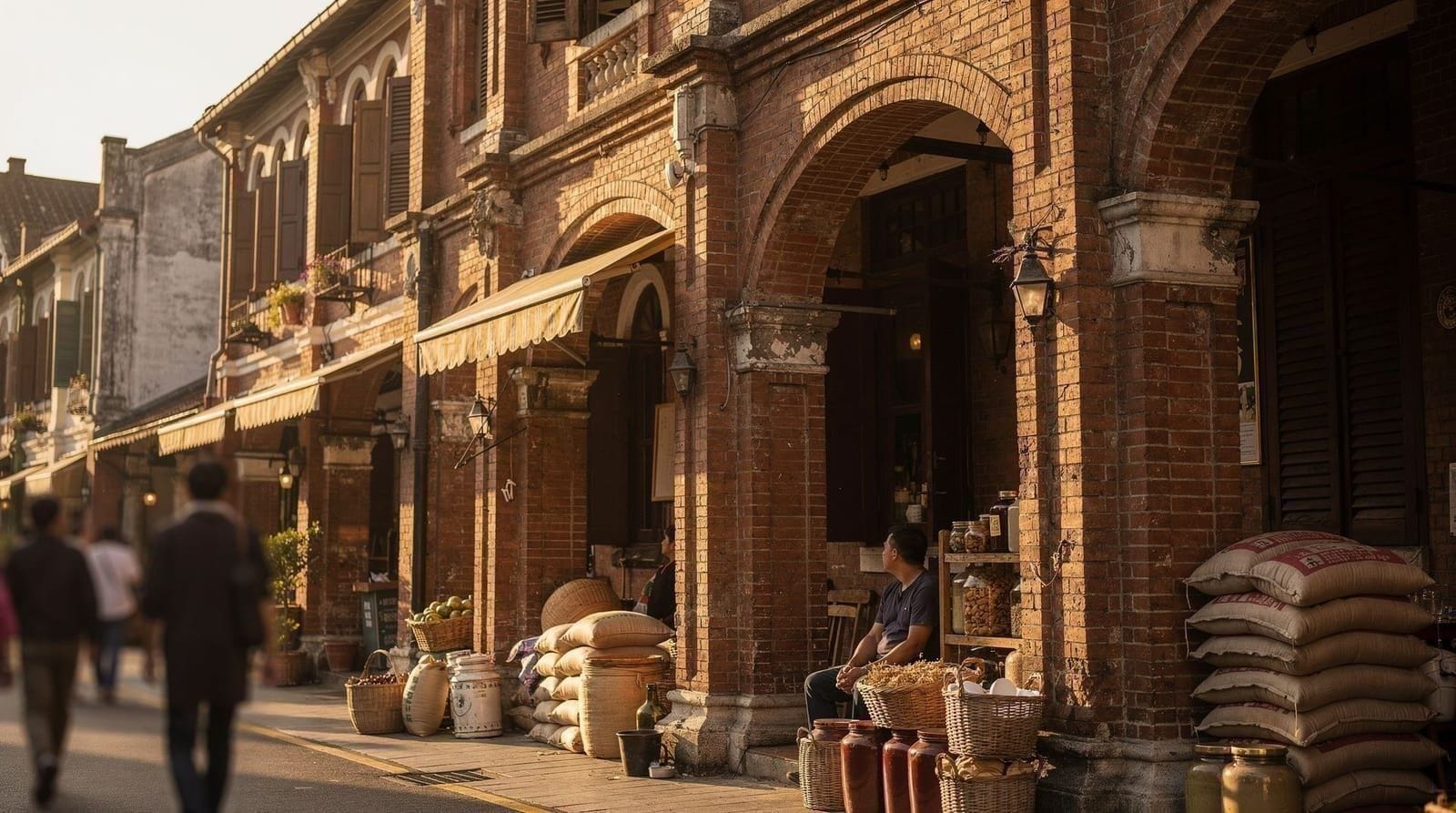
Datong (Bao’an + Confucius area): Walk south to Dadaocheng via Dihua Street — 15 minutes on foot from Bao’an. Traditional fabric market, dried goods, and street snacks.
Zhongshan (Xingtian): Ningxia Night Market is 10 minutes walk north — evening visit after the temple makes a natural combination. See the night market guide.
Beitou/Guandu (Guandu Temple): After the temple, take a 10-minute walk or taxi to Guandu Nature Park for a riverside walk. Combine with a half-day at Beitou hot springs — all on the same MRT Red Line. See the Beitou hot springs guide.
For the Wanhua district context, see the Dadaocheng guide. For broader trip planning, see how many days in Taipei and taipei itinerary guide.
Longshan Temple cultural tour — covers the most important sites with explanatory contextCheck availability Taipei vintage sunset tour — temples, old lanes and evening atmosphereWhat to bring and wear
No special preparation is required for a Taipei temple visit, but a few small items make it smoother. Wear comfortable shoes you can slip on and off easily in case an inner sanctuary requires removal. Bring a light scarf or shawl even in summer — while enforcement is rarely strict, having shoulders covered avoids any awkwardness at more conservative temples. Small change (coins and small notes) is useful if you want to purchase incense, participate in a divination ritual, or make a small donation, most of which cost TWD 20–100. Hand sanitiser is a practical addition given the amount of touching involved in jiaobei and qian shi rituals if you want to participate directly rather than just observe.
Visiting during a festival vs an ordinary day
The temple experience changes substantially depending on when you go. On an ordinary weekday, Longshan or Bao’an are calm — you can watch individual worshippers, examine architectural detail closely, and take your time at each altar. During a major festival (Lantern Festival, Mazu’s birthday, the Baosheng Cultural Festival at Bao’an), the same temples become dense, loud, and genuinely spectacular — processions with traditional music, opera performances, and crowds that can take 20–30 minutes to move through a normally 5-minute route.
Neither is wrong: choose the calm version if you want to study the architecture and rituals closely, choose the festival version if you want to see Taiwanese folk religion as a living, communal practice rather than a static site. Check the best time to visit Taipei guide’s festival calendar before you commit to a date.
Solo visitors and language barriers
Temples are among the easiest cultural sites in Taipei to visit alone and without Mandarin. There is no ticketing to navigate, no guided-tour requirement, and the etiquette signage at major temples (Longshan especially) includes English. Volunteers at Longshan and Xingtian are used to explaining jiaobei divination and incense etiquette to non-Chinese-speaking visitors — approach anyone wearing a temple volunteer vest if you have questions. The main friction point for solo visitors is festival crowding, where it helps to have a plan for where to stand or step aside rather than trying to push through a procession.
Top experiences
Bookable activities with verified prices and instant confirmation on GetYourGuide.