Taipei in winter — what to expect in December, January and February
Taipei: Beitou and Yangmingshan National park day tour
Duration: 9 hours
Is Taipei good to visit in winter?
Yes, with the right expectations. December to February brings mild, damp weather (12–18°C), with frequent overcast skies and occasional cold snaps to 8–10°C. There's no snow in the city. The upside is lower hotel prices in early December and January, excellent hot-spring conditions, and the cherry blossom season starting in mid-to-late February. Lunar New Year (late January or early February) causes several days of partial closures at local restaurants and sites.
Winter is Taipei’s quiet, cheap season — the trade-off is grey skies and damp air rather than genuine cold. Understanding the month-by-month shifts, and where Lunar New Year falls that year, makes the difference between a relaxed low-season trip and one derailed by closed restaurants and packed temples.
| When | December–February |
| Temperature | 8–20°C, damp and often overcast |
| Best for | Hot springs, museums, lower hotel prices |
| Watch out for | Lunar New Year closures (late Jan/early Feb) |
| Pack | Waterproof shell, fleece layer, compact umbrella |
What winter actually feels like in Taipei
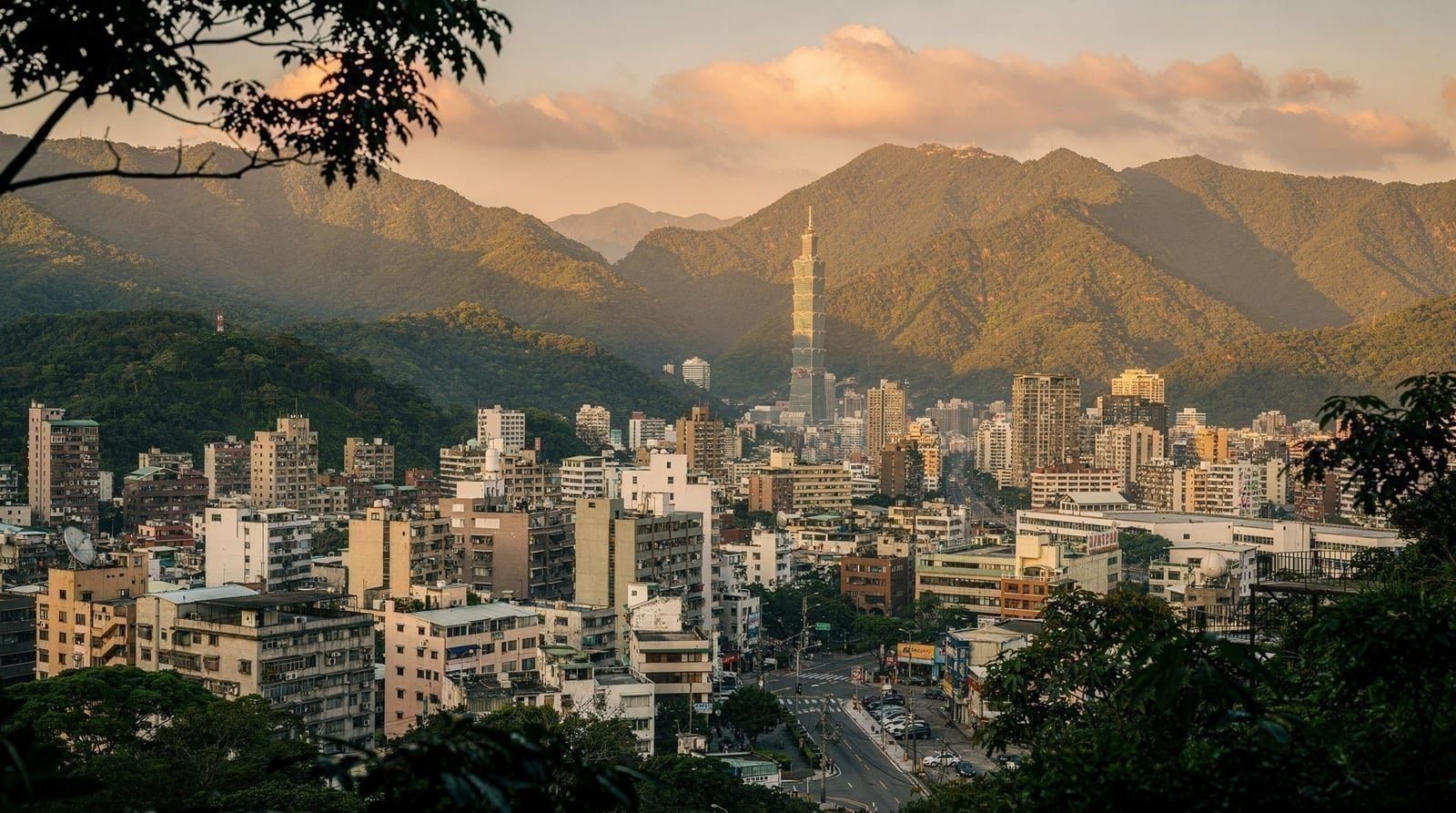
Taipei sits at 25° north latitude — roughly the same as Miami or Guangzhou. But its winter is damper and greyer than that position implies, because northeast monsoon winds blow in from the sea carrying persistent cloud cover from November through February.
Typical December–February conditions:
- Daytime highs: 14–20°C in December, 12–17°C in January, 13–18°C in February.
- Cold fronts (strong ones) can push lows to 8–10°C for 2–4 days at a time.
- Rain is frequent — not constant, but expect several rainy or overcast days per week.
- Zero snow at sea level; Yangmingshan occasionally sees light frost but rarely snow.
- Humidity remains relatively high, making the cold feel sharper than the numbers suggest.
This is not a harsh winter by any measure. But travelers expecting bright sunshine and warm days may be disappointed if they visit in January without researching the climate. Pack a waterproof jacket, a fleece layer, and accept that some days will be grey.
Winter month by month:
| Month | Temp (°C) | Rain | Crowds | Hotel prices |
|---|---|---|---|---|
| December | 14–20 | Moderate | Low, rising after Christmas | Lowest of the year in early Dec |
| January | 12–17 | Moderate | Low early, spikes before Lunar New Year | Low, then spikes around Lunar New Year |
| February | 13–18 | Moderate | Trough after New Year, then blossom crowds | Rising toward blossom season |
December in Taipei
Temperature: 14–20°C | Rain: moderate | Crowds: lower (then rising from Christmas week)
Early December is one of Taipei’s most underrated times to visit. The summer humidity is long gone, typhoon season has closed, and prices haven’t risen yet. Hotel rooms that go for TWD 4,500–6,000 in October often drop to TWD 2,500–3,500 in early December.
Outdoor day trips to Jiufen, Yehliu, and Houtong work well in early December — the light is clear and the mountain towns aren’t packed. See our day trips guide.
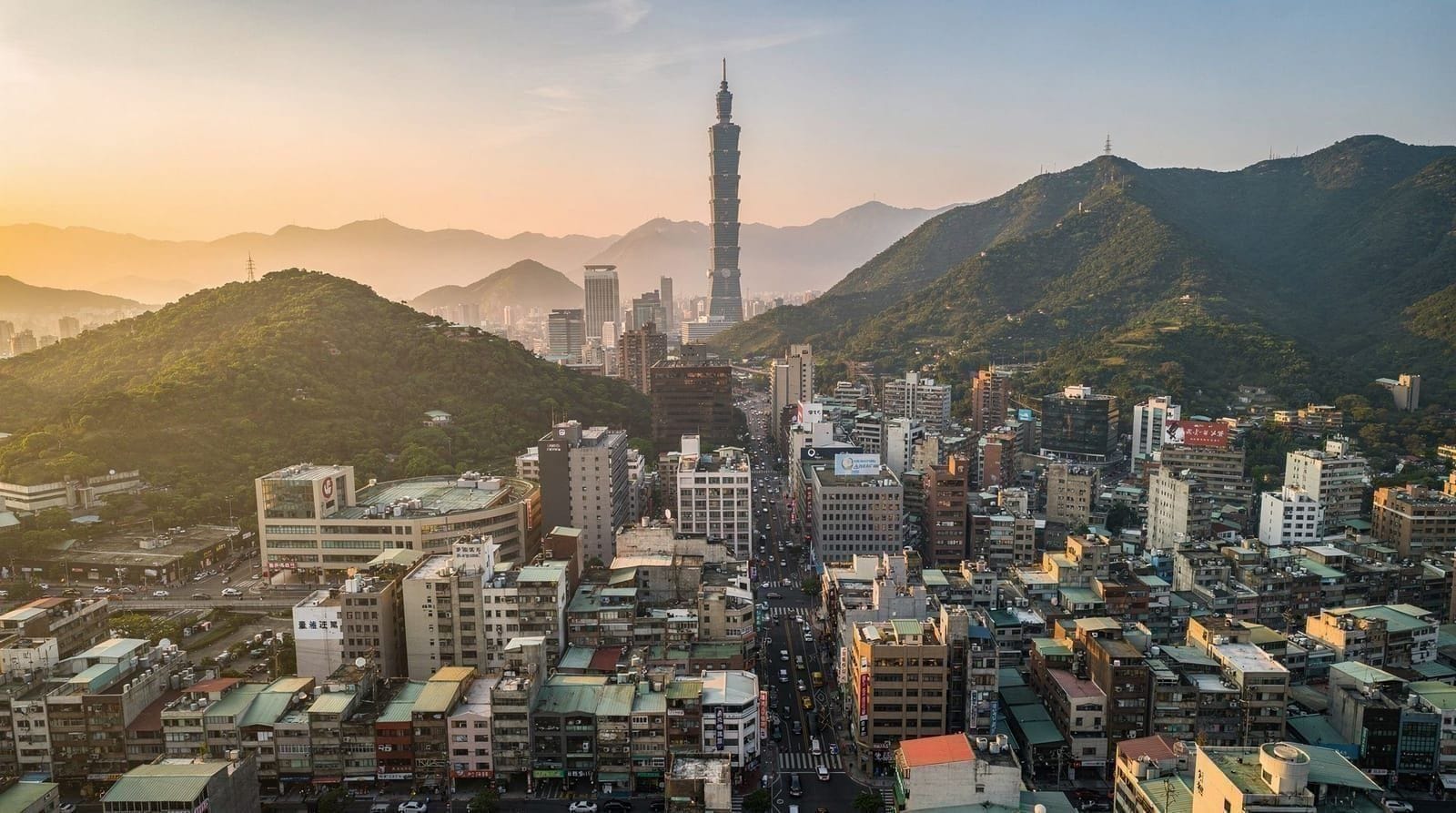
From Christmas week onward, domestic year-end holiday travel picks up. Taipei’s year-end countdown (Taipei 101 fireworks on 31 December) draws large crowds to Xinyi District.
What to prioritize in December:
- Hot springs in Beitou and Wulai — ideal weather for soaking.
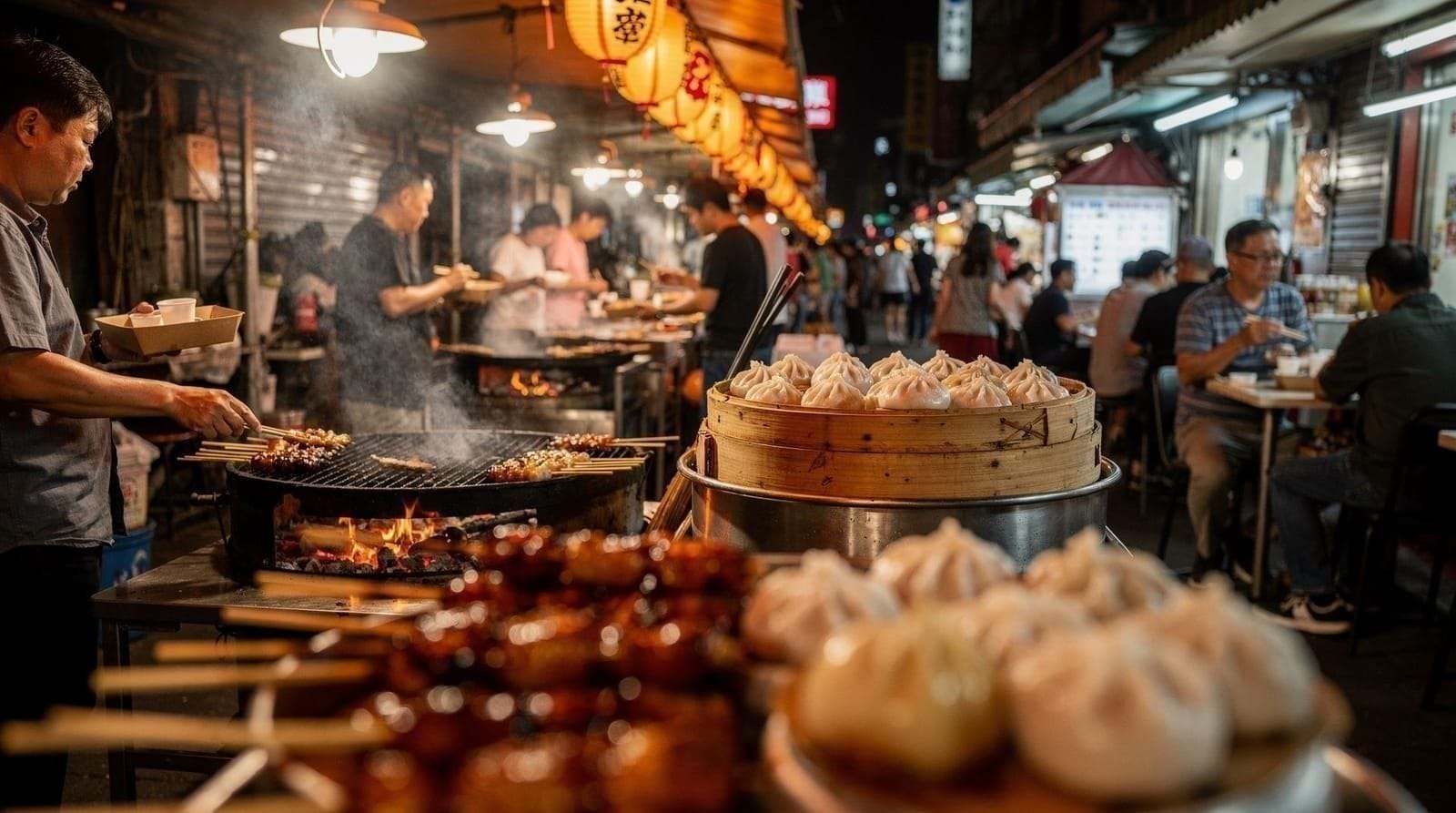
- Night markets — cooler evenings make standing at a stall far more pleasant than in summer.
- Museum-focused days — National Palace Museum, smaller museum tickets, Dadaocheng market area.
January in Taipei
Temperature: 12–17°C | Rain: moderate | Crowds: rising sharply toward Lunar New Year
January begins quietly and cheaply. Early January — the 1–15 window — is arguably the calmest period of the Taiwanese calendar: post-Western New Year, pre-Lunar New Year. Prices for flights and hotels are often at their lowest of the year.
Lunar New Year: the critical variable
Lunar New Year falls in late January or early February, depending on the calendar (check the specific date for your year). The holiday spans approximately 7–9 days formally, with the biggest effect on visitors concentrated around:
- New Year’s Eve (除夕, Chúxī) — families return home. Many restaurants close for a 4–7 day break starting on or just before New Year’s Eve.
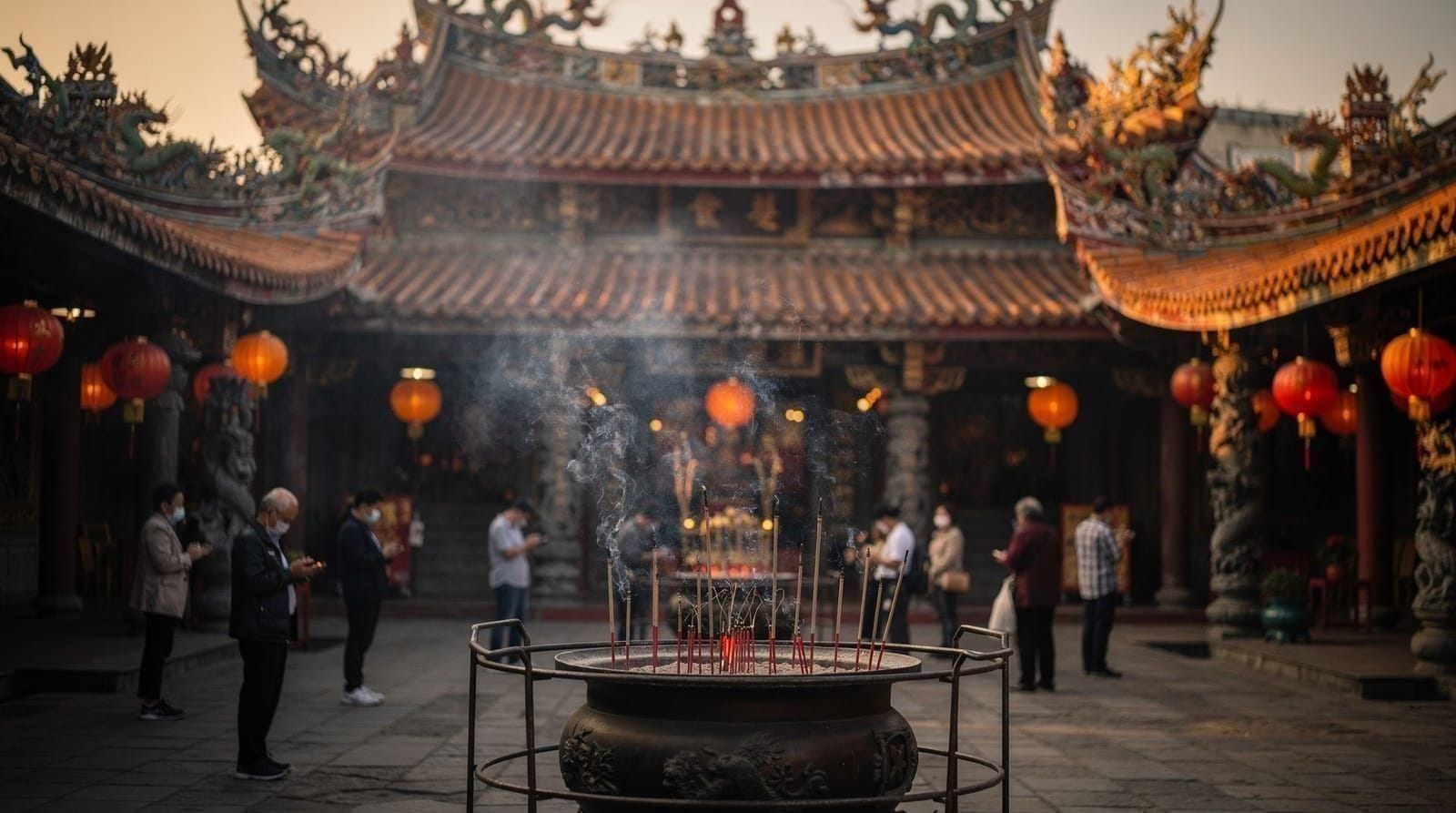
- Days 1–3 of the New Year — temples are extremely crowded with worshippers; Longshan Temple and Xingtian Temple see their busiest days of the year.
- Lantern Festival (day 15) — ends the New Year period. Taipei Lantern Festival features large lantern installations around the city; the Pingxi Sky Lanterns event takes place on a dedicated night.
Practical impact for visitors:
- Street-food stalls in night markets may close for 3–5 days around New Year.
- Major department stores, chain restaurants, and 7-Elevens stay open (Taiwan’s convenience stores never close).
- Attraction entry lines for Taipei 101 Observatory, National Palace Museum, and popular temples are much longer than usual.
- Bus and MRT services run on modified schedules on New Year’s Day.
If visiting during Lunar New Year, book accommodation 4–6 months ahead. Rates spike significantly in the week surrounding the holiday. For the Pingxi lantern event specifically, see our sky-lantern guide.
February in Taipei
Temperature: 13–18°C | Rain: moderate | Crowds: post-New Year trough, then cherry blossom season
After the Lunar New Year holiday (usually mid-February at the latest), Taipei returns to its quieter winter self. The second half of February marks the beginning of cherry blossom season in warmer years.
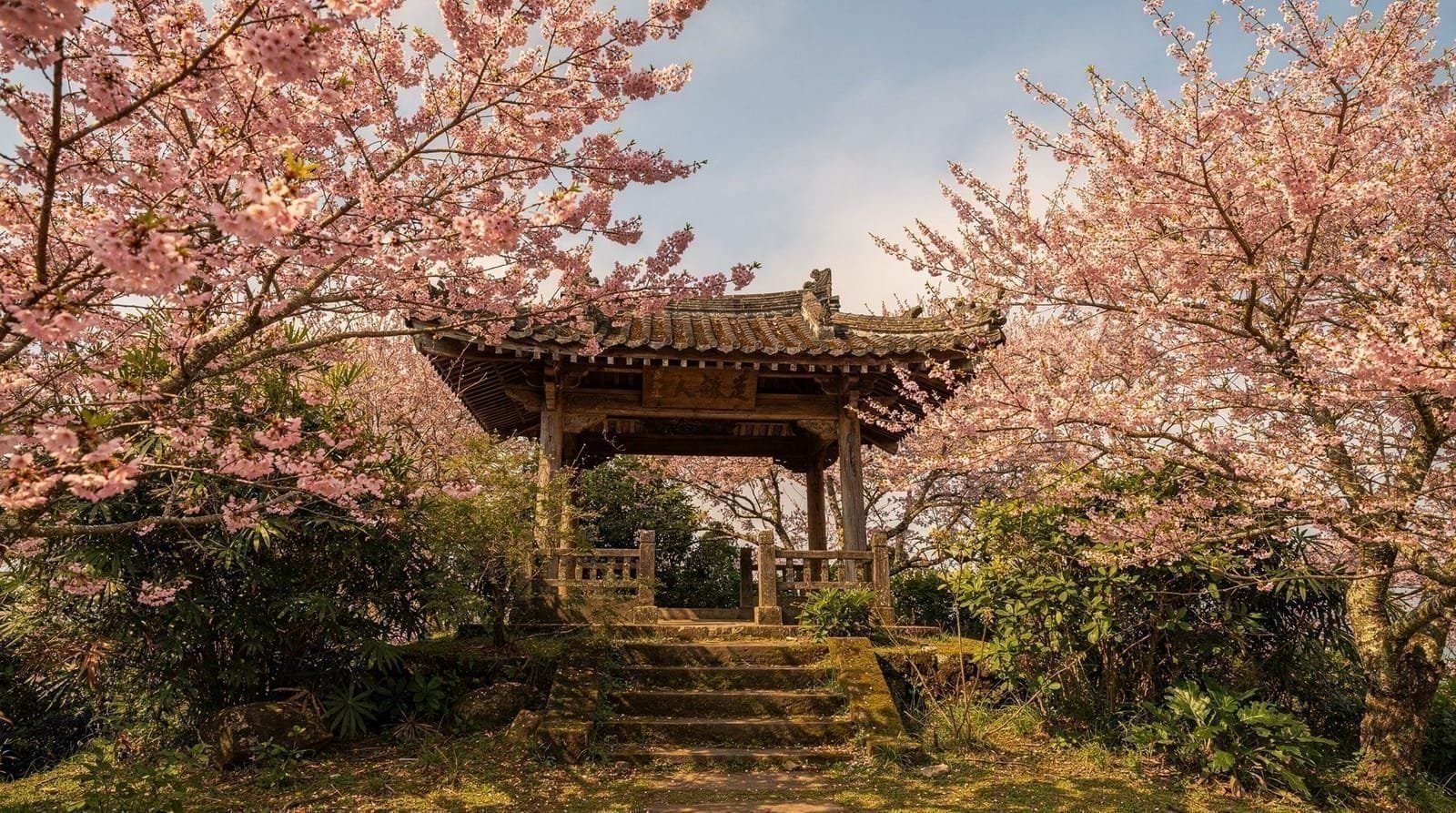
Cherry blossoms on Yangmingshan can begin appearing from mid-February in warm winters. Colder winters delay the display to early March. The Yangmingshan Flower Festival officially runs from late January through March, covering Taiwan cherry, Yoshino cherry, and eventually calla lilies in sequence.
Beitou and Yangmingshan day tour from TaipeiFor detailed blossom timing and how to handle peak-weekend crowds, see our cherry blossom guide.
Hot springs: winter’s best activity
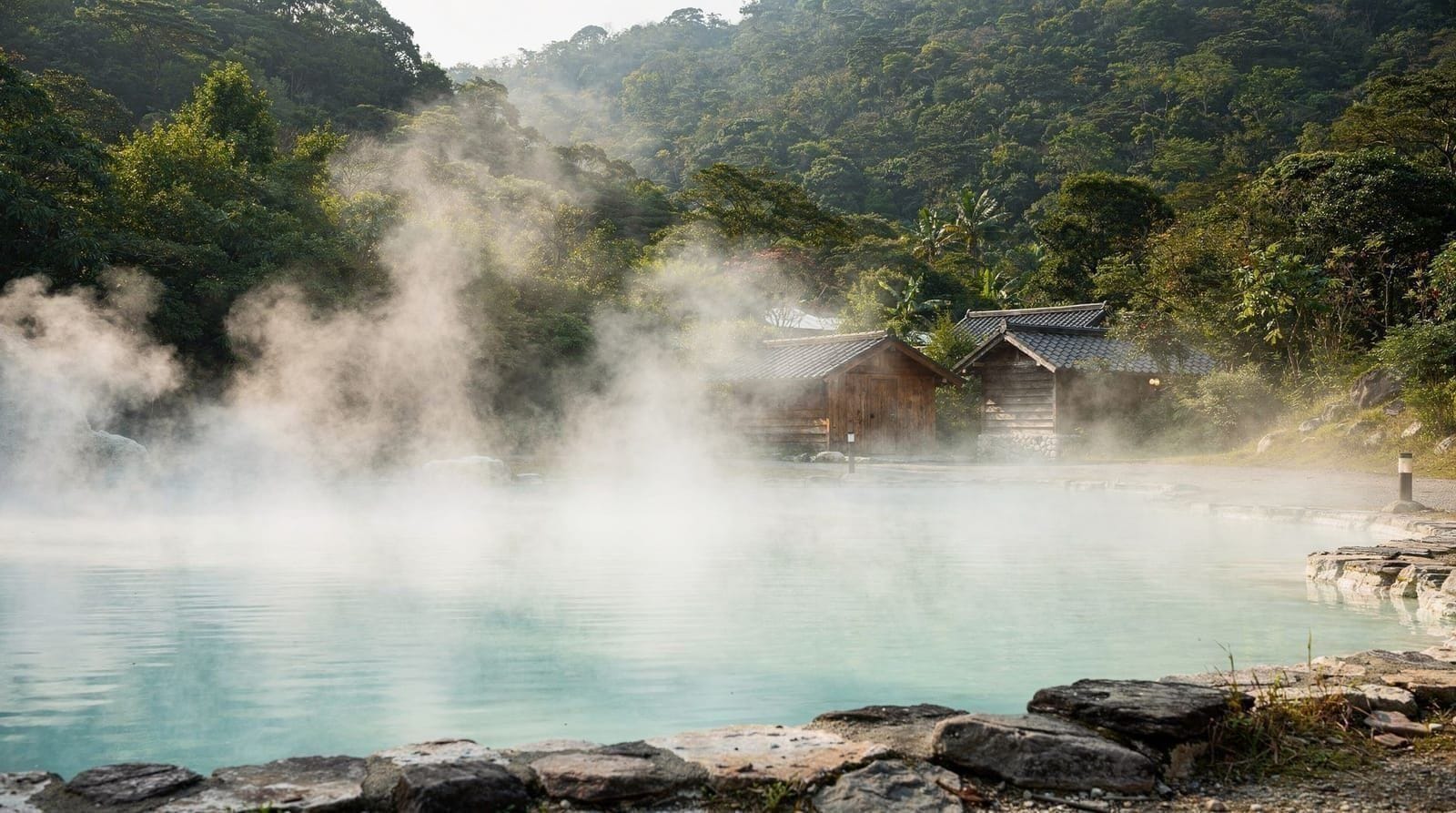
Winter is genuinely the best season for Taipei’s hot springs. Soaking outdoors in a 42°C mineral bath while cool mountain air surrounds you is an experience that makes little sense in summer but is perfect in January or February.
Main hot-spring options:
Beitou (北投)
The closest to central Taipei — 30 minutes by MRT from Taipei Main Station. Beitou’s sulphurous Radium Spring water is famous for its pale green colour and high mineral content. Options range from public pools at the Millennium Hot Spring (TWD 40–150 per person, outdoor) to traditional bathhouses (TWD 400–800 for private room rentals).
Yangmingshan National Park hot spring tourWulai (烏來)
About 40 minutes south of Taipei by bus from Xindian MRT. Wulai is set in an Atayal indigenous community with a river gorge, waterfall, and log-raft ride. The hot springs here are different from Beitou — sodium bicarbonate type, clear and odourless. A full-day trip pairs the springs with the indigenous culture village above the waterfall.
Wulai hot springs, waterfall and cable car tourJiaoxi, Yilan (礁溪)
Further afield (about 50 minutes by HSR from Taipei to Yilan), Jiaoxi is a small town famous for its unusual outdoor hot-spring parks — pools are literally in the town’s park and streets. Less scenic than Beitou or Wulai, but a fascinating practical approach to communal bathing.
For etiquette, pricing details, and a full comparison, see our hot-spring etiquette guide and Beitou vs Wulai vs Jiaoxi comparison.
Indoor Taipei: what works well in wet winter weather
Taipei’s indoor offering is genuinely strong. On a rainy winter day:
Museums:
- National Palace Museum — world-class collection of Chinese imperial artefacts; plan at least 3 hours.
- Taipei Fine Arts Museum (TFAM) — contemporary and modern Asian art in a striking building near Yuanshan MRT.
- National Museum of Taiwan History (Nangang) — excellent introduction to Taiwan’s full historical narrative.
Shopping and covered markets:
- Ximending — covered pedestrian shopping area, busy on weekends with teenagers and tourists alike.
- Guanghua Digital Plaza (光華商場) — tech and electronics market near Zhongxiao Fuxing MRT.
- Dadaocheng (Dihua Street) — covered traditional market with tea merchants, dried goods, and fabric shops; especially busy in the week before Lunar New Year.
Food: Winter is soup and braised-food season in Taiwan. Beef noodle soup (牛肉麵, niúròu miàn), oyster vermicelli, and stewed pork rice are especially satisfying in cooler weather. Night markets are more enjoyable in winter — standing in front of a stinky tofu stall at 25°C is less comfortable than at 15°C.
Building a winter itinerary around the weather
The most useful habit in a Taipei winter is to plan in pairs: one outdoor idea and one indoor fallback for each day. Check the forecast the evening before, then commit to whichever half suits the sky. Grey mornings often brighten later, so a flexible order of the day beats a rigid schedule.
- A dry, clear day is the moment for the hills. Yangmingshan and the Elephant Mountain hike reward good visibility, and the wider list of Taipei hikes gives you alternatives if one trail looks too wet.
- A drizzly day suits Beitou, where a soak is better with rain on the roof, or a slow afternoon in the tea houses of Maokong. If you cannot decide between the two tea-house areas, Jiufen teahouses versus Maokong lays out the differences.
- A properly miserable day is for the National Palace Museum, the best museums in Taipei, or a food crawl through Dadaocheng.
If you want a ready-made shape for the trip, the three-day itinerary and the five-day itinerary both adapt easily to winter by swapping outdoor stops for indoor ones. Food-focused travelers will enjoy the Taipei food lovers itinerary, since cool weather is when hot bowls and stall snacks taste best; the street food guide helps you choose what to order.
Getting around when it is wet
Public transport is the sensible choice in winter. The MRT guide and the EasyCard guide cover the basics, and most of the central sights are connected underground or a short walk from a station, so you spend little time exposed to rain. Day trips by train or bus are still perfectly workable; the Jiufen transport guide is worth reading before you go, because mountain towns can be wetter and mistier than the city. If the weather is truly poor, the Jiufen day trip guide and the Pingxi Line guide are better postponed for a clearer day rather than pushed through in heavy fog.
Where to stay in winter
Because you will spend more time indoors, the hotel matters more than in summer. A comfortable room near an MRT station, with a good bed and a place to dry wet clothes, makes the damp days easier. Our where to stay guide and neighborhoods overview explain which areas suit different travel styles, and the Xinyi district guide is a good starting point if you want malls and covered walkways close at hand. Anyone watching costs should also read the budget guide, since winter is the season when savings are easiest to find.
Packing for Taipei in winter
Taipei’s winter requires more thought than the tropics but less than northern Europe:
- Waterproof jacket or rain shell — essential; carry it every day.
- Mid-layer (fleece or light down) — for cold fronts and air-conditioned interiors.
- Sweater or thermal base layer — a couple of cool evenings will need it.
- Comfortable walking shoes with grip — wet pavements are the main hazard; avoid smooth-soled shoes.
- Compact umbrella — easier to carry than a full-size one on the MRT.
Snow gear is unnecessary. Heavy down jackets are overkill unless you’re hiking at altitude in Yangmingshan in January (where frost is possible).
See our full Taipei packing list.
Is winter the right time for your Taipei trip?
Winter suits you if:
- You prefer uncrowded attractions and lower prices (especially December and early January).
- You want to enjoy Taipei’s hot springs at their best.
- You’re targeting the Lunar New Year cultural experience.
- You want to catch early cherry blossoms in late February.
Winter is harder if:
- You need reliable outdoor weather for photography or day trips.
- Your trip falls during Lunar New Year and you haven’t pre-booked accommodation.
- You need warmth — Taipei’s cool/damp winter is disappointing if you’re expecting Southeast Asian temperatures.
The broader picture of Taipei’s year is in our best time to visit guide.
How winter compares to Taipei’s other seasons
Winter’s main competitor for “best season” is autumn (October–November), which offers similar mild temperatures with far less rain and no Lunar New Year disruption — see the full seasonal breakdown in our best time to visit guide. Against summer, winter wins decisively on comfort: no typhoon risk, no 34°C humidity, and night markets are genuinely more pleasant to stand in at 15°C than at 30°C. The one thing winter cannot match is guaranteed sunshine — if clear-sky photography matters more than low prices, shift your trip toward late October.
Families traveling with children generally do well in winter: fewer crowds at museums and the National Palace Museum, shorter queues for Taipei 101, and hot springs that kids tend to enjoy more in cool weather than in summer heat. See Taipei with kids for age-specific planning.
Frequently asked questions about Taipei in winter — what to expect in December, January and February
Does Taipei ever get snow in winter?
Do I need a heavy winter coat for Taipei?
Top experiences
Bookable activities with verified prices and instant confirmation on GetYourGuide.