Taipei in the rain — what to do when the weather doesn't cooperate
When rain isn’t optional
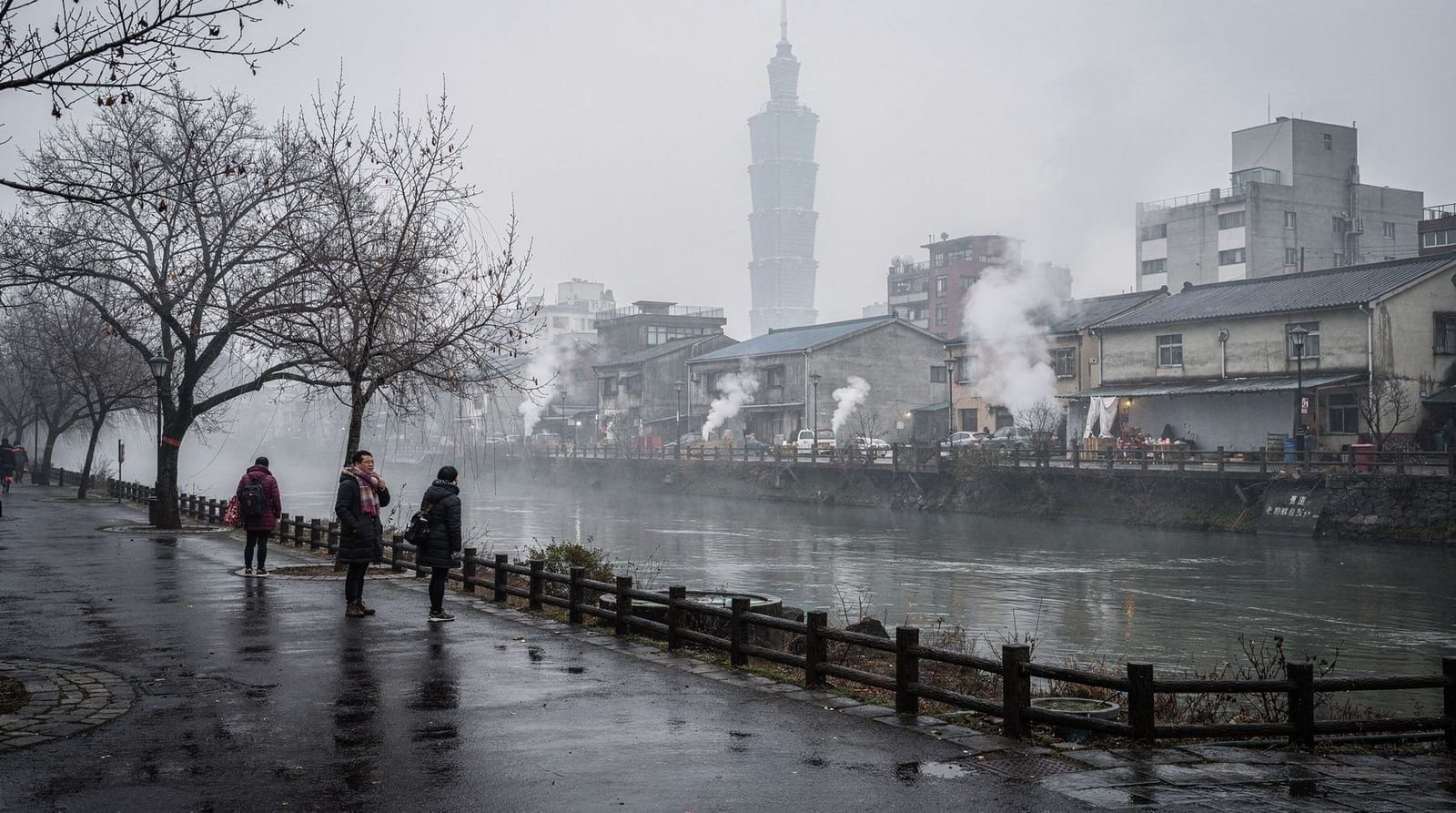
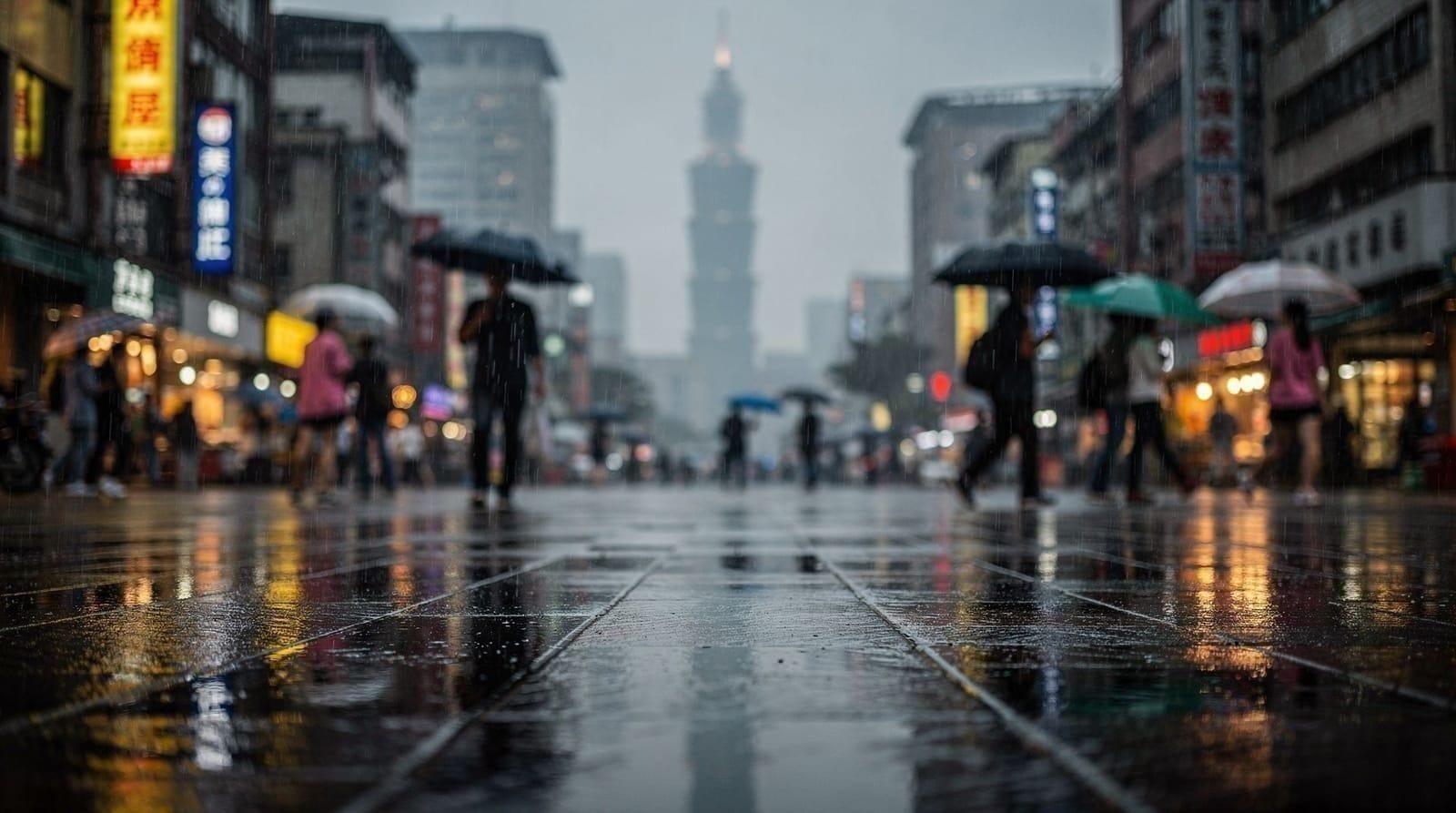
Taipei rains. This is not a small caveat.
| Where | Underground malls, museums, Beitou, Ximending |
| Cost | free (malls, temples) to around NT$350 (museum) |
| Time needed | flexible, half-day to full-day redirect |
| Getting there | MRT covers nearly everything below |
| Best rainy-day pick | Beitou hot springs or the National Palace Museum |
The city averages around 2,500mm of rainfall per year — more than London, more than most European cities — distributed across every month with only brief dry windows in autumn and early winter. The plum rain season (May–June) brings sustained grey drizzle. Typhoons (July–September) bring something more dramatic. And even in October and November — the “best months” — afternoon showers are common enough that an umbrella is standard equipment.
If your entire itinerary depends on outdoor sightseeing, Taipei rain is a genuine disruption. But the city has enough covered infrastructure, indoor culture and weather-independent experiences that a rainy day can be redirected without losing much.
The covered underground network
Taipei’s MRT system comes with something most visitors don’t fully register: an extensive underground mall network connecting major stations. The Taipei Station underground district links Taipei Main Station, the Q-Square mall, the Zhongxiao-Xinsheng corridor and sections of Ximending — it’s possible to walk 30–40 minutes underground between major shopping and dining areas without emerging at street level.
This is genuinely useful on a rainy afternoon. The underground sections along Zhongxiao East Road (忠孝東路) and the Xinyi district connect major department stores (ATT 4 Fun, Shin Kong Mitsukoshi, Neo19) and both the upper and lower levels of Taipei 101.
Ximending is another rain-resistant neighbourhood — its pedestrian centre is covered by awnings along the main shopping streets, and the density of food options, movie theatres and arcades makes it easy to spend 3–4 hours without noticing the weather.
Museums worth half a day
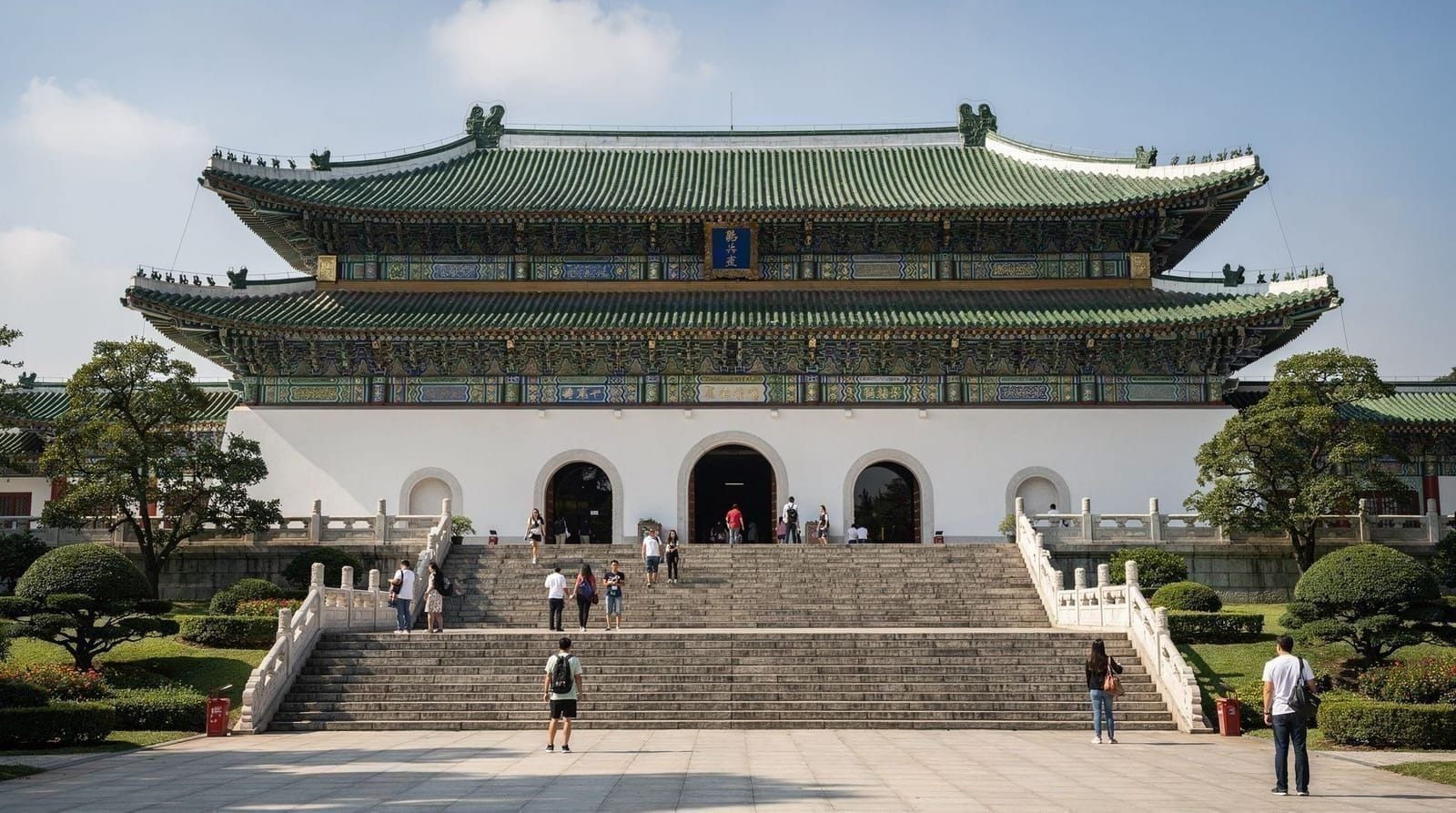
The National Palace Museum is arguably the city’s most compelling rain-day option. The collection of Chinese imperial artefacts is genuinely vast (700,000+ pieces, of which roughly 3,000 are displayed at any time), and the building is modern and comfortable. A focused 2–3 hour visit is more satisfying than an exhaustive one — pick one or two exhibition galleries and give them proper attention.
The permanent collections worth prioritising: the jade gallery (the Jadeite Cabbage is unavoidable and worth a moment), the bronze vessels from the Shang and Zhou dynasties, and the Song dynasty calligraphy. If there’s a temporary exhibition during your visit, check it — the museum rotates works from storage regularly and special exhibitions often outpace the permanent galleries.
Practical notes: entry is NT$350 (about €9.50 / US$11). The museum is a 15-minute bus ride from Shilin MRT. The café on the lower floor serves acceptable food without tourist-trap pricing.
Other good rainy-day museums in Taipei:
- Museum of Contemporary Art (MOCA) in Zhongshan — well-curated rotating exhibitions in a former Japanese school building; NT$100 entry
- Miniatures Museum near Zhongshan MRT — an oddly absorbing collection of miniature rooms and dioramas; underrated; NT$280
- National Taiwan Museum in 228 Peace Memorial Park — free with residency/student ID, NT$30 otherwise; good for historical context on Taiwan’s history
For a guided approach to the National Palace Museum’s most important works:
Taipei: National Palace Museum guided tourPairing the museum with a nearby cultural stop is easy to do in one wet day: a combined ticket covering the National Palace Museum and the Indigenous cultures museumCheck availability suits visitors who want a second indoor stop without extra planning. The best museums in Taipei guide lists more options for days when the forecast refuses to improve.
Beitou hot springs: rain makes it better
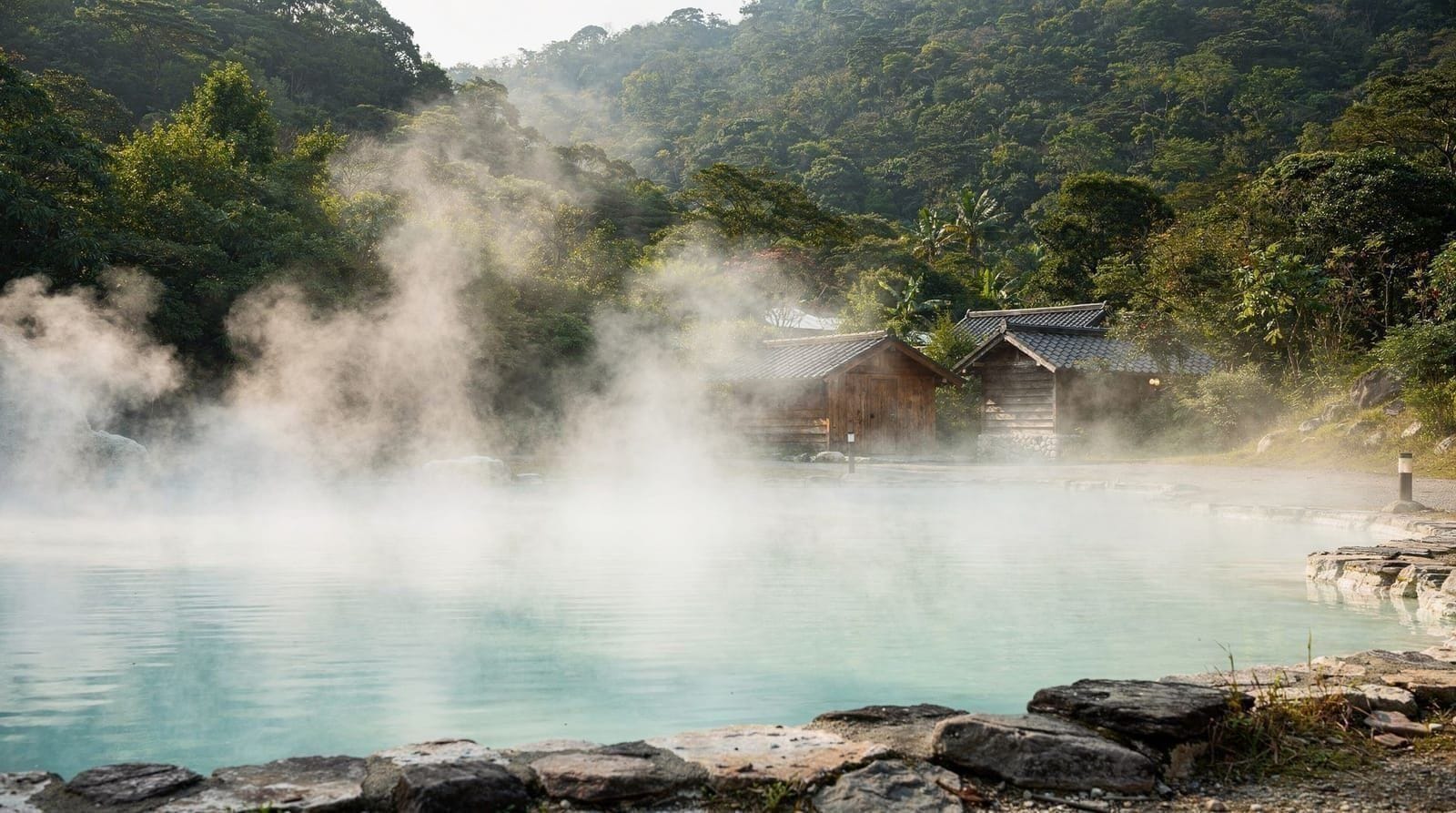
Counterintuitively, Beitou is one of the best rain-day destinations from central Taipei. The MRT runs there directly (Red Line, 35 minutes from Zhongshan), the hot spring baths are mostly indoor, and soaking in a geothermal pool while it rains outside has a particular satisfaction.
The Beitou Hot Spring area has multiple tiers of option:
- Xinbeitou Public Bath (新北投公共浴場): A preserved Japanese-era bathhouse, now operating as a museum. Free entry to the building; the actual baths require separate payment (NT$40–90 for public-gender pools).
- Public bath facilities: The outdoor mineral pools near the Thermal Valley (地熱谷) complex are free to look at but not accessible for bathing. The public bathhouse facility on Wenquan Road charges NT$40–90 for access.
- Private-room baths in hot spring hotels: From NT$400–1,500 per hour for a private room with your own pool. Several hotels (Longtang, Caesar Park Beitou) rent these by the hour without requiring a full hotel stay.
If you would rather not piece the area together yourself, a guided walk through the Beitou hot springs and heritage sites keeps the route simple on a wet day, and the Beitou hot springs guide and hot spring etiquette cover what to do once you are at the baths.
The Beitou to Wulai hot spring comparison guide covers the specific characteristics of each spring’s mineral content — different spring types have different colours and supposed health properties.
Temple-hopping with covered colonnades
Several of Taipei’s major temples have covered corridors that make them navigable in rain. Longshan Temple (龍山寺 in Wanhua) has an outer covered walkway around the main courtyard. It’s one of Taipei’s most atmospheric temples in any weather, and on a rainy weekday it’s peaceful rather than crowded.
The Dadaocheng area on Dihua Street (迪化街) is another good rainy option — the old merchant buildings have deep covered arcades (亭仔腳, tīng-zǐ-kha) along the street that allow window shopping and food stalls to function through light rain. The area’s preserved Baroque and Art Deco shophouse architecture is worth examining at close range; rain keeps the light flat but also thins the crowds.
Markets that work in rain
Most of Taipei’s outdoor night markets deteriorate in heavy rain — stalls close, the ground gets slippery, and food quality suffers at open-air cooking stations. The exceptions:
Ningxia Night Market has a relatively high proportion of covered or semi-covered stalls, and the street is narrow enough that vendor awnings provide partial coverage. In light rain, it remains functional.
Guanghua Electronics Market (光華數位新天地) near Zhongxiao Xinsheng Station is entirely indoor — six floors of electronics, computer components, phone accessories and second-hand tech. If you need a new charging cable or SIM adaptor, this is the most efficient place in the city.
Café culture as a genuine backup
Taipei’s café culture is serious, well-developed, and mostly overlooked in tourist guides that focus on temples and markets. The city has a dense independent café scene — particularly in Daan, Zhongshan and Ximending — with shops that take coffee seriously and typically have enough space to sit for 2–3 hours without pressure to leave.
For a rain-morning option: the cafés along Yongkang Street (永康街) near Dongmen MRT are reliably good. Many open from 08:00 and the street is walkable from the MRT with covered sections. The tea culture in this neighbourhood is strong — several shops specialise in Taiwanese oolong and mountain teas served in traditional gongfu style.
This overlaps with the Taipei coffee and tea scene covered elsewhere — see that guide for specific café names and tea district details.
Food as a rainy-day plan
A wet afternoon is a good excuse to organise the day around eating. The best street food in Taipei guide is useful for choosing dishes that suit a quick, sheltered stop, and a long lunch at Din Tai Fung and the xiaolongbao scene fills a grey hour or two without any weather risk. If the evening clears, the night markets guide and the best night market foods post help you pick a market that is worth the trip, and Shilin versus Raohe is a useful comparison when you can only commit to one.
Tea is the other natural fit. The Taipei tea culture guide explains what to expect from a gongfu session, which is a slow, sit-down activity that suits rain. If the cloud lifts, Maokong and its gondola are better saved for a clearer day, since the views are the point.
Moving around when it’s wet
The Taipei MRT guide and the EasyCard guide are worth a read before you go: with one card you can hop between covered stations and building entrances all day, which is what makes the redirect strategy above work. For day trips, the weather matters more. Coastal and mountain stops such as Jiufen and Yehliu are exposed, so the best day trips from Taipei are easier to enjoy when you keep them flexible and swap them with an indoor day if the forecast turns. The same goes for Yangmingshan, where cloud and rain can hide the scenery entirely.
If you are travelling as a family, the Taipei with kids guide has ideas that hold up indoors, and the Taipei for families itinerary shows how to balance the days. For a longer stay, the three-day itinerary leaves room to shuffle a wet day into the plan. A few more ideas for the quiet hours are in the 48 hours in Taipei post, and the Taipei packing tips cover the rest of what to bring.
Planning around known weather patterns
If you’re trying to minimise rainy days in Taipei:
- October–November: statistically driest months, fewest typhoon disruptions
- January–February: relatively dry and cool; Chinese New Year period (January–February) is peak domestic travel
- May–June (plum rain): extended grey periods but rarely torrential; umbrellas and waterproof layers handle most of it
- July–September (typhoon season): when a typhoon hits, most attractions close — but typhoons are typically 24–48 hour events followed by clear skies; they’re not week-long affairs
The best time to visit Taipei guide covers this in detail with monthly breakdowns.
What to pack for a rainy Taipei trip
A compact umbrella is more useful than a raincoat for most situations — Taipei’s rain is often light-to-moderate rather than driving, and an umbrella lets you duck in and out of covered arcades easily. Convenience stores sell disposable umbrellas for NT$100–150 if you’re caught without one, and most cafés and museums have umbrella bag dispensers at the entrance so you’re not dripping through the building.
Waterproof or quick-dry footwear matters more than most people plan for — Taipei’s stone temple courtyards and older pavements get genuinely slick, and the humidity means shoes rarely dry out fully between rainy days. A packable rain shell is worth adding if your itinerary includes Yangmingshan or Beitou, where mountain weather can be wetter than the city forecast suggests.
Rainy day near the airport
If you’re arriving or departing on a rainy day and have a few hours at Taoyuan Airport rather than the city itself, the airport’s own terminal facilities (indoor gardens, lounges, a cinema in Terminal 2) cover a surprising amount of downtime without needing to head into Taipei at all. If you do have time to reach the city, the underground network described above starts essentially at Taipei Main Station, a 35–37 minute Airport MRT ride away — meaning a rainy layover of 4+ hours can still productively include an hour or two at the National Palace Museum or a Yongkang Street café.
A realistic half-day rainy itinerary
If a full day of your trip turns out wet, a workable sequence is: late morning at the National Palace Museum (2–3 hours, indoors throughout), lunch nearby, then an MRT ride to Ximending for covered browsing and an early dinner, finishing with a soak at a Beitou private hot spring room if you’re not flying that evening. This covers culture, food and a genuinely pleasant way to end a wet day, all without more than brief exposure to actual rain between MRT exits and building entrances.
Frequently asked questions about Taipei in the rain
Does rain ruin a Taipei trip?
No, but it shifts what’s worth doing. The city has enough indoor infrastructure (MRT, underground malls, museums, hot springs, cafés) to redirect a rainy day without significant loss.
Are Taipei’s night markets open in the rain?
Most remain partially open in light rain — vendors with fixed stalls continue; open-cooking stalls may reduce operations. Heavy rain or typhoon warnings see most markets close.
Is the MRT disrupted by typhoons?
Yes — when a typhoon warning (particularly Land Warning) is issued, the MRT shuts down as a safety measure. This is usually announced 24–48 hours ahead. Check the Taipei Metro (TRTC) website for advisories.
What’s the best museum to visit in Taipei on a rainy day?
The National Palace Museum for Chinese imperial art; MOCA for contemporary Taiwanese art; the Miniatures Museum for something unusual. All are within 20–30 minutes of central Taipei by MRT or bus.
Can I use Beitou hot springs in any weather?
Yes — indoor facilities operate regardless of weather. Outdoor pools are less appealing in cold rain, but the private-room option in hot spring hotels is pleasant in any conditions.
What should I pack for rainy days in Taipei?
A compact umbrella (more useful than a raincoat), waterproof or quick-dry shoes, and a packable rain shell if your plans include Yangmingshan or Beitou, where mountain weather can be wetter than the city forecast.