Elephant Mountain hike — the Taipei 101 view trail explained
Taipei: Classic landmarks day tour
How hard is the Elephant Mountain hike in Taipei?
It is a short, steep hike — about 1.4km round trip with roughly 180m of elevation gain via stone steps. Most people reach the main viewing platform in 15–25 minutes from the trailhead. The steps are steep in sections but the hike is suitable for most people with basic fitness. Best time for the Taipei 101 skyline shot is at dusk or after dark.
What Elephant Mountain is and why people go
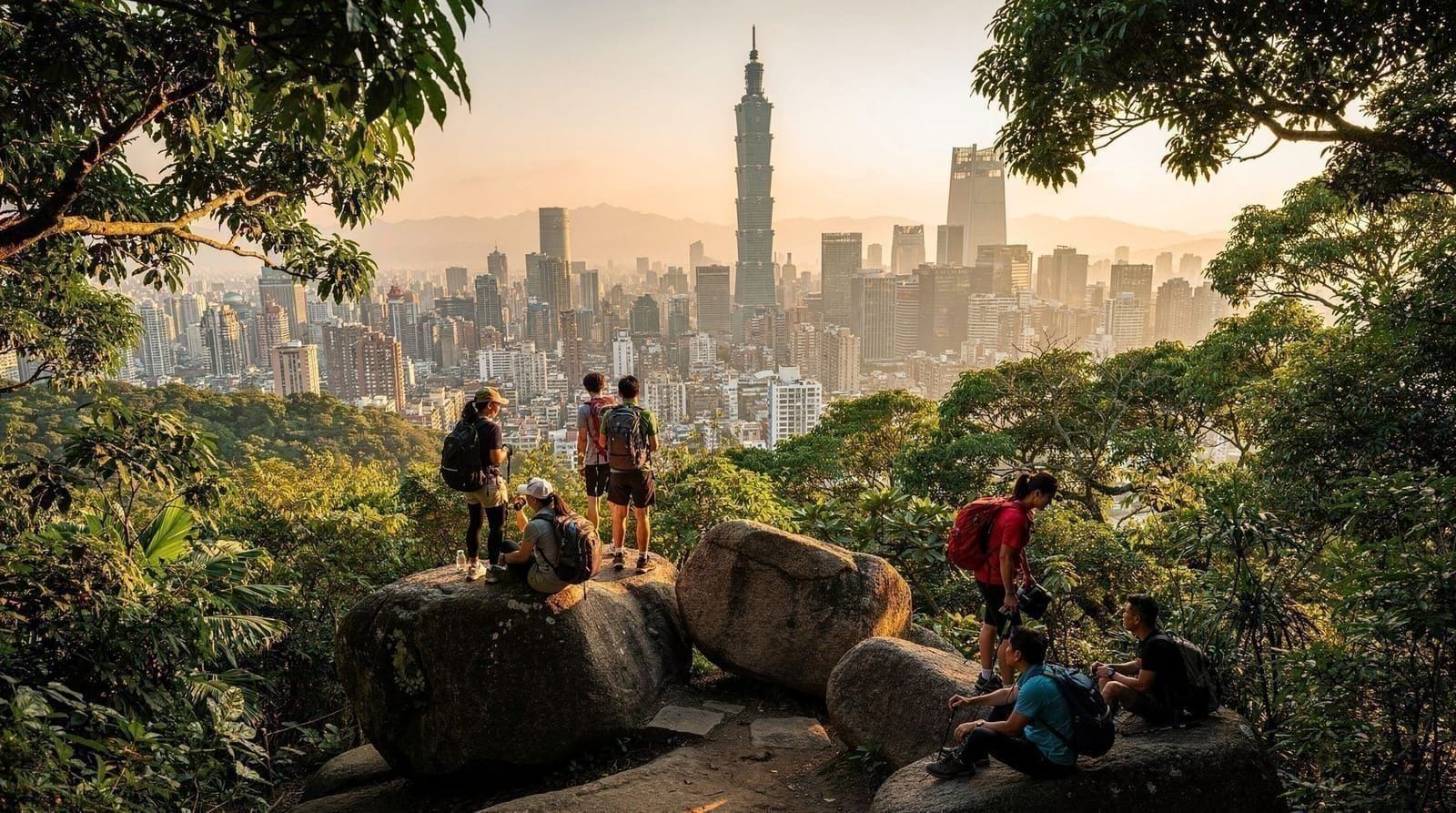
Elephant Mountain (Xiangshan, 象山) is a 183-metre hill on the eastern edge of Taipei’s Xinyi district, directly opposite Taipei 101. Its rocky summit ridge offers what is arguably the most accessible elevated view of the Taipei 101 skyline from close range — a clear line of sight across Xinyi with the 508-metre tower filling a third of the frame at the right angle.
The hike is short (15–25 minutes to the main platform) and begins directly from the MRT. There is no entry fee. It has become Taipei’s most-visited urban hike as a result, particularly at dusk when the skyline photographs well.
It is a legitimate hike with real stone steps and some elevation — not a stroll. But it requires no special fitness or equipment beyond comfortable shoes.
| Where | Xiangshan MRT (Red Line terminus), Xinyi district |
| Cost | Free — no ticket, no reservation |
| Time needed | 30–60 minutes round trip to First Peak |
| Getting there | MRT to Xiangshan Station, ~5–8 min walk to trailhead |
| Best time | 17:30–19:30 for the golden-hour skyline shot |
Where it fits in a Taipei trip
Elephant Mountain works best as a small, flexible add-on rather than a full outing. Because it starts at an MRT terminus and needs no booking, it slots easily into the gaps of a longer plan. First-time visitors often drop it into the evening of an arrival day, or the night before a bigger excursion, and the Taipei first-timer guide shows how it pairs with the city’s other headline stops. If you are still working out how long to stay, the how many days in Taipei guide helps you decide whether there is room for an unhurried sunset up here.
For a ready-made schedule, the Taipei in 3 days itinerary and the Taipei in 5 days itinerary both leave space for a Xinyi evening. Travellers watching their spending will like that this is one of the best free experiences in the city, a point the Taipei on a budget itinerary makes well.
Getting to the trailhead
The hike starts from near Xiangshan MRT Station (象山站), the eastern terminus of the MRT Red Line (Danshui-Xinyi Line). From Taipei Main Station, the journey takes approximately 20 minutes (NT$30).
From Xiangshan MRT:
- Exit 2
- Walk straight ahead (south) on Xin-guang Road
- After 200m, turn right (west) onto Fushing South Road Section 5
- Follow the brown Xiangshan direction signs
- Trailhead is 5–8 minutes walk from the MRT exit
The path to the trailhead passes through a residential neighbourhood with a few small cafés and convenience stores. Stock up on water before ascending — nothing is available at the top.
The trail
From the park entrance gate, the path divides: the left fork is a gentler gravel walk through the lower forest; the right fork is the steep stone step route that leads directly to the viewing rocks. Both reach the same summit area; the stone step route (right) is faster and more commonly taken.
Stone step route: 0.7km, approximately 180m elevation gain, 15–25 minutes. The steps are cut into the hillside and follow a direct line. Steep in sections — use the metal handrails where provided. The forest is dense on either side, offering shade in summer.
The main viewing platform (First Peak rock): A large outcrop of hexagonal columnar basalt provides a natural flat viewing surface for approximately 30–50 people. Taipei 101 appears directly across the Xinyi district. On clear days the full mountain ring encircling Taipei Basin is visible. This is where the famous photos are taken.
Beyond First Peak: The trail continues northeast along the ridge (Sihou Shan trail) with more view points at Second, Third, and Fourth Peaks. The trail becomes less manicured beyond the first peak and requires more care. Carrying on to Nangang MRT via the full ridge traverse is a genuine half-day undertaking.
Pacing yourself on the way up
The stone steps reward a steady rhythm more than a sprint. People who rush the first stretch tend to stop early with burning legs, while those who settle into a slow, even pace arrive at the rocks feeling fine. There are natural pauses along the way where the trees open slightly, and these are good moments to catch your breath and look back at the city creeping into view. Nobody minds if you step aside to let faster walkers pass; the path is used by locals who come for exercise as well as by visitors with cameras.
Families and anyone who is less confident on steps can take the gentler gravel fork instead, accepting that the route is longer in exchange for an easier gradient. If you are travelling with young children, the Taipei with kids guide covers what else suits them in the city, and a daytime visit is easier than an evening one with small legs.
Photography: the golden hour logic
The reason most visitors come to Elephant Mountain between 17:30 and 19:30 is the quality of light:
17:30–18:00: Late afternoon warm light illuminates Taipei 101 and the Xinyi district; sky is blue with possible cloud drama. Best for showing the city in daylight context.
18:00–18:45 (dusk, varies by season): The transition from day to night light. Taipei 101’s illuminated structure turns on gradually. The sky shifts through orange, pink, and purple. This 30–45 minute window produces the most sought-after images.
19:00+: Full city lights. Taipei 101’s LED crown is fully lit. The city looks spectacular at night but the sky is black — different composition, still worth photographing.
For morning photography, arrive before 08:30. The low sun comes from behind you (east), illuminating the western face of the buildings. City haze is minimal in the first two hours of daylight.
Whatever the hour, a few habits improve the pictures. Find your spot early and be patient, since the best position on the rock is not always the first one you see. Keep your tripod, if you bring one, low and out of the way of other visitors, and be considerate about standing in front of someone else’s frame. A phone steadied against a rock often does as well as a heavier setup, and the city lights reward a few seconds of stillness more than a rapid burst of shots.
Seasons and weather on the hill
Taipei’s weather shapes this hike more than the trail itself. The clear, crisp days of autumn give the sharpest skyline, which is why the best time to visit Taipei guide points to that season for views generally. Winter can be grey and damp, and the Taipei in winter guide explains what to expect so you can choose a brighter day. Summer brings heat and humidity, so go late in the day and carry extra water.
Typhoon season changes the plan entirely. When a storm is approaching, the hill is no place to be, and the Taipei typhoon season guide explains how to read the warnings. Rainy spells are covered in the Taipei in the rain article, which also suggests indoor alternatives for the evenings you postpone. Wet or not, pack sensibly using the Taipei packing tips.
The crowds situation
Elephant Mountain is busy on weekend evenings before sunset but not overwhelmingly so — the trail is wide enough to accommodate two-way foot traffic without significant wait. The viewing rock platform has limited standing space and fills during peak golden hour (18:00–19:00 on Saturdays). If you arrive before 17:30 or after 19:30, the platform is typically manageable.
Weekday evenings are noticeably quieter than weekends.
The trail after dark (returning after sunset) is manageable with the steps lit from below by small solar markers, but a headlamp or phone torch is helpful for the descent.
Elephant Mountain vs the Taipei 101 Observatory
Both put you above the Xinyi skyline, but the experience is different, and many visitors do both on the same trip rather than choosing one.
| Elephant Mountain hike | Taipei 101 Observatory | |
|---|---|---|
| Cost | Free | Paid ticket, book ahead for sunset slots |
| View | Taipei 101 in the skyline, from outside | The skyline from inside Taipei 101, looking down |
| Effort | 15–25 min uphill walk, stone steps | Elevator, no walking |
| Best for | The classic postcard photo of the tower itself | 360° panoramic city and mountain views |
| Weather risk | Ruined by haze or rain | Indoor, unaffected by rain |
If you only have time for one, Elephant Mountain gives the more iconic photograph; the observatory gives the wider, weatherproofed view. See the Taipei 101 Observatory ticket if you want to combine both on one Xinyi outing.
Taipei classic landmarks day tour (Xinyi and beyond)Etiquette on the rocks
The viewing rocks are shared space, and a little courtesy keeps the atmosphere friendly. Take your photos, then step back so others can have their turn. Carry your rubbish down with you, keep music off or low, and stay away from the edges, especially in the dark when it is harder to judge distances. Most visitors are relaxed and happy to take a photo of you if you ask, which is often the easiest way to get a picture with the skyline behind you.
What to bring
- Water: At least 500ml. There is nothing available at the top.
- Comfortable shoes: The stone steps can be slippery when wet. Flip-flops are not suitable. Running shoes are fine; hiking boots unnecessary for the main viewpoint.
- Light jacket: The top is exposed and breeze-cooled. In autumn and winter, bring a layer.
- Camera: Both phones and dedicated cameras work well. The view rewards a wide-angle lens. For sunset, arrive 30 minutes before the expected light for positioning.
- Torch/headlamp: Useful for descent after dark.
Combining Elephant Mountain with other Xinyi district sights
Elephant Mountain sits at the eastern edge of the Xinyi district — Taipei’s main upscale shopping and corporate area. Taipei 101 Observatory is a 15-minute walk from the trailhead (see guides for the observatory separately). The area has dense dining options including the Din Tai Fung branch in Xinyi (the most accessible location, NT$200–400 for xiaolongbao).
The area links to: Xinyi and Taipei 101, Xinyi district guide, Taipei 101 Observatory.
Food and drink after the descent
Coming down hungry is part of the ritual, and Xinyi has plenty to offer. If you want something quick and casual, the best street food in Taipei guide and the Taipei night markets guide point to good options for a late bite. For a sit-down meal built around dumplings, the Din Tai Fung and xiaolongbao guide explains what to order. A cold drink is the obvious reward, and the Taipei bubble tea guide will help you pick a shop. Anyone planning a longer food-focused day can follow the Taipei food lovers itinerary.
Getting back and staying nearby
The return to the MRT is the same short walk you made on the way in, and trains from the terminus are a simple ride back toward the centre. If you are paying for rides with a card, the EasyCard guide saves fuss, and the Taipei MRT guide covers the system as a whole. Choosing a hotel in the east of the city makes this hike especially convenient, and the where to stay in Taipei guide compares the neighbourhoods. The Xinyi and Taipei 101 destination page is a good overview of the district around the hill.
For the city’s other hiking options, see taipei best hikes guide and Yangmingshan hiking guide.
What guides get wrong about Elephant Mountain
The “30-minute hike” claim: Most online sources say 30 minutes to the top. In our experience, fit adults reach the main rock in 15–20 minutes; those taking their time or with children need 25–30 minutes. The 30-minute estimate is conservative.
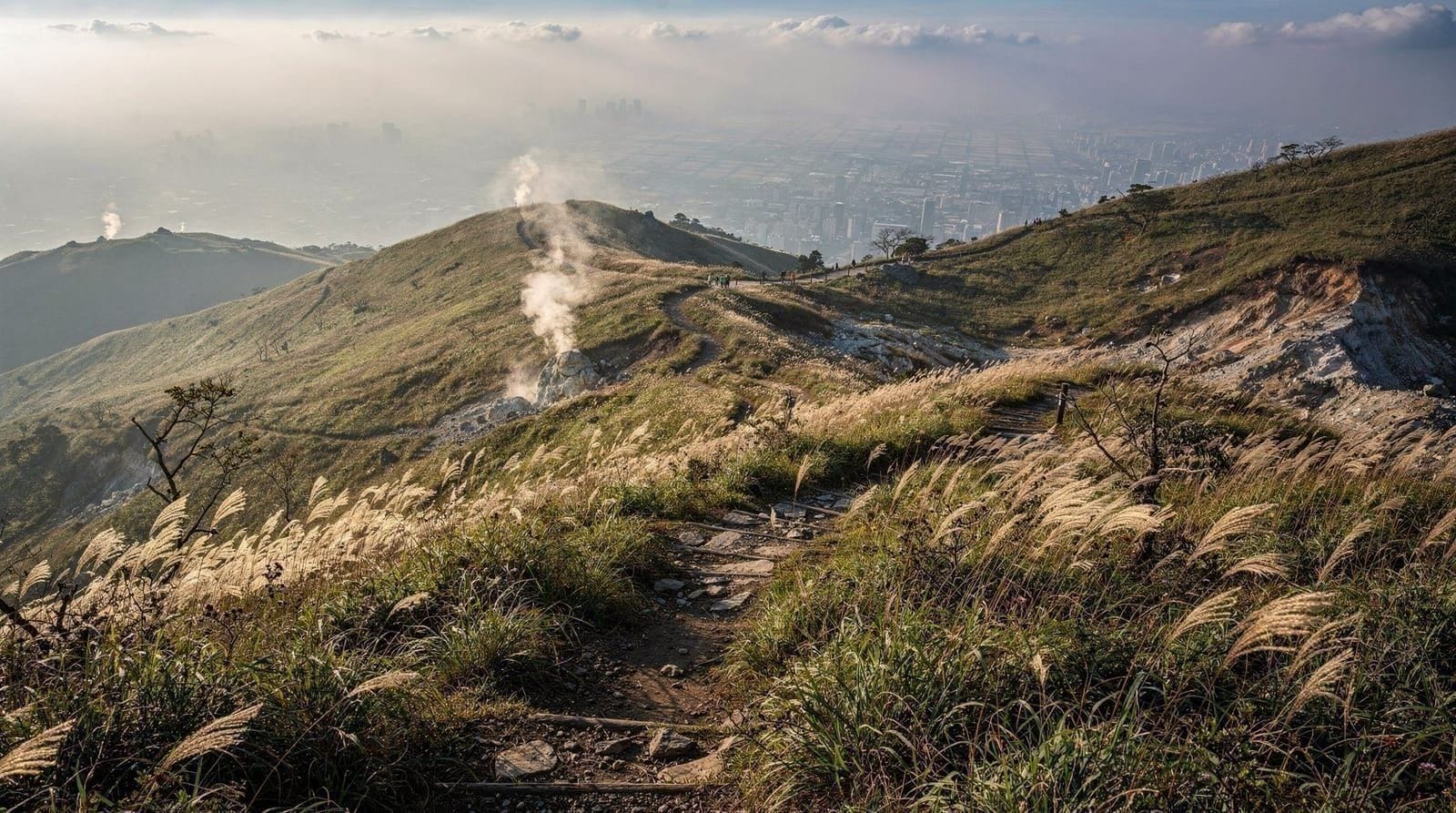
“Worth it for the view”: It is worth it. But be clear that the view is of Taipei 101 and the Xinyi skyline — not a panoramic mountain landscape. If you are looking for the volcanic landscape and broader city view, Yangmingshan provides that; Elephant Mountain provides the Taipei 101 shot. Both are worth doing if you have time.
“Best at sunset, any day”: The view is best when the sky is clear. Taipei has significant haze in summer (June–August). The clearest air is in autumn (October–November) when northeast winds from the Pacific clear the basin. If Yangmingshan’s summit is visible from the city, Elephant Mountain will offer excellent views; if the mountains are obscured by haze, the skyline view will be washed out.
Taipei must-see attractions walking tour (includes Xinyi area)For getting around Taipei’s attractions efficiently, see the Taipei MRT guide and Taipei on a budget guide.
Frequently asked questions about Elephant Mountain hike — the Taipei 101 view trail explained
Where is the Elephant Mountain trailhead?
Is Elephant Mountain free to visit?
When is the best time to hike Elephant Mountain?
How crowded is Elephant Mountain?
Is there a longer hiking route on Elephant Mountain?
Can I see Taipei 101 from the top of Elephant Mountain?
What happens to the Elephant Mountain hike if it rains?
Do I need to book a tour to visit Elephant Mountain?
Top experiences
Bookable activities with verified prices and instant confirmation on GetYourGuide.